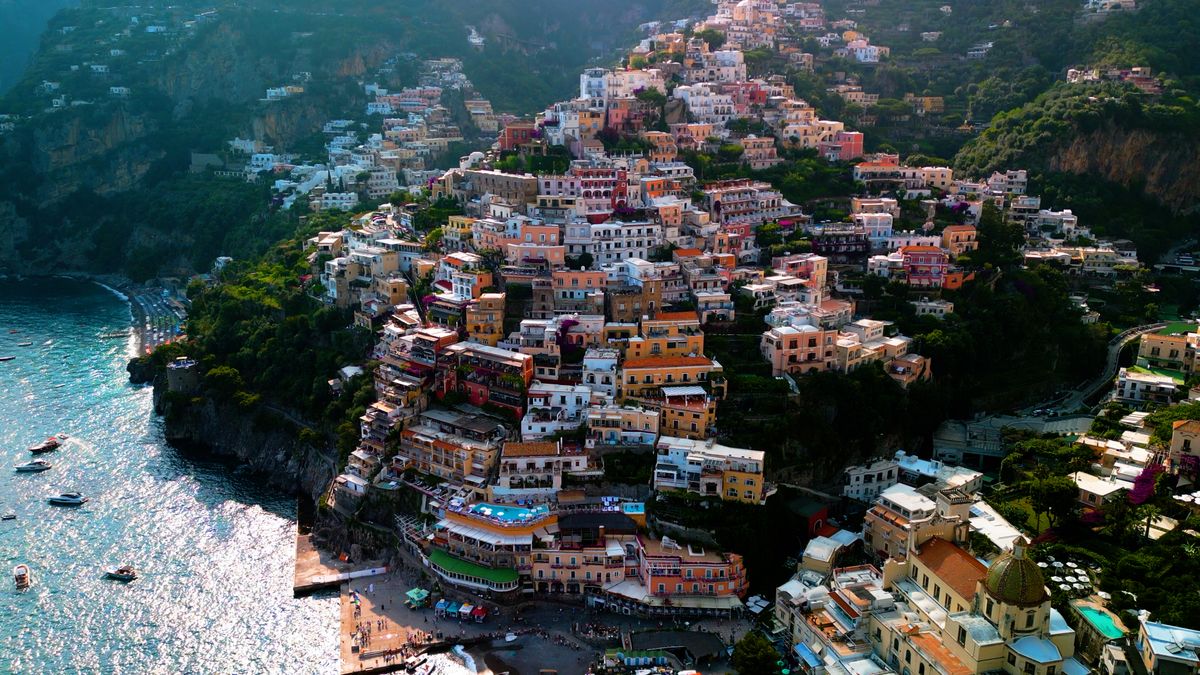
Naples and the Amalfi Coast sit within an hour of each other, but they offer completely different experiences. Naples is one of Italy’s great cities — intense, ancient, and home to the world’s best pizza. The Amalfi Coast is one of Italy’s great landscapes — vertical cliffs, pastel villages, and a deep blue sea that has drawn visitors since Roman emperors built villas here. The two complement each other perfectly. Choosing between them depends on what you want from southern Italy.
Quick Verdict
| Category | Naples | Amalfi Coast |
|---|---|---|
| Scenery | — | Winner |
| Food | Winner | — |
| Value for money | Winner | — |
| Beaches | — | Winner |
| History and museums | Winner | — |
| Accommodation variety | Winner | — |
| Day trips | Winner | — |
| Atmosphere | Tied | Tied |
Choose Naples if you want Italy’s finest food, ancient history, Pompeii access, and a base that punches far above its price point. Choose the Amalfi Coast if you want coastal scenery, clifftop villages, swimming, and the visual drama of one of Europe’s most photographed coastlines.
Scenery and Character
The Amalfi Coast wins on scenery without contest. The SS163 coastal road winds for 50 kilometres between Positano and Salerno, with villages — Positano, Praiano, Atrani, Amalfi, and Ravello — clinging to cliffs 200 metres above the sea. The light changes the palette through the day: hazy blue in the morning, rich gold in the afternoon. From the sea, looking back at Positano’s cascade of white and terracotta houses is one of Italy’s defining images.
Naples is a city, not a landscape, but its setting is extraordinary. Built on the shore of a wide bay with Vesuvius rising behind it, Naples has one of the great urban vistas in Europe. The Lungomare waterfront at sunset — sea in front, Vesuvius behind, Castel dell’Ovo on its peninsula — is genuinely spectacular. But this is urban drama, not coastal idyll.
Winner: Amalfi Coast, easily. The scenery is the reason to go.
Food and Dining
Naples is one of the world’s great food cities, and this is its clearest advantage over the Amalfi Coast.
Naples invented pizza, and the best pizza in the world is still made here. L’Antica Pizzeria da Michele (Via Cesare Sersale 1) serves two options — margherita and marinara — for €5–6 each. Sorbillo on Via dei Tribunali (margherita from €5.50) is the high-volume institution. 50 Kalò (Piazza Sannazaro) is considered by many food professionals to have the finest dough in the city, under €8 a pizza. The difference between Neapolitan pizza and anywhere else is not a matter of degree — it is a different food.
Beyond pizza, Naples’ street food is extraordinary. Cuoppo (fried seafood cone, €5–7), frittatina di pasta (fried pasta cake, €2), sfogliatella (ricotta-filled pastry, €2–3), and the city’s extraordinary espresso (€1 at the counter) define one of Italy’s most distinctive culinary cultures. A sit-down dinner at a good trattoria — pasta alle vongole, seafood, wine — costs €20–30 per person.
The Amalfi Coast has good food, with the emphasis firmly on seafood. Scialatielli ai frutti di mare (hand-rolled pasta with shellfish, €16–22) is the regional signature. The coast’s Sfusato Amalfitano lemons — unusually large and intensely fragrant — appear in limoncello, lemon tarts, and delizia al limone (lemon cream pastry cake). But restaurants in Positano and Ravello are expensive: €35–50 for dinner is standard, partly for the views, partly for the captive market. Quality varies more than in Naples.
Winner: Naples, clearly — better food at dramatically lower prices.
Beaches and Swimming
The Amalfi Coast wins here, though it is worth being realistic about what the beaches are actually like.
Most beaches on the Amalfi Coast are small and pebbly, with sun lounger concessions charging €15–25 per person per day. Positano’s Spiaggia Grande is the most famous — beautiful from above, busy in summer. Atrani has a small free beach. Marina di Praia (near Praiano) is a compact cove accessible by a steep path, with a beach restaurant and excellent snorkelling. The Lido delle Sirene at Amalfi town is more relaxed. Swimming in the sea is excellent throughout — clear, warm from June, with visibility that can reach 10 metres.
Naples has no beach to speak of within the city. The nearest swimming options are Posillipo (rocks and small private lidos, 20 minutes by bus) or the beaches at Pozzuoli and Bacoli in the Campi Flegrei area. Neither competes with the Amalfi Coast.
Winner: Amalfi Coast, decisively — swimming and coastal access are central to the experience.
History and Museums
Naples has one of the richest archaeological legacies in Italy.
The Museo Archeologico Nazionale (€18, Piazza Museo Nazionale 19) is arguably the finest antiquities museum in the world for the Greco-Roman period. The Farnese collection (including the Farnese Hercules and the Farnese Bull), the mosaics and frescoes rescued from Pompeii and Herculaneum, and the Secret Cabinet of erotic art from ancient sites together constitute an extraordinary archive. The museum alone justifies the journey to Naples.
Below street level, Napoli Sotterranea (€12, Via dei Tribunali 296) exposes the Greek-era cistern network beneath the city. The Catacombs of San Gennaro (€13, Via Capodimonte 13) are the most historically significant Christian catacombs outside Rome. The Museo di Capodimonte (€14, Via Miano 2) holds Caravaggio, Titian, Raphael, and Masaccio in a former Bourbon royal palace on the hill above the city.
The Amalfi Coast has less concentrated history but offers architectural highlights. Ravello’s Cathedral of Santa Maria Assunta (free, Piazza Vescovado) has 12th-century bronze doors and a pulpit decorated with mosaics. Villa Rufolo (€10) and Villa Cimbrone (€10) have extraordinary garden terraces above the sea. The Emerald Grotto (Grotta dello Smeraldo, €5, reachable by boat or lift from the road at Conca dei Marini) is an otherworldly sea cave with green-lit stalactites.
Winner: Naples, by a wide margin — this is one of Europe’s great museum cities.
Accommodation
Naples offers far more variety at lower prices.
In the historic centre, 3-star hotels run €70–120/night. Costantinopoli 104 (Via Santa Maria di Costantinopoli 104, from €100) is a 19th-century palazzo with a courtyard pool — one of the few city-centre Naples hotels with outdoor space. Hotel Palazzo Decumani (Via del Grande Archivio 8, from €90) is a reliable boutique choice on the Spaccanapoli axis. For views, the waterfront hotels along Via Partenope (€120–200) look directly at Vesuvius across the bay.
The Amalfi Coast’s accommodation is expensive, particularly in summer. Hotels in Positano average €200–400/night — the iconic Hotel Le Sirenuse (Via Cristoforo Colombo 30) starts from approximately €800 in peak season. Amalfi town and Ravello are slightly more affordable (€120–250). The budget strategy is to base yourself in Sorrento (hotels from €80–130/night) or Salerno (from €70) and day-trip along the coast.
Winner: Naples, substantially — both for value and variety.
Getting Around
Naples has a metro (Line 1 and Line 2, single ticket €1.30) that connects the main sights, plus the Circumvesuviana commuter railway to Pompeii (40 minutes, €4), Herculaneum (20 minutes), and Sorrento (70 minutes). The historic centre is walkable. The Lungomare is a pleasant flat walk along the seafront. Ferries from Molo Beverello and Mergellina connect to the islands and the Amalfi Coast.
The Amalfi Coast is best navigated without a car. The SITA bus from Sorrento runs the full coastal road (SS163) to Salerno, stopping at Positano (35 minutes from Sorrento, €2.40), Praiano, Atrani, and Amalfi (1 hour from Sorrento). Ferries connect Positano, Amalfi, and Salerno from April to October and are often the more pleasant option — the sea approach to Positano is one of the great arrivals in Italian travel. Driving is possible but stressful: the SS163 is single-lane in places, busy with tour buses, and parking in Positano is extremely limited.
Winner: Naples for flexibility and price. The Amalfi Coast is genuinely car-free friendly by Italian standards.
Day Trips
Naples is one of the best day-trip bases in all of Italy.
From Naples: Pompeii (40 minutes by Circumvesuviana, €4 return; site entry €18), Herculaneum (20 minutes, €13 entry), Vesuvius (combined with either; shuttle from Ercolano, €10 entry), Capri (hydrofoil from Molo Beverello, 50 minutes, from €22 return), Sorrento (Circumvesuviana, 70 minutes), the Amalfi Coast (ferry or bus via Sorrento), Ischia (ferry from Calata Porta di Massa, 90 minutes, from €15), and the Campi Flegrei volcanic area (metro to Pozzuoli, free).
From the Amalfi Coast: Capri is the main addition (ferry from Positano or Amalfi to Capri, approximately 45 minutes, from €25). Naples is a day trip in reverse. Pompeii is reachable but requires backtracking to Sorrento first.
Winner: Naples, decisively — no city in Italy has a better range of day trips within reach.
When to Visit
Naples is good year-round and has milder summers than Rome. July and August bring heat (32–36°C) and more visitors, but Naples is less saturated with international tourists than Rome or Florence — the city functions for locals as much as visitors. Spring (April–June) and autumn (September–October) are ideal. Winter is mild (8–14°C) and genuinely quiet, with no beach-going compromise for a city-focused visit.
The Amalfi Coast has a much tighter ideal window. May and early June are arguably the best weeks: warm enough to swim, lemon trees in flower, crowds manageable. July and August are extremely busy, very expensive, and hot — the SS163 clogs with tour buses. From November to March, many hotels close, ferry services stop, and the coast becomes almost inaccessible in wet weather. Aim for late April to mid-June or September to mid-October.
Winner: Naples for flexibility. The Amalfi Coast has a narrow sweet spot.
Final Verdict
Naples and the Amalfi Coast are not rivals — they are natural partners, and the most rewarding approach is to combine both.
Spend 2–3 nights in Naples first: eat pizza, visit the National Archaeological Museum, walk Spaccanapoli, and use the city as a base for a Pompeii day trip. Then take the ferry or the Circumvesuviana-to-Sorrento route and spend 2–3 nights on the coast: arrive into Positano by sea, walk the coastal path from Bomerano to Positano (Sentiero degli Dei — the Path of the Gods), and drive or bus up to Ravello for the views.
If you can only choose one: Naples gives you more — more history, more food, more variety, more day trips, and dramatically better value. The Amalfi Coast gives you the experience of pure scenery and coastal beauty that has no equivalent in southern Italy.
Search hotels in Naples → | Search hotels on the Amalfi Coast →
Ready to Plan Your Trip?
See our full guides and itineraries:
- 3 Days in Naples — the city’s highlights, Pompeii, and how to structure the time
- Amalfi Coast Itinerary — five days on the Costiera Amalfitana
- Southern Italy Itinerary — ten days from Naples to Sicily
- Naples vs Rome — comparing Italy’s two southern powerhouses
Also relevant to this area: our Amalfi vs Positano guide weighs the two most visited towns on the coast, and Sorrento vs Positano helps you choose where to base yourself.
Plan Your Trip
✈️ Book your flights to Italy 🛡️ Get travel insurance 📱 Stay connected with an eSIM 🚗 Rent a car
🎟️ Browse tours in Naples — Browse Amalfi Coast tours 🏨 Search hotels in Naples — Search hotels on the Amalfi Coast