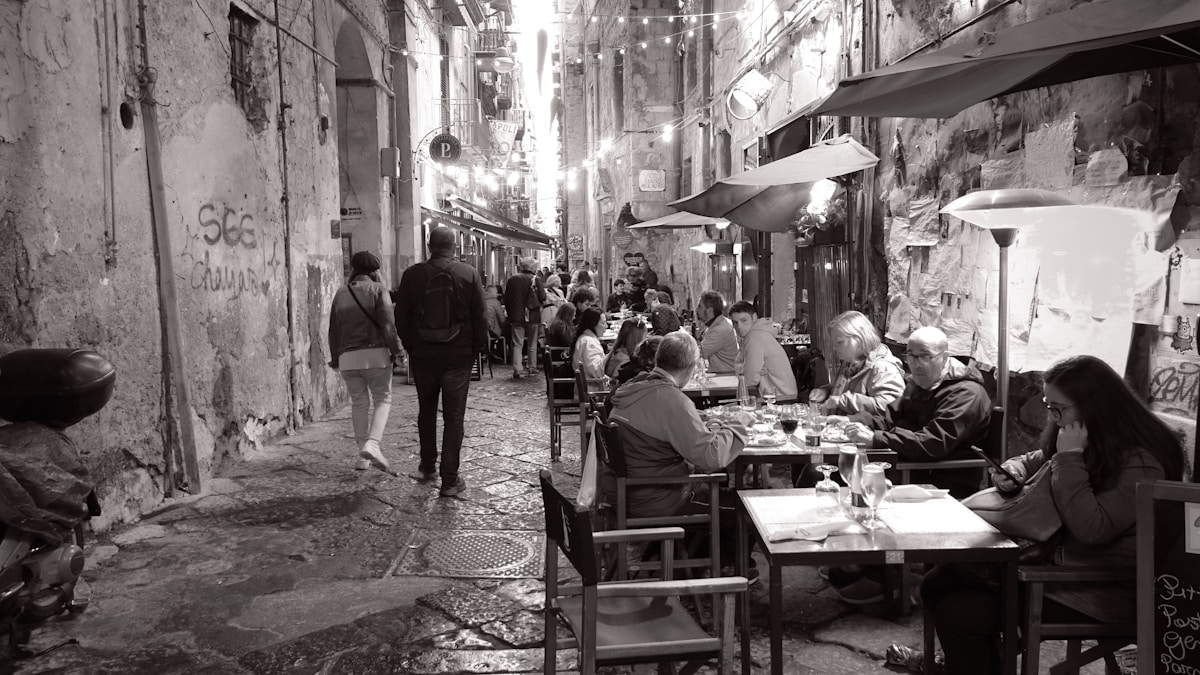
Naples is the most influential city in Italian food history. Neapolitan pizza changed how the world eats. The San Marzano tomato - the tomato - was cultivated in the volcanic plains below Vesuvius. The sfogliatella pastry, the ragù napoletano, and the espresso as we know it were all either invented or perfected in this city.
Pizza
Neapolitan pizza is a TSG (Traditional Speciality Guaranteed) product with strict rules: Tipo 00 flour, fresh or San Marzano tomatoes, fior di latte (buffalo mozzarella is optional but prized), hand-stretched by a pizzaiolo, cooked in a wood-fired oven at 485°C for 60–90 seconds.
The result is a soft, charred, slightly wet pizza with a puffy crust (cornicione) and minimal toppings. The canonical versions:
- Margherita - San Marzano tomato, fior di latte, fresh basil, olive oil
- Margherita con bufala - with buffalo mozzarella instead of fior di latte (richer, more liquid)
- Marinara - tomato, garlic, oregano, olive oil. No cheese. The oldest version.
- Fritta - the fried pizza. Dough folded over ricotta, salami, and provola, then deep-fried. Street food in Quartieri Spagnoli.
A margherita at a genuine Neapolitan pizzeria costs approximately €4–6 as of 2026. Many traditional pizzerias are cash only.
Best pizzerias
L’Antica Pizzeria da Michele (Via Cesare Sersale 1-3, near Piazza Garibaldi) - Founded 1870. Serves only Margherita and Marinara. No reservations; queue on the street - expect 20–40 minutes at lunchtime. Margherita approximately €5. Cash only. The gold standard. Open Monday–Saturday 10:30am–midnight.
Pizzeria Sorbillo (Via dei Tribunali 32, Centro Storico) - Multiple generations of the Sorbillo family. Slightly more variety than da Michele alongside similar quality. Margherita approximately €5. Open daily. The Via dei Tribunali original is the one to visit.
Concettina ai Tre Santi (Via Arena della Sanita 7b, Rione Sanita) - Innovative Neapolitan pizza in the Sanita neighbourhood. Creative toppings alongside the classics. Margherita approximately €5, specialty pizzas approximately €8–12. Reservations recommended for dinner. Open daily.
Di Matteo (Via dei Tribunali 94, Centro Storico) - Famous for pizza fritta (fried pizza, approximately €2.50) as well as baked pizza. Margherita approximately €4. Cash only.
50 Kalo (Piazza Sannazaro 201b, Mergellina) - A modern pizzeria using high-quality flour and extended fermentation. Margherita approximately €7, specialty pizzas approximately €9–14. Reservations recommended. A more refined experience than the Centro Storico institutions.
Pizzeria Starita (Via Materdei 27, Materdei) - Inventor of the fried pizza margherita. Open since 1901. Margherita approximately €5–6.
The Street Food of Naples
Naples has one of the richest street food cultures in Europe - eating while walking is normal, and the street food is serious.
Cuoppo - a paper cone filled with fried seafood (squid, shrimp, small fish) or vegetables. Approximately €4–6 per cone. Friggitoria Vomero (Via Cimarosa 44, Vomero) and Fiorenzano (Piazza Montesanto) are reliable sources.
Frittatina di pasta - fried pasta cake. Bucatini or maccheroni mixed with béchamel, ham, and provola, formed into a disc and deep-fried. A Neapolitan invention.
Sfogliatella - Two versions: riccia (shell-shaped, layered pastry, crunchy) and frolla (smoother shortcrust), both filled with ricotta, semolina, and candied citrus. Best eaten warm. Approximately €1.50–2.50 each. Attanasio (Via Ferrovia 1-2, near Piazza Garibaldi) bakes fresh sfogliatelle continuously - the queue moves fast. Pasticceria Pintauro (Via Toledo 275) has been making them since 1785.
Pizza fritta - Dough folded over ricotta, salami, and provola, then deep-fried. Post-war street food, enormously satisfying. Approximately €2–4. Di Matteo (Via dei Tribunali 94) is the most famous source. Via dei Tribunali in the Centro Storico is the main street food corridor.
Panzarotti - fried dough balls filled with ricotta and salami. Similar to calzone but smaller and always fried.
Pera e musso - boiled octopus tentacles with lemon, sold from carts at the port and the Spaccanapoli market. One of the city’s most ancient street foods.
Tarallo - A ring-shaped savoury biscuit with pepper and almonds, sold from street vendors. Approximately €0.50–1 each. A cheap, satisfying snack.
A guided Naples street food tour covers the full circuit - cuoppo, pizza fritta, sfogliatella, and pera e musso - in the Spaccanapoli and Quartieri Spagnoli in a single morning.
Pasta and Main Courses
Ragù napoletano - a slow-cooked meat sauce (beef, pork ribs, sausage) braised for 6–8 hours in tomato, wine, and lard until the meat disintegrates and the sauce becomes almost black. Traditionally cooked on Sunday morning, eaten at Sunday lunch. Served with paccheri or rigatoni. Completely different from Bolognese.
Spaghetti alle vongole - spaghetti with clams, white wine, garlic, parsley, and olive oil. The clams are the local vongole verace from the Bay of Naples. Approximately €12–16 at trattorias.
Genovese - an onion and meat sauce (no tomato) braised for hours until the onions dissolve into a golden-brown mass. Nothing to do with Genoa - the name refers to a Genoese trading community in medieval Naples. The most underknown great Neapolitan pasta dish.
Baccalà alla napoletana - salt cod with tomatoes, olives, and capers. A Friday dish throughout the city.
Frittura di paranza - mixed small fried fish (anchovies, sardines, small sole). The quintessential Neapolitan fish dish. Approximately €12–15.
Polpo alla Luciana - octopus braised in tomato, named after the fishermen of Santa Lucia. Approximately €14–18.
Best restaurants for full meals
Trattoria da Nennella (Vico Lungo Teatro Nuovo 103-105, Quartieri Spagnoli) - A legendary, chaotic Neapolitan trattoria with no menu - the waiter tells you what’s available. Full meal approximately €15–20 per person including wine. Cash only. Open for lunch only (12pm–3pm). Book or arrive before noon.
Osteria della Mattonella (Via Giovanni Nicotera 13, Chiaia) - Traditional Neapolitan seafood and pasta. Pasta approximately €10–14, fish mains approximately €14–20. Quieter and more refined than Nennella. Reservations recommended for dinner. Closed Monday.
Pastry and Sweets
Sfogliatella - the defining Neapolitan pastry. Two versions:
- Riccia (curly): crispy, layered pastry shells, like rough filo, filled with sweetened sheep’s ricotta, semolina, and candied orange peel
- Frolla (smooth): a shortcrust pastry version with the same filling
Both are eaten hot, in the morning. The pastry shop Attanasio near the Centrale station is the most famous; dozens of other excellent pasticcerie operate throughout the city.
Babà al rhum - a small yeast cake soaked in rum syrup. Ubiquitous in Neapolitan bakeries. Approximately €2–3 each. Best warm; available plain or filled with cream.
Pastiera napoletana - a wheat berry and ricotta tart with orange blossom, cinnamon, and candied citrus. An Easter cake, though available year-round. Dense, aromatic, and completely distinctive. Approximately €3–4 per slice.
What to Drink
Espresso - Naples is the espresso capital. The Neapolitan espresso is more intense and slightly bitter than the Roman version; the crema is thick and the extraction is shorter. Drunk standing at the bar, without milk (after breakfast). An espresso costs approximately €1–1.20 standing, €2–2.50 seated as of 2026. Caffetteria Mexico (Piazza Dante 86) and Gran Caffe Gambrinus (Via Chiaia 1-2, overlooking Piazza del Plebiscito - approximately €4.50 seated, worth it for the setting) are the most historic cafes.
Lacryma Christi - the wine of the volcanic slopes of Vesuvius. A dry white and a light red made from indigenous Campanian grapes (Coda di Volpe for white, Piedirosso for red). Names reference the myth that Christ wept over Lucifer’s fall - his tears watered the vines. Quality has improved significantly in recent decades.
Gragnano - a sparkling red wine from the hills south of Naples. Fruity, low-alcohol (11%), and unusual - a fizzy red served slightly chilled. The traditional accompaniment to pizza napoletana.
Limoncello - produced on the Amalfi Coast and in Naples from Sfusato Amalfitano or Femminello del Gargano lemons. Served ice-cold as a digestivo.
Markets
Pignasecca Market (Via Pignasecca, near Montesanto) - Naples’ most atmospheric daily street market. Fish, meat, cheese, fruit, vegetables, and fried-food stalls. Open Monday–Saturday mornings until approximately 2pm. The prices are the lowest in the city for fresh produce.
Mercato di Porta Nolana (near Piazza Garibaldi) - A large street market specialising in fresh fish. The fishmongers here supply the city’s restaurants. Open Monday–Saturday mornings.
Take a Guided Food Tour of Naples
Naples is the most food-dense street-eating city in Italy — pizza fritta, cuoppo di mare, sfogliatella, and tarallo are all consumed standing up, from specialist shops that have been doing the same thing for generations. The city is also dense and not always legible to first-time visitors. A guided food tour handles the navigation and takes you to the specific street food stands in the Quartieri Spagnoli, Spaccanapoli, and the Porta Nolana fish market that genuinely warrant the queue. Browse Naples food tours on GetYourGuide.
Practical Tips
- A full sit-down pizza meal with beer or wine costs approximately €10–15 per person - Naples is the most affordable major Italian city for eating out
- The coperto (cover charge) is approximately €1–2 per person at trattorias - lower than northern Italy
- Many traditional pizzerias and trattorias are cash only - carry cash in the Centro Storico
- Lunch is the main meal in Naples - many trattorias close between 3pm and 7pm
- The best food in Naples is almost always the cheapest. Expensive restaurants near the waterfront are rarely better than a €5 margherita at Da Michele
- Tipping is not expected. Rounding up by €1–2 is appreciated
For full Naples logistics: Naples travel guide. For plant-based options in the city: vegan guide to Naples. Pizza is also covered in depth in the Italian pizza guide. The Amalfi Coast - where the lemons come from - is covered in our Amalfi Coast guide.
Where to stay: Find hotels in Naples — search accommodation across all budgets.