Italy and Greece are the twin pillars of Mediterranean travel - ancient civilisations, extraordinary food, and landscapes that have been inspiring travellers for centuries. They are not identical, however. Italy has the depth of art, the complexity of cuisine, and the urban texture that makes cities like Rome, Florence, and Naples endlessly rewarding. Greece has the islands - and for sheer scenic drama and island variety, nothing in the Mediterranean competes. Here is an honest side-by-side comparison.
Quick Verdict
| Category | Italy | Greece |
|---|---|---|
| Art and museums | Winner | - |
| Islands | - | Winner |
| Ancient history | Tied | Tied |
| Food depth | Winner | - |
| Value for money | - | Winner (mainland) |
| City texture | Winner | - |
| Beach variety | - | Winner |
| Crowd levels | Both very busy July–Aug | Both very busy July–Aug |
Choose Italy if you want world-class art, a richer urban experience, and the most complex and rewarding food culture in Europe. Choose Greece if you want island-hopping, clear blue water, and a slower, sun-drenched pace.
Climate and Best Time to Visit
Both countries peak in July and August - hot, expensive, and heavily crowded. Shoulder season visits in May and September are strongly recommended for both.
Italy: Rome and the south are extremely hot in July and August (35–40°C). Florence is similarly scorching. The north (Milan, Lake Como, the Dolomites) is cooler and offers more comfortable summer travel. May and early June, and September and October, offer the best combination of good weather, manageable crowds, and lower prices. Venice floods (acqua alta) from October through February, though this has become a year-round risk.
Greece: The Cyclades (Santorini, Mykonos) are at their best in May, June, and September - the meltemi wind makes July and August uncomfortable on exposed islands, and hotels are at their most expensive. The mainland (Athens) runs slightly cooler than the islands. Crete has one of the longest swimming seasons in Europe - comfortable from April to November.
Winner: A draw, but both countries are materially better visited in shoulder season. May and September are ideal for both.
Cost Comparison
Italy: A realistic mid-budget daily allowance runs approximately USD 80–100/day per person, covering a 2–3 star hotel (€70–120), restaurant meals (€12–16 for pasta at a trattoria, €18–25 for a full sit-down dinner), entry fees, and transport. Eating at a bar - espresso standing at the counter (€1.20), cornetto (€1–1.50), and a tramezzino sandwich (€2–3) - is excellent value. Tourism tax in hotels adds €3–7/night per person in most cities.
Greece: The mainland and less visited islands average USD 60–80/day for similar travel. A taverna meal of grilled fish, mezze, and wine runs €20–30 for two. However, Santorini and Mykonos operate on a completely different price tier - hotel rooms in Santorini during July and August can easily exceed €200–500/night, and restaurants on the caldera charge accordingly. Budget travellers should look at Crete, Naxos, Paros, or the Dodecanese for better value.
Winner: Greece, on the mainland and affordable islands. Italy and the premium Greek islands are comparable.
Ancient History
This is one of the most genuinely competitive categories.
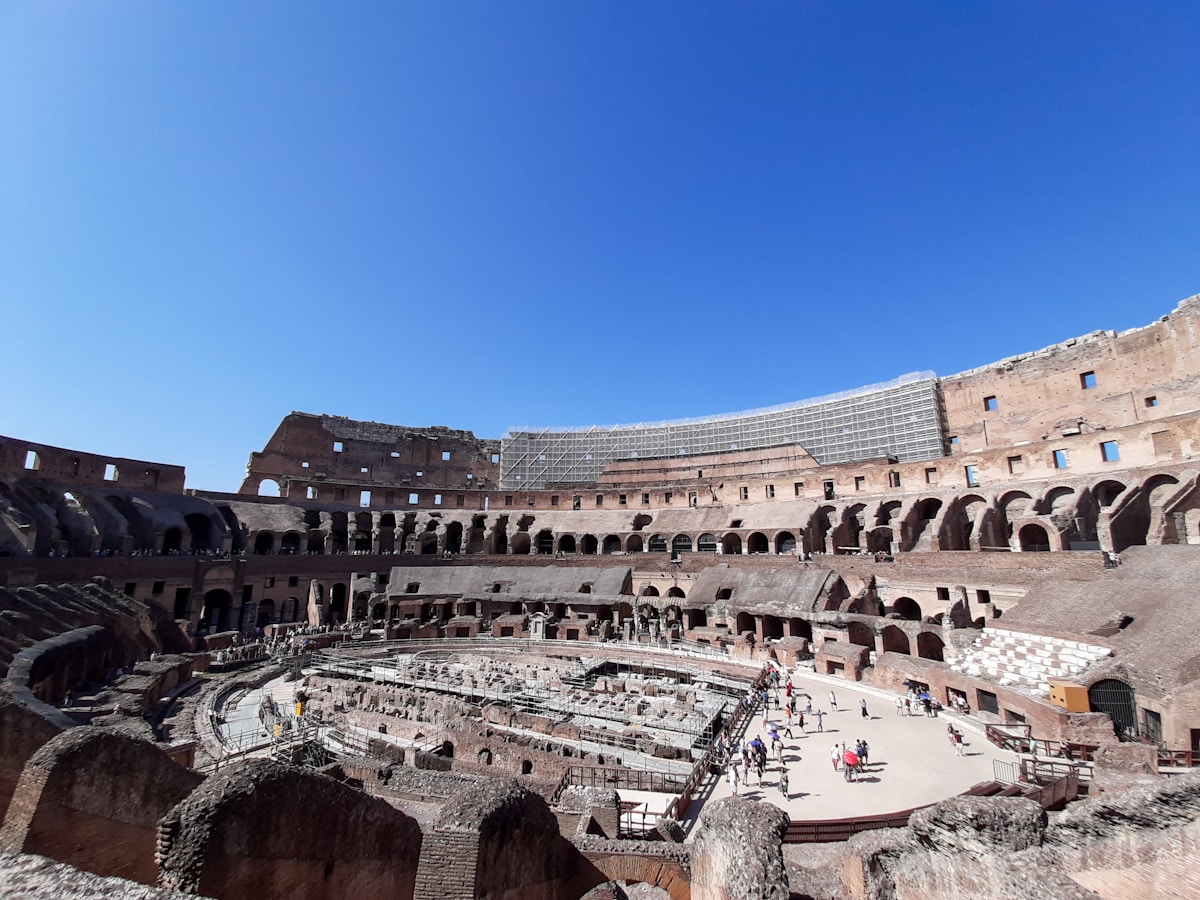
Italy: Rome houses an extraordinary density of ancient sites. The Colosseum (€24 entry, book online to avoid queues that can reach 2–3 hours) and the adjacent Roman Forum tell the story of the empire’s centre. The Vatican Museums (from €20, queues without a booking can be 3+ hours; book ahead) house millennia of artistic accumulation. The Borghese Gallery (€13, entry limited - must book) is arguably the finest collection of Baroque sculpture in the world.
Greece: The Acropolis in Athens (€20, reduced in winter) remains one of the most recognisable ancient sites on earth. The Parthenon, built in 447–432 BC, is the pinnacle of classical architecture. The National Archaeological Museum (€12) houses the finest collection of ancient Greek artefacts, including the Antikythera mechanism. Delphi (€12), Olympia (€12), and Epidaurus are all within day-trip range and far less crowded than Athens.
Winner: A genuine tie. Italy has more sites within a smaller geographic area; Greece’s sites are arguably purer - less built-over by subsequent civilisations.
Islands
Greece is the clear winner for island travel. With over 200 inhabited islands spread across the Aegean and Ionian seas, the variety is extraordinary.
- Santorini: The whitewashed clifftop villages of Oia and Fira, perched above the volcanic caldera, are among the most photographed scenes on earth. Sunset at Oia is a near-mandatory experience. Hotels with caldera views range from €200 to €1,000+/night in summer; book six to twelve months ahead for peak season.
- Mykonos: The party island with beautiful beaches, windmills, and a sophisticated restaurant scene. Expect premium prices across the board.
- Crete: Greece’s largest island offers mountain gorges (Samaria Gorge, 18km - allow 5–6 hours), Venetian harbour towns (Chania, Rethymno), Minoan palaces (Knossos, €15), and long sandy beaches. It is also significantly cheaper than the Cyclades.
- Corfu, Rhodes, Paros, Naxos: Each offers distinct character from fortress towns to quieter beaches with excellent local food.
Italy’s island equivalents - Sicily (Palermo, Taormina, the Valley of Temples), Sardinia (beaches rivalling the Caribbean in clarity), and the Amalfi Coast - are spectacular but fewer in number and often require a car to explore fully.
Winner: Greece for island variety. Italy for island quality on individual gems.
Food
Italy has one of the world’s deepest food cultures - and crucially, it varies dramatically by region.
- Naples is the birthplace of pizza: a margherita DOC at a historic pizzeria costs €6–9 and nothing elsewhere compares.
- Bologna is considered Italy’s food capital - fresh tagliatelle al ragù (the original Bolognese), mortadella, and tortellini. A plate of fresh pasta at a trattoria costs €12–16.
- A proper espresso standing at a bar costs €1.20–1.50 almost everywhere; sit down and the price doubles. Gelato from a quality gelateria (look for natural colours and covered trays) costs €2.50–4 for two scoops.
- Regional wines are extraordinary throughout - Barolo and Barberesco in Piedmont, Chianti in Tuscany, Greco di Tufo in Campania.
Greece does not match Italy’s depth but excels in its own register. A taverna meal of mezze - tzatziki, spanakopita, grilled octopus, horta (wilted greens with lemon) - eaten slowly over several hours is one of the most pleasurable dining experiences in Europe. Souvlaki from a street grill costs €3–5. Fresh fish priced by weight at a quayside taverna is expensive but excellent. Greek olive oil and feta cheese are world class.
Winner: Italy, by a significant margin for depth and regional variety.
Art and Museums
Italy wins this category decisively.
The Vatican Museums (€20–30 with booking) contain the Sistine Chapel, Raphael’s Stanze, and one of the world’s great ancient sculpture collections. The Uffizi in Florence (€25+) holds the greatest concentration of Renaissance masterpieces anywhere - Botticelli’s Birth of Venus, Leonardo’s Annunciation, Michelangelo’s Doni Tondo. Michelangelo’s David at the Accademia (€16, book ahead) is extraordinary in person. The Borghese Gallery (€13, strictly timed - must book) has Bernini sculptures that are considered the height of Western art.
Greece’s National Archaeological Museum (€12) in Athens is genuinely world-class for ancient artefacts, and the Acropolis Museum (€15) is a beautifully designed modern building that contextualises the Parthenon sculptures. But for sheer volume and variety of art across centuries, Italy has no peer in Europe.
Winner: Italy, convincingly.
Getting There and Around
Both countries are major international hubs for European aviation. Rome Fiumicino and Milan Malpensa are the primary Italian airports. Athens International is the main Greek gateway, with Heraklion (Crete) and Thessaloniki handling significant traffic.
Within Italy, the rail network is extensive and generally reliable - Rome to Florence takes 1.5 hours by Frecciarossa (from €25 booked early), Florence to Milan 2 hours (from €25). Regional trains are slower and cheaper.
Greece’s island system runs on ferries. Athens (Piraeus) is the main port, with high-speed catamarans to Santorini taking approximately 5 hours (from €60), and slower ferries taking 8+ hours at lower cost. Inter-island connections can require returning to Piraeus. Internal flights within Greece are often faster and surprisingly affordable (Athens to Heraklion from €30 booked ahead).
Winner: Italy for mainland travel efficiency. Greece requires more planning and patience for island-hopping, but ferries are a pleasurable part of the experience rather than a burden.
Who Should Choose Each?
Choose Italy if you:
- Are passionate about art, history, and architecture
- Want world-class food and wine in a concentrated itinerary
- Prefer cities and cultural sites to beaches
- Are visiting Europe for the first time and want the classic circuit
Choose Greece if you:
- Prioritise islands, swimming, and sunshine
- Want a more relaxed pace and fewer museum queues
- Are budget-conscious (on mainland or affordable islands)
- Have already done Italy and want a contrasting Mediterranean experience
Final Verdict
Italy and Greece are both among the world’s great travel destinations, but they satisfy different travel instincts. Italy is Europe’s cultural colossus - the depth of art, food, and urban history is unmatched on the continent. Greece offers something Italy cannot fully replicate: the freedom of island-hopping, the sheer Mediterranean clarity of Aegean waters, and a pace of life that encourages genuine rest.
Visit both. Start with Italy if cities and culture are your priority; start with Greece if islands and warmth are what you want. Neither will disappoint. Search flights to Italy to see current fares from your origin.
Ready to Plan Your Trip?
See our itineraries for inspiration:
- One Week in Italy - seven days through Rome, Florence, and Venice
- 10 Days in Italy - the classic grand tour of Italy’s highlights
- 2 Weeks in Italy - the ultimate two-week Italian itinerary
- 3 Weeks in Italy - the north-to-south grand tour from Milan to Sicily
Also comparing European destinations? Our Italy vs Spain guide applies the same framework to Italy versus the Iberian Peninsula.
Plan Your Trip
✈️ Book your flights to Italy 🛡️ Get travel insurance 📱 Stay connected with an eSIM 🚗 Rent a car
🎟️ Browse tours in Italy 🏨 Search hotels in Italy — Search hotels in Greece