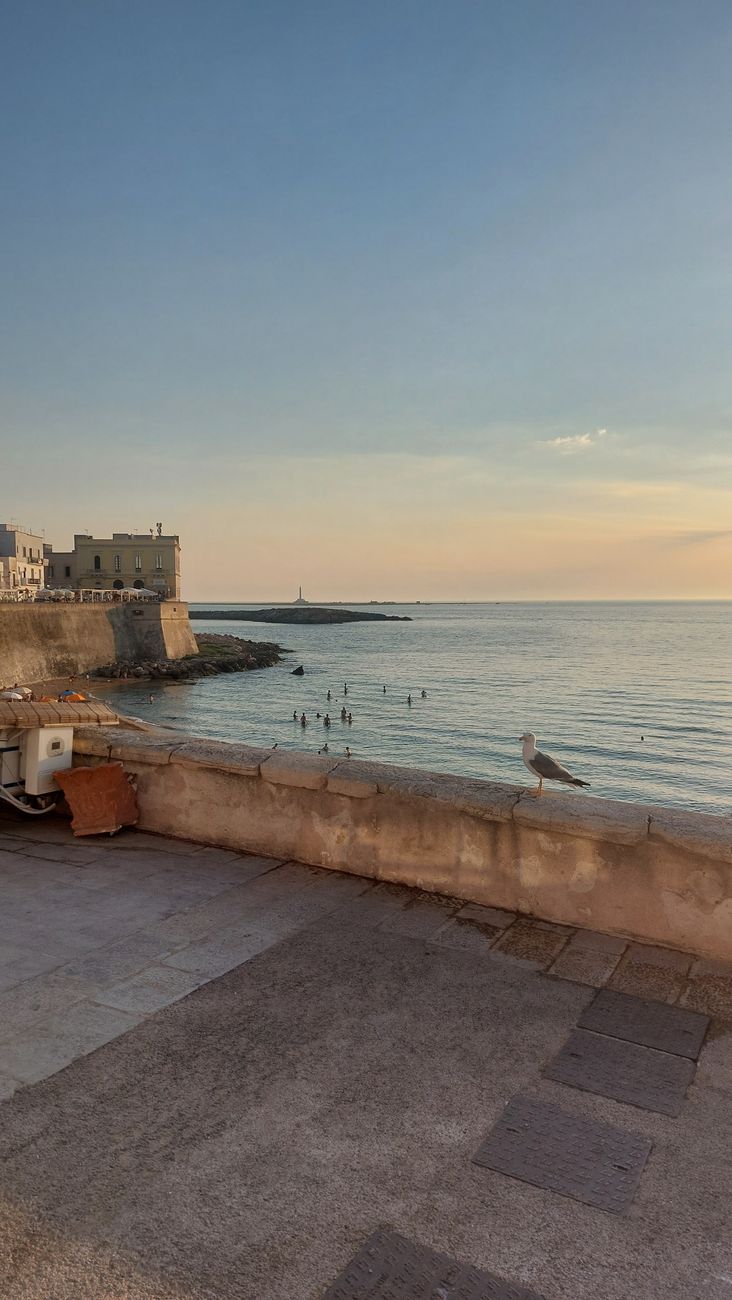
Gallipoli, Italy: Guide to the Ionian Coast Old Town
Gallipoli: an island old town connected to Puglia by a stone bridge, Ionian beaches, ancient Greek roots, and some of the best seafood in the south.
Gallipoli is the most dramatically situated city in Puglia. The old town sits on a small island in the Ionian Sea, connected to the modern mainland by a 17th-century stone bridge — from a distance it appears to float. Founded by Greek colonists who called it Kallipolis (beautiful city), Gallipoli retains a southern Italian intensity that sets it apart from the better-known Puglia destinations: rougher around the edges than Ostuni, more working-class than Lecce, and with some of the finest beaches in the region immediately to the south.
The old town
The island centro storico is best explored on foot. The main axis runs from the bridge through Corso Roma to the Cathedral, with narrower alleys spiralling down to the sea walls on all sides.
Castello di Gallipoli — The Angevin castle sits at the bridge entrance to the old town, guarding the harbour. Built in the 13th century and expanded by the Aragonese in the 15th–16th centuries, it’s one of the best-preserved coastal fortresses in Puglia. Entry approximately €4 as of 2026; open Tuesday–Sunday 10am–1pm and 4pm–8pm (summer hours, reduced in winter). The ramparts give good views across the harbour to the open Ionian.
Cathedral of Sant’Agata (Piazza Immacolata) — A handsome 17th-century baroque cathedral built in local limestone with a layered facade. The interior holds several paintings attributed to Giovanni Andrea Coppola, a Gallipolino painter who trained under Guido Reni. Free entry; open daily. Considerably smaller and less decorated than Lecce’s Santa Croce, but genuinely local rather than a tourist showcase.
The harbour (Porto Vecchio) — The working fishing harbour on the north side of the island is where the day’s catch is unloaded and where sea urchin vendors set up in summer. Ricci di mare (sea urchins) sold from polystyrene trays at approximately €8–12 per dozen are one of the definitive Gallipoli experiences — eaten raw with bread and white wine. The red mullet (triglia) and octopus from this harbour are served in virtually every restaurant in town.
The sea walls — Walk the perimeter of the old town along the Riviera Armando Diaz and the southern sea walls. The limestone ramparts drop directly into the Ionian on the south side. Good vantage points for the open sea and for watching the fishing boats return at dawn.
Fontana Greca (near the bridge on the mainland side) — A small but historically significant Greek-era fountain dating to the 4th century BC, believed to be one of the oldest surviving Greek structures in Puglia. Easy to miss — look for the weathered bas-reliefs opposite the bridge approach.
Beaches
The beaches south of Gallipoli are the finest in this part of Puglia — fine sand, shallow entry, Ionian blue water without the Adriatic’s occasional roughness.
Baia Verde — The closest beach to the old town (approximately 2km south), lined with beach clubs (lidi) charging approximately €15–20 per day for two sunbeds and an umbrella as of 2026. Popular with Italian families and young summer crowds. The water is calm and clear.
Punta della Suina — Approximately 4km south of the centre, partly within a protected natural area. The western section has pine forest running to the dunes; the water is exceptionally clear. Some free beach areas alongside the lidi. One of the most photographed beaches in the Salento.
Lido Pizzo — A long, gently shelving beach approximately 8km south, calmer than Baia Verde and popular with families with young children. Beach clubs and some free stretches. Good for snorkelling on the rocky sections at the northern end.
Rivabella and Torre del Pizzo — Further south, approximately 12–15km, for quieter conditions and fewer facilities. Suitable for those with a car who want to escape the summer crowds.
Local buses (STP) run south along the coast from the bus stop on Via Matteo Camera (mainland side) in summer, approximately every 30–60 minutes. A taxi to Punta della Suina costs approximately €8–10 one way as of 2026.
Food and drink
Gallipoli is first and foremost a fishing town. The seafood is the reason to eat here.
Ricci di mare (sea urchins) — Sold live from harbour stalls in summer (July–August being peak season), approximately €8–12 per dozen. The vendor opens them on the spot; eat with a small fork and bread. One of the best food experiences in Puglia.
Tiella gallipolina — The local version of tiella, a layered bake of mussels (cozze), rice, potatoes, and zucchini. Different from the Bari version; here it tends to have more mussel and less potato, and is baked in a terracotta pot (tiella is also the name of the pot). Found at most traditional restaurants.
Pasticciotto leccese — Lecce’s custard pastry is found across Salento including Gallipoli, eaten for breakfast with coffee (approximately €1.50 as of 2026).
Restaurants:
- Osteria del Mare (Via Riviera Armando Diaz) — Seafood-focused, right on the sea walls. Fish of the day approximately €14–18 per person as of 2026; full dinner with wine approximately €30–40 per person. Cash preferred.
- Il Bastione (Riviera Nazario Sauro) — Reliable mid-range restaurant with sea views and a broad menu of local pasta and grilled fish. Mains approximately €12–18 as of 2026.
- Ristorante Il Canneto (Lungomare Marconi) — On the mainland waterfront, busy with locals year-round. Spaghetti alle vongole and octopus salad are the standouts. Approximately €25–35 per person as of 2026.
- Trattoria del Porto (via the old harbour) — Basic tables near the fishing boats, excellent for a quick lunch of grilled fish. Primi from approximately €9, secondi from approximately €12 as of 2026.
For the food culture of the wider Salento region, the Pugliese food guide covers the regional dishes in depth.
Where to stay
Gallipoli’s accommodation divides between the atmospheric (if noisy in summer) old town and the quieter mainland side near the beaches.
Budget (approximately €40–70/night as of 2026):
- B&B La Puritate (old town, Vicolo del Teatro) — Simple rooms in the centro storico, some with sea views. Breakfast included.
- Affittacamere Al Pescatore (old town) — Basic rooms above a small restaurant, good position near the harbour. No breakfast.
Mid-range (approximately €80–130/night as of 2026):
- Hotel Palazzo del Corso (Corso Roma, old town) — Renovated palazzo in the centro storico with air-conditioned rooms and a small rooftop. Doubles from approximately €95/night as of 2026.
- Hotel Masseria Il Frantoio (mainland, Viale Bovio) — Former olive-press building with a courtyard garden. Quieter than old town options; good value.
Upper-mid (approximately €140–200/night as of 2026):
- Relais Corte Palmieri (old town, Corte Palmieri) — Boutique hotel in a restored 18th-century palazzo, sea views from some rooms, rooftop terrace. Doubles from approximately €150/night as of 2026 in peak summer; lower in shoulder season.
Book in advance for July and August — Gallipoli is extremely popular with Italian holidaymakers and good rooms fill months ahead.
Getting there
From Lecce (recommended base): Trenitalia direct trains run approximately every 60–90 minutes; journey time approximately 50–60 minutes, cost approximately €5–7 as of 2026. Lecce is the ideal base for exploring the Salento — it has more accommodation options, better transport connections, and the finest baroque architecture in Puglia. From Lecce station, trains to Gallipoli use the FSE (Ferrovie del Sud Est) network.
From Bari: No direct train. Change at Lecce (2h total from Bari; approximately €12–15 for the combined journey as of 2026). By car from Bari: approximately 180km via the SS16 and SS101, around 2 hours.
From Brindisi Airport: Approximately 70km. Bus to Lecce (STP, approximately €7, 40 minutes), then train to Gallipoli. By taxi/hire car from Brindisi directly: approximately 1 hour, approximately €60–80 as of 2026.
By car: Driving gives flexibility for beach-hopping along the coast. Parking in and near the old town is limited and heavily contested in July–August. The main car park is on the mainland near the bridge approach (Piazza Aldo Moro); arrive early or park 10 minutes back from the waterfront.
Getting around the Salento
With Gallipoli as a base or day trip from Lecce, the Salento peninsula is worth exploring. Gallipoli sits on the Ionian side; Otranto (approximately 60km east via the tip of the heel) is on the Adriatic side with a medieval old town and remarkable 12th-century cathedral mosaic. Santa Maria di Leuca, the southernmost point of Puglia, is approximately 40km south of Gallipoli.
For a full picture of the region, the Puglia itinerary covers how to structure time across the main destinations.
Best time to visit
June is the best overall month — sea temperature reaches approximately 22–24°C (swimmable), the old town is lively without being overwhelmed, beach clubs are open, and accommodation prices are 30–40% below peak. Long days with sunset around 8:30pm.
September is the second-best window — crowds thin after the first week, the sea is at its warmest (approximately 26°C), and restaurants are still fully operational. Prices drop noticeably from mid-September.
July–August is peak season: beaches are busy, old-town streets are crowded in the evenings, and prices for accommodation roughly double compared to June. If you come in August, book accommodation months in advance.
October is quiet and mild (approximately 18–20°C air temperature, sea still swimmable until mid-October). Most beach lidi close; the town reverts to its working-fishing character. Good for architecture and food without the summer circus.
November–March is off-season — very quiet, some restaurants close, but the old town is atmospheric and entirely uncrowded. Not suitable for beach visits.
Upcoming Events in Gallipoli
Alba White Truffle Fair 2026
Alba White Truffle Fair 2026, October 3–December 6. World's largest white truffle market with Barolo tastings, tajarin, and live auctions in Piedmont.
La Befana - Feast of the Epiphany 2027
La Befana 2027, January 6. Italy's Epiphany gift-giving day: children receive sweets or coal from the Befana witch, then decorations come down.
Book an experience
Top experiences in Gallipoli
Explore the best tours and activities in Gallipoli, with instant confirmation and free cancellation on most bookings.