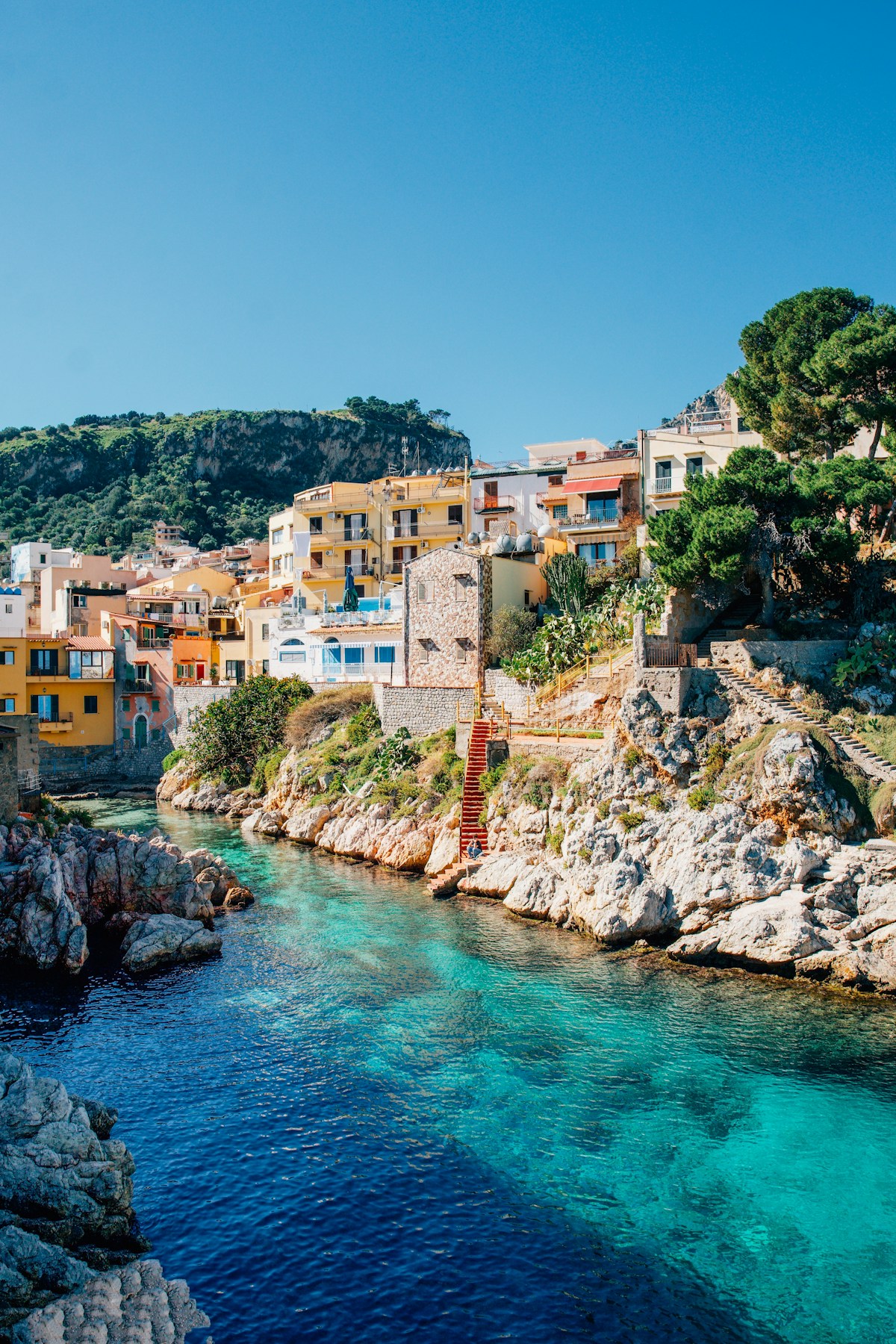
Sicily is Italy’s largest region and one of the most geographically varied. The island runs roughly 280 km from west to east and 190 km north to south - getting from Palermo to Syracuse by car takes over three hours on a good run. Where you base yourself shapes everything: the culture and street food of Palermo are nothing like the volcanic landscapes around Catania, and Taormina’s clifftop glamour is a different world from the quiet baroque lanes of Ortigia. This guide breaks down each area so you can match your base to your priorities.
Search Sicily hotels on Booking.com to compare prices and check availability across all areas in this guide.
Palermo - Culture, Markets, and Street Food
Sicily’s capital sits on the northwest coast and is the island’s most complex and historically layered city. Arab-Norman churches, Baroque piazzas, Phoenician roots, and one of Italy’s finest street food cultures all coexist in a dense, somewhat chaotic urban fabric.
Best for: Culture-focused travellers, history enthusiasts, first-time visitors to Sicily, anyone interested in Sicilian food in its most concentrated form (Ballarò and Vucciria markets, arancini, panelle, sfincione).
Budget (from €70/night as of 2026): The B&B Ai Quattro Canti (Via Maqueda 81) is a well-regarded guesthouse in the heart of the old centre, a five-minute walk from the Quattro Canti crossing. Doubles from approximately €75/night as of 2026.
Mid-range (from €120/night as of 2026): The Hotel Porta Felice (Via Butera 45) has rooftop terrace views over the Foro Italico and the sea, a central location near the Kalsa district, and reliable service. Doubles from approximately €130/night as of 2026. Hotel Ambasciatori (Via Roma 111) is a comfortable three-star on Palermo’s main artery, well placed for the Teatro Massimo and central markets; doubles from approximately €110/night.
Luxury (from €200/night as of 2026): Palazzo Brunaccini (Via Brunaccini 2) is a restored 18th-century palazzo in the old centre with individually decorated rooms and a small courtyard; doubles from approximately €210/night as of 2026.
Taormina - Clifftop Luxury with Etna Views
Perched on a clifftop above the Ionian Sea on the island’s northeast coast, Taormina is Sicily’s most photographed and most expensive base. The view from the Greek theatre - Etna rising behind the stage, the coast curving below - is one of Italy’s great vistas. The Corso Umberto, the pedestrianised main street, is lined with designer boutiques, wine bars, and restaurants.
Best for: Couples, honeymoon stays, anyone who wants to splurge on one or two nights of luxury. Less suited to budget travellers or anyone wanting an authentic non-touristy experience.
Note: Taormina’s hotels are consistently the priciest in Sicily. Prices below are shoulder-season rates; peak summer adds 40–80% or more.
Mid-range (from €180/night as of 2026): The Hotel Villa Belvedere (Via Bagnoli Croce 79) is a family-run property with a pool and direct views of Etna and the bay; doubles from approximately €185/night as of 2026. It books quickly for summer - reserve at least three months ahead.
Luxury (from €300/night as of 2026): The Grand Hotel Timeo (Via Teatro Greco 59), part of the Belmond group, is set directly adjacent to the Teatro Antico with sweeping terrace views. Doubles from approximately €450/night as of 2026 in peak season; shoulder season rates start lower. The Hotel Metropole (Corso Umberto 154) is a smaller boutique option in a central palazzo, with doubles from approximately €300/night.
Catania - Urban, Gritty, and the Best Value of the Three Cities
Catania sits at the foot of Etna on the east coast and is the island’s second city. It’s less curated than Taormina and less historic than Palermo, but it’s the most liveable of the three: a real working city with a good university scene, strong baroque architecture around the Via Etnea, the vast Pescheria fish market, and the most useful transport hub (Fontanarossa airport, trains to Messina and Syracuse, buses to Palermo).
Best for: Budget travellers, those planning to climb Etna, anyone using a rental car to explore the east coast and southeast (Noto, Ragusa, Syracuse).
Budget (from €60/night as of 2026): B&B Una Finestra sul Barocco (Via Coppola 4) is a well-positioned guesthouse near the Piazza del Duomo; doubles from approximately €65/night as of 2026.
Mid-range (from €90/night as of 2026): Mercure Catania Centro (Via Etnea 218) is a reliable chain option on Catania’s main boulevard, central and consistent; doubles from approximately €95/night as of 2026. Hotel Katane Palace (Via Finocchiaro Aprile 110) is a four-star with good rooms near the old centre; doubles from approximately €110/night.
Luxury (from €170/night as of 2026): Una Hotel Palace (Via Etnea 218) has rooftop views of Etna and the city; doubles from approximately €175/night as of 2026.
Cefalù - Laid-Back Beach Town
A small resort town on the north coast, 70 km east of Palermo. Cefalù is built around a Norman cathedral and a medieval centre, with a good sandy beach directly in front of the old town - rare for Sicily’s north coast. It’s quieter than Palermo and far less developed than Taormina.
Best for: Families with children, anyone who wants a beach-and-sightseeing combination without Taormina’s prices.
Mid-range (from €110/night as of 2026): Hotel Kalura (Via Vincenzo Cavallaro 13) sits on a rocky promontory east of town with a private lido, pool, and views of La Rocca; doubles from approximately €120/night as of 2026. Hotel Baia del Capitano (Contrada Mazzaforno) is a low-rise property set on the clifftop with sea views; doubles from approximately €110/night.
Syracuse and Ortigia - Baroque Island Old Town
Syracuse is Sicily’s most complete ancient city, and its historic core - the island of Ortigia, connected to the mainland by two short bridges - is the finest baroque ensemble in the region. Narrow lanes, ochre and honey-coloured stone, a Greek temple embedded in the cathedral walls, and the Fonte Aretusa freshwater spring on the seafront promenade. Tourism here is growing but hasn’t yet hit Taormina levels.
Best for: Architecture and history, couples looking for atmosphere without Taormina’s prices, anyone exploring the southeast (Noto, Ragusa, and the Val di Noto baroque towns are all within 90 minutes by car).
Mid-range (from €120/night as of 2026): Gutkowski Hotel (Lungomare Vittorini 26) is a converted palazzo on Ortigia’s eastern seafront with simple, well-designed rooms and a loyal following; doubles from approximately €125/night as of 2026. Henry’s House (Via del Castello Maniace 68) occupies a 17th-century building at Ortigia’s southern tip with sea views; doubles from approximately €130/night.
Agrigento - Base for the Valley of Temples
Agrigento itself is a functional modern town, but the Valley of Temples (Valle dei Templi) - a UNESCO site containing some of the world’s best-preserved Greek temples - makes it worth an overnight stay. Most visitors doing a coast-to-coast itinerary build in one night here.
Mid-range (from €100/night as of 2026): Villa Athena (Via Passeggiata Archeologica 33) is the only hotel with direct views over the temples; doubles from approximately €150/night as of 2026 and worth the premium if you want to see the temples lit up at dusk. Hotel Concordia (Piazza Pirandello 1) is a simpler, more affordable option in the upper town; doubles from approximately €100/night.
Best Areas by Traveller Type
- First-timers: Palermo (most context and culture) or Catania (best transport hub for exploring).
- Families: Cefalù (beach, old town, calm pace) or Catania (airport proximity, affordable).
- Couples: Taormina for views and atmosphere, or Ortigia for baroque charm at lower prices.
- Budget travellers: Catania. Consistently the most affordable of the main cities for hotels, food, and transport.
- History and archaeology: Syracuse/Ortigia as a base, with day trips to Agrigento and Noto.
When to Book
July and August are full peak season across Sicily. Taormina and Cefalù in particular book out months in advance - if you’re travelling in summer, reserve accommodation before flights. Shoulder season (May–June and September–October) is the best window: warm enough for beaches, prices 30–50% lower than peak, and crowds significantly thinner.
Many rural agriturismo properties and smaller boutique hotels close entirely between November and March. If travelling out of season, verify opening dates before booking.
Plan your trip:
- Browse day tours and guided experiences in Sicily
- Book a hire car - essential for exploring Sicily independently
- Get travel insurance before you book
- Pick up an eSIM for Italy
- Search hotels in Sicily on Booking.com
Getting Around
A rental car is essential for anything beyond the main cities. Public buses (SAIS, Interbus, Flixbus) connect the major towns, but services are infrequent and rural sites are inaccessible without a car.
Parking is the main practical challenge. Taormina, Ortigia, and Palermo’s centro storico are all ZTL zones (limited traffic zones) - entering without a permit triggers an automatic fine. Book hotels with private parking or use the signposted car parks on the edge of the historic centre and walk or take a cable car (Taormina has one).
For more on planning around the island’s geography, see our Sicily island guide.
For things to do across the island: Sicily things to do guide. For city-specific accommodation: Palermo travel guide and Taormina guide cover their own hotel options in detail. For a full trip route: Sicily itinerary maps 10–14 days with day-by-day logistics. For the food to pair with your stay: Sicilian food guide covers arancini, granita, and the best restaurants by area. For comparing Sicily with Sardinia: Sicily vs Sardinia guide.
Ready to Plan Your Trip?
See our itineraries for inspiration:
- Sicily Itinerary - ten days around the Mediterranean’s largest island
- Southern Italy Itinerary - ten days from Naples to Sicily
- 3 Weeks in Italy - the north-to-south grand tour from Milan to Sicily
- 2 Weeks in Italy - the ultimate two-week Italian itinerary