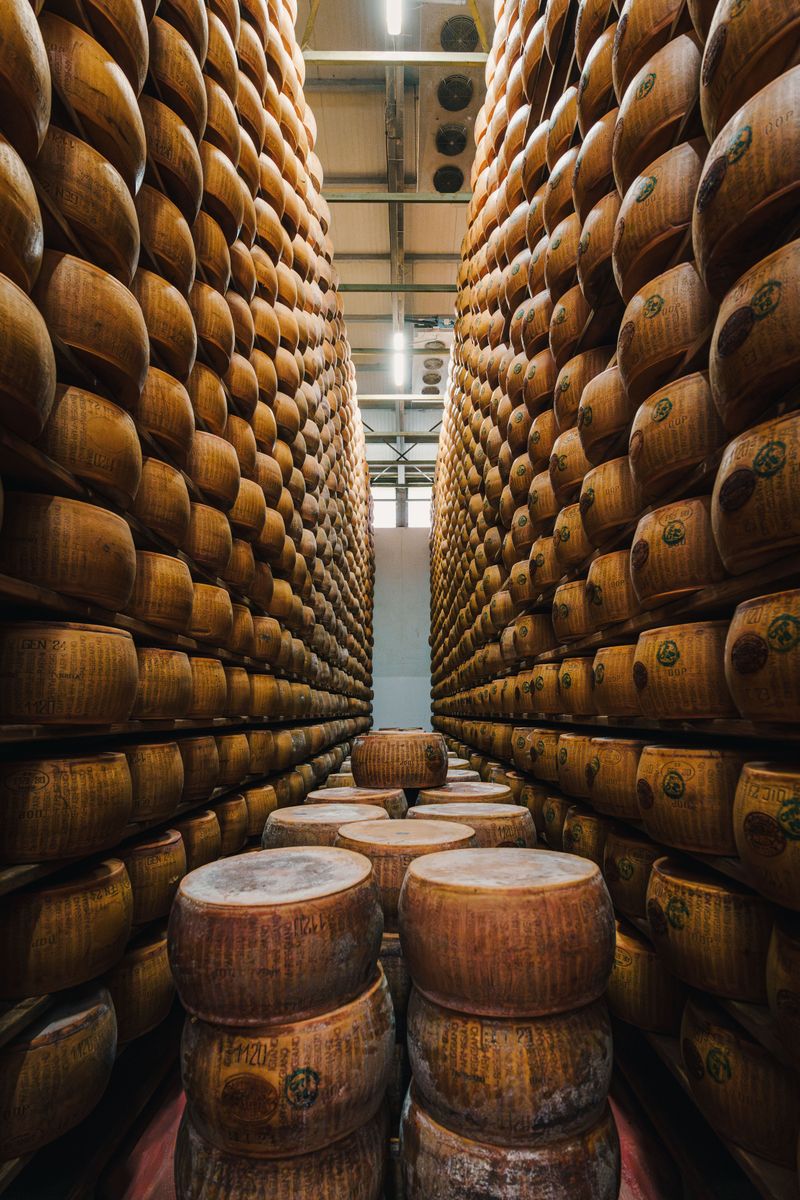
The province of Parma produces three of Italy’s most internationally imitated and never equalled DOP products: Prosciutto di Parma, Parmigiano Reggiano, and Culatello di Zibello. Unlike most food tourism that stops at a restaurant or market, Parma has a fully developed producer-visit infrastructure — you can walk through refrigerated cellars where prosciutti are salted and aged, watch cheese curds pressed into wheels at 07:00 on a Tuesday morning, and visit balsamic acetaie in the wider Emilia-Romagna region within an hour’s drive. This is food tourism at its most direct.
The Three Pillars of Parma’s Food Identity
Prosciutto di Parma — Production is defined by law: a specific zone south of the Via Emilia, between the rivers Enza and Stirone, below 900 metres altitude. Pigs must come from designated northern Italian breeds raised in specified regions. Legs are cured with sea salt alone — no nitrates, no additives — then aged a minimum of 12 months. Premium hams reach 24–30 months, developing a complex, faintly nutty sweetness. Every leg that passes the Consorzio del Prosciutto di Parma’s inspection is fire-branded with the five-point Ducal Crown before sale.
The centre of production is Langhirano, 15 kilometres south of Parma. Walking into a working prosciuttificio here — racks of hanging legs stretching to the ceiling across hundreds of square metres of curing room — is one of the more memorable food experiences in Italy.
Parmigiano Reggiano — Each wheel requires 550 litres of milk and must age a minimum of 12 months before sale. The Consortium inspects every wheel: those that pass are branded by age (12, 24, or 36 months); those that fail have their rinds scraped blank and are sold as generic parmesan with no geographic protection.
Morning visits to caseifici (cheese dairies) typically begin at 07:00–08:00 when milk from the previous evening’s milking combines with the fresh morning milk in large copper vats. This is when cheese curds form, are ladled into moulds, and pressed — the most photogenic phase of production. Tours advertising “morning milk delivery visits” are taking you to see exactly this.
Culatello di Zibello — Produced in seven comuni along the Po river from the rear haunch of the pig, aged 24–36 months in cellars where winter Po Valley fog creates unique humidity conditions. Production is tiny; prices reflect it — a 100g portion at a specialist shop costs approximately €10–18. A visit to a culatello producer is harder to arrange independently, but several guided operators include culatello cellars as part of their Parma programmes.
Visiting Producers Independently
Consorzio del Prosciutto di Parma: The Consortium runs an official visit programme connecting visitors with member prosciuttifici near Langhirano. Visits are led by a producer representative explaining each curing stage, from initial salting through to quality inspection. Most facilities require advance booking via the Consortium’s website (prosciuttodiparma.com); some accept small walk-in groups. Approximate cost: €10–15 per person for the guided facility tour, usually followed by a tasting. Transport from Parma city: 20–25 minutes by car via the SS513; Bus Line 21 from Parma Stazione takes approximately 45 minutes.
Parmigiano Reggiano caseifici: The Parmigiano Reggiano Consortium lists participating dairies at parmigiano-reggiano.it. Most accept visits Tuesday through Saturday mornings; confirm by telephone at least one day ahead — email response is less reliable at smaller operations. There is no admission charge at most dairies; a visit is considered a courtesy, and purchasing cheese is expected but not required. Dairies range from 5 to 30km from Parma’s city centre depending on the specific cooperative.
Acetaia di Giorgio (Emilia-Romagna, near Modena): Traditional balsamic vinegar — Aceto Balsamico Tradizionale di Modena — is produced in attics rather than cellars, where Emilian seasonal temperature swings drive the concentration of cooked grape must over 12–25 years across a series of diminishing barrels. Acetaia di Giorgio, run by the Barbieri family near Modena, is one of the better-known acetaie accepting visitor appointments. Modena is approximately 35–40 minutes from Parma by car or regional train; this pairs well with a Parma producer day if you start early. The difference between a 12-year Tradizionale (approximately €50–80 for 100ml) and a 25-year Extravecchio (€120–200) is not subtle — the tasting makes the price point comprehensible immediately.
Salumeria Rosi (central Parma): A historic salumeria in the city centre stocking the full range of local cured meats and Parmigiano at multiple ages. Run by a family with deep roots in the city’s food trade, it is one of several specialist shops where you can taste before buying and receive a direct explanation of provenance and ageing. A mixed affettati board with a glass of Malvasia dei Colli di Parma costs approximately €14–18 — a good way to calibrate your palate before or after a producer visit.
Guided Tour Operators
GetYourGuide Parma food tours: The broadest selection of bookable experiences in Parma, ranging from 2-hour market and tasting walks (from approximately €35–55 per person) to half-day producer visits combining a prosciuttificio and caseificio with lunch (approximately €90–130 per person, including transport and meals). Filter for “Parma food” and “producer visit” for the most relevant results. Browse Parma food experiences on GetYourGuide.
Context Travel: Context specialises in small-group, expert-led food experiences for visitors who want depth over spectacle. Their Emilia-Romagna tours are guided by food historians or trained culinary professionals (“docents”) who explain DOP production law, the economics of protected designations, and what distinguishes artisan from industrial scale. Groups cap at 6 people. Prices approximately €120–180 per person; book directly at contexttravel.com.
Devour Tours: Offers half-day and full-day Parma food tours typically combining a producer visit with market stops and lunch at a traditional trattoria. The Parma itinerary commonly includes a prosciuttificio in Langhirano and a Parmigiano Reggiano caseificio, with lunch included. Prices approximately €110–155 per person including meals and transport. Book at devourtours.com.
Best Season and Booking Tips
All three main products can be visited year-round. October through December offers the richest context: this is when fresh prosciutti are salted at the start of new cure cycles, autumn grape harvests feed new batches of balsamic must, and Parma hosts food events including the Cibus food fair. The combination of active production and cooler temperatures makes autumn the most atmospheric season to visit.
July and August see some caseifici reduce visit availability. Summer milk yields differ in composition, which affects Parmigiano production schedules. Call ahead rather than assuming availability.
Book guided tours at least 2–3 weeks ahead from April through September. October through December: 1 week ahead is usually sufficient. Independent Consortium-organised prosciuttificio visits book up 3–7 days in advance; smaller caseifici often prefer a phone call the day before.
Vegetarian-Friendly Options
The Parmigiano Reggiano caseificio visit and an acetaia tour involve no meat at any stage. Combining both — a dairy in the morning, the Acetaia di Giorgio near Modena in the afternoon — makes an excellent meat-free producer day in Emilia-Romagna. Note that Parmigiano Reggiano uses animal rennet and is therefore not strictly vegetarian, though it is suitable for most vegetarians in practice. Prosciutto facility tours are meat-focused throughout and are not adaptable.
Practical Information
- Getting to Langhirano from Parma: Bus Line 21 from Parma Stazione runs several times daily (approximately 45 minutes, approximately €2 one-way). By car: 20–25 minutes via the SS513. Guided tours include round-trip transport from Parma.
- What to wear: Prosciutto curing houses are cold year-round (approximately 14–16°C). Caseifici are warm and humid during morning curd-making (35–40°C), then cold in the ageing rooms. Dress in layers.
- What’s included in guided tours: Transport from Parma, guided facility access with commentary, product tasting, and usually a sit-down lunch or aperitivo. Wine is sometimes included — confirm when booking.
- Solo travellers: Most group tours fill quickly with couples and small groups; solo travellers should book with at least 2–3 weeks lead time and explicitly request to join an existing group departure rather than booking a private tour at significantly higher cost.
For a full introduction to Parma before booking any tours, see the Parma city guide and the Parma eating guide for where to eat in the city itself. For the broader regional food context, the Emilia-Romagna food guide covers the full range of products across the region.
Where to stay: Find hotels in Parma — search accommodation across all budgets.