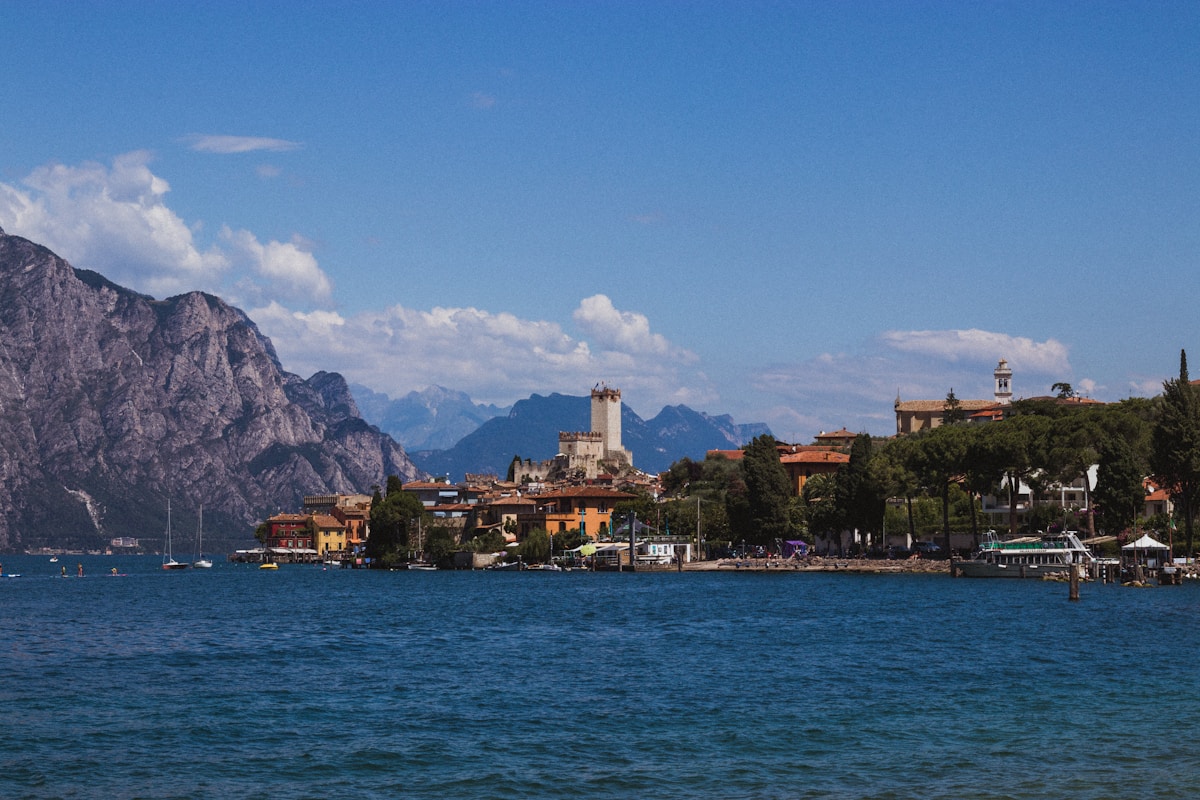
Verona is one of the best-positioned cities in Italy for day trips. Lake Garda is 25 minutes away by train; Venice is just over an hour on the Frecciarossa; Mantua, Vicenza, and the Valpolicella wine region are all within 45 minutes. No other Italian city puts such variety within such easy reach.
Top Day Trip Tours at a Glance
| Tour | Duration | Price (from) | Group Size | Highlights |
|---|---|---|---|---|
| Lake Garda Day Trip from Verona | Full day | from €45 | Small group | Sirmione castle, ferry to Malcesine, Monte Baldo cable car |
| Venice Day Trip from Verona | Full day | from €55 | Up to 20 | 70-min train, Grand Canal, Rialto, Palazzo Ducale |
| Valpolicella Wine Tour from Verona | Full day | from €79 | Small group | Amarone estates, cellar visits, panoramic vineyard lunch |
| Mantua Day Trip from Verona | Full day | from €45 | Small group | Gonzaga palaces, Piazza delle Erbe, lake-surrounded city |
| Dolomites Day Trip from Verona | Full day | from €69 | Up to 20 | Alpine scenery, Cortina viewpoints, Dolomiti Paganella |
Browse all Verona day trips → GetYourGuide
Lake Garda (20–60 minutes by train or bus)
Italy’s largest lake sits immediately west of Verona, and different parts of it suit different types of day trip.
Sirmione (approximately 35 km west, 30–45 minutes by bus from Verona’s Piazza Cittadella or by train to Peschiera then connection) is the most popular destination on the lake’s southern shore - a narrow medieval peninsula projecting into the water, with the 13th-century Scaligeri castle at its tip. The Grotte di Catullo (on the southern headland) is a large Roman villa complex, one of the finest in northern Italy - entry approximately €6 as of 2026, open Tuesday–Sunday 8:30am–7pm in summer, shorter hours in winter. Sirmione also has natural thermal baths: the Aquaria Thermal Spa (entry approximately €35 for a day pass as of 2026) uses the same sulphurous springs that Romans used. Note that Sirmione is extremely crowded in July and August - go early, or visit in May, September, or October.
Malcesine (approximately 60 km north on the eastern shore, approximately 1 hour by bus from Verona) is the most spectacular lakeside village - a medieval castle on a rocky headland, colourful harbourfront buildings, and the Monte Baldo cable car rising from the town to 1,760 metres above sea level. The cable car (approximately €20 return as of 2026) gives panoramic views over the lake and the Alps - on clear days you can see as far as the Dolomites. Paragliding from the top is a popular activity (from approximately €120 per person with a tandem pilot as of 2026).
Riva del Garda (approximately 90 km north, approximately 2 hours by bus) is the windsurfing and kitesurfing capital of Europe, where the lake narrows between cliffs and consistent thermal winds make for near-perfect conditions from spring through autumn. Equipment hire from approximately €30/hour. The old town has a small square and waterfront castle - a good lunch stop.
Lake boat tours from Peschiera (the closest lake town to Verona’s train network): various operators run tours of the southern lake from approximately €25–40 per person, including stops at Sirmione, Desenzano, and sometimes the Borromean peninsula. Tours run April–October.
Getting there: Regional train from Verona Porta Nuova to Peschiera del Garda - approximately 25 minutes, approximately €4 as of 2026. Bus to Sirmione from Verona Piazza Cittadella - approximately 1 hour, approximately €3.50. Buses to Malcesine depart Verona bus station.
Mantua / Mantova (45 minutes by train)
Mantua is one of Italy’s most underrated Renaissance cities - a UNESCO World Heritage Site surrounded on three sides by lakes formed by the Mincio river, giving it an enclosed, almost island-like quality. The Gonzaga dynasty ruled here for four centuries (1328–1708) and filled the city with exceptional architecture.
Palazzo Ducale (Piazza Sordello) is the vast Gonzaga palace complex - over 500 rooms, though not all are open. The Camera degli Sposi (Bridal Chamber) with Andrea Mantegna’s extraordinary 1474 fresco cycle is the highlight: an illusionistic painted room depicting the Gonzaga court with painted architectural details that dissolve the wall. Entry to the full complex approximately €15 as of 2026. Book online to guarantee entry. Open Tuesday–Sunday 8:15am–7:15pm.
Palazzo Te (Viale Te) - The Gonzaga summer palace designed by Giulio Romano in 1524. The Sala dei Giganti (Room of the Giants) has floor-to-ceiling frescoes of the Fall of the Giants that wrap around every surface including the ceiling and floor - one of the most disorienting rooms in Italian art. Entry approximately €12 as of 2026. Open from 9am Tuesday–Sunday.
Mantua’s food is Emilian-influenced: tortelli di zucca (pumpkin-filled pasta with mustard and amaretti biscuits - an unusual sweet-savoury combination) is the signature dish. Try it at Trattoria dei Martini (Piazza Carlo d’Arco 1 - pasta approximately €12–14) or Ochina Bianca (Via Finzi 2 - mains approximately €14–18, reservations recommended for dinner).
Getting there: Direct train from Verona Porta Nuova to Mantova - approximately 45 minutes, approximately €4–7 as of 2026. Services every 1–2 hours.
Valpolicella (15 km northwest, 30 minutes by car)
The Valpolicella wine zone begins almost immediately west of Verona - a network of small valleys north of the city producing Valpolicella DOC, Ripasso, and the big-bodied Amarone della Valpolicella DOCG. Amarone is made by drying the grapes for 90–120 days before pressing, concentrating the sugars to create a wine of approximately 15–17% alcohol - rich, complex, and long-lived.
Key producers accepting visitors with advance booking:
- Allegrini (Fumane - tastings from approximately €25 per person as of 2026, with vineyard walk and cellar tour)
- Zenato (San Benedetto di Lugana - tastings approximately €20–35 per person)
- Bertani (Grezzana - historic winery, tastings approximately €25–40 per person, one of Amarone’s founding estates)
Negrar di Valpolicella is the main town - unremarkable in itself but near some of the best wine estates. Roman villa mosaics were discovered under a local vineyard in 1922 and are open for guided visits at specific times.
Getting there: A car is the only practical option for independent winery visits. From Verona city centre approximately 20–30 minutes northwest on the SP12 toward Fumane or Negrar. Organised wine tours from Verona run daily in season (approximately €70–120 per person including transport and multiple tastings as of 2026).
Vicenza (45 minutes by train)
Vicenza is the city of Andrea Palladio - the 16th-century architect whose villas and palaces defined a mode of classical design that influenced architecture across Europe and North America for two centuries. The historic centre is a UNESCO World Heritage Site.
Piazza dei Signori has two of Palladio’s finest public works: the Basilica Palladiana (a Gothic town hall enclosed in a classical arcade - now an exhibition venue, roof terrace approximately €3 as of 2026 for views) and the Loggia del Capitaniato. The Teatro Olimpico (Piazza Matteotti) is the oldest surviving indoor theatre in the world, completed in 1585 from Palladio’s designs after his death. The elaborate stage set - a permanent painted streetscape in forced perspective - is unchanged since the first performance. Entry approximately €11 as of 2026.
Outside the historic centre, Villa La Rotonda (Via della Rotonda 45, approximately 2 km southeast) is Palladio’s most famous villa - the domed, symmetrical building that directly inspired Chiswick House in London, the Panthéon in Paris, and the US Capitol. The grounds are accessible on most days (approximately €5); the interior opens on Wednesday and Saturday afternoons only (approximately €10). Check opening times before going.
Getting there: Direct train from Verona Porta Nuova to Vicenza - approximately 45 minutes, approximately €5–7 as of 2026. Services every 30 minutes.
Soave (20 km east, 30 minutes)
Soave is the simplest day trip from Verona - a medieval walled town east of the city producing Soave DOC, one of the best-known Italian white wines internationally. The medieval castle (Castello Scaligero) sits on the hilltop above the town, with the walls descending to enclose the old centre - intact enough to feel genuinely medieval rather than reconstructed. Entry to the castle approximately €6 as of 2026.
Wine tastings: several producers have tasting rooms in or near the town. Cantina di Soave (Via Vittorio Veneto 5 - cooperative winery, tastings from approximately €10 as of 2026) is the largest and most accessible for walk-ins. Coffele (Via Roma 5 - small family producer, tastings approximately €15 per person as of 2026, book ahead) makes some of the most serious wines in the appellation.
Getting there: Regional train from Verona Porta Nuova toward Venice - stop at Soave-San Bonifacio (approximately 30 minutes, approximately €3 as of 2026). From the station, the old town is approximately 2 km uphill - local bus or taxi.
Venice (1 hour 10 minutes by Frecciarossa)
Venice is the natural long day trip from Verona. The high-speed train makes the journey fast enough to allow 5–6 hours in the city before returning for dinner. The challenge is that Venice is extremely expensive for a day visit - a vaporetto (water bus) day pass costs approximately €25 as of 2026, and St. Mark’s Square is now subject to a day-visitor entry fee of approximately €5 on peak days.
Recommended approach for a day trip: walk from Santa Lucia station through the Cannaregio district (the most local-feeling neighbourhood), cross to the Rialto, then cut south to the Dorsoduro for the Accademia gallery (entry approximately €15 as of 2026) or the Peggy Guggenheim Collection (entry approximately €18). Return via the Grand Canal by vaporetto at sunset - the best way to experience the city’s scale.
Getting there: Frecciarossa from Verona Porta Nuova to Venezia Santa Lucia - approximately 1 hour 10 minutes, from approximately €12 booked in advance on trenitalia.com. Regional trains take approximately 1.5–2 hours and cost approximately €10.
Practical notes
- Lake Garda is at its best in May–June and September–October; July–August is extremely crowded and parking is difficult
- For Mantua: the Camera degli Sposi in Palazzo Ducale has a daily visitor cap - book online at mantovaducale.beniculturali.it well in advance
- Valpolicella winery visits require advance booking in almost all cases; walk-ins are rarely possible at the better estates
- The Verona opera season runs late June through early September - if visiting in summer, add an Arena evening to your itinerary
- Verona Porta Nuova is the main train station; some regional services also stop at Verona Porta Vescovo (closer to the city centre from the east)
Book Verona Day Trip Tours on GetYourGuide
| Day Trip | Duration | From price | Highlights |
|---|---|---|---|
| Lake Garda and Sirmione day trip from Verona | Full day | From €55 | Sirmione castle, lake ferry, Garda town, Bardolino |
| Venice guided day trip from Verona | Full day | From €65 | Grand Canal, Rialto, San Marco, Doge’s Palace entrance |
| Valpolicella wine tour from Verona | Full day | From €79 | Amarone tasting, historic cellars, vineyard landscapes |
Browse all Verona day tours on GetYourGuide →
Back to the full Verona travel guide for the city itself. For Lake Garda as a standalone destination - including the best towns, boat trips, and where to stay - our Lake Garda guide covers the full lake. For Venice as a day trip destination that works in reverse, see the Venice travel guide. For a longer northern Italy circuit connecting Verona, Venice, Lake Garda, and Milan, our northern Italy itinerary maps the route. For a comparison of the two northern lakes, our Lake Como vs Lake Garda guide helps with prioritisation.
Where to stay in Verona: Find hotels in Verona — search accommodation across all budgets.