Lake Garda Travel Guide: Italy's Largest Lake
Your guide to Lake Garda: Sirmione, Riva del Garda, Malcesine, the olive groves of the south shore, and the sailing towns of the north.
Guides for Lake Garda
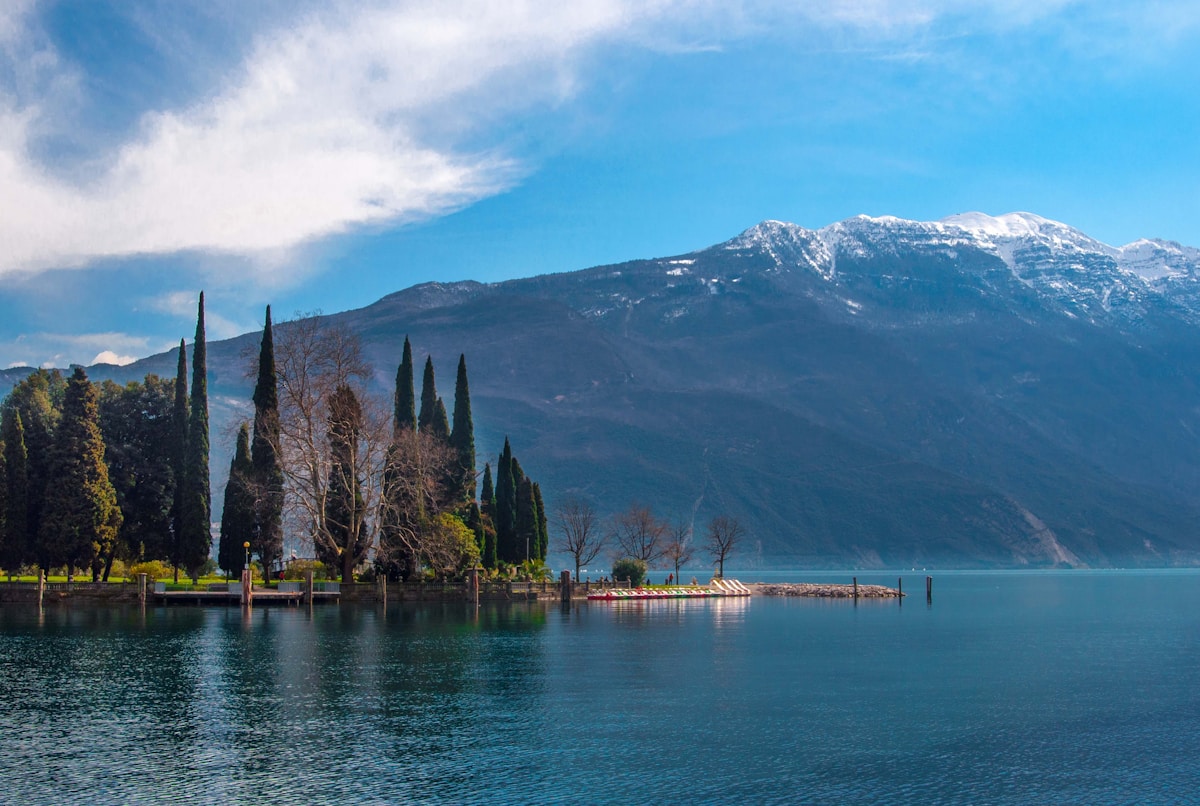
Lake Garda (Lago di Garda) is Italy’s largest lake and its most varied. Stretching 51 km from north to south and covering 370 square kilometres, it sits at the junction of three regions - Lombardy (west), Veneto (east), and Trentino-Alto Adige (north). The southern shore is relatively flat, sunny, and dotted with resort towns; the northern shore narrows into an Alpine fjord flanked by steep mountains rising above 2,000m, where the microclimate supports olive groves, lemon terraces, and vineyards at latitudes more typical of northern Germany. The lake is large enough that the north and south are climatically distinct - and the character of the towns changes accordingly.
The lake’s geography creates a natural division: the broad, warm south around Sirmione and Desenzano feels Mediterranean; the narrow, mountain-enclosed north around Riva del Garda feels Alpine. This variety - beach towns, mountain sports, Roman ruins, medieval castles, theme parks, and wine country within a single lake - is what makes Garda the most popular lake destination in Italy, drawing approximately 25 million visitors per year.
Key lakeside towns
Sirmione
On a narrow peninsula at the southern shore, connected to the mainland by a medieval drawbridge. The Scaliger Castle (Rocca Scaligera, entry approximately €6 as of 2026, open Tuesday–Saturday 8:30am–7:30pm) guards the entrance with its waterside fortifications - one of the best-preserved lakeside castles in Italy. The Grotte di Catullo at the peninsula’s tip are the most important Roman remains on the lake - a 1st-century Roman villa complex covering 2 hectares (entry approximately €10 as of 2026; open Tuesday–Saturday 8:30am–5pm, Sunday from 2pm, closed Monday; free on the first Sunday of the month). Aquaria thermal baths on the peninsula offer lake-view spa treatments (entry from approximately €30 for 2 hours). The thermal springs here have been known since Roman times and the water emerges at 69°C. Extremely crowded in summer - arrive before 10am or visit in shoulder season.
Riva del Garda
At the northern tip, enclosed by mountains. The most alpine-feeling town on the lake, with a strong outdoor sports culture. Good for watersports (windsurfing, kitesurfing, sailing) due to reliable thermal winds - the Ora (afternoon southerly) and Peler (morning northerly) are consistent from April through October. The 13th-century Torre Apponale (entry approximately €2 as of 2026; open March–May Tuesday–Sunday 10am–6pm, June–September daily 10am–6pm) overlooks the lakefront piazza with 165 steps to the summit and views over the northern lake. The MAG Museo Alto Garda (entry approximately €3 as of 2026, including the Mastio tower; open June–September daily 10am–6pm, spring and autumn Tuesday–Sunday 10am–6pm) in the lakeside Rocca covers local history and art. The town also serves as a gateway to the Ledro Valley and Lago di Tenno, a striking turquoise mountain lake approximately 15 minutes by car.
Malcesine
Eastern shore, dominated by the Scaliger Castle (entry approximately €7). The Funivia Malcesine-Monte Baldo cable car ascends to 1,760m in approximately 10 minutes (approximately €25 return; open April–early November, first ascent 8:15am, last ascent 6pm, last descent 6:45pm) - the rotating cabin gives 360-degree views over the lake and the Alps. At the summit: hiking, mountain biking, and (in winter) skiing. One of the most spectacular cable car rides in the Alps. The town itself has a compact medieval centre with a small harbour - quieter than Sirmione but with fewer dining options.
Desenzano del Garda
The largest town on the lake and the main transport hub. Desenzano has a direct train station on the Milan–Venice line (regional trains from Verona approximately 20 minutes, approximately €4 as of 2026), making it the easiest lakeside town to reach by public transport. The Roman Villa (Via Scavi Romani, entry approximately €4) preserves well-maintained floor mosaics from the 4th century. The old harbour and Piazza Malvezzi are the centre of the town’s nightlife - Desenzano is the liveliest after-dark option on the lake. Weekly Tuesday market fills the lakefront with stalls.
Lazise
A small walled town on the eastern shore with a well-preserved medieval gate and intact castle walls (visible from outside; the castle is private). Lazise has a quieter atmosphere than Sirmione with a pleasant lakefront promenade and a cluster of restaurants around the small harbour. The town is close to both Gardaland and the Caneva World water park, making it a practical base for families.
Bardolino
Eastern shore, known primarily for wine. The Bardolino DOC appellation produces light, fruity red wines (and the rosé Chiaretto) from Corvina grapes. The town itself is pleasant without being remarkable - the real draw is the wine culture. The Museo del Vino Zeni (free entry, tastings from approximately €10 for a flight) and the Museo dell’Olio d’Oliva Cisano (free entry, olive oil museum) are both within a few kilometres. The lakefront promenade from Bardolino south to Lazise (approximately 5 km) is one of the best lakeside walks.
Gardone Riviera
Western shore. The Vittoriale degli Italiani (entry approximately €18 with guided house tour, approximately €15 for park and three museums without the tour, as of 2026; open April–September daily 9am–8pm, October–March Saturday–Sunday and holidays 9:30am–5:30pm) is the extraordinary, grandiose, and eccentric home of poet-soldier Gabriele d’Annunzio - a warship prow in the garden, a biplane hanging from the ceiling, rooms stuffed with art and memorabilia. The most unusual sight on the lake. The Giardino Botanico Hruska (entry approximately €12 as of 2026; open 14 March–31 October daily 9am–7pm) nearby combines Alpine and Mediterranean plants with contemporary sculpture in a compact lakeside setting.
Limone sul Garda
Western shore, famous for its historic lemon terraces (limonaie) built into the steep slopes. The Limonaia del Castel (entry approximately €3) is a restored 18th-century lemon house where lemons were grown commercially for centuries - an unusual sight this far north. The town is small and pretty but very crowded in summer. Best visited by ferry from Malcesine or Riva del Garda.
Things to do
Windsurfing and sailing - Concentrated in the north around Riva del Garda and Torbole. Equipment rental from approximately €30/hour; lessons from approximately €50. The conditions are considered the best inland sailing water in Europe. Torbole in particular hosts international regattas.
Monte Baldo - Hiking and mountain biking from the Malcesine cable car summit. The Sentiero della Pace (Path of Peace) follows WWI trenches along the ridge with extraordinary views. The botanical garden at the summit has Alpine flora. In spring, the meadows are covered with wildflowers - Monte Baldo is sometimes called the “Garden of Europe” for its botanical diversity.
Cycling - The 140km lakeside cycle path is progressively being completed. The Limone–Riva section (approximately 3km, partially suspended over the lake on a spectacular cliffside path) opened in 2018 and is one of the most photographed cycle paths in Europe. Free access. Bike rental is available in most lakeside towns from approximately €15–25/day for a standard bike, approximately €35–50/day for an e-bike.
Wine and olive oil tasting - Bardolino DOC (light red, eastern shore) and Lugana DOC (white, southern shore) are the main lake appellations. Several wineries offer tastings - the Zeni Wine Museum (near Bardolino, free entry) combines a wine museum with tastings (flights from approximately €10). For olive oil, the eastern shore between Bardolino and Malcesine produces a delicate DOP oil - the Frantoio Turri (Cavaion Veronese) offers guided tastings from approximately €8.
Gardaland - Italy’s largest theme park, located near Castelnuovo del Garda on the southern shore. Open daily from late March through early November, with occasional winter opening. Entry approximately €46 for adults, approximately €39 for children (as of 2026). Book online for discounts. Adjacent is the SEA LIFE Aquarium (separate ticket approximately €18, or combined with Gardaland from approximately €52). The park draws around 3 million visitors annually.
Boat trips - Private boat hire (no licence required for boats under 40 HP) from approximately €80 for 2 hours. Guided boat tours of the whole lake from approximately €25. Sunset cruises from Sirmione and Riva del Garda from approximately €35 including a drink. For a full breakdown of operators, departure points, Isola del Garda tours, and windsurfing at Torbole, see our Lake Garda boat tours guide.
Where to eat
Lake fish - particularly carpione (lake sardine), luccio (pike), and lavarello (whitefish) - are the local specialities. Risotto con tinca (risotto with tench) is Sirmione’s signature dish. Bigoli (thick hand-rolled pasta, a Veneto tradition) with sardines or duck ragù is common on the eastern shore. Olive oil from the lake’s eastern slopes is used generously.
Sirmione: Al Bersagliere (Via Dietro Caserme 62 - mains approximately €14–20) has a lakeside terrace and does lake fish well. La Rucola 2.0 (Vicolo Strentelle 7 - tasting menus from approximately €65) is a Michelin-starred option for a special occasion.
Riva del Garda: Osteria Le Servite (Via delle Servite 30 - mains approximately €12–16) serves Trentino-influenced Alpine-lake cuisine. Restel de Fer (Via Restel de Fer 10 - mains approximately €14–22) focuses on local ingredients including lake fish and polenta.
Desenzano: Esplanade (Via Lario 10 - mains approximately €16–24) overlooks the harbour with a menu built around lake fish. Caffè Italia (Piazza Malvezzi 19 - mains approximately €10–16) is a more casual lakefront option.
Malcesine: Ristorante Vecchia Malcesine (Via Pisort 6 - tasting menus from approximately €80) has a terrace with castle views and holds a Michelin star.
Where to stay
Accommodation ranges from campsites and budget hotels to lakeside luxury properties. The lake has options across every budget, and rates drop significantly outside July–August.
Sirmione: Hotel Sirmione e Promessi Sposi (Piazza Castello - doubles from approximately €130/night) sits beside the castle with lake views. Grand Hotel Terme (Viale Marconi - from approximately €200/night) has private thermal pool access and a spa. Budget guesthouses on the mainland side of Sirmione from approximately €70/night.
Riva del Garda: Better value than the southern shore. Hotel Sole (Piazza III Novembre - doubles from approximately €110/night) has a lakefront position in the main square. Hotel Luise (Viale Rovereto - from approximately €80/night) is a clean, modern option a short walk from the centre. Hostels and B&Bs from approximately €45/night.
Malcesine: Hotel Castello Lake Front (doubles from approximately €120/night) has direct lake views. Budget options from approximately €70/night in the streets behind the lakefront.
Desenzano: Park Hotel (Lungolago Cesare Battisti - doubles from approximately €140/night) overlooks the harbour. The town also has the widest range of Airbnb and apartment options on the lake.
Agriturismo options in the hills above the lake (both shores) from approximately €60–100/night - these offer olive groves, vineyards, and quiet settings away from the lakefront crowds.
Getting there
By air: Verona Valerio Catullo Airport (VRN) is the closest - approximately 20 km from the southern shore. Shuttle buses run to Peschiera del Garda. Milan Bergamo Airport (BGY, approximately 80 km) and Milan Malpensa (MXP, approximately 150 km) are alternatives with more flight routes.
By train: Desenzano del Garda and Peschiera del Garda are both on the Milan–Venice main line. Regional trains from Verona to Peschiera approximately 15 minutes (approximately €4 as of 2026), to Desenzano approximately 20 minutes. From Milan Centrale, direct trains to Desenzano take approximately 1 hour 15 minutes (from approximately €12). From there, local buses connect to other lakeside towns.
By car: Approximately 1.5–2 hours from Milan via the A4 motorway. Approximately 30 minutes from Verona. Approximately 2 hours from Venice. Hire a car for the flexibility to explore the lake’s back roads and hilltop villages at your own pace. Parking in the lakeside towns can be difficult in summer - Sirmione in particular has very limited parking (large car park at the town entrance, approximately €2/hour as of 2026, fills by mid-morning in July–August).
Getting around the lake
Ferry services - The Navigazione Lago di Garda (navigazionelaghi.it) operates regular ferry and hydrofoil services connecting all major towns. A full-lake day pass costs approximately €35 as of 2026. Individual tickets vary - Desenzano to Riva del Garda (the full length) takes approximately 4 hours by regular ferry or approximately 2.5 hours by fast hydrofoil (approximately €15–20 one way). Car ferries run between Maderno and Torri del Benaco (approximately 30 minutes, approximately €12 for a car and driver).
By car - The lakeside road (Gardesana) circles the entire lake but is narrow and congested, particularly on the western shore between Salò and Riva. Allow 3–4 hours for a full circuit without stops. The eastern shore road is generally faster.
By bus - Local bus services connect the main towns on both shores. The southern towns are well connected; the northern towns less so. Riva del Garda has the best bus connections to Trento and Rovereto.
By bicycle - Increasingly practical as sections of the lakeside cycle path are completed. The southern shore is flat; the north requires fitness.
Best time to visit
The season runs from April to October. April–May and September–October offer mild weather (18–25°C), manageable crowds, and lower accommodation prices - we recommend these months for a first visit. July and August are peak season: temperatures reach 30–35°C, the lake is warm enough for swimming (approximately 24°C by August), but accommodation prices double and the most popular towns (especially Sirmione) are extremely crowded. Winter (November–March) is quiet - many hotels and restaurants close, though Riva del Garda and Desenzano remain open year-round. Christmas markets appear in several towns in December.
Day trips from Lake Garda
Verona - Approximately 30 minutes by train from Peschiera or Desenzano. The Arena, Juliet’s balcony, and one of Italy’s best-preserved Roman and medieval city centres. Easy as a half-day trip.
Venice - Approximately 1.5 hours by train from Peschiera del Garda (change at Verona for faster Frecciarossa services). Feasible as a full-day trip, though tiring.
Trento - Approximately 45 minutes by bus from Riva del Garda. The MUSE science museum (designed by Renzo Piano), the Buonconsiglio Castle, and a handsome city centre. Less touristy than the lake towns.
Mantua (Mantova) - Approximately 45 minutes by car from the southern shore. A UNESCO-listed Renaissance city with the Palazzo Ducale (one of the largest palace complexes in Europe) and the Palazzo Te. Underrated and uncrowded.
Deciding between Lake Garda and Lake Como? Our Lake Como vs Lake Garda guide covers which suits which type of trip.
For where to stay across the lake’s different towns: Lake Garda hotels guide. For activities, watersports, and day trips in detail: Lake Garda things to do. For day trips to Verona and the Valpolicella wine zone: Lake Garda day trips. For a cross-lake comparison of where to stay on Lake Garda, Lake Como, and Lake Maggiore: our Italian Lake District hotels guide.
Upcoming Events in Lake Garda
La Befana - Feast of the Epiphany 2027
La Befana 2027, January 6. Italy's Epiphany gift-giving day: children receive sweets or coal from the Befana witch, then decorations come down.
Book an experience
Top experiences in Lake Garda
Explore the best tours and activities in Lake Garda, with instant confirmation and free cancellation on most bookings.