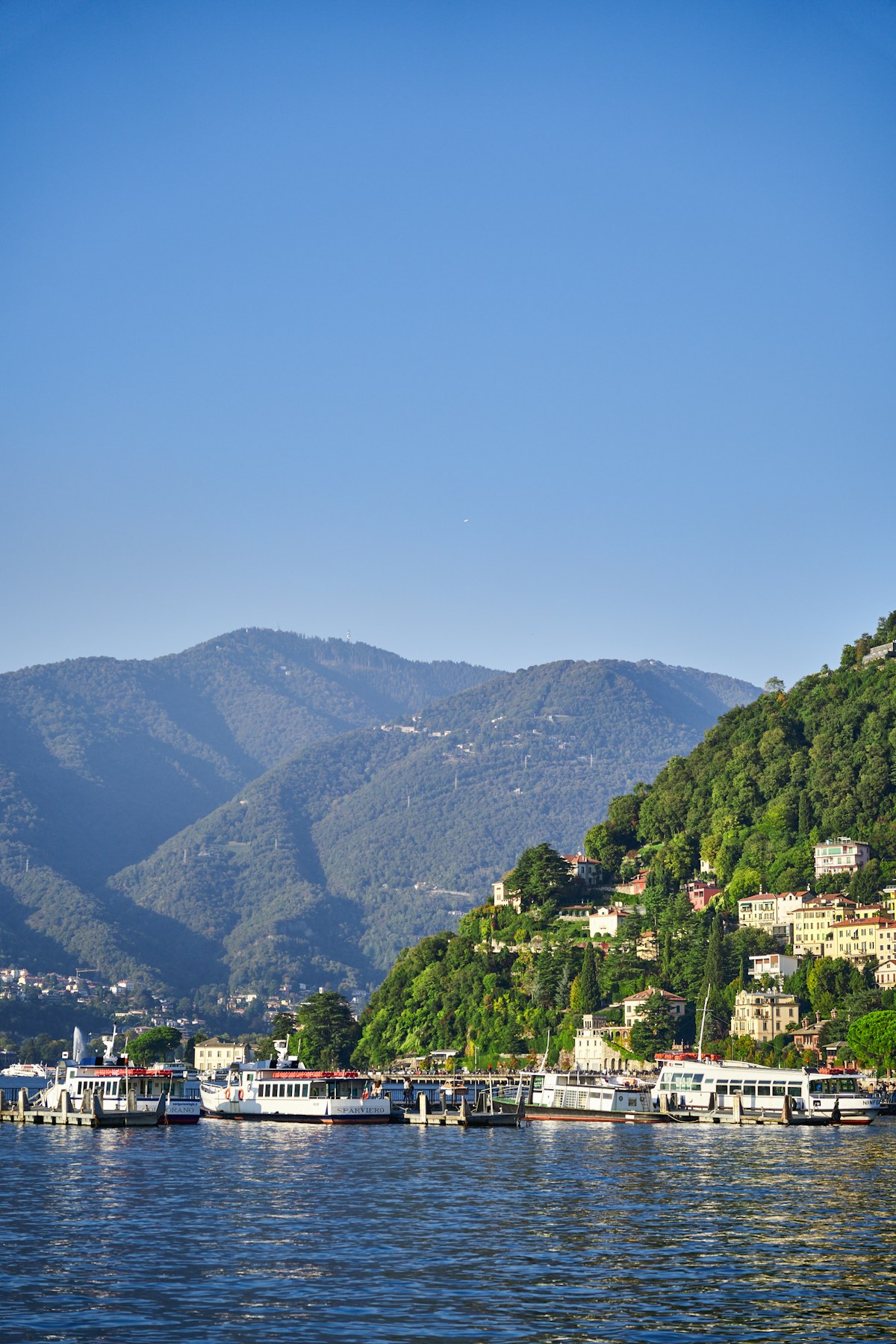
Lake Garda (Lago di Garda) is the largest lake in Italy - 52km long, up to 17km wide, with a northern end enclosed by dramatic Dolomite cliffs and a southern end opening into a wide, lake-shore flat. The range of experience is exceptional: Roman ruins, Renaissance fortresses, Venetian-era villages, a Mediterranean-climate garden culture in the west, watersports in the windy northern narrows, and some of Italy’s finest olive oil and wine on the eastern shore.
Sirmione and the Roman ruins
Sirmione is built on a narrow spit projecting from the southern shore - accessible by a single bridge through the Scaligeri Castle (13th century, built by the Scala family of Verona). The castle is the most photographed image of Lake Garda: a turreted medieval fortress surrounded by water.
At the tip of the peninsula, the Grotte di Catullo are the ruins of a large Roman villa (1st century BC/1st century AD), associated - loosely, without historical certainty - with the Latin poet Gaius Valerius Catullus, who was born near Sirmione. The site covers the full promontory tip, with well-preserved stone rooms, heating systems, and cisterns. The museum at the entrance holds finds from the site. The views from the ruins across the lake are spectacular. €6 entry.
The thermal baths (Terme di Sirmione) use natural sulphur springs; a spa complex is operated by Aquaria.
Gardone Riviera and the western shore
The western shore (Riviera Bresciana) has the most elaborate historic garden culture - the mild climate allows lemons, olives, and sub-tropical plants. Gardone Riviera has:
Il Vittoriale degli Italiani - the extraordinary personal monument built by the nationalist poet and wartime adventurer Gabriele d’Annunzio (1863–1938). A fantasy complex of houses, gardens, museums, a battleship prow projecting from the hillside, a mausoleum, and an open-air theatre. Deeply bizarre, historically fascinating. €14 gardens + house. The most genuinely odd tourist attraction in northern Italy.
The Heller Garden (Giardino Botanico André Heller) - a 2-hectare art and botanical garden with works by Hundertwasser, Roy Lichtenstein, and Keith Haring integrated into the planting. €9 entry.
The northern narrows (Riva del Garda and Torbole)
The northern end of the lake narrows dramatically as the Dolomites close in. Riva del Garda and Torbole are the watersports capitals of Italy - the thermal winds (the ora, blowing north from the lake in the afternoon; the peler, blowing south in the morning) create consistently excellent conditions for windsurfing and kitesurfing. Riva del Garda is a historic town with a 12th-century fortified tower (Rocca di Riva) on the lakefront. The Monte Baldo cable car (from Malcesine) rises from lakeside to 1,760m - a spectacular ascent with paragliding from the summit.
The eastern shore (Bardolino and Peschiera)
The eastern shore produces Bardolino DOC - light red wine from Corvina, Rondinetta, and Molinara grapes. The wine villages of Bardolino, Lazise, and Garda have good enotecas. Custoza DOC is the white wine of the southern eastern shore.
Lake Garda olive oil: The lake’s microclimate allows olive cultivation at this latitude. The Garda DOP olive oil is light, fruity, and among the finest in Italy. The area around Bardolino and the western shore produces most of it.
Malcesine
The most attractive town on the eastern shore - a Scaligeri castle above the lake, medieval streets, and the Monte Baldo cable car. The castle now houses a small museum. Worth a half-day stop. The ferry from Riva del Garda or Sirmione is the most pleasant approach.
Practical notes
Getting around: A car gives the most freedom on Lake Garda - hire a car if you plan to explore multiple shores in a single day. Ferries connect the main towns (slower but scenic). The southern shore is accessible from Verona (20 minutes) and from Brescia (40 minutes); the northern shore from Trento (45 minutes). For bookable boat experiences - private rentals, sunset cruises, Isola del Garda tours, and windsurfing lessons - see our Lake Garda boat tours guide.
Best for: Families (Gardaland theme park, watersports), history (Sirmione), wine (eastern shore), gardens (western shore), sport (north).
When to go: May–June and September–October. July–August are very crowded, particularly the southern shore.
Back to the full Lake Garda travel guide for an overview of the lake’s towns, ferry connections, and when to visit. For where to stay across Sirmione, Gardone Riviera, and the northern shore - see best hotels at Lake Garda. For day trips to Verona, the Valpolicella wine zone, and the Dolomites, see day trips from Lake Garda. For boat tours, private rentals, and watersports bookings, see our Lake Garda boat tours guide. Choosing between the two lakes? Our Lake Como vs Lake Garda guide covers the differences.
Book Lake Garda Tours on GetYourGuide
| Tour | Duration | From price | Highlights |
|---|---|---|---|
| Full-Day Lake Garda Tour: Bus & Boat with Guide | 10 hours | From €45 | Limone, Salò, Sirmione peninsula, Lazise medieval town, public lake ferry |
| Sirmione & Lake Garda Day Tour from Verona | 8 hours | From €40 | Scaligero Castle, Roman Grotte di Catullo ruins, lake cruise |
| Lake Garda Sailing Tour with Wine Tasting | 4 hours | From €55 | Bardolino DOC wine, lake sailing, eastern shore vineyards |
Where to stay in Lake Garda: Find hotels in Lake Garda — search accommodation across all budgets.