Syracuse Travel Guide: Ortigia, Neapolis & Baroque Sicily
Plan Syracuse and Ortigia: the Duomo, Fountain of Arethusa, Neapolis Archaeological Park, day trips to Noto, and how to reach it from Catania airport.
Guides for Syracuse
Syracuse (Siracusa) was once a rival to Athens. Today it is a calm, sun-bleached city in south-east Sicily, split between the mainland, where the Greek and Roman ruins of Neapolis lie, and the small island of Ortigia, where most visitors spend their time. Ortigia’s narrow lanes lead to a Baroque cathedral built around a Greek temple, a freshwater spring with papyrus, and a seafront promenade that is at its best at sunset. The whole centre is UNESCO-listed as part of Syracuse and the Rocky Necropolis of Pantalica{target=“_blank”}.
This hub is the starting point. It covers what Syracuse is like, how to get there, where to base yourself and what to do beyond the city, with links to our dedicated pages on tours, hotels and things to do.
Syracuse at a Glance
| Detail | What to know |
|---|---|
| Where | South-east Sicily, about 65 km south of Catania and 220 km from Palermo |
| Best base | Ortigia island, walkable end to end in about 20 minutes |
| Time needed | 2 days (1 day if you are passing through) |
| Neapolis Archaeological Park | Approximately €10-13 as of 2026, open daily, hot and shadeless in summer |
| Castello Maniace | Approximately €4 as of 2026 |
| Best months | April-June and September-October |
Ortigia: the Heart of Syracuse
Ortigia is a roughly 1 km island joined to the mainland by two short bridges. You can see most of it on foot in half a day, but it rewards slow wandering.
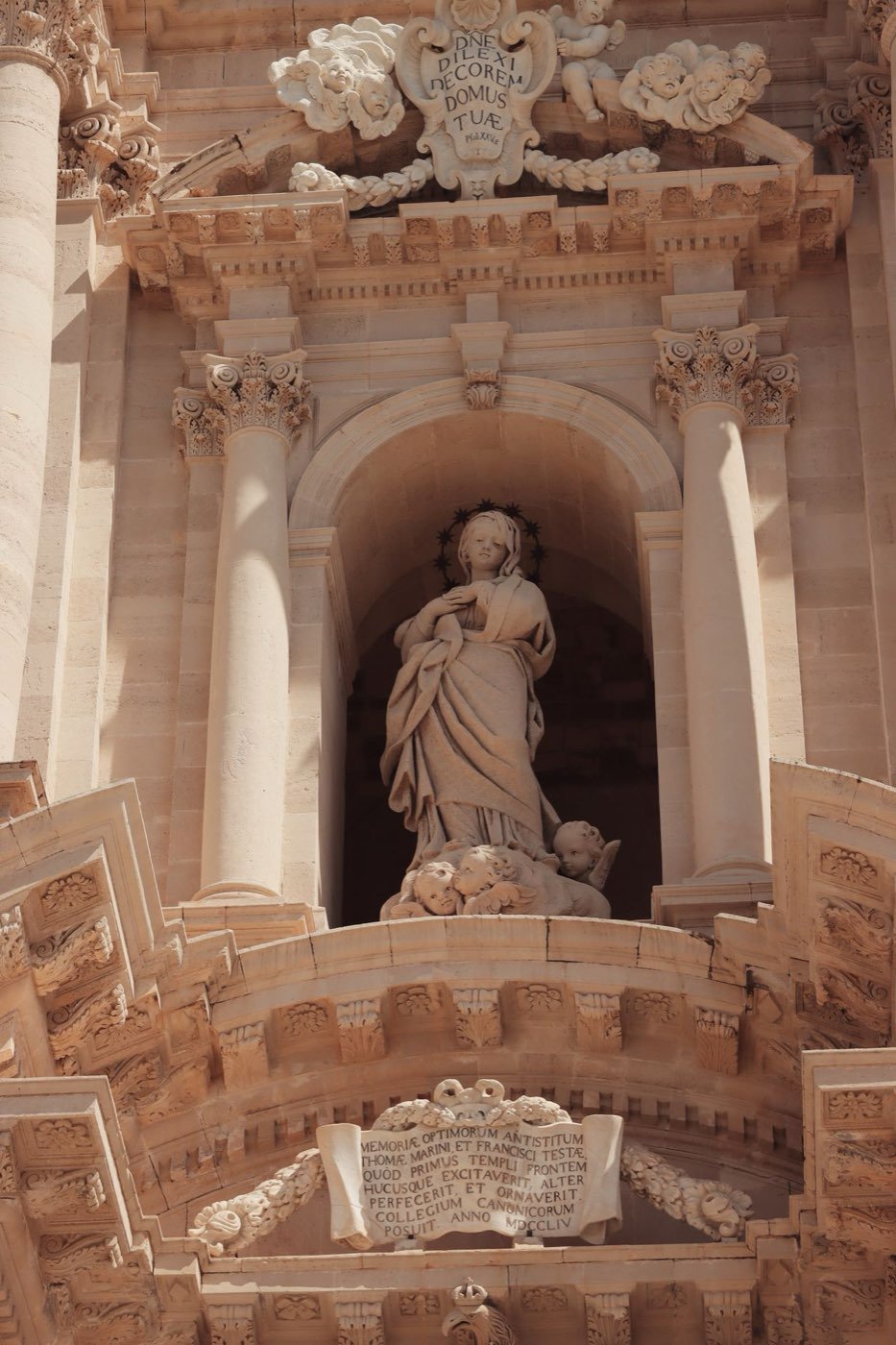
Piazza del Duomo is the centrepiece. The Cathedral (Duomo di Siracusa) has a Baroque facade added after the 1693 earthquake, while the walls inside are the Doric columns of a 5th-century BC Temple of Athena. Facing the cathedral, the church of Santa Lucia alla Badia houses Caravaggio’s Burial of Saint Lucy (check current opening arrangements, as the painting has moved in recent years).
The Fountain of Arethusa is a freshwater spring just by the sea, planted with papyrus. According to myth, the nymph Arethusa fled here from the river god Alpheus. Walk the seafront Lungomare di Levante from here to Castello Maniace, the 13th-century fortress at the island’s southern tip, built by Frederick II.
Mercato di Ortigia on Via de Benedictis runs in the mornings and is the best place for cheap lunches: sandwiches stuffed with local cheese and cured meats, olives, fresh ricotta, and the local sweet Sicilian pastries. Our things to do in Syracuse guide has a full walking route.
Neapolis Archaeological Park
On the mainland, about 2 km from the Ortigia bridge, the Parco Archeologico della Neapolis holds the best-preserved Greek sites in the city. The Greek Theatre, carved into the hillside in the 5th century BC, hosts classical drama each May and June. Nearby are the Roman Amphitheatre, the Altar of Hieron II and the Latomia del Paradiso, an old quarry holding the Ear of Dionysius, a 23 m-high limestone cave with extraordinary acoustics.
Go first thing in the morning or late afternoon; there is little shade and midday heat in summer is intense. Allow 2 to 3 hours. A guided visit is useful because much of the site is bare stone, so book a Neapolis and Ortigia tour if you want context. If you also plan to visit the Paolo Orsi Archaeological Museum, which is close by and holds the finds from across the area, buy a combined ticket where offered (check the park’s current ticket options).
Where to Stay
Stay on Ortigia if you can. You can walk to dinner, the evenings are atmospheric and the day-trippers go home by 6pm. The mainland has cheaper rooms and parking but little character. Ortigia rooms range from simple B&Bs to restored palazzo hotels; approximately €90 to €300 per night is a fair broad range as of 2026, with summer and the May-June theatre season at the top end. Read our where to stay in Syracuse guide for neighbourhoods and verified options, or compare Syracuse hotels on Booking.com.
Day Trips from Syracuse
- Noto (around 35-40 minutes): the finest Baroque town in the Val di Noto, with a golden-stone main street, Cattedrale di San Nicolò and some of Sicily’s best granita and ice cream.
- Modica and Ragusa (around 1.5 hours by car): Modica is known for grainy chocolate made to an Aztec-style recipe, and Ragusa Ibla for its stepped Baroque old town. Ideally combine them on one day with a car.
- Pantalica (around 1 hour): a nature reserve with thousands of rock-cut tombs, part of the same UNESCO listing; best with a car or a guide.
- Catania and Etna (around 1 hour to Catania): see our Catania guide and the Sicily day trips guide.
Getting There and Around
From Catania Fontanarossa Airport (CTA): this is the main gateway. Coaches (AST and Interbus) run direct to Syracuse in roughly 1 hour 15 minutes, taxis and private transfers take about 50-60 minutes, and the airport also links to Catania Centrale for regional trains to Siracusa. See our Catania airport transfer guide for options and Trenitalia{target=“_blank”} for train times.
By train: Siracusa station is on the mainland, about 1 km from Ortigia (15-minute walk or short bus). Regional services from Catania and Messina are slow but scenic.
Around town: Ortigia is largely a limited-traffic zone (ZTL), so leave the car at a car park on the mainland or at Talete near the bridge, and walk. For Noto, Modica and the countryside, a car makes sense; our Sicily car rental guide covers pick-up and driving tips.
When to Visit
- April-June: the best window. Warm days, flowers, and the classical drama season at the Greek Theatre (typically May-June; check the INDA programme for the year).
- July-August: very hot, crowded and with the highest prices.
- September-October: still warm sea and thinner crowds.
- November-March: mild but quiet, with some seafront places shut.
Where Syracuse Fits in Sicily
Syracuse pairs well with Taormina and Etna, Catania and the south-east Baroque towns on a loop that starts and ends at Catania. For the bigger picture see our Sicily island guide, and for guided options browse Syracuse tours.
Upcoming Events in Syracuse
La Befana - Feast of the Epiphany 2027
La Befana 2027, 6 January. Italy's Feast of the Epiphany, when the good witch fills stockings with sweets - for many families, bigger than Christmas.
Find hotels in Syracuse
Compare rates and availability across hundreds of options, free cancellation on most.
Browse hotels in Syracuse →Affiliate link; commission earned at no cost to you.
Book an experience
Top experiences in Syracuse
Explore the best tours and activities in Syracuse, with instant confirmation and free cancellation on most bookings.