Rome and Barcelona are two of the Mediterranean’s most popular city break destinations - and they offer genuinely different experiences. Rome is ancient, layered with 2,800 years of continuous history, and built around monuments that defined Western civilisation. Barcelona is artistic, modern, and coastal, shaped by Gaudí’s extraordinary architecture and a beach culture that Rome cannot match. Both are outstanding. The choice depends on what you want from a city.
Quick Verdict
| Category | Rome | Barcelona |
|---|---|---|
| Ancient history | Winner | - |
| Architecture | - | Winner |
| Food | Winner | - |
| Beaches | - | Winner |
| Nightlife | - | Winner |
| Museums | Winner | - |
| Value for money | Tied | Tied |
| Walkability | Tied | Tied |
Choose Rome if you want ancient history, world-class art, and the best food culture in the Mediterranean. Choose Barcelona if you want beaches, Gaudí, nightlife, and a more modern city atmosphere.
History and Architecture
Rome’s historical depth is unmatched in Europe. The Colosseum (€24, combined with Roman Forum and Palatine Hill), the Pantheon (free), St Peter’s Basilica (free, dome climb €10), and the Trevi Fountain represent thousands of years of continuous history. Every neighbourhood reveals archaeological layers - walk through Trastevere and you pass medieval churches built on Roman foundations. The Vatican alone (Museums from €20) could fill a week.
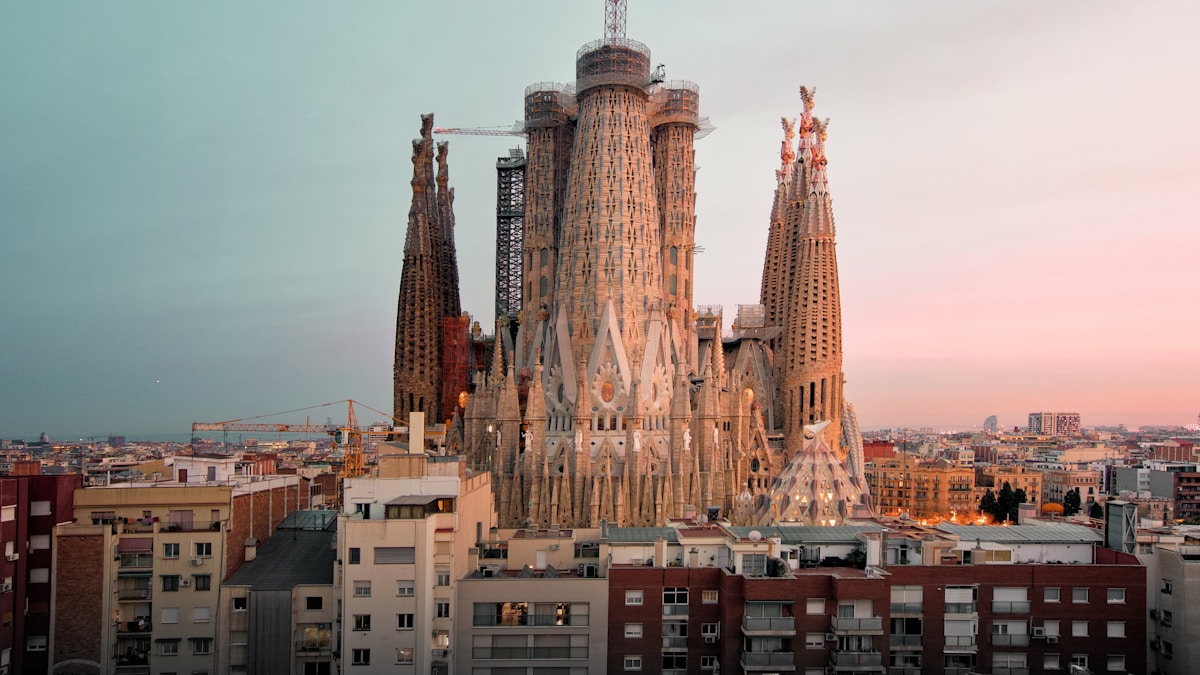
Barcelona’s architecture is dominated by Antoni Gaudí, whose Modernisme movement gives the city its unique character. The Sagrada Família (from €26, book ahead - the interior is one of the most extraordinary spaces in world architecture) has been under construction since 1882 and is projected for completion by 2026. Park Güell (€10), Casa Batlló (from €35), and Casa Milà/La Pedrera (from €25) are all distinctive, fantastical buildings. The Barri Gòtic (Gothic Quarter) adds medieval depth, and the Picasso Museum (€12) and MNAC (€12) are excellent.
Winner: Rome for depth of history. Barcelona for architectural creativity and Gaudí.
Food and Dining
Rome’s food is among the finest city food cultures on earth. The four canonical Roman pastas - carbonara, cacio e pepe, amatriciana, and gricia - are served at trattorias across the city for €12–16 per plate. Pizza al taglio (by the slice, €3–5) is Rome’s fast food. An espresso at the bar costs €1.20. Supplì (fried rice balls, €2–3) and gelato from quality gelaterias (€2.50–4) are excellent walking snacks. A full dinner with house wine at a mid-range trattoria costs €30–45 per person.
Barcelona’s food is based on Catalan cuisine and the tapas tradition. A tapas crawl through the Born or Gràcia neighbourhoods - patatas bravas (€5–7), jamón ibérico (€8–15), pan con tomate (€3–4), gambas al ajillo (€10–12) - is a social experience as much as a meal. La Boqueria market on La Rambla (tourist-heavy but still excellent for seafood) and the Mercat de Santa Caterina are food-hall highlights. Seafood is outstanding - paella at a Barceloneta restaurant costs €15–20 per person. Barcelona also has a strong contemporary food scene with numerous Michelin-starred restaurants.
Winner: Rome for depth, tradition, and everyday affordability. Barcelona for tapas culture and seafood.
Beaches
Barcelona has city beaches; Rome does not. Barceloneta Beach is a 15-minute walk from the Gothic Quarter - this accessibility transforms the character of the city, particularly in summer. Further north, Bogatell and Nova Icària beaches are less crowded. Beach bars serve drinks and food with sea views.
Rome’s nearest beach is Ostia, reachable in 40 minutes by Roma-Lido commuter train (€1.50). Ostia is functional - black sand, umbrellas for hire (€15–20/day) - but not a highlight. The better beaches of the Lazio coast (Sperlonga, Gaeta) require 1.5–2 hours by car.
Winner: Barcelona, decisively.
Museums and Art
Rome wins for sheer volume and variety. The Vatican Museums (from €20) contain the Sistine Chapel and one of the world’s great collections. The Borghese Gallery (€13, must book) has Bernini sculptures and Caravaggio paintings. The Capitoline Museums (€16), Galleria Doria Pamphilj (€14), and MAXXI contemporary art museum (€12) ensure coverage from ancient to modern. Entrance to most churches - many containing masterpieces by Caravaggio, Raphael, and Michelangelo - is free.
Barcelona’s museums are excellent but more focused. The Picasso Museum (€12) traces the artist’s formative years. The Fundació Joan Miró (€16) on Montjuïc is outstanding. The MNAC (€12) in the Palau Nacional has an extraordinary collection of Romanesque frescoes. MACBA (€11) covers contemporary art. The Gaudí buildings function as museums in themselves - Casa Batlló (€35) is among Europe’s most expensive museum tickets but the experience justifies the price.
Winner: Rome for breadth. Barcelona for Modernisme architecture as living art.
Accommodation
Both cities have extensive hotel stock. Rome’s mid-range hotels average €90–150/night; well-located properties in Trastevere, Monti, or near Piazza Navona offer the best experience. Hostels near Termini start from €25–40/night.
Barcelona’s mid-range hotels average €100–160/night. The Eixample district has good value and central location. The Gothic Quarter is atmospheric but noisy. The Born neighbourhood balances character with convenience. Barcelona has a tourist surcharge (€3.25/night as of 2026) on top of accommodation costs. Hostels from €25–40/night.
Winner: Rome, marginally - slightly lower prices and no separate tourist surcharge.
Getting Around
Both cities have effective metro systems. Rome’s metro has three lines (single ticket €1.50) covering major tourist areas. Barcelona’s metro has 12 lines (single ticket €2.40, T-Casual 10-trip pass €11.35) and is more extensive and modern. Both cities are walkable in their historic centres.
Barcelona has an edge in overall transport quality - the metro is newer, the bus network is comprehensive, and the city is flatter. Rome’s buses are famously unreliable, and the metro has fewer lines but covers the essential tourist corridor.
Winner: Barcelona for transport quality. Both are highly walkable.
Nightlife
Barcelona is one of Europe’s nightlife capitals. The city operates on a late schedule - dinner at 9–10pm, bars from 11pm, clubs from 1–2am until dawn. Razzmatazz, Pacha, and Sala Apolo are institution-level clubs. The Born and Raval neighbourhoods have dense bar scenes. Beach clubs in Barceloneta add a daytime-to-night dimension.
Rome’s nightlife is more atmospheric than intense. Aperitivo hour (6–9pm) in Trastevere, Monti, or Pigneto is the high point - a drink (€8–12) accompanied by free food. Wine bars and enotecas are excellent. Testaccio has Rome’s best clubs, but the scene is smaller and less international than Barcelona’s.
Winner: Barcelona, convincingly.
When to Visit
Both cities are best in spring (April–June) and autumn (September–October).
Rome in summer (July–August) is extremely hot (35–40°C) and very crowded. Barcelona in summer is hot (30–34°C) but the beach makes it more bearable - you can cool off in the sea between sightseeing. Barcelona’s winter (December–February) is milder than most northern European cities (10–15°C) but cooler than Rome. Rome’s winter is mild (8–14°C) and much quieter.
Winner: Barcelona handles summer better thanks to the beach. Both are best in shoulder season.
Final Verdict
Rome and Barcelona are both tier-one Mediterranean city destinations, but they satisfy different needs. Rome is the deeper cultural experience - ancient history, Renaissance art, and a food culture that operates on another level. Barcelona is the more modern, lifestyle-oriented city - Gaudí, beaches, tapas, and nightlife create a trip that feels effortlessly enjoyable.
For a first trip to southern Europe, Rome is the more essential destination. For a return trip or for travellers who prioritise beaches and nightlife alongside culture, Barcelona is hard to beat. Both deserve at least three to four days. Rome tours and skip-the-line experiences are worth booking before you arrive.
Ready to Plan Your Trip?
See our itineraries for inspiration:
- 3 Days in Rome - the perfect short break in the Eternal City
- One Week in Italy - seven days through Rome, Florence, and Venice
- 10 Days in Italy - the classic grand tour of Italy’s highlights
- 2 Weeks in Italy - the ultimate two-week Italian itinerary
Looking at Rome versus other Italian cities? Our Rome vs Florence guide and Milan vs Rome guide set out the key differences within Italy.
Plan Your Trip
✈️ Book your flights to Italy 🛡️ Get travel insurance 📱 Stay connected with an eSIM 🚗 Rent a car
🎟️ Browse tours in Rome 🏨 Search hotels in Rome — Search hotels in Barcelona