Spoleto Travel Guide: Festival & Medieval Umbria
Guide to Spoleto: the Festival dei Due Mondi performing arts festival, medieval Duomo, La Rocca fortress, Ponte delle Torri aqueduct, and Umbrian food.
Guides for Spoleto
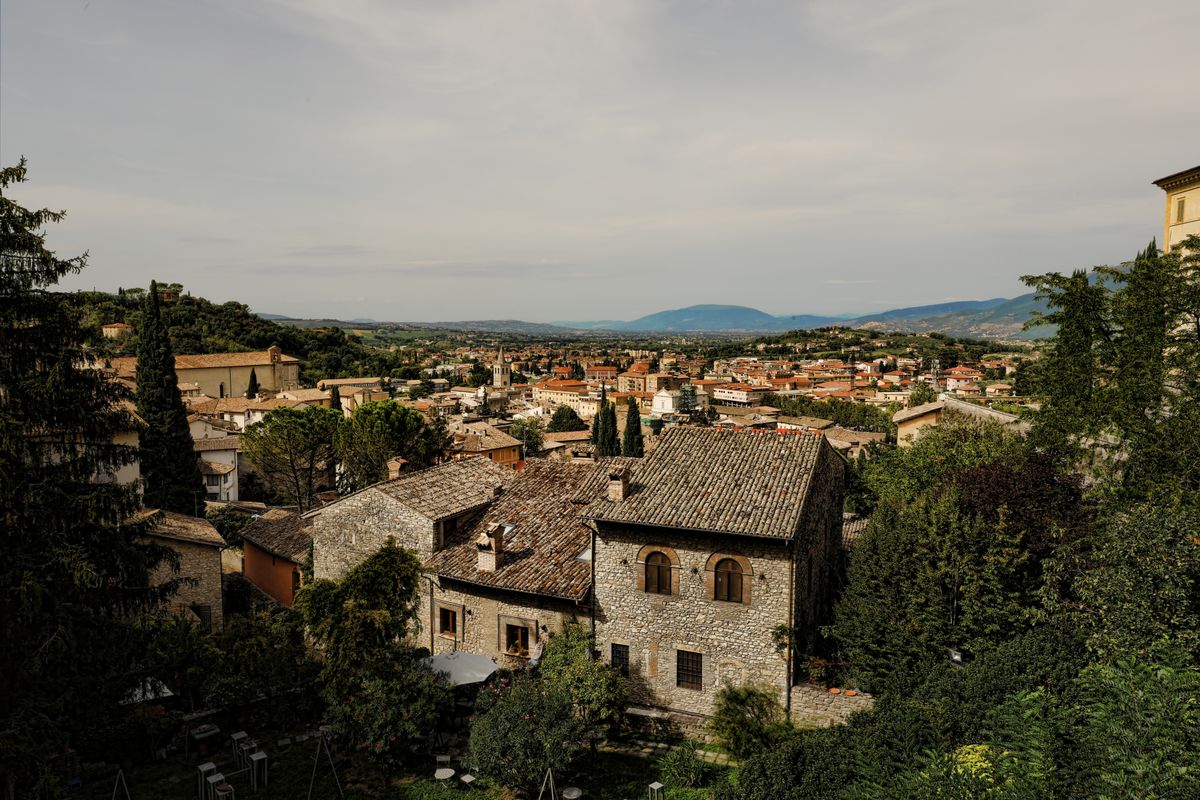
Spoleto is a medieval hilltop town in the Spoleto Valley of Umbria, best known internationally for the Festival dei Due Mondi — one of Europe’s most prestigious performing arts festivals, founded by Gian Carlo Menotti in 1958. Outside festival season, Spoleto rewards visitors with a cathedral containing major Renaissance frescoes, a 14th-century hilltop fortress, and one of the most dramatic pieces of medieval engineering in Italy: the Ponte delle Torri aqueduct bridge spanning a deep gorge below the walls. The town sees fewer visitors than Assisi or Orvieto and has a genuine working-town character that Umbria’s more touristic stops have lost.
What to see
Duomo di Spoleto (Piazza del Duomo) — The cathedral’s apse contains a fresco cycle by Fra Filippo Lippi, painted in 1467–1469 and showing scenes from the life of the Virgin. These are among the finest High Renaissance works in Umbria outside Florence. Lippi died in Spoleto while completing the frescoes — apparently of plague — and is buried in the cathedral’s right transept, where Lorenzo de’ Medici paid for the tomb. The Romanesque exterior and the approach down the long Piazza del Duomo staircase are equally memorable. Entry free; voluntary donation appreciated.
La Rocca Albornoziana (Via del Ponte) — The hilltop fortress was commissioned in 1359 by Cardinal Gil de Albornoz, the papal legate who reasserted control over the Papal States. It served as a papal residence and later, until 1982, as a prison. The fortress now contains the Museo Nazionale del Ducato di Spoleto with Lombard period artefacts, medieval sculpture, and the painted Camera Pinta (frescoed rooms from the 15th century). Entry approximately €7. The views from the ramparts over the Umbrian valley are outstanding. Open Tuesday–Sunday 8:30am–7:30pm.
Ponte delle Torri — Walk south from La Rocca along the walls (approximately 5 minutes) to reach the bridge. The 10 arches span the Tessino gorge at 82 metres height, with 230 metres total length. Built in the 13th–14th centuries, it incorporated Roman foundations and served simultaneously as aqueduct and defensive crossing. Standing on the bridge and looking back at La Rocca above, or down into the forested gorge, gives the best perspective on medieval Spoleto’s engineering ambitions. Free access, open dawn to dusk.
Roman Theatre (Via dell’Anfiteatro) — A well-preserved 1st-century AD Roman theatre built into the hillside below the old town, now used as the main performance venue for the Festival dei Due Mondi. The adjacent cloisters of a former Augustinian convent contain the Museo Archeologico Nazionale di Spoleto, with finds from the theatre excavations and local Umbrian territory. Entry approximately €4.
Church of Sant’Eufemia (Via Visuale, above Piazza del Duomo) — An unusual 12th-century Romanesque church with a matroneum — an upper gallery originally designed to segregate women from the main congregation, rare in Italian churches. The carved capitals in the nave are the finest Romanesque sculpture in Spoleto. Entry approximately €3.
Piazza del Mercato — The old town’s commercial centre, built over the Roman forum. The Arco di Druso, a 1st-century AD triumphal arch, still spans the main entrance. Market on Fridays.
The Festival dei Due Mondi
Gian Carlo Menotti chose Spoleto for his festival in 1958 for its compact medieval theatre network and its relative obscurity — at a time when every major Italian arts festival was dominated by established institutions. The Festival dei Due Mondi (the two worlds are Europe and America) brought international opera, theatre, and dance to a town that had no previous festival tradition. Today it runs for approximately three weeks in late June–early July, using the Roman Theatre, Piazza del Duomo, Teatro Caio Melisso, and various outdoor venues.
Programme and tickets: festivaldispoleto.com. Accommodation in Spoleto and the surrounding Valnerina sells out during festival weeks — book at least 3–4 months ahead for July dates.
Where to stay
Hotel dei Duchi (Viale G. Matteotti 4 — doubles from approximately €110/night) overlooks the Roman Theatre and Ancajani Park at the edge of the historic centre, with views over the town. Large, comfortable rooms; two restaurants on site. A 5-minute walk from the Duomo.
Hotel San Luca (Via Interna delle Mura 21 — doubles from approximately €95/night) is a family-run 4-star hotel in a former convent, with a courtyard garden used for breakfast in warmer months. Quieter location than the Duchi, slightly outside the main tourist circuit.
During the Festival dei Due Mondi (late June–July), prices across Spoleto and the surrounding valley increase significantly and the town books out. Outside festival season, accommodation is generally easy to find and competitively priced for the quality.
Food
Spoleto sits in the Valnerina, a valley running south-east into the Apennines that produces some of Umbria’s finest ingredients: black truffles from Norcia (50km south), lentils from Castelluccio, cured meats from the Norcino tradition, and local olive oil. Umbrian cuisine is simpler than its Emilian or Piemontese counterparts — fewer cream sauces, more legumes, grilled meats, and earthy flavours.
Strangozzi al tartufo nero — a thick, rough-textured pasta (similar to spaghetti but square-cut) with a black truffle sauce made from Norcia black truffles. The defining pasta dish of the Valnerina. Black truffles peak October–March; fresh truffle dishes from approximately €18–22.
Palomba alla ghiotta — wood pigeon braised with olives, capers, anchovies, and liver sauce. A dish with medieval roots found across Umbria and the Marche; Spoleto’s version is particularly associated with the town.
Umbricelli — another local pasta shape, thicker and rougher than strangozzi, also served with truffle or with a simple garlic and olive oil sauce.
Named restaurants: Il Tempio del Gusto (Via Arco di Druso 11 — mains approximately €16–22) focuses on Umbrian and Valnerina ingredients including black truffle; Apollinare (Via Sant’Agata 14 — mains approximately €14–18) is in a medieval building with a good selection of local wines; La Barcaccia (Piazza Fratelli Bandiera 8 — mains approximately €12–16) is the most straightforward trattoria option for local cooking.
Wines: Umbrian DOC wines available throughout: Sagrantino di Montefalco (a powerful tannic red from 20km north-west of Spoleto) and Torgiano Rosso. Both pair well with the black truffle dishes.
Getting there and around
Train: Spoleto sits on the Rome–Ancona railway, one of the main routes across central Italy. From Roma Termini: approximately every hour, journey time approximately 1h15–1h30, fare approximately €10–15. From Perugia: regional connections via Foligno (approximately 1 hour). From Florence: change at Terontola or Foligno (approximately 2h30 total).
Car: Spoleto is 130km from Rome via the A1 and E45 motorway (approximately 1h30). 47km from Perugia via the SP3 (approximately 45 minutes).
On foot: The historic centre is pedestrianised and compact. The walk from the lower town up to La Rocca and across to Ponte delle Torri takes approximately 45 minutes at a moderate pace.
For regional context: Umbria guide, Perugia, Assisi. For a Spoleto-centred trip, see the 5-day Umbria itinerary which routes through Spoleto, Orvieto, Assisi, and Perugia. Book a guided tour of Spoleto for the Duomo frescoes, La Rocca, and the Ponte delle Torri.
Upcoming Events in Spoleto
La Befana - Feast of the Epiphany 2027
La Befana 2027, January 6. Italy's Epiphany gift-giving day: children receive sweets or coal from the Befana witch, then decorations come down.
Book an experience
Top experiences in Spoleto
Explore the best tours and activities in Spoleto, with instant confirmation and free cancellation on most bookings.