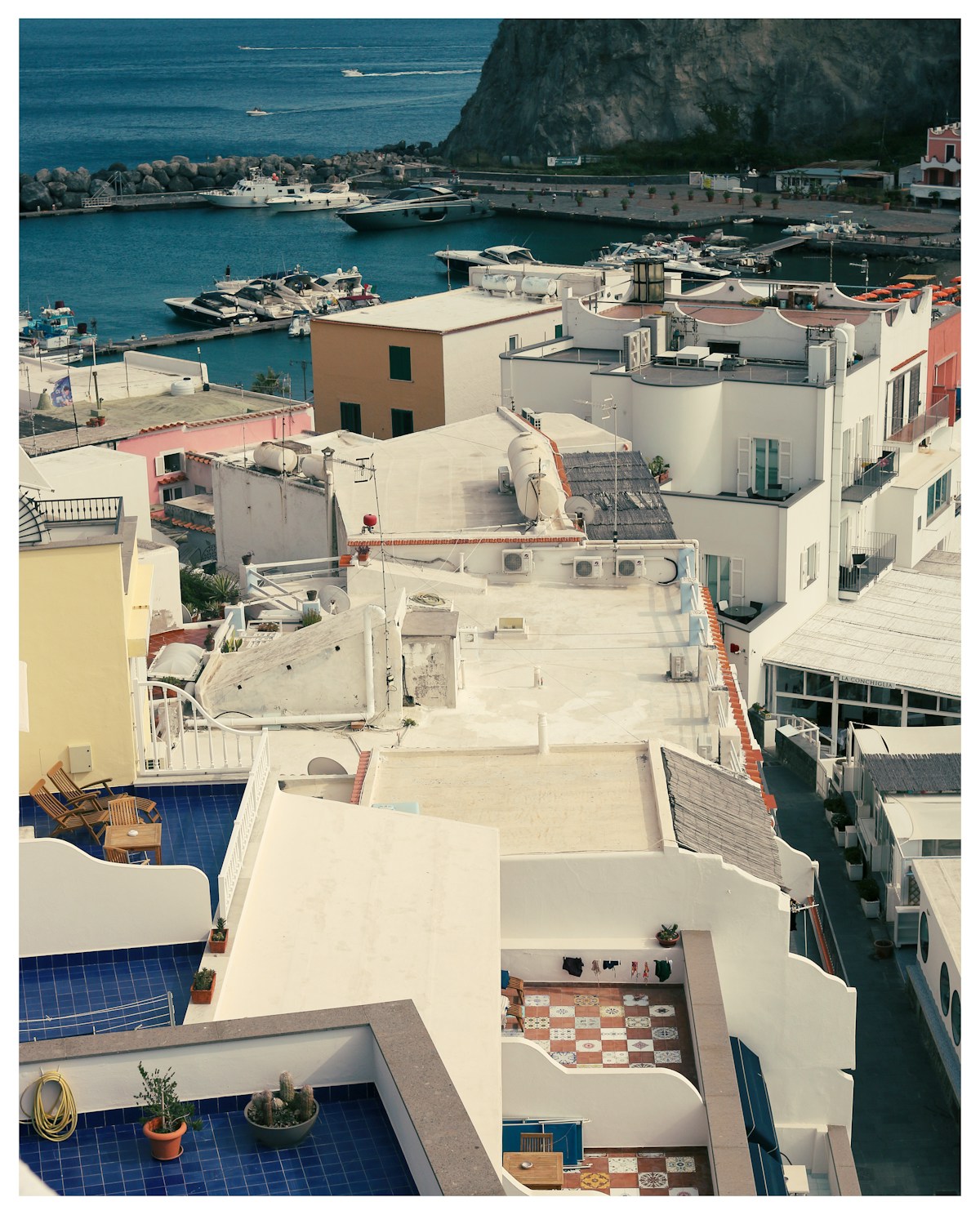
Ischia Travel Guide: Thermal Spas, Beaches & the Bay
Everything you need to plan a trip to Ischia - thermal parks, beaches, Aragonese Castle, where to stay, and how to get there from Naples.
Guides for Ischia
Ischia is a volcanic island at the northern end of the Bay of Naples - the largest of the three islands in the bay (Ischia, Procida, Capri) and by far the most geologically active. The island sits on a volcanic system that heats groundwater to temperatures between 15°C and 80°C, feeding a network of thermal pools and spa parks that have drawn visitors since ancient Roman times. Pliny the Elder documented them; the Romans called the island Aenaria. Today the thermal infrastructure is the primary reason most visitors come.
Getting there
Ferries and hydrofoils depart from three mainland ports to Ischia’s two main ports - Ischia Porto (ferries and hydrofoils) and Casamicciola Terme (ferries only). Most visitors use Ischia Porto.
From Naples (Molo Beverello): Caremar and Medmar run car ferries approximately every 1–2 hours, crossing in approximately 1.5 hours (car ferries, approximately €12–15 per person as of 2026 for economy class, cars extra at approximately €45–80 depending on size and season). Alilauro and SNAV run faster hydrofoils (aliscafi) in approximately 50–55 minutes, approximately €18–22 per person, foot passengers only.
From Pozzuoli (Naples metropolitan area): Medmar runs car ferries in approximately 1 hour, often less crowded and slightly cheaper than Naples departures. Good option if staying in the Phlegrean Fields area.
From Sorrento: Alilauro runs a summer hydrofoil service (approximately June–September) taking approximately 50 minutes, approximately €18–22 per person. Convenient for combining with the Amalfi Coast.
Booking in advance is strongly recommended for July and August, particularly for car crossings. Vehicles are transported year-round but prices increase sharply in peak season.
Thermal parks
Ischia has over 100 thermal establishments - from simple roadside pools to large landscaped complexes. The two flagship thermal parks are:
Giardini Poseidon Thermae (Citara beach, Forio) - The largest thermal complex on the island, with 22 thermal pools set at various temperatures (28°C to 40°C), a private beach on Citara Bay, saunas, steam caves, beauty treatments, and restaurants. Entry approximately €33–38 as of 2026 depending on season; half-day entry (after 1pm) approximately €25–30. Open May through October, daily 9am–7pm. Pool temperatures suit serious thermal use rather than a poolside holiday - water is mineral-rich and brown-tinged. Book treatments in advance in high season.
Negombo (Baia di San Montano, Lacco Ameno) - A more design-conscious thermal park in a sheltered bay, with 14 pools, a private beach, and botanical garden. Entry approximately €35–42 as of 2026; the setting is more aesthetically refined than Poseidon. Open May through October. The bay itself (San Montano) has the calmest, clearest water on the island outside the thermal pools.
Budget alternative: Sorgeto thermal springs (access via path from Sant’Angelo or taxi boat from the harbour) - naturally occurring thermal water bubbles up in a rocky cove and mixes with the sea. Free to use, with no facilities. A torch (flashlight) is useful for the path at night.
Beaches
Spiaggia di Maronti (south coast, near Sant’Angelo) - Ischia’s longest beach at approximately 3km, backed by steep hillside with fumaroles (natural steam vents) visible in the rock face. The eastern end has thermal hot spots where the sand itself is warm. Accessible by boat taxi from Sant’Angelo harbour (approximately €5 each way) or a long walk down a steep path. Sun lounger hire approximately €15–20 per day.
Spiaggia di Citara (Forio) - A long, open bay facing southwest - one of the best sunset beaches on the island. Has both the free public beach and the Giardini Poseidon entrance. Moderately crowded in summer. Free public section and paid sections with sun loungers.
Spiaggia dei Pescatori (Ischia Porto/Ischia Ponte) - The “fishermen’s beach”, a small curve of dark volcanic sand between the two halves of the island’s main town. The most accessible beach from Ischia Porto, approximately 10 minutes’ walk. Gets crowded in July and August.
Baia di San Montano (Lacco Ameno) - The clearest water on the island, in a sheltered north-facing bay. Accessible independently or as part of entry to Negombo thermal park. Relatively calm and good for snorkelling.
Aragonese Castle
The Castello Aragonese sits on a small islet (connected to Ischia Ponte by a 220-metre stone causeway) that rises 113 metres above the sea. The current castle dates to 1441 when Alfonso of Aragon replaced the Byzantine tower with the fortified complex that stands today - though the site has been fortified since at least 474 BC.
The interior includes a cathedral (now partially ruined but with fine frescoes), the remains of a Clarissian convent, a prison used under Spanish rule, an 18th-century church, and multiple terraces with views over the Bay of Naples, Vesuvius, and on clear days the coastline past Capri. Entry approximately €12 as of 2026. Open daily 9am–7pm (last entry 6pm; closes earlier in winter). Allow 1.5–2 hours. The ascent is by elevator shaft cut through the rock from the causeway entrance.
The island’s towns
Ischia Porto - The main arrival point, centred on a circular harbour (a volcanic crater filled by the sea in 1854 at the order of Ferdinand II). The commercial hub of the island, with the most hotels, restaurants, and shops. The Corso Vittoria Colonna runs from the ferry terminal past boutiques and bars toward Ischia Ponte.
Ischia Ponte - The older, quieter residential quarter east of the porto, running along the causeway to the castle. More authentic than the tourist centre, with a fishing harbour and local bars.
Forio - On the west coast, the island’s second town. The whitewashed church of Santa Maria del Soccorso on the headland is the island’s most photographed building. Citara beach and the Poseidon thermal park are here. The village of Sant’Angelo di Ischia (walkable from Forio) has a distinctive piazza.
Sant’Angelo - A small village on the south coast with a pedestrianised centre, pastel-coloured buildings, a tiny harbour, and a calm pace. No cars are permitted in the village itself. The most picturesque town on the island - arrive early morning or evening to appreciate it without crowds.
Lacco Ameno - On the north coast, site of a famous pink mushroom-shaped rock in the harbour (the Fungo), and home to the Museo Archeologico di Pithecusae (the island’s Greek-era history), with exhibits from the earliest Greek colonial settlement in the western Mediterranean (approximately 8th century BC). Entry approximately €5 as of 2026.
Where to eat
Il Focolare (Via Cretaio 3, Barano d’Ischia) - Arguably the best restaurant on the island, set inland in the hills with a wood-burning fireplace. Focuses on Ischian rabbit (coniglio all’ischitana - braised in white wine, tomato, and herbs in a terracotta pot), local cheeses, and seasonal vegetables. Mains approximately €14–20. Reservations essential in summer.
Ristorante Alberto (Via Cristoforo Colombo 8, Ischia Porto) - Reliable seafood restaurant at the porto, known for linguine all’astice (lobster pasta) and grilled catch of the day. Mains approximately €16–26.
Bar Calise (Piazza degli Eroi, Ischia Porto) - A landmark cafe and pasticceria open since 1946, known for granita, sfogliatelle, and Neapolitan pastries. Good for breakfast. Pastries approximately €2–4.
Da Ciccio (Via Luigi Mazzella 32, Ischia Ponte) - Simple, well-priced trattoria near the castle causeway, popular with locals for lunch. Pasta dishes approximately €10–13, fish second courses approximately €14–20. Closed Tuesday.
Where to stay
Budget: Hotel Terme Oriente (Via Pontano 6, Ischia Porto) is a small thermal hotel with its own pool, doubles from approximately €75–100/night including use of thermal facilities. Pensione Il Monastero (inside the Castello Aragonese, Ischia Ponte) is an unusual option within the castle walls - basic rooms with extraordinary views, doubles from approximately €80–110/night.
Mid-range: Hotel della Baia (Via Spiaggia Citara, Forio) has a thermal pool, direct beach access at Citara, and doubles from approximately €110–160/night. Hotel Terme San Michele (Via Sant’Angelo 6, Sant’Angelo) is well-positioned for the south coast, with a thermal pool and doubles from approximately €120–170/night.
Top-end: Mezzatorre Hotel & Thermal Spa (Via Mezzatorre 23, Forio) occupies a renovated 16th-century tower and villa on the northwest tip of the island, with a private cove, thermal pool, and spa. Doubles from approximately €280–450/night depending on season. Il Moresco Hotel (Via Edoardo Gianturco 16, Ischia Porto) is the most refined option near the ferry port, with a thermal garden and pool, doubles from approximately €200–320/night.
Plan your trip:
- Browse boat tours and day trips from Naples to Ischia
- Book hire a car or scooter on the island
- Get travel insurance for your trip
- Pick up an eSIM for Italy
- Search hotels in Ischia
Ischia vs Capri: key differences
Capri is smaller (10 sq km vs Ischia’s 46 sq km), has no thermal baths, and is significantly more expensive for food and accommodation. Its main draw is dramatic coastal scenery - the Blue Grotto, the Faraglioni rock stacks - and a glamour reputation. Ischia has more beach variety, the spa infrastructure, medieval history at the castle, and a broader range of accommodation. Capri works as a day trip from Naples or Sorrento; Ischia rewards a longer stay. Prices on Ischia are roughly 30–40% lower than comparable Capri options.
Both islands depart from Naples, which makes a natural gateway city for an Ischia trip. For the Neapolitan pizza and street food to try before or after the ferry crossing, our Neapolitan food guide covers the essentials. The Amalfi Coast is accessible by seasonal ferry from Ischia, making a combined itinerary straightforward from late April to October.
Upcoming Events in Ischia
Alba White Truffle Fair 2026
Alba White Truffle Fair 2026, October 3–December 6. World's largest white truffle market with Barolo tastings, tajarin, and live auctions in Piedmont.
La Befana - Feast of the Epiphany 2027
La Befana 2027, January 6. Italy's Epiphany gift-giving day: children receive sweets or coal from the Befana witch, then decorations come down.
Book an experience
Top experiences in Ischia
Explore the best tours and activities in Ischia, with instant confirmation and free cancellation on most bookings.