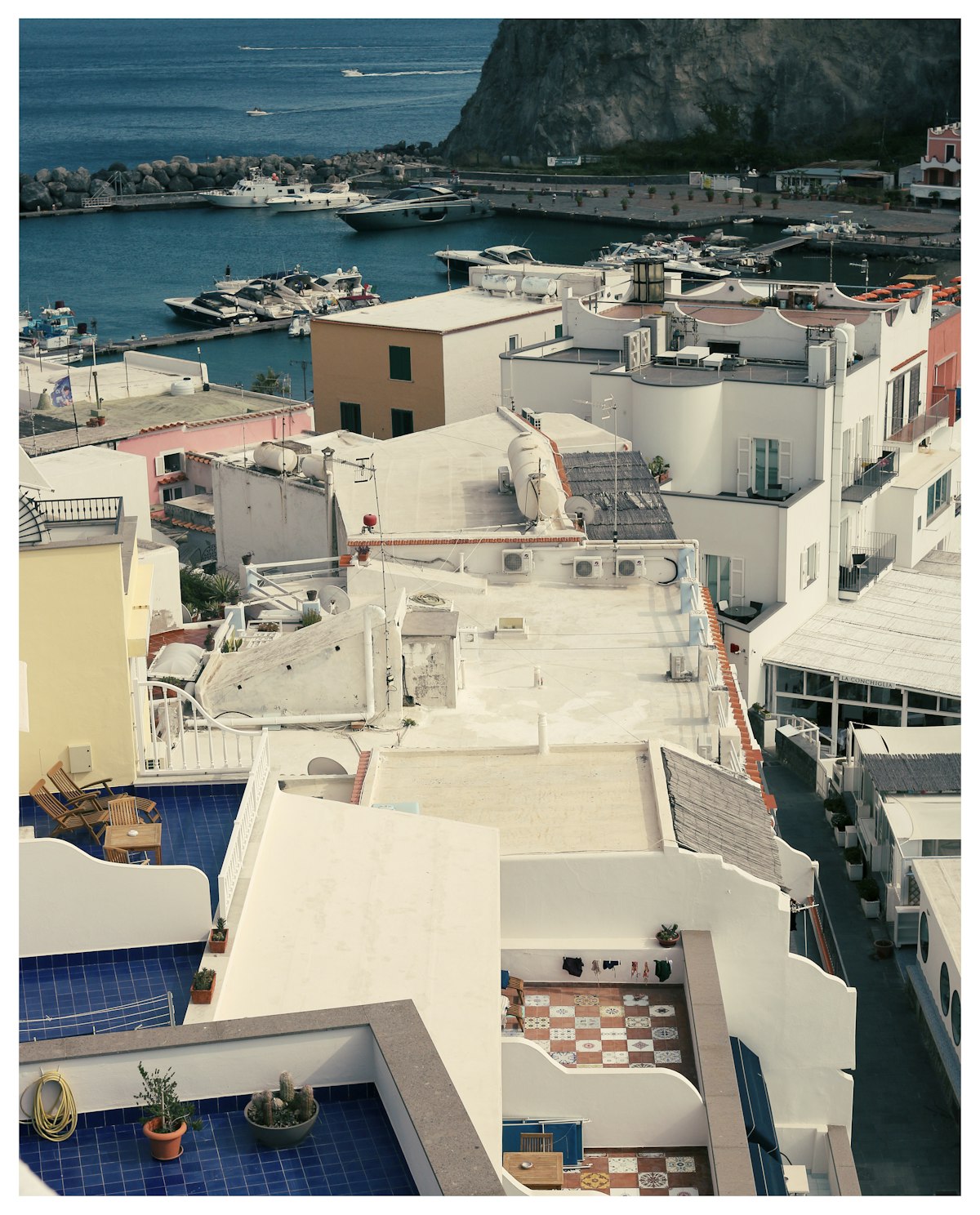
Ischia does not operate as a museum island - it is a lived-in place, with a working port, an agricultural interior, and a thermal industry that has been running since the Romans identified the volcanic springs here. The combination of a genuine medieval castle, multiple thermal parks, good food, and genuinely diverse beaches makes it one of the more rewarding islands in the Bay of Naples for visitors who want more than a sunbed. Ischia tours and boat circuits departing from Ischia Porto cover the castle, Sant’Angelo, and the south coast coves in a half-day.
Aragonese Castle (Castello Aragonese)
The Aragonese Castle is the dominant landmark of Ischia and one of the most dramatic medieval structures in the south of Italy. It sits on a small volcanic islet connected to the main island by a 220-metre stone bridge - the bridge walk alone, with views across the bay to the mainland and Vesuvius, is worth the admission. Construction of the fortifications dates to the 5th century BC (the Greeks called it Inarime), but the present structure reflects largely Aragonese work of the 15th century, when Alfonso I of Aragon ordered extensive rebuilding.
The interior is extensive and takes at least two to three hours to explore properly. Key points:
- The Cathedral: Partially ruined, with a stark Baroque interior and a remarkable underground charnel house used by the Poor Clares convent. The convent’s mummification chamber - where deceased nuns sat in open-air thrones until decomposition was complete - is unsettling and genuinely historic.
- The upper terraces: Views across the bay to the Phlegraean Fields, Procida, and on clear days the tip of Capri.
- The tower lift: An internal lift cuts out the steeper sections of the ascent if needed.
Entry: Approximately €12 per adult as of 2026. Open daily from approximately 09:00 to 19:00 in summer (18:00 in shoulder season - verify hours at the castle website before visiting). Allow 2–3 hours.
Getting there: The castle is at Ischia Ponte, on the eastern side of the island. Bus 7 from Ischia Porto runs to Ischia Ponte (approximately 15 minutes); the walk from Ischia Porto along the seafront takes about 20 minutes.
Poseidon Gardens Thermal Park (Giardini Poseidon)
Poseidon Gardens on the west coast at Citara is the largest thermal park on Ischia - 22 pools at varying temperatures (28–40°C), a direct beach section on Citara bay, multiple restaurants and bars, sunbeds, massage treatments, and a range of other spa facilities spread across a landscaped hillside.
Day pass price: Approximately €33 as of 2026 (adult, weekday rate; weekend rates may differ slightly - verify on the Poseidon Gardens website before booking). The price includes access to all pools and the beach. Towel hire is approximately €5 extra; locker approximately €2.
Practical advice: Poseidon opens daily from around 08:30 to 19:00 in season (April–October). In August, arriving at opening time is advisable - by 10:30 the most popular hot pools are full. The pools closest to the beach are cooler; the upper pools on the hillside run hotter. The restaurant food is serviceable but pricy - you can bring your own food for picnicking.
Negombo Gardens
Negombo at Baia di San Montano near Lacco Ameno is the smaller and quieter of the two major thermal parks - a deliberate design philosophy that limits capacity. The thermal pools are set into a landscaped botanical garden of unusual quality (Negombo maintains one of southern Italy’s better collections of Mediterranean exotic plants), and the bay directly below is among the most beautiful on the island.
Day pass price: Approximately €35 as of 2026 (check the Negombo website as prices adjust annually). Includes thermal pools, garden access, and San Montano beach. Treatments (massage, mud wraps) at extra cost, bookable on arrival.
Why choose Negombo over Poseidon: Fewer people, more considered landscaping, a better beach, and a more serene atmosphere. The trade-off is fewer pools and less beach infrastructure.
Free Thermal Bathing at Maronti and Sant’Angelo
Not all thermal experiences on Ischia require a park entrance fee. At the eastern end of Spiaggia dei Maronti, natural hot springs emerge from the cliff face and the sand itself - you can sit in the natural stream where hot water meets the sea at whatever temperature you position yourself. The Sorgeto hot springs near Sant’Angelo are a further option: a natural cauldron of thermal water at the sea’s edge, accessible via a staircase. Local vendors sometimes charge a nominal entry fee (approximately €2–4 as of 2026) for access to the main pool.
Sant’Angelo Village
Sant’Angelo on the south-west coast is one of the most appealing places on Ischia that is not a beach or thermal park. The village is car-free - vehicles stop at the car park above and everything beyond moves on foot. The main street is lined with restaurants, ceramic shops, and gelaterie; the harbour has fishing boats alongside tourist cruisers. It is the most self-contained place on the island to spend an evening, and several good restaurants serve here until midnight in summer.
Getting there: Bus 1 from Ischia Porto, approximately 45 minutes. Taxis are available but more expensive.
Boat Tours Around the Island
A full-day boat tour circumnavigating Ischia takes approximately 5–7 hours and typically stops at three or four swimming and snorkelling points inaccessible by land - sea caves, cliff coves on the north coast, and the waters off the Aragonese Castle. Tours depart from Ischia Porto and Casamicciola; group tours run approximately €35–50 per person including lunch as of 2026. Private charter is available for groups of 6–10 at approximately €400–600/day for the boat.
Forio and Lacco Ameno
Forio on the west coast is Ischia’s most artistically interesting town - the white-walled church of Santa Maria del Soccorso sits dramatically on the headland above the sea and is the standard sunset-watching location on the island. The town centre has independent restaurants and bars that cater more to locals than tourists, and prices are correspondingly lower than Ischia Porto.
Lacco Ameno to the north-west is quieter and more refined - the smallest municipality on the island, with a famous mushroom-shaped rock (Il Fungo) rising from the harbour. The Museum of Pithecusae here holds artefacts from Ischia’s Greek colonial period (8th century BC), including the Nestor’s Cup inscription - one of the oldest known examples of Greek alphabetic writing.
Museum of Pithecusae entry: Approximately €5 per adult as of 2026. Open Tuesday–Sunday 09:00–19:00 in season.
Local Cuisine
Ischia’s signature dish - coniglio all’Ischitana (rabbit braised in white wine with garlic, wild herbs, tomatoes, and chilli) - appears on virtually every restaurant menu on the island and is worth ordering at least once. The volcanic soil produces intensely flavoured tomatoes and good local wine; look for DOC Ischia Bianco (a blend based on Forastera and Biancolella grapes) served chilled with seafood.
Other dishes to try:
- Totani fritti: Fried totani squid, served as antipasto or a light main
- Seppie alla luciana: Cuttlefish braised with olives, capers, and tomatoes in the Neapolitan style
- Maccheroni al ragù: Sunday-style slow ragù, widely available in the interior trattorie around Barano and Fontana
For a reliable meal, the restaurants along Via Luigi Mazzella in Ischia Porto and around the Piazza degli Eroi serve both locals and visitors. Main courses run approximately €14–24 as of 2026; seafood-heavy menus lean toward the higher end. Avoid the tables directly on the tourist waterfront - quality and price worsen in inverse proportion to the view.