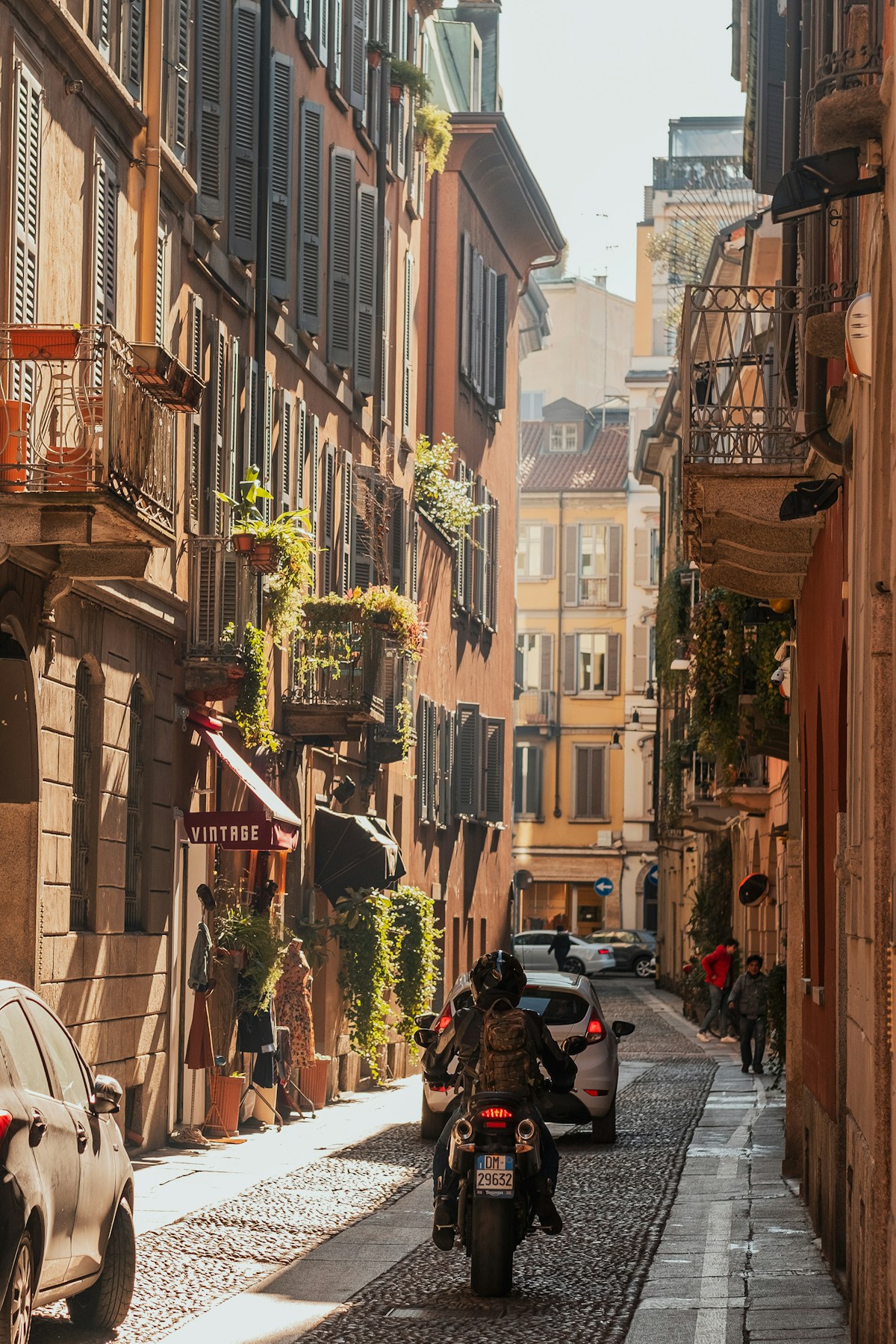
Milan works differently from most Italian cities for accommodation. There is no single compact historic centre with a ring of medieval lanes - the city is larger, more spread out, and more commercially oriented. Staying near the Duomo puts you in the business hotel corridor; staying in Navigli puts you 25 minutes’ walk from the cathedral but closer to the best of what Milan does well in the evening. The right base depends on whether you’re here for the art and fashion, the food and canal scene, or a mix of both.
Search Milan hotels on Booking.com to compare prices and check availability across all areas in this guide.
Duomo / Centro
The zone around the Duomo, Galleria Vittorio Emanuele II, and Piazza della Scala is Milan’s geographic centre and the most convenient single point for accessing the main sights. It is also where the highest concentration of chain hotels and business properties are found.
Pros: The Duomo itself is the obvious draw - one of the largest Gothic cathedrals in the world, and the rooftop terraces are worth the ticket. La Scala is adjacent. The Galleria is walkable. Metro lines M1 and M3 intersect at Duomo station, making the rest of the city immediately accessible. For a short visit focused on the landmark sights, this is the most practical zone.
Cons: The streets immediately around the Duomo are tourist-oriented in the way that major European landmark districts tend to be - chain restaurants, souvenir shops, and a general sense that the neighbourhood exists to service the monument rather than the other way around. The business hotel dominance means prices are high for what you get in terms of atmosphere.
Budget (€90–140/night): Genuine budget options are scarce in this zone. The Hotel Nettuno (Via Tadino 27 - technically closer to Porta Venezia but within the broader centre) offers clean, functional rooms at approximately €95/night as of 2026. Look also at properties on the residential streets east of Corso Vittorio Emanuele II for more honest pricing.
Mid-range (€150–300/night): The Hotel Berna (Via Napo Torriani 18, near Centrale station) is a reliable four-star with consistent reviews and straightforward service; doubles from approximately €155/night as of 2026. Not in the most atmospheric location but well positioned for transport.
Top-end (€400+/night): The Park Hyatt Milan (Via Tommaso Grossi 1, inside the Galleria Vittorio Emanuele II) is the landmark luxury address in this zone - occupying a former bank building with a glass-domed entrance. Doubles from approximately €550/night as of 2026. Booked well ahead for fashion industry events and trade fairs.
Brera
The gallery district immediately north of the Duomo - named for the Pinacoteca di Brera (one of Italy’s foremost art museums) - is the most consistently recommended area for visitors who want atmosphere alongside convenience. The streets around Via Fiori Chiari and Via della Moscova have a cluster of independent wine bars, quality restaurants, and small boutiques that represent Milan at something closer to its best.
Pros: 15 minutes’ walk south to the Duomo; 10 minutes’ walk west to Castello Sforzesco; adjacent to the Quadrilatero della Moda (Montenapoleone, Via della Spiga, Corso Venezia). The Pinacoteca di Brera itself is one of the most important painting collections in Italy and can easily absorb three to four hours. The restaurant quality on the side streets is higher and more varied than near the Duomo.
Cons: Brera is expensive - the boutique and design-hotel market here commands a premium. Some streets fill with an aperitivo crowd on weekday evenings, which is lively rather than problematic but worth knowing about.
Budget: There are no significant budget options within Brera itself. The nearest affordable accommodation is in Porta Venezia, a 15-minute walk east.
Mid-range (€160–320/night): The Mandarin Oriental Milan (Via Andegari 9, Brera) has rooms from approximately €450/night as of 2026 - technically luxury, but the lower-category rooms edge into the upper-mid-range bracket during slower periods. The Hotel Giulio Cesare (Via Rovello 10, at the Brera/Duomo border) is a more accessible option; doubles from approximately €160/night as of 2026.
Top-end (€400+/night): The Mandarin Oriental Milan is the defining property in this category for the Brera zone - intimate compared with the Park Hyatt, with a strong restaurant and spa offering. Full doubles from approximately €500/night as of 2026.
Navigli
The canal district - centred on Naviglio Grande and Naviglio Pavese - is Milan’s most architecturally distinctive neighbourhood. The canals (navigli) were Leonardo da Vinci’s engineering project, part of a system that once linked Milan to the River Po. Today the towpaths are lined with bars and restaurants, and the area fills up from aperitivo hour onward.
Pros: Among the best places in Milan to spend an evening - the canal-side bars are lively without being aggressively touristy. The food scene is genuinely good for the price. The area has a distinct character that the Duomo zone lacks entirely. Short metro or tram ride to the centre.
Cons: Navigli operates primarily as an evening destination - during the day it can feel quiet and slightly purposeless. Metro access is via Porta Genova (M2 Green Line), which is convenient but means a short tram or bus ride to the Duomo. Noise from canal-side bars on weekend nights is significant; a rear-facing room is worth prioritising.
Budget (€60–110/night): The Ostello Bello Grande (Via Medici 4, near Navigli) operates as a design-led hostel with private rooms available; private doubles from approximately €85/night as of 2026. One of the better-value options in Milan if you want the canal district without a hotel premium. The Hotel Nettuno (mentioned above in the Duomo section) is also reachable by tram.
Mid-range (€130–250/night): The Maison Borella (Alzaia Naviglio Grande 8) is the most considered mid-range option in this zone - a boutique hotel directly on Naviglio Grande in a 19th-century building with exposed brickwork and canal views from some rooms; doubles from approximately €160/night as of 2026. Book the canal-view rooms specifically; the courtyard rooms are quieter but lose the main draw of the location.
Top-end: Navigli does not have five-star hotels; the area’s identity is mid-range and boutique. For genuine luxury, Brera or the Duomo zone is more appropriate.
Porta Venezia / Corso Buenos Aires
East of Brera and north of the city centre, Porta Venezia is one of Milan’s most diverse and food-rich neighbourhoods. Corso Buenos Aires is Italy’s longest shopping street; the side streets around it contain a remarkably varied selection of restaurants - North African, Middle Eastern, East Asian, and Italian regional cuisines alongside each other.
Pros: Excellent food options at every price point. The neighbourhood has a genuine resident population rather than being primarily tourist-oriented. Close to the Giardini Pubblici (the city’s main urban park) and the Natural History Museum. Metro M1 (Red Line) at Porta Venezia and Lima stations provides quick access to the Duomo (two stops) and the rest of the M1 line.
Cons: Less architecturally striking than Brera or Navigli. The main drag (Corso Buenos Aires) is more functional than atmospheric. Some of the side streets north toward Piazzale Loreto are lower quality.
Budget (€85–130/night): One of the better budget zones in the city. The Hotel Nettuno (Via Tadino 27) sits in this neighbourhood; doubles from approximately €95/night as of 2026. Good value for the location and transport connections.
Mid-range (€130–220/night): The Hotel Rosello (Via Plinio 18) is a solid mid-range option with straightforward rooms and good connections; doubles from approximately €130/night as of 2026. The area also has a good supply of serviced apartments for stays of more than three nights.
Porta Garibaldi / Isola
The neighbourhood around Piazza Gae Aulenti - where the futuristic glass towers of the Porta Nuova development rise above the older low-rise Isola quarter - is Milan’s most conspicuously contemporary district. Isola (the “island”, cut off by railway tracks on three sides) is now a design and food destination in its own right.
Pros: The Unicredit Tower and Piazza Gae Aulenti are photogenic and worth seeing. Isola has a dense concentration of concept restaurants, natural wine bars, and independent cafes. Garibaldi station (M2 Green Line, M5 Lilac Line, suburban rail) makes the whole city accessible. For design-industry visitors, this area has the right credentials.
Cons: The further you get from the Garibaldi hub into Isola proper, the further you are from the Duomo and main sights (approximately 30 minutes on foot, or 10 minutes by Metro). Some parts of the area are still in transition - blocks of construction and corporate development neighbour the older residential streets.
Top-end (€350+/night): The Hotel VIU Milan (Via Aristotile Fioravanti 6) is the standout luxury property in this zone - a rooftop pool with views of the skyline, a design-forward restaurant (Bulk), and rooms that reflect the contemporary character of the neighbourhood; doubles from approximately €350/night as of 2026. One of the better arguments for staying away from the Duomo area.
Mid-range (€140–280/night): The Milano Verticale | UNA Esperienze (Piazza Gae Aulenti 5) sits directly on the contemporary piazza; doubles from approximately €170/night as of 2026. More corporate in feel than Hotel VIU but well positioned for the area.
Sempione
West of the Duomo, the neighbourhood around Castello Sforzesco and Parco Sempione is quieter than Brera and considerably less tourist-saturated than the centre. Parco Sempione is Milan’s most significant green space - 47 hectares of parkland behind the castle.
Pros: Castello Sforzesco - a 15th-century fortress containing several museums including the Michelangelo’s Pietà Rondanini - is the defining sight. Parco Sempione is pleasant for morning runs. The Arena Civica is here. The neighbourhood is genuinely quieter than Brera while remaining central.
Cons: Fewer restaurants and bars than Brera or Navigli. Some streets between Sempione and Porta Garibaldi are functionally rather than scenically attractive.
Mid-range (€130–250/night): The Townhouse Galleria (Via Silvio Pellico 8, technically between the Duomo and Sempione zones) has well-designed rooms and a roof terrace; doubles from approximately €200/night as of 2026. For Sempione itself, the accommodation density is lower - apartments and smaller B&Bs are the main option.
Plan your trip:
- Browse day tours and experiences in Milan
- Book an airport transfer to your hotel
- Get travel insurance before you book
- Pick up an eSIM for Italy
- Search hotels in Milan on Booking.com
Booking and practical tips
- Milan hosts major trade fairs (SXSW Milan, Salone del Mobile in April, MICAM in September, Fashion Week in February and September). During these events the entire city sells out and prices rise dramatically - sometimes by 200–300% above base rates. Check the trade fair calendar before booking and either commit far ahead or plan around the dates entirely.
- The Metro is Milan’s best navigation tool. Four intersecting lines (M1–M4, with M5 also operational in the northwest) cover the city comprehensively. A 10-journey carnet saves money over single tickets; 48-hour and 72-hour travel passes are available.
- Malpensa Airport is 50 km northwest of the centre - allow 50–60 minutes via the Malpensa Express train from Garibaldi or Centrale stations. Linate Airport is 7 km east of centre - approximately 25–30 minutes by taxi or bus. Bergamo Orio al Serio (used by Ryanair) is 50 km east.
- Aperitivo is not just a drink in Milan - it is a meal. Most bars in Brera, Navigli, and Porta Venezia serve a spread of antipasti with every drink from approximately 6–9pm. Budget approximately €12–18/person for a drink with food, as of 2026.
- No city tourist tax is charged in Milan, unlike Florence and Venice - the room rate is the room rate.
- For stays longer than four nights, self-catering apartments in Porta Venezia or Navigli offer better value than hotels at equivalent quality levels. A one-bedroom apartment in Porta Venezia runs approximately €130–180/night as of 2026.
For the full Milan planning picture: Milan travel guide covers the Duomo, Last Supper, and neighbourhoods. For budget accommodation: best hostels in Milan. For what to eat and where: Milan food guide. For day trips from Milan to Lake Como and Bergamo: day trips from Milan. Remote workers can also compare Milan against other cities in our best cities for remote work in Italy guide and the Milan coworking guide.
Ready to Plan Your Trip?
See our itineraries for inspiration:
- Northern Italy Itinerary - lakes, cities, and the Dolomites
- One Week in Italy - seven days through Rome, Florence, and Venice
- 2 Weeks in Italy - the ultimate two-week Italian itinerary
- 3 Weeks in Italy - the north-to-south grand tour from Milan to Sicily
Hotels by price tier
The following hotels are grouped by nightly rate to help with budget planning.
Luxury hotels (from €300/night as of 2026)
Bulgari Hotel Milano (Via Privata Fratelli Gabba 7b, near Via Montenapoleone) - Milan’s most exclusive hotel, in a private garden backing onto the Botanical Gardens. Doubles from approximately €700/night. Spa, restaurant, and a design standard that matches the fashion district location. Private garden access - rare in central Milan.
Mandarin Oriental Milan (Via Andegari 9, Quadrilatero) - Four 18th-century buildings converted into a refined five-star. Doubles from approximately €500/night. The Seta restaurant holds two Michelin stars. Spa and fitness centre. Impeccable service.
Armani Hotel Milano (Via Manzoni 31, near the Duomo) - Designed by Giorgio Armani, occupying the upper floors of a building on Via Manzoni. Doubles from approximately €450/night. Minimalist interiors in beige and grey. Armani/Ristorante serves Italian-Japanese fusion. The aesthetic is pure Armani - either exactly what you want or too austere.
Park Hyatt Milan (Via Tommaso Grossi 1, near the Duomo) - Housed in a former bank building steps from Galleria Vittorio Emanuele II. Doubles from approximately €400/night. The VUN Andrea Aprea restaurant holds a Michelin star. Spa. The central location is the strongest selling point.
Château Monfort (Corso Concordia 1, near Porta Venezia) - A boutique five-star in a converted early-20th-century building with theatrical, fairy-tale-inspired interiors. Doubles from approximately €300/night. The design is distinctive - ornate rather than minimalist. Spa, garden courtyard.
Mid-range hotels (€100–250/night as of 2026)
Maison Milano (Via Mazzini 4, near the Duomo) - A design hotel in a converted 18th-century palazzo. Doubles from approximately €150/night. Modern interiors, good location between the Duomo and Navigli. Rooftop terrace.
Hotel Principe di Savoia may be famous, but mid-range travellers get better value from:
Hotel Gran Duca di York (Via Moneta 1, Centro Storico) - A boutique hotel in an 18th-century palazzo steps from the Duomo. Doubles from approximately €130/night. Small rooms but excellent location and attentive service. Breakfast included.
Nhow Milano (Via Tortona 35, Tortona design district) - A design hotel by Karim Rashid in the former industrial district. Doubles from approximately €120/night. Bold colours and contemporary design. Good for Salone del Mobile visitors - the Tortona events are steps away. Recording studio and music-themed rooms.
Hotel Milano Scala (Via dell’Orso 7, Brera) - An eco-friendly four-star near La Scala. Doubles from approximately €160/night. Rooftop terrace with Duomo views. The environmental commitment is genuine (solar panels, organic breakfast). Good Brera location.
Ostello Bello Grande (Via Roberto Lepetit 33, near Centrale station) - A hybrid hostel-hotel with private rooms from approximately €90/night. The communal areas, rooftop terrace, and free evening aperitivo make it genuinely enjoyable. Dorm beds from approximately €28/night. The best social accommodation in Milan.
Budget hotels (under €100/night as of 2026)
Ostello Bello (Via Medici 4, near the Duomo) - The original Ostello Bello location. Dorm beds from approximately €25/night. Private doubles from approximately €85/night. Free breakfast, free evening aperitivo (drink + food). Self-catering kitchen. Terrace. Central location a 10-minute walk from the Duomo. The best budget option in Milan.
Hotel Manzoni (Via Santo Spirito 20, near Via Montenapoleone) - A well-maintained three-star in the fashion district. Doubles from approximately €95/night - exceptional value for the location. Small rooms but clean and comfortable. Breakfast included. Book well ahead.
B&B Hotel Milano Centrale (Via Sammartini 36, near Centrale station) - A modern budget chain hotel steps from the station. Doubles from approximately €70/night. Functional, clean, no frills. Good for transit stays.
Hotel Garda (Viale Tunisia 17, Porta Venezia) - A family-run two-star in a good residential neighbourhood. Doubles from approximately €65/night. Basic but clean. Good metro access (Porta Venezia, Line 1). Breakfast included.
Practical notes
Metro: Milan’s metro is excellent (5 lines: M1–M5) and connects all main areas. Single tickets approximately €2.20, 24-hour pass approximately €7.60 as of 2026. Most hotels are within walking distance of a metro station.
City tax: Approximately €2–5 per person per night depending on hotel category, as of 2026. Hostels approximately €2, four-stars approximately €4, five-stars approximately €5.
Trade fairs and fashion weeks: During Salone del Mobile (April), Fashion Week (February and September), and Fiera Milano trade exhibitions, prices double or triple and availability disappears. Check the Fiera Milano calendar before booking. If visiting during these events, book months ahead.
Airports: Linate is 7km from the centre (bus approximately €5 or metro M4 direct, approximately 15 minutes). Malpensa is 45km northwest (Malpensa Express train from Cadorna or Centrale, approximately 50 minutes, approximately €13 as of 2026). Orio al Serio (Bergamo) is 55km east (Autostradale bus to Centrale, approximately 1 hour, approximately €7) - the main budget airline hub. For a private airport transfer to your Milan hotel, direct services from all three airports are bookable in advance.
Parking: If driving, book accommodation with parking. Central Milan’s Area C congestion charge zone covers the historic centre - approximately €7.50/day entry. Hotel parking costs approximately €20–40/day.
For the full Milan travel guide covering the Last Supper, Duomo, design, and getting around. For restaurants, aperitivo bars, and the best markets: see the Milan food guide. For attractions, day trip planning, and the Navigli: see things to do in Milan. For remote workers: Milan is ranked as the top base in Italy for digital nomads in our best cities for remote work guide. Choosing between Milan and Rome? Our Milan vs Rome guide sets out the differences in cost, pace, and what each city does best.