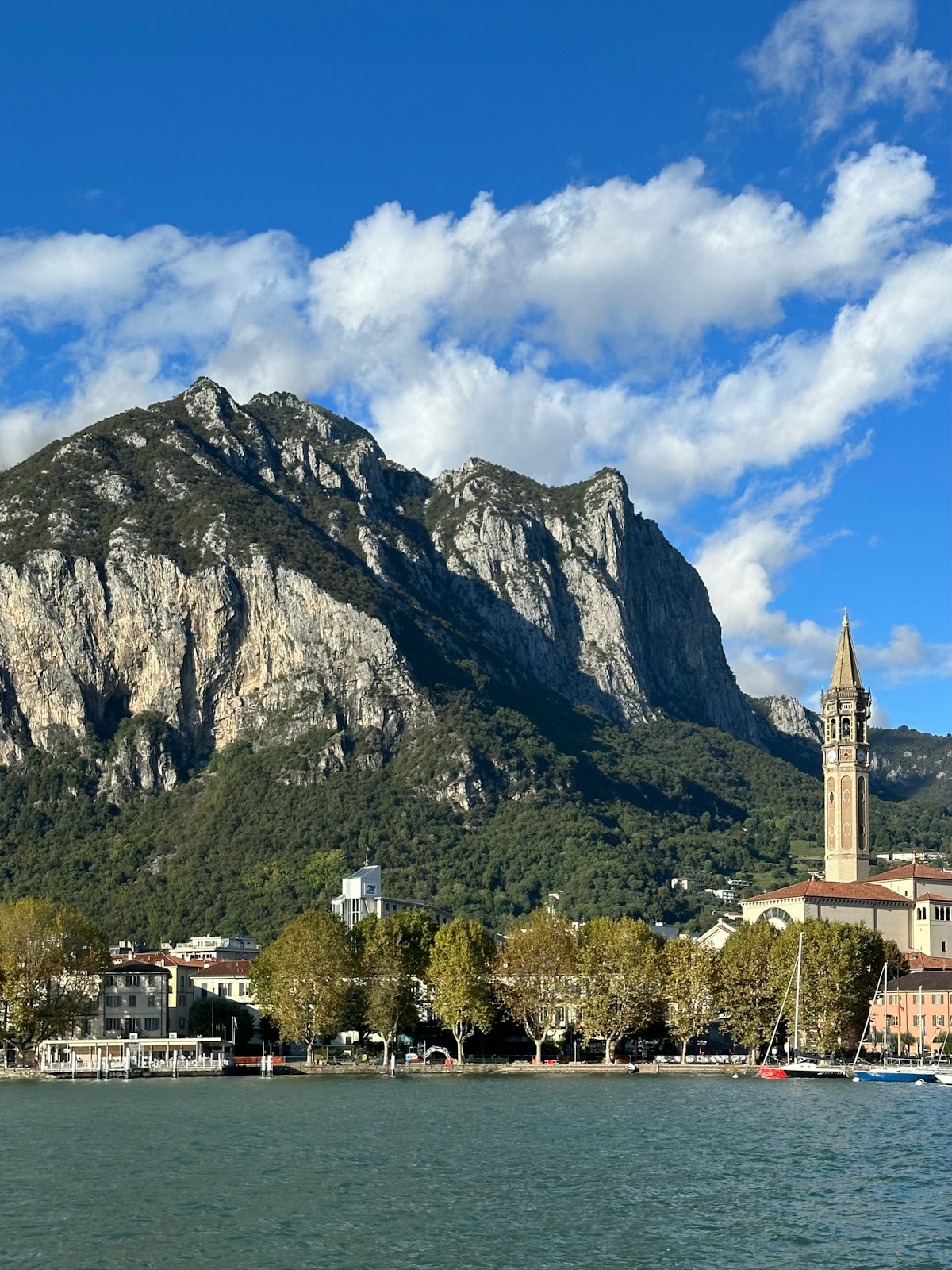
Milan is the best-connected city in northern Italy for day trips. High-speed trains to Turin and Genoa run in under 2 hours; Lake Como is 40 minutes; Bergamo is 50 minutes by commuter rail. The lakes, the Alps, and a string of interesting Lombard towns are all in range.
Top Day Trip Tours at a Glance
| Tour | Duration | Price (from) | Group Size | Highlights |
|---|---|---|---|---|
| Lake Como Day Trip from Milan | Full day | from €55 | Small group | Ferry to Bellagio, Varenna, Villa Monastero gardens |
| Bergamo Medieval City Tour from Milan | Half day | from €39 | Up to 20 | Funicular, Città Alta, Piazza Vecchia, city walls |
| Turin Day Trip from Milan | Full day | from €55 | Small group | Museo Egizio, Mole Antonelliana, Piedmontese food |
| Cinque Terre Day Trip from Milan | Full day | from €69 | Up to 20 | Train logistics, 2 villages, Vernazza, Blue Trail |
| Lake Maggiore and Borromean Islands Tour | Full day | from €59 | Small group | Isola Bella, palace gardens, Stresa promenade |
Browse all Milan day trips → GetYourGuide
Lake Como (40–60 minutes by train)
The most dramatic lake in northern Italy - steep mountain walls dropping directly into deep blue water, with belle epoque villas and gardens along the shoreline. Train from Milano Cadorna or Centrale to Como San Giovanni (approximately 40–60 minutes, approximately €5–7 each way as of 2026) gets you to the southern tip. From Como town, the ferry network reaches Bellagio (approximately 2 hours by slow ferry, approximately €12), Varenna (approximately 1 hour, approximately €10), and Menaggio (approximately 1.5 hours, approximately €11).
Key stops: Bellagio (the point where the lake divides into two arms - gardens, small hotels, spectacular views), Varenna (quieter, more local, Villa Monastero with waterfront gardens - entry approximately €10), and Villa del Balbianello (Lenno - the villa used in Star Wars and Casino Royale - entry approximately €10 for gardens, approximately €20 including villa interior, closed Monday and Wednesday). A full day covers the lower lake well; the upper lake needs an overnight.
Bergamo (50 minutes by train)
The medieval upper city (Citta Alta) above the modern lower town is one of the finest small cities in Italy. The Venetian walls (UNESCO World Heritage, 16th century) encircle a city of extraordinary quality: the Piazza Vecchia (which Le Corbusier called the finest square in Italy), the Cappella Colleoni (a Renaissance masterpiece with inlaid marble - free entry), the Basilica of Santa Maria Maggiore (free entry, Romanesque interior with Baroque additions), and food that is entirely Bergamasco - polenta, casoncelli (filled pasta), Moscato di Scanzo wine.
Getting there: Train from Milano Centrale - approximately 50 minutes, approximately €6 each way as of 2026. From the lower city, take the funicular to the Citta Alta (approximately €1.40 each way, runs every 7 minutes). Bergamo Orio al Serio airport is the main Ryanair hub for Milan - arriving here and spending a few hours in the upper city before continuing to Milan is an efficient start to a trip.
Lake Maggiore and the Borromean Islands (50–80 minutes by train)
Stresa is the main resort town on Lake Maggiore, with ferry connections to the Borromean Islands. Isola Bella has a baroque palazzo with terraced gardens descending to the water - entry approximately €17 (palazzo and gardens combined) as of 2026. Isola Madre has a botanical garden with rare plants - entry approximately €14. Isola dei Pescatori is a tiny fishing village with restaurants but no formal attractions - free to walk around. A combined island ticket (approximately €25) is better value than individual entries.
Getting there: Train from Milano Centrale to Stresa - approximately 60–80 minutes, approximately €7–10 each way as of 2026. Ferries to the islands run from Stresa pier every 30–60 minutes (approximately €13–17 for a day pass covering all three islands).
Cremona (1 hour 15 minutes by train)
The Stradivarius city. Antonio Stradivari made his violins here in the 17th–18th centuries. The Museo del Violino (Piazza Marconi - entry approximately €12 as of 2026) tells the story of violin-making and displays original Stradivari instruments - including the opportunity to hear them played during live demonstrations (check the schedule online). The Piazza del Comune is among the finest medieval piazzas in Italy, dominated by the Torrazzo - the tallest medieval brick tower in Italy (112 metres, 502 steps, entry approximately €5). Local food is excellent: torrone (nougat - Cremona invented it), marubini (filled pasta in broth), and mostarda (candied fruit in mustard syrup).
Getting there: Train from Milano Centrale - approximately 1 hour 15 minutes, approximately €7 each way. Compact enough to cover comfortably in half a day.
Turin (50 minutes by Frecciarossa)
Italy’s most underrated city - a proper European capital with baroque piazzas designed by Guarini and Juvarra, the Museo Egizio (the world’s finest Egyptian collection outside Cairo - entry approximately €18 as of 2026), the Mole Antonelliana (Turin’s landmark tower, now the National Cinema Museum - entry approximately €15, lift to the top approximately €9), and extraordinary Piedmontese food (agnolotti pasta, brasato al Barolo, bicerin chocolate-coffee drink). The Shroud of Turin is housed in the Cathedral (not always on public display - check dates). Aperitivo culture in Turin rivals Milan’s, centred on Piazza Vittorio Veneto and the Quadrilatero Romano district.
Getting there: Frecciarossa from Milano Centrale or Porta Garibaldi - approximately 50 minutes, from approximately €15 booked in advance at trenitalia.com. A full day is genuinely not enough for Turin; consider an overnight.
Cinque Terre (3 hours by train)
The five coastal villages - Monterosso, Vernazza, Corniglia, Manarola, Riomaggiore - are feasible as a very long day trip but better as an overnight. Train from Milan to La Spezia (approximately 3 hours, from approximately €15 by regional train or approximately €30 by Intercity), then local Cinque Terre Express trains between villages (approximately €5 per journey). The Cinque Terre Card (approximately €16/day as of 2026) covers unlimited train travel and the hiking trails. Go in spring or autumn; summer is extremely crowded.
Genoa (1 hour 30 minutes by Frecciarossa)
Italy’s largest port city and one of the most undervisited. The medieval caruggi (narrow alleyways) form one of the largest intact medieval town centres in Europe. The Palazzo dei Rolli (UNESCO-listed noble residences, several open to visitors - check schedules, some free) are extraordinary examples of Genoese architecture. The Porto Antico (old port, redesigned by Renzo Piano) houses the Acquario di Genova (the largest aquarium in Italy - entry approximately €28 as of 2026). The food is exceptional: focaccia di Recco (paper-thin bread with fresh cheese), pesto alla Genovese, farinata (chickpea flatbread), and trofie pasta.
Getting there: Frecciarossa from Milano Centrale - approximately 1.5 hours, from approximately €15 booked in advance. Regional trains take approximately 2 hours, approximately €10.
Mantua (2 hours by train)
A Renaissance city built on three artificial lakes. The Palazzo Ducale (entry approximately €15 as of 2026) is enormous - 500 rooms, including Mantegna’s famous Camera degli Sposi (painted room with extraordinary trompe l’oeil ceiling). The Palazzo Te (entry approximately €15) is Giulio Romano’s masterpiece - the Sala dei Giganti (Room of the Giants) is one of the most immersive painted rooms in Italy. The food is excellent: tortelli di zucca (pumpkin pasta), risotto alla pilota, sbrisolona (crumbly almond cake).
Getting there: Train from Milano Centrale - approximately 2 hours (change at Cremona or Verona), approximately €12 each way. Worth combining with Cremona for a 2-day Lombard cities circuit.
Practical notes
- Lake ferries (Como, Maggiore, Garda) run reduced timetables in November–March - check schedules at navigazionelaghi.it before planning
- Turin by Frecciarossa is surprisingly fast and affordable - book online for the best prices
- Bergamo airport is the main budget airline hub for Milan - arriving there and visiting the upper city before continuing to Milan saves a day
- Cremona, Mantua, and Bergamo can be combined into a 2-day Lombard cities circuit if you’re based in Milan for a week
- Regional trains in Lombardy are frequent and don’t require advance booking - buy at the station or on the Trenitalia app
Book Milan Day Trip Tours on GetYourGuide
| Day Trip | Duration | From price | Highlights |
|---|---|---|---|
| Lake Como guided day trip from Milan | Full day | From €65 | Bellagio, ferry on the lake, Villa Carlotta gardens |
| Bergamo and Cremona tour from Milan | Full day | From €75 | Bergamo upper city, Cremona cathedral, violin museum |
| Mantua and Sabbioneta UNESCO day trip | Full day | From €79 | Palazzo Ducale, Gonzaga history, Sabbioneta ideal city |
Browse all Milan day tours on GetYourGuide →
Back to the full Milan travel guide for the city itself. Day trips to Lake Como and Lake Garda each have their own guides covering the towns, boat trips, and where to stay if you’re extending your visit. Bergamo has a dedicated city guide for the upper city. Turin has its own guide covering the Egyptian Museum, Royal Palace, and Piedmontese food. For a multi-day circuit of northern Italy connecting Milan, the lakes, Venice, and Verona, see our northern Italy itinerary.
Where to stay in Milan: Find hotels in Milan — search accommodation across all budgets.