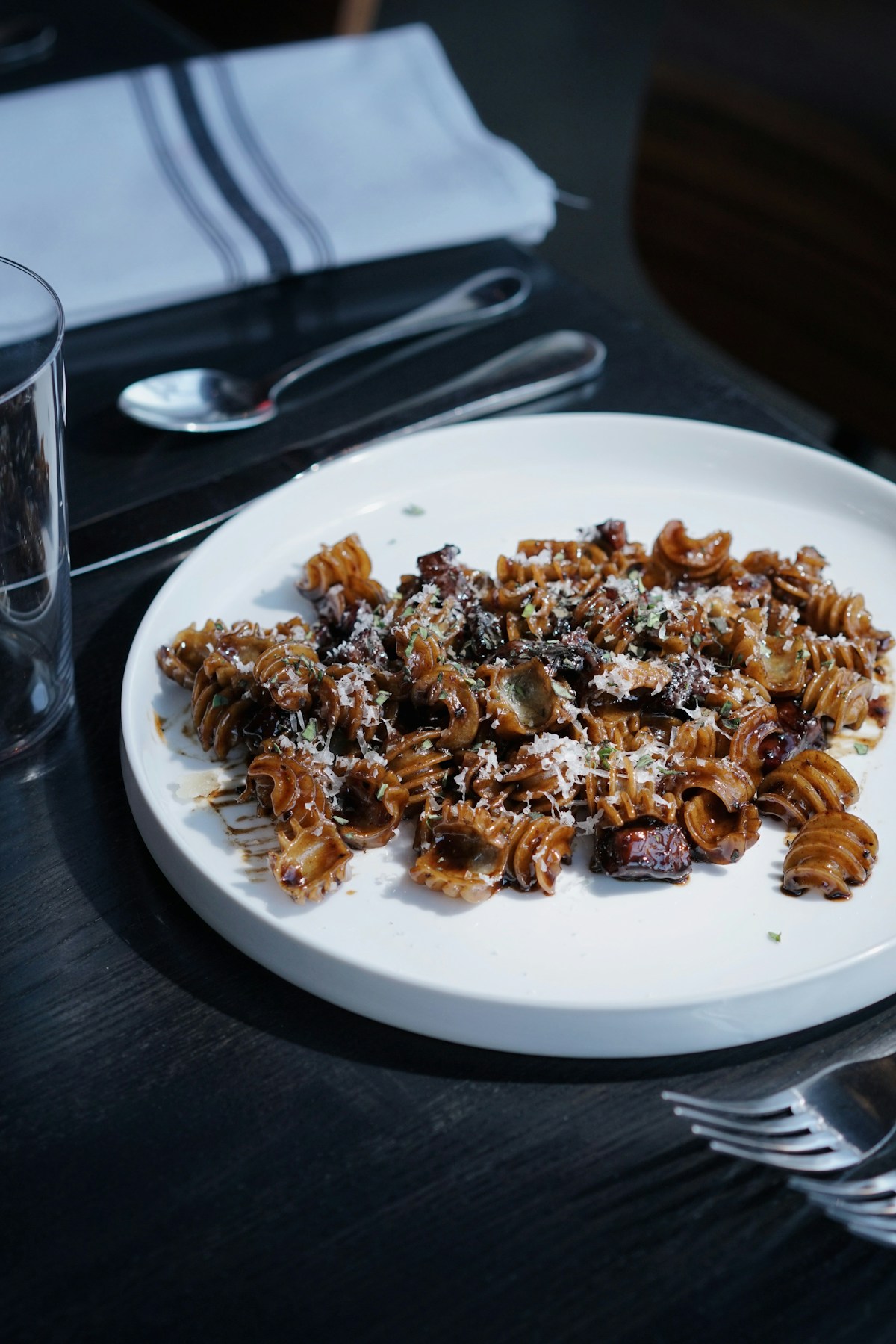
Milan sits at the centre of Po Valley cuisine - the richest food tradition in Italy. The north cooks with butter and cream rather than olive oil, uses egg pasta rather than dried pasta, and has access to excellent meat, dairy, and rice. Milan’s own food tradition is distinct from the rest of Lombardy: urban, sophisticated, and built around a cafe and aperitivo culture that has no equivalent elsewhere.
The essential dishes
Risotto alla Milanese - Saffron risotto made with bone marrow, butter, and Grana Padano. The saffron gives it a deep gold colour; the bone marrow adds a richness that makes it a meal in itself. Traditionally served alongside ossobuco as a side dish, though excellent alone. Approximately €14–18 at trattorias, as of 2026.
Ossobuco alla Milanese - Braised veal shank in white wine with gremolata (lemon zest, garlic, parsley). A slow-cooked Milanese classic requiring 2–3 hours of braising. The marrow inside the bone is eaten with a small spoon - the best part. The classic combination with risotto alla Milanese makes a substantial meal. Approximately €20–28 at trattorias.
Cotoletta alla Milanese - Bone-in veal chop, breaded in egg and breadcrumbs, and fried in butter until golden. Similar to Wiener Schnitzel (Milan claims the Milanese version predates the Viennese one). Served without sauce; lemon on the side. The proper version is thick, bone-in, and cooked in butter - not the thin, oven-baked version found at tourist restaurants. Approximately €18–25 at trattorias. Some restaurants offer “orecchio d’elefante” (elephant ear) - a larger, thinner version.
Cassoeula - A slow-cooked winter stew of pork ribs, sausages, pork rind, and Savoy cabbage. Heavy, deeply satisfying, and traditionally eaten from November through February. Not commonly served in summer. Approximately €14–18 at trattorias.
Mondeghili - Milanese meatballs made from leftover boiled meat, bread, egg, and nutmeg. Fried and served as a starter or with polenta. A traditional recycling dish. Approximately €8–12 as an antipasto.
Panettone - The tall, dome-shaped Christmas bread with candied citrus and raisins originated in Milan. Fresh from a Milanese pasticceria at Christmas bears no resemblance to the commercially exported product. Pasticceria Cova (Via Montenapoleone 8 - approximately €35–45 for a 1kg panettone) and Marchesi (Via Santa Maria alla Porta 11a - approximately €30–40) produce some of the finest versions.
Where to eat
Traditional Milanese
Trattoria Masuelli San Marco (Viale Umbria 80, Porta Romana) - Operating since 1921. Excellent ossobuco and risotto alla Milanese. Pasta approximately €14–16, mains approximately €18–25. Traditional service, warm atmosphere. Reservations recommended. Closed Sunday. Metro M3 (Lodi).
Trattoria Milanese (Via Santa Marta 11, near the Duomo) - A classic Milanese trattoria since 1933. Cotoletta alla Milanese approximately €22, risotto alla Milanese approximately €16. Full meal approximately €40–50 per person with wine. Reservations essential for dinner. Closed Tuesday.
Ratanà (Via Gaetano de Castillia 28, Isola) - Modern Milanese cuisine in a converted railway building near the Bosco Verticale. Risotto alla Milanese approximately €16, cotoletta approximately €24. The seasonal menu changes regularly. Reservations recommended. Open Monday–Saturday.
Antica Trattoria della Pesa (Viale Pasubio 10, Garibaldi) - A grand trattoria operating since 1880 with heavy wooden interiors and traditional service. Risotto approximately €16, ossobuco approximately €24. Full dinner approximately €45–55 per person. Reservations essential. Closed Sunday.
Budget eating
Luini Panzerotti (Via Santa Radegonda 16, near the Duomo) - The most famous street food in Milan. Panzerotti (deep-fried calzone-style pockets filled with tomato and mozzarella) for approximately €3 each. Open Monday–Saturday 10am–8pm. Expect a queue at lunchtime. Cash only.
Princi (several locations - Via Speronari 6 is nearest the Duomo) - A Milanese bakery chain with excellent pizza by the slice (approximately €3–5), focaccia, and pastries. Open from early morning until late evening. Good for quick, affordable meals.
Mercato Comunale (Via Valenza 2, Navigli) - A neighbourhood covered market with stalls serving prepared food. Lunch plates approximately €8–12. Open Monday–Saturday mornings.
Aperitivo
The Milanese aperitivo ritual is one of the city’s genuine contributions to Italian culture. A Milan food tour that covers the aperitivo tradition, the historic markets, and the Milanese specialities gives a structured introduction to the city’s food identity. For a deeper dive into the city’s aperitivo scene and restaurant recommendations, our complete Milanese food guide covers the best bars and where to eat across all neighbourhoods. From approximately 6pm to 9pm, bars across the city serve free food with drink purchases. A Negroni, Campari Spritz (Campari was founded in Milan), or Aperol Spritz for approximately €8–12 includes access to a buffet that ranges from nibbles (olives, crisps, bruschetta) to substantial spreads (pasta, rice salad, cold cuts, vegetables). This is how Milanese people eat on weeknights.
Best aperitivo bars
Mag Cafe (Ripa di Porta Ticinese 43, Navigli) - Craft cocktails and a generous aperitivo buffet on the canal. Drinks approximately €8–10. Open 6pm–2am daily.
Bar Basso (Via Plinio 39, Porta Venezia) - The bar that invented the Negroni Sbagliato (Negroni with Prosecco instead of gin). An institution since 1947. Negroni Sbagliato approximately €10. Open 8am–1am, closed Tuesday.
Botanical Club (Via Tortona 33, Tortona) - A cocktail bar in the design district with a strong aperitivo spread. Drinks approximately €10–12. Open 6pm–2am daily.
N’Ombra de Vin (Via San Marco 2, Brera) - A wine bar in a converted 15th-century building. Excellent wine selection (glasses from approximately €6) with aperitivo food. Open 10am–midnight daily.
Markets
Mercato di Via Fauché (Tuesday and Saturday mornings, Porta Tenaglia area) - The city’s largest outdoor food market. Farmers from the surrounding Po Valley bring seasonal produce, cheese, and cured meats. Metro M5 (Cenisio).
Peck (Via Spadari 9, near the Duomo) - Milan’s most famous delicatessen, open since 1883. Expensive but unmatched for charcuterie, cheese, prepared foods, and wine. Three floors: deli, wine cellar, and restaurant. A 200g selection of cheeses costs approximately €10–15. Worth visiting even just to look.
Eataly Milano Smeraldo (Piazza XXV Aprile 10, Garibaldi) - The Milan branch of the Italian food emporium. Multiple restaurants, a grocery store, and cooking classes. Lunch at the counters approximately €12–18 per person.
Take a Guided Food Tour of Milan
Milan’s best eating is neighbourhood-specific — the Navigli district for aperitivo and traditional trattoria cooking, Brera for the upscale Milanese dining that matches the fashion quarter, the Mercato Metropolitano near Porta Romana for artisan producers under one roof. A food tour covering the Navigli and its attached canal-side restaurants, with aperitivo at a historic bar and a proper cotoletta lunch, gives you the full Milanese experience in a focused three-hour window. Browse Milan food tours on GetYourGuide.
Practical tips
- The coperto (cover charge) in Milan is approximately €2–3 per person at trattorias
- Lunch is typically 12:30pm–2:30pm, dinner 7:30pm–10:30pm. Many trattorias close between meals
- A full trattoria dinner (antipasto, primo, secondo, wine) costs approximately €40–55 per person
- Espresso at the bar: approximately €1.20–1.50 standing. Sitting costs more (approximately €3–5) - this is standard
- Tipping: not expected. Rounding up or leaving €1–2 is appreciated at restaurants
- The Navigli canal district has the best concentration of restaurants and bars for evening dining - walk along Naviglio Grande and Naviglio Pavese
Back to the full Milan travel guide for the Last Supper, Duomo, design districts, and aperitivo culture. For comprehensive restaurant and aperitivo bar recommendations, check our full Milanese food guide. For plant-based dining in Milan, our vegan guide to Milan covers the best restaurants by neighbourhood. For the Italian coffee culture context - standing at the bar, what to order, regional differences - see our Italian coffee guide. Pairing food with Lombard and Piedmontese wine? Our Italian wine guide covers the zones and what to order. For accommodation in Milan across all budgets, see the best hotels in Milan or the broader Milan hotels guide.
Where to stay in Milan: Find hotels in Milan — search accommodation across all budgets.