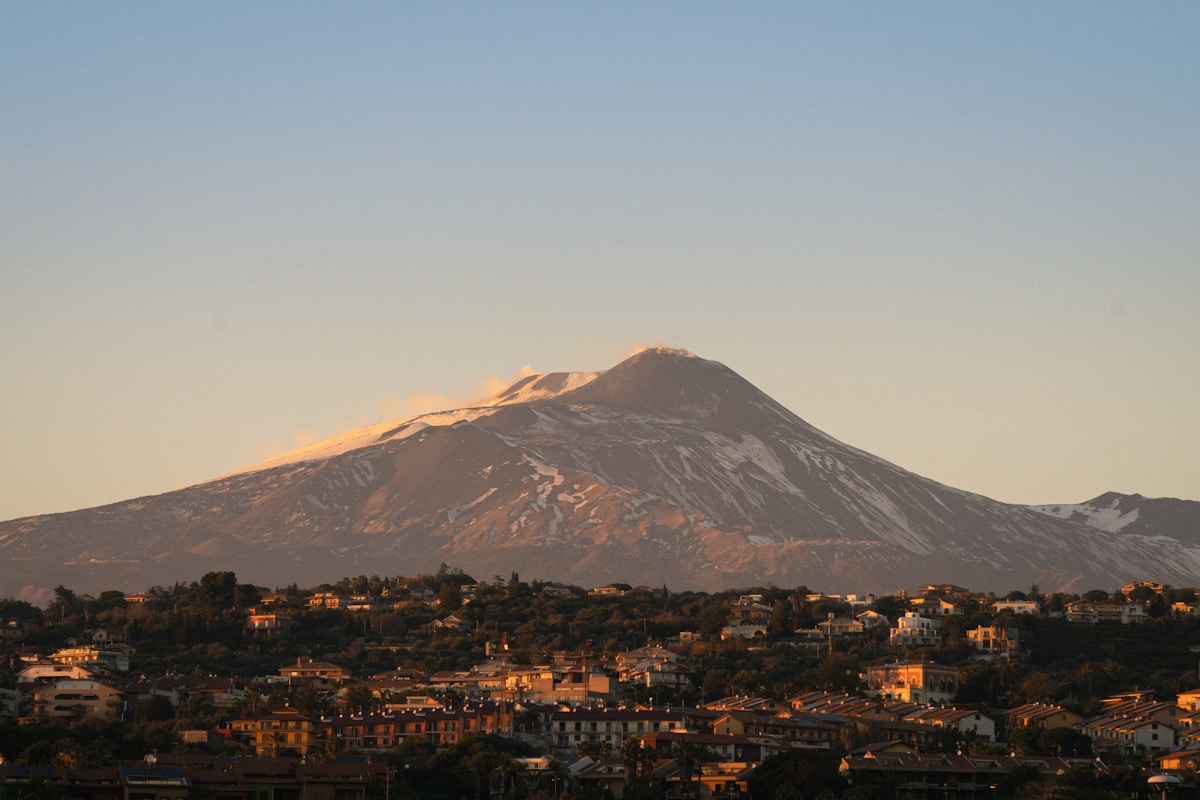
Catania is the most underrated city in Sicily. Built entirely from black lava stone after the devastating 1693 earthquake — and rebuilt in a confident, theatrical Baroque style — it sits at the foot of Mount Etna with the Ionian Sea to the east. The fish market at La Pescheria is one of the great food markets of southern Italy. The Duomo, the Fontana dell’Elefante, and the streets running north along Via Etnea form an urban core that is as architecturally coherent as anything in Italy. And because most tourists shoot straight through to Taormina, you get it largely to yourself. Here’s where to base yourself.
Search Catania hotels on Booking.com to compare prices and check availability across all areas in this guide.
Centro Storico — Between the Duomo and the Teatro Massimo
The historic centre is the natural choice for most visitors. The key landmarks are tightly packed: Piazza del Duomo and its elephant fountain (the city’s symbol), the Cathedral of Sant’Agata, the Roman amphitheatre (partially visible in Piazza Stesicoro), and the Villa Bellini gardens — the best urban park in Catania. Via Etnea, the main commercial spine running north from the Duomo, has good cafes, pastry shops, and the clearest views of Etna on clear days.
Pros: Walking distance to everything. Best concentration of restaurants and bars. Etna tour operators pick up nearby. Atmospheric at night when the market traders have packed up and the streets belong to locals eating late.
Cons: The streets around La Pescheria (the fish market) are very busy and noisy from early morning. Some of the narrower medieval streets have parking and noise issues. The area immediately around the main station is more run-down — hotels closer to the Duomo are preferable.
Budget (€55–90/night): Family-run B&Bs and small guesthouses in the streets just west of Via Etnea. The B&B Etnea (Via Etnea area): clean, comfortable rooms with good breakfasts in the heart of the historic centre; doubles from approximately €65/night as of 2026. The Palazzo Stesicoro B&B (near Piazza Stesicoro): converted historic building, modest facilities, excellent position; doubles from approximately €70/night.
Mid-range (€100–180/night): The Una Hotel Palace (Via Etnea 218): a four-star occupying a 19th-century palazzo, rooftop terrace with Etna views, reliable business-standard facilities; doubles from approximately €130/night as of 2026. Palazzo Marletta (Via Vittorio Emanuele II): a boutique hotel in an 18th-century palazzo, individually designed rooms, a calmer atmosphere than the main Via Etnea hotels; doubles from approximately €150/night.
Luxury (€200–350/night): The Hotel Katane Palace (Via Finocchiaro Aprile 110): Catania’s most polished four-star, with a rooftop pool, a spa, and well-proportioned rooms; doubles from approximately €220/night as of 2026. Duetorri Hotel (via Gemmellaro): intimate boutique in a converted palazzo, five suites and rooms with original features; doubles from approximately €250/night.
Playa and the Waterfront (La Scogliera)
Catania has a long urban beach — the Playa — running south from the port. The waterfront neighbourhood around La Scogliera (the lava-rock breakwater north of the port) has a more local, residential character, popular with Catanese who want to be near the sea. This area is best suited to visitors with a car or staying several nights.
Pros: Closer to the sea. Quieter in the evenings. Some good seafood restaurants along the waterfront. Useful if you’re arriving or departing from Catania Fontanarossa airport, which is 5 kilometres south.
Cons: About 20–25 minutes’ walk from the Duomo and the historic centre. Less atmospheric for evening dining than the centro storico. Limited public transport connections late at night.
Budget to Mid-range (€70–140/night): Smaller hotels and B&Bs near the sea promenade. The Hotel Nettuno (Viale Ruggero di Lauria): a seafront hotel with pool, popular with Italian families in summer; doubles from approximately €90–130/night depending on season as of 2026.
Ognina
Ognina is a small neighbourhood at the northern edge of the city centre, where the old lava-rock fishing port sits against the Ionian sea wall. It’s a genuine neighbourhood — bars, local restaurants, a small harbour — rather than a tourist zone. A handful of B&Bs and apartments here offer good value.
Pros: More local atmosphere than the tourist-focused centro storico. The fishing port and the lava shoreline are atmospheric at any time of day. Good value for money. Useful for travellers heading north to Acireale and Taormina.
Cons: 2–3 kilometres north of the Duomo — requires a bus or taxi for the main sights. Fewer hotel options. Less immediately walkable for a short city visit.
Budget (€60–95/night): Small family-run guesthouses and apartments overlooking the harbour. Prices are lower than the historic centre for equivalent facilities.
Plan your trip:
- Browse tours and Etna excursions from Catania
- Book an airport transfer from Catania Fontanarossa
- Get travel insurance before you book
- Pick up an eSIM for Italy
- Search hotels in Catania on Booking.com
Booking and practical tips
- Book Etna tours before your accommodation. The best-value Etna tours — particularly those covering the summit craters — sell out quickly in summer. Fix your tour date first, then book accommodation around it. Most tours depart from Catania or from Nicolosi (30 minutes south by car/bus).
- The Sant’Agata festival is in early February. Catania’s patron saint’s festival (3–5 February) is one of the most dramatic religious events in Sicily — over a million people. Hotels book up months in advance and prices surge significantly. If you want to attend, plan well ahead. If you want to avoid crowds, avoid this window entirely.
- Catania Fontanarossa airport (CTA) is 5 kilometres south of the city centre. A taxi costs approximately €15–20 to the centro storico as of 2026. The Alibus (airport bus) runs to the city centre for approximately €4.
- City tax in Catania is approximately €2/night per person — payable at the property.
- Summer heat. Catania in July and August is very hot — regularly 35°C+. Air conditioning is essential; confirm it is working before booking. The lava stone buildings retain heat; rooms above the first floor tend to be cooler.
- Parking in the centro storico is restricted. If arriving by car, book a hotel with parking or use one of the car parks on the edge of the historic zone. Via Etnea and most of the central streets are pedestrianised or ZTL restricted.
For the full city overview: our Catania travel guide covers the Etna excursion options, the fish market, and the best of the city’s baroque architecture. For accommodation across Sicily more broadly: hotels in Palermo, hotels in Taormina, and the Sicily hotels overview.
Ready to Plan Your Trip?
- Sicily Itinerary - the definitive route through the island
- Southern Italy Itinerary - Naples, Sicily, and Calabria in sequence
- 3 Weeks in Italy - the full north-to-south grand tour