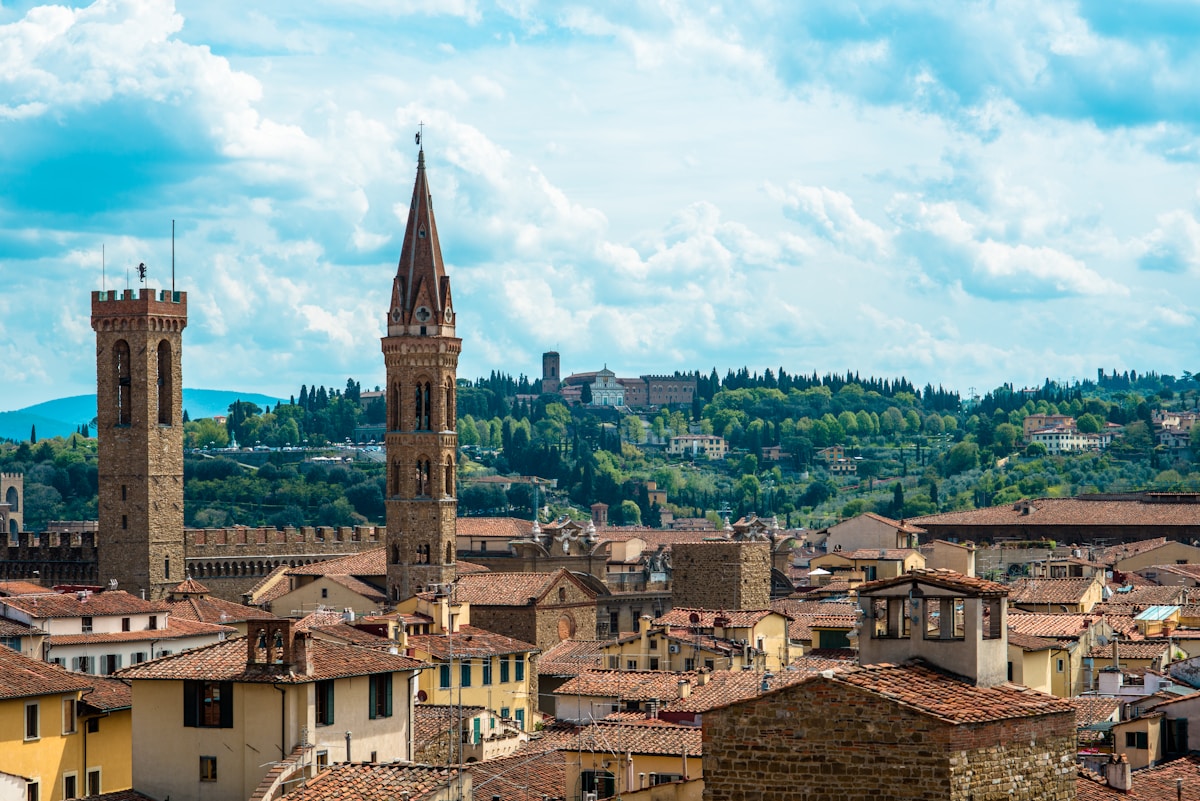
The Renaissance - literally “rebirth” - was the period from roughly the 14th to 17th centuries when Europe rediscovered classical Greek and Roman learning and applied it to art, literature, science, and political thought. It began in the Italian city-states and spread from there to the rest of Europe. No other single cultural movement has shaped the Western world more completely.
Why Italy?
Several converging factors made Italy the birthplace:
Wealth from trade. The Italian city-states - Florence, Venice, Genoa, Milan - were the commercial hubs of medieval Europe. Merchant families grew rich from banking, cloth, and trade with the East. Wealth produced patronage: the commissioning of art, architecture, and scholarship.
Proximity to classical ruins. Roman monuments, manuscripts, and statuary were everywhere. Italian humanists had a physical relationship with antiquity that northern Europeans lacked.
The fall of Constantinople (1453). When the Ottomans took Constantinople, Byzantine scholars fled west with Greek manuscripts. This injected a fresh source of classical knowledge into Italian intellectual life.
Competition between city-states. Florence competed with Venice competed with Milan. Magnificence - in buildings, art, festivals - was a form of political power. The Medici of Florence, the Visconti and Sforza of Milan, the Gonzaga of Mantua, and the Este of Ferrara all sponsored art to demonstrate their status.
The key periods
Proto-Renaissance (1280–1400): Dante, Petrarch, Boccaccio in literature. Giotto in painting - his frescoes in Padua’s Scrovegni Chapel (1305) broke decisively with the flat, symbolic style of Byzantine art and gave figures mass, emotion, and space.
Early Renaissance (1400–1490): Brunelleschi solves the engineering problem of Florence’s cathedral dome (1436) - still the largest masonry dome ever built. Donatello creates the first freestanding nude bronze statue since antiquity (David, c.1440). Masaccio, Botticelli, Piero della Francesca, Ghirlandaio.
High Renaissance (1490–1527): The brief period of absolute achievement - Leonardo da Vinci, Michelangelo, Raphael. The Sistine Chapel ceiling painted 1508–1512. The Mona Lisa painted c.1503–1519. Raphael’s Vatican Stanze. These three artists worked simultaneously in Florence and Rome.
Mannerism and Late Renaissance (1527 onwards): The Sack of Rome (1527) by mutinous Habsburg troops ended the High Renaissance. Artists responded with increasingly complex, artificial, emotionally intense work - Pontormo, Rosso Fiorentino, Bronzino in Florence; Tintoretto and Veronese in Venice.
Where to see the Renaissance
Florence: The essential Renaissance city. The Uffizi holds the greatest collection of Renaissance painting in the world - Botticelli’s Birth of Venus and Primavera, Leonardo’s Annunciation, Raphael, Titian, Caravaggio. The Accademia has Michelangelo’s David (the original; the copy in Piazza della Signoria is a replacement). Brunelleschi’s dome dominates the skyline. The Baptistery doors by Ghiberti - Michelangelo called them the Gates of Paradise.
Rome: The Vatican Museums + Sistine Chapel. The Raphael Rooms in the Apostolic Palace. Castel Sant’Angelo. San Pietro in Vincoli for Michelangelo’s Moses.
Venice: The Scuola Grande di San Rocco - Tintoretto’s entire decorative cycle, 60 paintings. The Gallerie dell’Accademia. The Doge’s Palace. Santa Maria dei Frari for Titian’s Assumption of the Virgin.
Milan: Santa Maria delle Grazie - Leonardo’s Last Supper (1495–1498), painted directly on the refectory wall. Booking months ahead is essential; visits are 15 minutes.
Mantua: One of the finest small Renaissance courts. Palazzo Ducale, Palazzo Te (Giulio Romano’s masterpiece), the Camera degli Sposi by Mantegna.
Padua: The Scrovegni Chapel (Giotto, 1305) - the origin point. Small, often overlooked, absolutely essential.
Ferrara: The Este court. Palazzo Schifanoia, the Palazzo dei Diamanti, Castello Estense. A perfectly preserved Renaissance city.
Plan your trip:
- Browse guided tours of Florence’s Renaissance landmarks
- Get travel insurance for your trip
- Search flights to Florence
The Medici
No family is more central to the Florentine Renaissance. Cosimo de’ Medici (1389–1464) established Medici dominance through banking and strategic patronage - commissioning Brunelleschi, Donatello, Fra Angelico, Luca della Robbia. His grandson Lorenzo “il Magnifico” (1449–1492) ran the most brilliant court in Europe - poets, philosophers, painters, and the young Michelangelo all gathered at the Medici villa. When Lorenzo died, the Florentine golden age effectively ended.
The family’s story - banking empire, political power, patronage, exile, return, two popes (Leo X and Clement VII), and eventual grand dukes of Tuscany - is impossible to separate from the history of Renaissance Florence. The Palazzo Medici Riccardi and the Medici Chapels (with Michelangelo’s New Sacristy) are the essential stops.
For visiting the Renaissance in person: Florence travel guide covers the Uffizi, Accademia, and Duomo with current prices and booking advice. For tickets: Uffizi tickets guide and Florence Duomo tickets guide. For the Last Supper in Milan: Last Supper tickets guide. For Venice’s Tintoretto and Titian: Venice travel guide. For Padua’s Scrovegni Chapel: Padua travel guide.