The Roman Republic lasted approximately 500 years - from the expulsion of the Etruscan kings in 509 BC to the establishment of the Principate under Augustus in 27 BC. In that time, Rome grew from a small city-state on the Tiber to the dominant power of the Mediterranean world, and the political system that made this possible - the combination of Senate, elected magistrates, and popular assemblies - was one of the most sophisticated in the ancient world. The Republic’s internal contradictions eventually destroyed it, in a century of civil wars that produced Julius Caesar, Pompey, Crassus, Brutus, Cassius, Mark Antony, Cleopatra, and Augustus.
The constitution
The Roman Republic was not a democracy in the modern sense - it was an aristocratic republic in which power was held by the Senate (composed of former magistrates, almost entirely from noble families) and channelled through elected annual magistrates. The key offices:
Consul: Two consuls were elected annually, with equal power - each could veto the other. They commanded the armies and presided over the Senate. Emergency situations could produce a Dictator, appointed for six months with absolute power (Caesar’s perpetual dictatorship broke this rule).
Praetor: Legal magistrates, also commanded military forces.
Censor: Conducted the census, controlled the composition of the Senate, and oversaw public morals.
Tribune of the Plebs: Elected by and from the common people (plebs); had the power to veto actions of any magistrate (the tribunicia potestas - the right of intercession). The most powerful popular office.
Quaestor, Aedile, and others: Lower magistrates with financial, administrative, and civic functions.
The Punic Wars
The three wars against Carthage (264–146 BC) were the defining conflict of the Republic:
First Punic War (264–241 BC): Rome enters Sicily to contest Carthaginian influence; fights the first major naval war in its history. Sicily becomes Rome’s first provincial possession.
Second Punic War (218–201 BC): Hannibal Barca crosses the Alps with 37,000 troops and war elephants and defeats Roman armies at the Trebia (218 BC), Lake Trasimene (217 BC), and Cannae (216 BC - perhaps 70,000 Romans dead in a single afternoon). He remains in Italy for 15 years but cannot take Rome. Scipio Africanus takes the war to Africa; Hannibal is recalled; the Battle of Zama (202 BC) ends Carthaginian power.
Third Punic War (149–146 BC): Rome destroys Carthage utterly - the city razed, the population enslaved, the site salted. The phrase “Carthage must be destroyed” (Cato the Elder’s closing statement to every Senate speech, regardless of subject) is the defining piece of Roman imperialist rhetoric.
The breakdown of the Republic
The century from the Gracchi brothers (133 BC) to Augustus (27 BC) is the story of the Republic’s gradual destruction by its own contradictions:
The Social War (91–87 BC): Rome’s Italian allies revolt and demand Roman citizenship. They win it, but the war reveals that the political system designed for a city-state cannot accommodate an empire.
Sulla’s first dictatorship (82–79 BC): Sulla marches on Rome (the first general to use his army against the city) and installs himself as Dictator. He resigns; the precedent is set.
The First Triumvirate (60 BC): Caesar, Pompey, and Crassus form an unofficial alliance to dominate politics, bypassing the Senate.
Caesar’s civil war (49–44 BC): When the Senate orders Caesar to disband his army, he crosses the Rubicon (“the die is cast”) and marches on Rome. His victory in the civil war leads to his dictatorship. He is assassinated by Brutus, Cassius, and others on the Ides of March (15 March) 44 BC in the Theatre of Pompey.
The Second Triumvirate and the Augustan settlement: Octavian (Caesar’s adopted son, later Augustus), Mark Antony, and Lepidus defeat the Republican forces at Philippi (42 BC). Antony’s alliance with Cleopatra and his conflict with Octavian leads to the Battle of Actium (31 BC). Octavian’s victory gives him sole power; in 27 BC, the Senate grants him the title “Augustus” and the Republic formally becomes the Principate.
Plan your trip:
- Browse guided tours of Rome’s Republican-era sites
- Get travel insurance for your trip
- Search flights to Rome
Where to see the Roman Republic
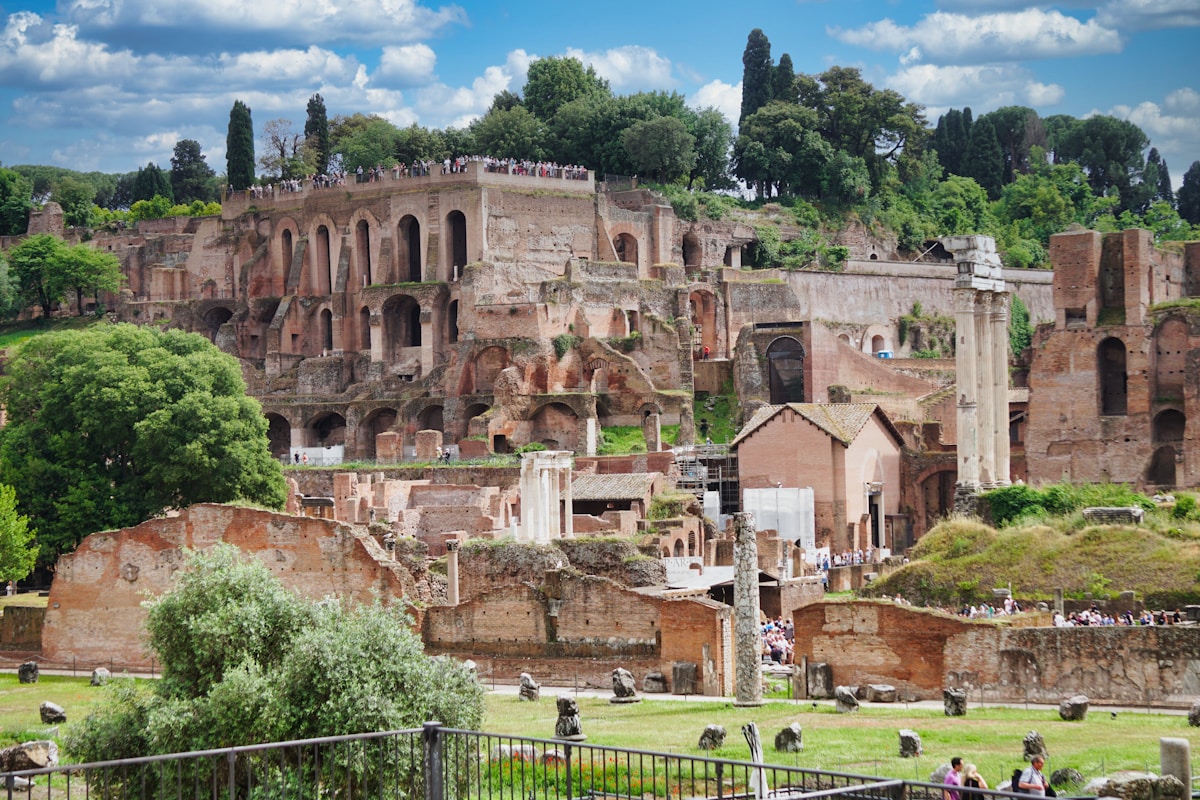
The Roman Forum: The civic, religious, and commercial centre of Republican Rome. The Temple of Saturn (dedicated 498 BC), the Temple of Castor and Pollux (484 BC), the Rostra (speaker’s platform from which tribunes addressed the people), the Basilica Julia and Basilica Aemilia (law courts and commercial halls), and the Senate House (Curia Julia - rebuilt by Caesar, completed by Augustus). The assassination of Caesar took place in the Theatre of Pompey, now under modern Largo di Torre Argentina, where the foundations are visible in an open-air cat sanctuary.
The Largo di Torre Argentina: Four Republican-era temples (4th–2nd centuries BC) are partially excavated in an open plaza near Campo de’ Fiori. The remains of the Theatre of Pompey - where Caesar was assassinated - are now partly incorporated into a restaurant.
The Capitoline Hill: The original citadel of Rome, where the Temple of Jupiter Optimus Maximus stood (the most important religious site in the Republic). The Capitoline Museums (in the palaces Michelangelo designed for the Piazza del Campidoglio) hold the best Republican and Imperial Roman sculpture collections.
Ostia Antica: Rome’s ancient port city, 30km west, shows Republican and Imperial urban planning in a largely unexcavated city. Far less visited than Pompeii; equally impressive.
For visiting the Republican sites: Rome travel guide covers the Forum, Colosseum, and Capitoline Hill with current entry fees and opening hours. For Colosseum booking: Colosseum tickets guide. For the history after the Republic ended: ancient Rome guide. For Pompeii - the snapshot of Roman life preserved by Vesuvius: Pompeii history guide.