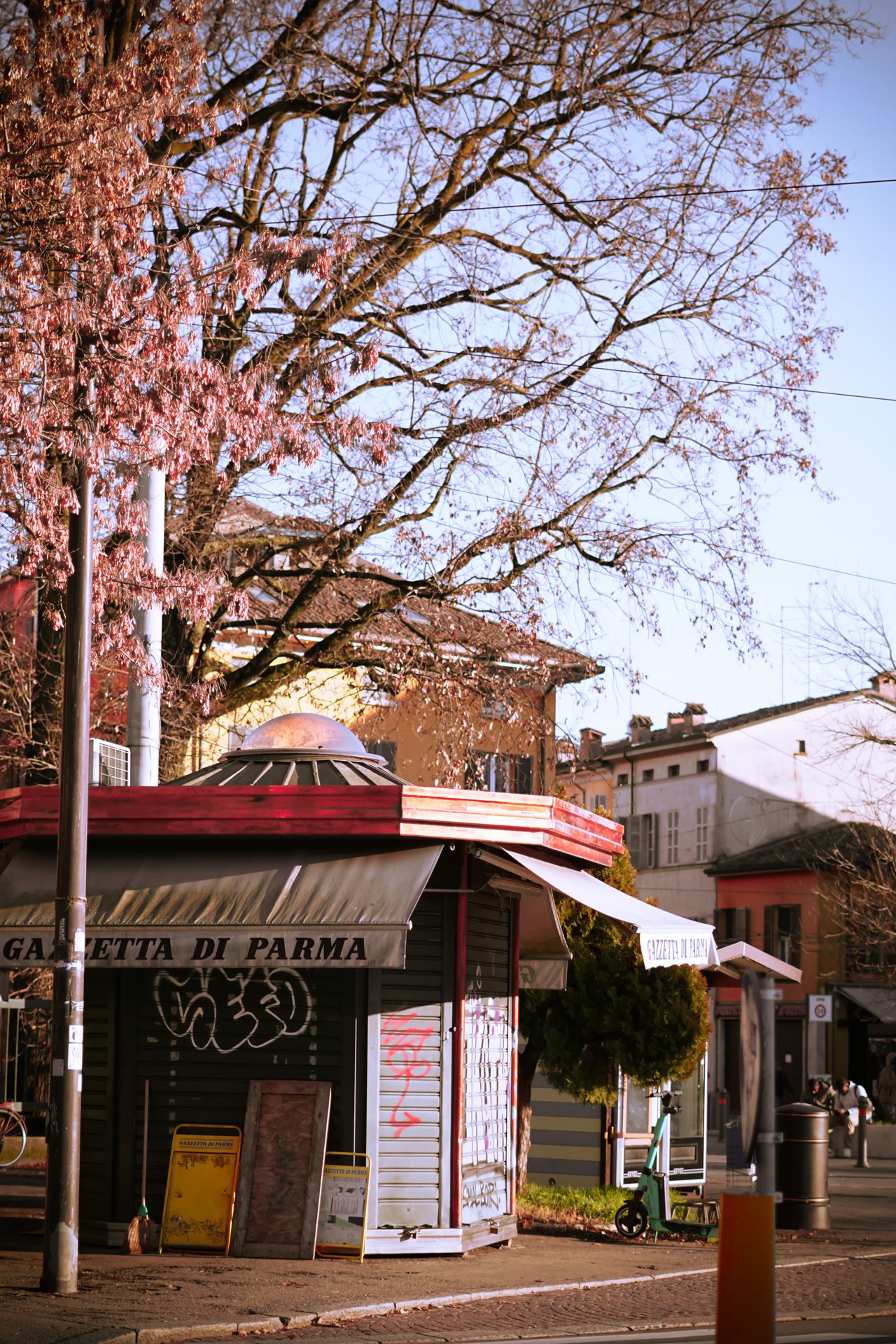
Parma sits in the Po Valley in Emilia-Romagna, roughly halfway between Bologna and Milan, and it takes about fifteen minutes in the city to understand why it holds a reputation entirely disproportionate to its size. The cathedral frescoes are among the most spatially inventive in Italian Renaissance painting. The opera house is one of the most acoustically demanding stages in Italy. And the food — above all else, the food — has shaped the cuisine of the entire Western world in ways that most people encounter daily without thinking about where it originated.
Two of Italy’s most internationally traded products come from this territory: Parmigiano-Reggiano (the cheese) and Prosciutto di Parma (the cured ham). Both carry the EU’s Protected Designation of Origin (PDO) mark, meaning they can only be produced under specific conditions in a defined geographic area. The Parmigiano-Reggiano production zone covers Parma, Reggio Emilia, Modena, Bologna (left bank of the Reno), and Mantova (right bank of the Po). Prosciutto di Parma is more restricted still: it must be cured in the Langhirano hills south of the city, where the specific microclimate — cool air channelled from the Ligurian Apennines — is held to be essential to the flavour.
Understanding what makes these products genuinely different from imitations requires a visit to the place where they are made. A Parmigiano-Reggiano dairy tour typically begins before 9am, when the curd is still being worked in the copper vats. A single wheel of Parmigiano weighs approximately 40 kilograms and requires roughly 550 litres of milk — the daily output of about 20 cows. The cheese contains no additives, no preservatives, and no colouring: just milk, salt, and rennet, combined according to a method documented since at least the 13th century.
Beyond the food, Parma has a civic confidence reflected in its architecture. The Palazzo della Pilotta, the Romanesque cathedral complex, and the 19th-century Teatro Regio form a cultural core that is walkable in a morning. Arturo Toscanini, born here in 1867, conducted the opening night of the renovated Teatro Regio in 1898 and remained associated with it throughout his career.
Quick Comparison: Top Parma Tours at a Glance
| Tour | Duration | Price (approx) | Best For |
|---|---|---|---|
| Parmigiano-Reggiano dairy tour + tasting | 2–3 hrs | from €30 | Food culture, production |
| Prosciutto di Parma factory tour + tasting | 2 hrs | from €25 | Cured meats, tradition |
| Combined food tour (cheese + ham + wine) | Full day | from €85 | Gastronomy overview |
| Cathedral + Baptistery guided tour | 1.5 hrs | from €20 | Art history, frescoes |
| Parma city walking tour | 2 hrs | from €22 | History, architecture |
| Teatro Regio guided visit | 1 hr | from €15 | Opera, cultural history |
| Cooking class: fresh pasta and local dishes | Half day | from €75 | Hands-on gastronomy |
| Day trip to Cremona or Reggio Emilia | Full day | from €55 | Regional comparison |
Parmigiano-Reggiano Dairy Tours
Duration: 2–3 hours | From: approx €30 per person
The production of Parmigiano-Reggiano follows a method that has changed little in seven centuries. Milk from local cows (predominantly Vacca Rossa Reggiana or Frisona breeds) arrives at the dairy before dawn; by mid-morning the curds have been cut, cooked in copper vats, and moulded into their characteristic wheel shape. A guided tour of a working caseificio walks you through each stage — from the open vats where the curd separator (spadino) is used by hand to the draining tables and the salt bath (brining pool) where new wheels spend 20–25 days before entering the ageing warehouse.
The magazzino is the defining image of Parmigiano-Reggiano production: rows of shelves stacked from floor to ceiling with golden wheels, turned and brushed by hand (or by automated brushing machines on larger estates) every few days. A single producer may have 80,000–100,000 wheels in storage at any one time, representing years of production and an enormous tied-up capital. Wheels are tested by inspectors from the Consorzio Parmigiano-Reggiano using a small hammer — the sound reveals whether the interior has developed correctly or contains voids.
Tasting at the end of the tour typically covers three ages: 12-month (giovane, mild and milky), 24-month (the standard commercial export age, more granular and complex), and 36-month or older (stagionato, intensely crystalline, sometimes with a slight bitterness). The difference is significant and provides a practical food education that no description can substitute for.
For more food producer tour options in the region, see our guide to Parma food producer tours.
Browse Parmigiano-Reggiano tours and all Parma activities
Prosciutto di Parma Curing Factory Tours
Duration: 2 hours | From: approx €25 per person
The Langhirano hills, 15 kilometres south of Parma, produce one of the world’s most replicated and least successfully replicated cured meats. Prosciutto di Parma requires specific breed pigs (Large White, Landrace, or Duroc, fed on a grain and whey diet), a specific curing location (the hills south of the Via Emilia, where the Ligurian mountain air is drawn through), and a minimum ageing period of 12 months — though 24-month examples are significantly more complex and represent the quality level most producers are proudest of.
A guided factory tour at one of the Langhirano curing houses begins in the salatura room, where each leg is rubbed by hand with sea salt — a precise and skilled process, since over-salting ruins the leg and under-salting allows spoilage. After a brief resting period, the legs move through a series of progressively cooler rooms where they hang on wooden racks (staffili), gradually losing moisture and developing flavour over the curing period. The final stage involves applying a paste of lard and ground black pepper (sugna) to the exposed muscle tissue to prevent excessive drying.
The Consorzio del Prosciutto di Parma inspects every leg at the 12-month point; those that pass receive the five-point Ducal Crown (corona ducale) branded into the rind with a fire iron. Those that fail are sold without the crown mark and cannot legally be called Prosciutto di Parma. Tasting after the tour typically covers two ages alongside local bread and sometimes a young Lambrusco or Malvasia di Candia to cut the fat.
Browse Prosciutto tours and all Parma activities
Cathedral and Baptistery Guided Tours
Duration: 1.5 hours | From: approx €20 per person
The Duomo di Parma (Cattedrale di Santa Maria Assunta) is a Romanesque building begun in the late 11th century, but its most important feature dates from the High Renaissance: Antonio Allegri da Correggio’s fresco of the Assumption of the Virgin in the dome, completed between 1526 and 1530. Correggio arranged his figures in a spiralling ascent that created an illusion of infinite upward space — the first fully developed illusionistic ceiling fresco in Italian art, predating even the most ambitious Baroque painted ceilings by nearly a century.
The fresco was controversial when unveiled: the cathedral’s canons reportedly compared it to “a hash of frogs’ legs” for its compressed, foreshortened figures. Later generations, including Annibale Carracci and the Baroque ceiling painters, came to Parma specifically to study it. A guided tour of the cathedral gives the context to appreciate what Correggio did technically and why the dome solution was so radical for its time.
Adjacent to the cathedral, the octagonal Baptistery (completed 1307) is considered one of the finest Romanesque-Gothic buildings in Italy. The exterior is faced in Verona pink marble; the interior contains carved reliefs by Benedetto Antelami across the twelve months of the calendar and the signs of the zodiac, along with fresco cycles covering the life of John the Baptist and scenes from the Old and New Testaments. The combination of the two buildings is manageable in a 90-minute guided tour.
Browse cathedral tours and all Parma activities
Parma City Walking Tours
Duration: 2 hours | From: approx €22 per person
Beyond the cathedral complex, Parma’s historic centre contains a well-preserved network of medieval streets, Renaissance palaces, and Baroque churches that a guided walk can make coherent in a single morning. The route typically begins at Piazza del Duomo and moves west toward the Palazzo della Pilotta — the massive Farnese palace complex begun in 1583 — which houses the Galleria Nazionale (including Correggio’s Madonna di San Girolamo and Parmigianino’s Self-Portrait in a Convex Mirror), the Palatina library, and the Teatro Farnese (1618), an early Baroque wooden theatre that was destroyed in World War II and meticulously reconstructed.
From the Pilotta, most walking tours continue to the Teatro Regio (completed 1829, commissioned by Marie-Louise of Austria who governed Parma after Napoleon), and then to Via Cavour and the Strada della Repubblica — the main commercial street — ending near the Piazza Garibaldi with the Palazzo del Governatore. The guide typically covers the city’s history under the Farnese family (16th–17th century), its Napoleonic period under Marie-Louise, and the figures — Verdi was born 30 kilometres west, Toscanini in the city itself — who defined its musical reputation.
Browse walking tours and all Parma activities
Practical Information
Getting to Parma: Parma station is on the main Milan–Bologna line, served by Intercity and high-speed connections. Milan takes approximately 55 minutes by fast train; Bologna approximately 37 minutes. Regional connections to Cremona (58km, approximately 50 minutes) are slower. The city centre is a 15-minute walk from the station or a short bus or taxi ride.
When to visit: Parma is a year-round destination. Food tours are available regardless of season as production is continuous. The biennial Cibus food fair in May (check the official Cibus calendar for the next edition date) draws major producers and is a good time for food-focused visitors. July and August are quiet and hot; December brings the Christmas markets and the truffle season in the surrounding hills.
Dairy tour logistics: Most Parmigiano-Reggiano caseifici begin production between 5am and 8am and tours are scheduled to catch the active curd-working phase. This means early starts — often 8am or 8:30am — which some visitors find inconvenient but which are worth accommodating for the full production experience.
Where to stay: See our Parma hotels guide for central and peripheral accommodation options.
City overview: Read our full Parma city guide for restaurant recommendations, neighbourhood detail, and travel logistics within the region.