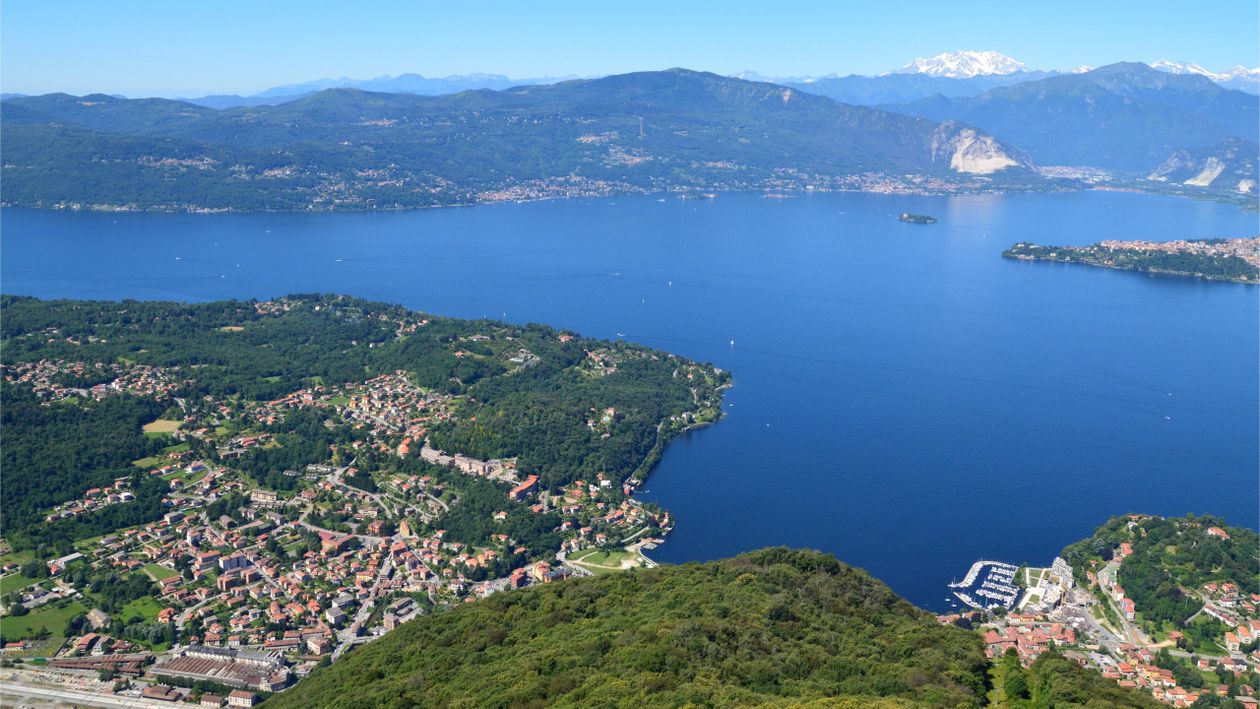
Lake Como and Lake Maggiore are the two most visited of Italy’s northern lakes — separated by about 60 kilometres but distinct in character, atmosphere, and what they offer to visitors. Como has the larger profile: steeper, narrower, with celebrity villas that make it a perennial travel fantasy. Maggiore is wider, calmer, and holds a secret that Como doesn’t — the Borromean Islands, a chain of small islands with palace gardens that are among Italy’s finest. Choosing between them comes down to what kind of lakeside experience you want.
Quick Verdict
| Category | Lake Como | Lake Maggiore |
|---|---|---|
| Scenery | Winner | - |
| Celebrity appeal | Winner | - |
| Borromean Islands | - | Winner |
| Value for money | - | Winner |
| Stresa town | - | Winner |
| Access from Turin | - | Winner |
| Access from Milan | Tied | Tied |
| Romanticism | Winner | - |
Choose Lake Como if you want dramatic cliffside scenery, villa culture, and the most iconic of Italy’s lakes. Choose Lake Maggiore if you want the Borromean Islands, better value, and a lake that rewards exploration without premium pricing.
Scenery and Character
Lake Como is one of the most beautiful lakes in the world. Its distinctive Y-shape — two southern arms meeting at the Bellagio promontory — creates a series of viewpoints from which the lake appears framed differently at every angle. The mountains rise almost vertically from the water on both shores, creating a drama that is immediately apparent from the ferry. The villas with their terraced gardens — Villa del Balbianello (€10 gardens, €20 with villa), Villa Carlotta (€12), Villa Melzi — represent the height of Italian formal garden design. Bellagio, at the junction of the lake’s two arms, is as close to a perfect Italian lakeside town as exists.
Lake Maggiore is wider and less enclosed — at its broadest it stretches 17 kilometres across — and its shores are lower and more varied. The northern section, approaching Locarno in Switzerland, narrows into fjord-like proportions and becomes more dramatic. The central section around Stresa and the Borromean Islands is the most visited and most beautiful: the three islands appear to float in the lake before an Alpine backdrop that includes Monte Rosa (4,634 metres), Italy’s second-highest peak, visible on clear days from the western shore.
Winner: Lake Como for concentrated drama and classic Italian lake scenery.
The Borromean Islands — Maggiore’s Ace
Lake Maggiore has an attraction that Como cannot match: the Borromean Islands, a compact archipelago of three islands in the centre of the lake. Isola Bella is the most extraordinary — a 17th-century Baroque palace (Palazzo Borromeo, entry €18) set in 10 terraced gardens that descend to the lake, with white peacocks, grottos decorated with shells and stones, and views across the water to the Alps. The palace interiors contain Flemish tapestries, Napoleonic-era rooms, and a 16th-century collection of arms and armour. It is an elaborate piece of theatre, and worth several hours.
Isola Madre (€14 separately, or combined with Isola Bella for €26) is quieter, larger, and covered in botanical gardens containing Kashmir cypress trees, wisteria tunnels, and Europe’s largest rhododendron. Isola dei Pescatori (the fishermen’s island, free) is the only inhabited island — a working fishing village with narrow lanes, a good restaurant (Verbano, with terrace views, expect €40–60 for dinner), and a church.
Lake Como has no equivalent. Villa del Balbianello and Villa Carlotta are outstanding, but they are accessible from the shore rather than standing alone in the lake.
Winner: Lake Maggiore, emphatically, for the Borromean Islands.
Stresa vs Bellagio
Stresa is Lake Maggiore’s main resort town — a proper lakeside town with a grand promenade (Lungolago), Belle Époque hotels, and the Grand Hotel des Iles Borromées (a Hemingway haunt, from €250/night). The cable car from Stresa to the summit of Mottarone (1,491 metres, €22 return) gives panoramic views across seven lakes on clear days. The town has a year-round resident population, regular ferry connections to the Borromean Islands (€17 for unlimited island hopping), and a train station with direct services to Milan (1 hour, from €12) and Turin (1.5 hours, from €15).
Bellagio is Lake Como’s star town — and one of Italy’s most beautiful. Perched at the tip of the central promontory where the lake divides, it has views in three directions and a stepped historic centre of silk workshops, gelaterias, and gardens. The Villa Serbelloni gardens (€9, guided tour only) and Villa Melzi d’Eril (€8) are open to visitors. Restaurants are expensive (€30–50 for a main), boutiques target the luxury end, and accommodation is correspondingly premium (€150–300/night for mid-range). The ferry connections are excellent but there is no train station — you arrive by ferry or taxi boat.
Winner: A draw. Bellagio is more beautiful; Stresa is more practical and better connected by rail.
Cost and Accommodation
Lake Como is noticeably more expensive, particularly in Bellagio and Varenna. Mid-range hotels in Bellagio run €150–280/night in summer; the Grand Hotel Villa Serbelloni (from €400) and Filario Hotel (from €200) represent the quality ceiling. Como town at the southern tip of the lake is more affordable (€90–150) but further from the scenic highlights.
Lake Maggiore offers better value. Stresa hotels average €100–200/night for mid-range properties; the Grand Hotel des Iles Borromées is the luxury benchmark (from €250). The eastern shore (Arona, Angera) has more budget-friendly options (€70–120/night). Restaurants in Stresa average €20–35 per person, compared to €30–50 in Bellagio.
Winner: Lake Maggiore for value at all price points.
Getting There
Lake Como is primarily accessed from Milan. Trains run from Milano Centrale to Varenna-Esino (1 hour, €7–10) and to Como San Giovanni at the southern tip (40 minutes, €5). The fast ferry from Como town to Bellagio takes 1.5 hours; the slower ferry service runs throughout the day.
Lake Maggiore has better connectivity across multiple cities. Trains run to Stresa from Milan (1 hour, €12) and from Turin (1.5 hours, €15) — making it uniquely accessible from both of Italy’s main northern cities. Verbania-Pallanza on the western shore and Arona at the southern end both have train stations. The ferry system connects all lakeside towns.
Winner: Lake Maggiore for access from Turin; a draw for Milan access.
When to Visit
Both lakes are at their best from May to October. The villa gardens on Lake Como are most spectacular in May when wisteria, azaleas, and camellias bloom. The Borromean Island gardens are similarly magnificent in late April to June.
July and August are peak season on both lakes — Bellagio fills up quickly, and the ferry queues for the Borromean Islands grow long by midday. September and October are excellent on both lakes: warm (18–24°C), clear, and considerably quieter. Lake Maggiore’s Settimane Musicali (classical music festival, mid-August to late September) is a regional draw.
Both lakes largely close from November to March — many hotels and restaurants shut, and the ferry services reduce significantly.
Winner: A draw. Both are best in May–June and September.
Final Verdict
Lake Como wins on scenery, celebrity cachet, and the romance of the traditional Italian lake experience. Lake Maggiore wins on value, the Borromean Islands, and accessibility from Turin. Maggiore is consistently underrated relative to Como — in part because Como’s profile is so dominant — but for many travellers the Borromean Islands alone justify the visit.
Both lakes are easily combined with Milan and with each other. A northern Italy itinerary that includes both lakes (two nights on Como, one on Maggiore, with a night in between in Stresa) is one of Italy’s most rewarding sequences.
Ready to Plan Your Trip?
See our guides for the wider Italian Lakes:
- Lake Como vs Lake Garda - how the two most famous Italian lakes compare
- Northern Italy Itinerary - lakes, cities, and the Dolomites
Plan Your Trip
✈️ Book your flights to Italy 🛡️ Get travel insurance 📱 Stay connected with an eSIM 🚗 Rent a car
🎟️ Browse tours on Lake Como — Browse tours on Lake Maggiore 🏨 Search hotels on Lake Como — Search hotels on Lake Maggiore