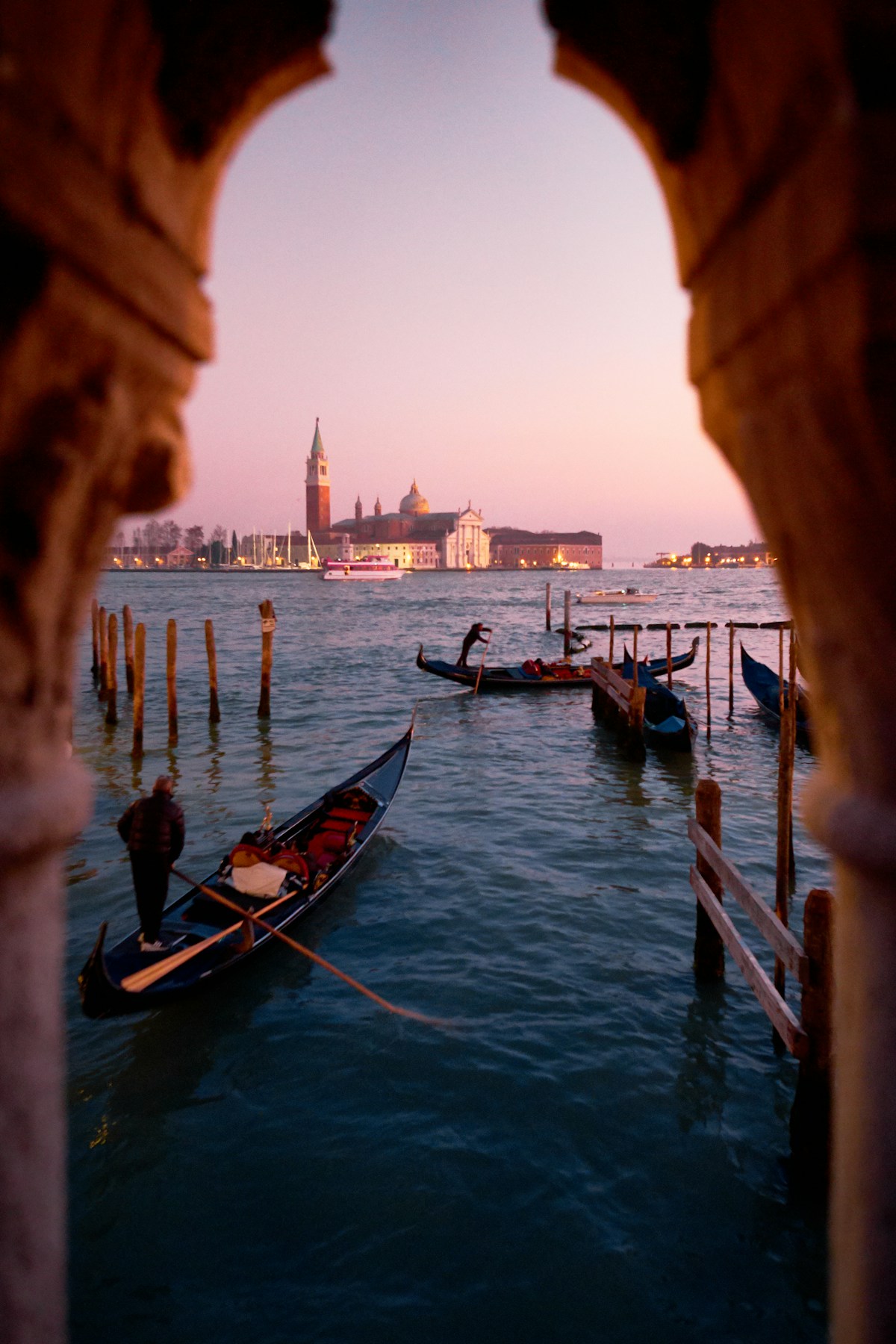
Quick Answer
April to May is Venice’s most reliable window for comfortable sightseeing — mild temperatures, manageable crowds, and the canal light at its most photogenic. February’s Carnival is spectacular but expensive and very crowded. For accommodation on the main island or in Mestre, see hotels in Venice. For orientation, visit our Venice city guide.
Season Overview
| Month | Avg Temp | Rain Days | Crowds | Cost |
|---|---|---|---|---|
| January | 4°C | 6 | Very Low | Budget |
| February | 5°C | 6 | Low/Peak* | Budget/Peak* |
| March | 10°C | 8 | Moderate | Mid |
| April | 15°C | 8 | High | High |
| May | 20°C | 8 | High | High |
| June | 25°C | 7 | Very High | Peak |
| July | 28°C | 5 | Peak | Peak |
| August | 27°C | 6 | Peak | Peak |
| September | 23°C | 7 | High | High |
| October | 17°C | 8 | Moderate | Mid |
| November | 11°C | 10 | Low | Mid |
| December | 6°C | 8 | Moderate | Mid |
*February Carnival week sees peak prices and crowds despite low temperatures.
Peak Season: June to August
Venice in summer is one of Italy’s most intense tourist experiences. The sestieri of San Marco and Dorsoduro fill with day-trippers from cruise ships — up to 30,000 per day — making movement through some calli feel like queuing. Temperatures reach 27–28°C with humidity from the lagoon, and the canals carry a noticeable smell in mid-July.
Hotels in central Venice spike to €180–250+ per night for a standard three-star room. The Rialto Bridge and Piazza San Marco are both unpleasantly crowded from 10am to 7pm.
The evening, however, transforms the city. After 8pm, day-trippers return to their coaches and cruise ships; the calli empty noticeably, and Venice recovers something of its character. Booking accommodation on the island (rather than Mestre) is worth the premium if your budget allows.
Shoulder Season: April to May and September to October
Spring offers the most comfortable Venice experience. April temperatures of 15°C are ideal for walking, the Biennale of Architecture or Art opens in odd/even years respectively (runs April to November), and the absence of summer humidity makes the lagoon crossing to Burano and Murano pleasant.
September is when many visitors find Venice at its most satisfying: post-summer temperature drop to 23°C, the Venice Film Festival runs in late August into early September (Lido island, 10 minutes by vaporetto), and hotel prices fall 15–20% from August highs.
October brings the first acqua alta warnings of the season, typically minor — under 80cm, which doesn’t flood St. Mark’s Square (the threshold is around 90cm). Waterproof boots sold everywhere are more of a fashion statement than a practical necessity in early October.
Off Season: November to March
November to January is Venice’s acqua alta season. The combination of high tides and sirocco winds from the south can push water across St. Mark’s Square multiple times per week. Sirens with coded horn patterns warn of incoming floods: one long tone means under 80cm; three tones means over 130cm and raised platforms appear across the piazza.
February Carnival runs for ten days before Lent (dates shift year to year). Masks, elaborate costumes, and performances in Campo San Polo and Piazza San Marco make it visually extraordinary — but hotel prices match July, and the crowds in the final weekend are among the year’s largest.
Month-by-Month Guide
| Month | Weather | Crowds | Cost | Notes |
|---|---|---|---|---|
| January | 4°C, foggy | Very Low | Budget | Fog creates atmospheric conditions for photography |
| February | 5°C, cold | Low/Peak | Budget/Peak | Carnival: 10 days of peak prices and crowds |
| March | 10°C, mild | Moderate | Mid | Days lengthening, acqua alta risk subsiding |
| April | 15°C, pleasant | High | High | Biennale opens in even/odd years |
| May | 20°C, warm | High | High | Best overall month |
| June | 25°C, warm | Very High | Peak | Festa della Sensa: marriage to the sea ceremony |
| July | 28°C, humid | Peak | Peak | Festa del Redentore: fireworks over the basin |
| August | 27°C, humid | Peak | Peak | Venice Film Festival begins late August |
| September | 23°C, warm | High | High | Film Festival (Lido), humidity drops |
| October | 17°C, mild | Moderate | Mid | First acqua alta warnings, golden light |
| November | 11°C, wet | Low | Mid | Acqua alta season begins in earnest |
| December | 6°C, cold | Moderate | Mid | Christmas atmosphere, some flooding |
Key Events and Festivals
- Carnevale di Venezia (February, 10 days before Lent) — Masked processions, costume competition on Piazza San Marco, Grand Canal parade
- Vogalonga (May/June) — Non-competitive rowing regatta, 30km through the lagoon, around 2,000 boats
- Venice Biennale (April–November, alternating years) — Art Biennale in odd years, Architecture Biennale in even years
- Festa del Redentore (third Sunday of July) — Fireworks from a bridge of boats across the Giudecca Canal
- Venice International Film Festival (late August/early September) — Major screenings on Lido island, celebrity arrivals at the Palazzo del Cinema
Plan Your Trip
✈️ Book your flights to Italy 🎫 Find tours in Venice 🛡️ Get travel insurance 📱 Stay connected with an eSIM 🚗 Hire a car in Italy