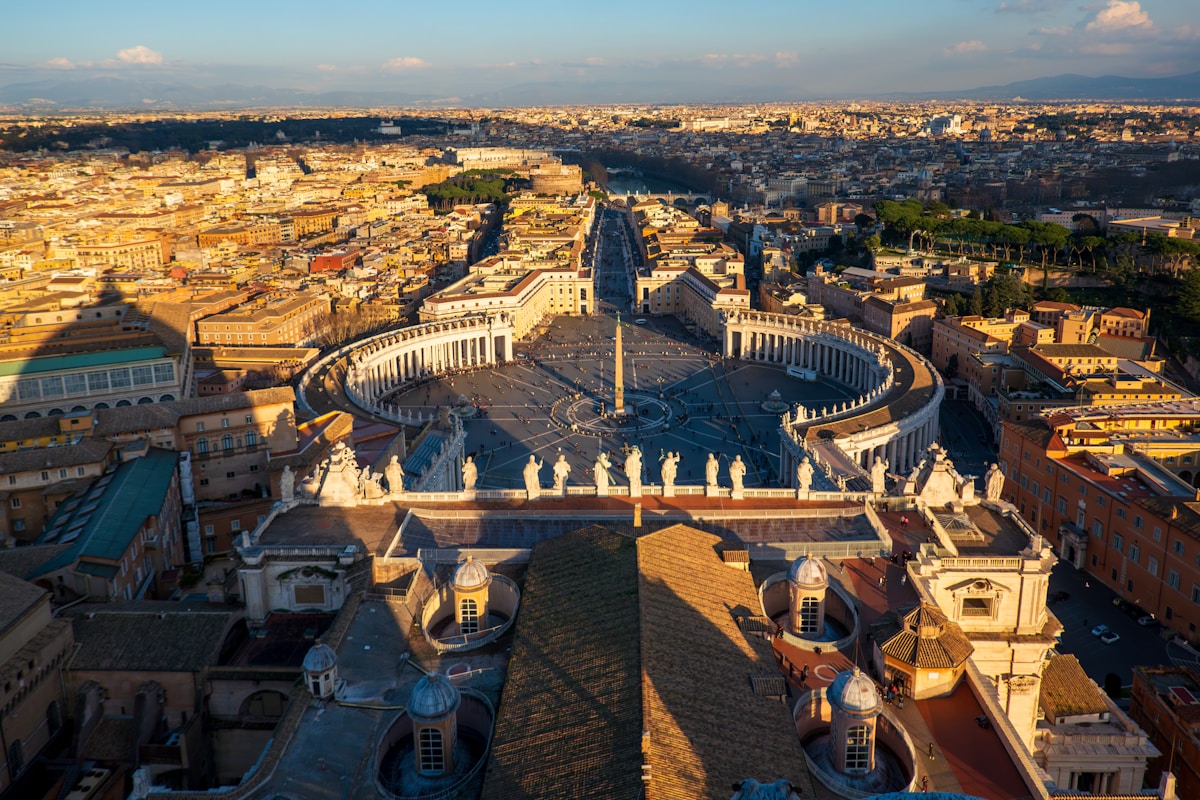
Quick Answer
April to May and September to October are the best times to visit Rome. Temperatures are mild (18–26°C), major sites are open with manageable queues, and the city feels at its most energetic. Book hotels three to four months ahead for these windows. For city orientation, see our Rome city guide. Find central accommodation at hotels in Rome.
Season Overview
| Month | Avg Temp | Rain Days | Crowds | Cost |
|---|---|---|---|---|
| January | 8°C | 7 | Low | Budget |
| February | 9°C | 7 | Low | Budget |
| March | 13°C | 8 | Moderate | Mid |
| April | 17°C | 8 | High | High |
| May | 22°C | 6 | High | High |
| June | 27°C | 4 | Very High | Peak |
| July | 30°C | 2 | Peak | Peak |
| August | 30°C | 3 | Peak | Peak |
| September | 26°C | 5 | High | High |
| October | 20°C | 8 | Moderate | Mid |
| November | 14°C | 10 | Low | Mid |
| December | 9°C | 8 | Moderate | Mid |
Peak Season: June to August
Rome in summer is relentlessly hot. July and August average 30°C but regularly spike to 36–38°C, making the Colosseum — an open-air amphitheatre with minimal shade — genuinely punishing to visit between 11am and 4pm. The Vatican Museums queue can reach 300 metres by 9am in July; skip-the-line tickets sell out days in advance.
Hotel prices hit their highest in this window, with central three-star properties from €130–180 per night. Ferragosto (15 August) is the key date to know: much of Rome closes as locals head to the coast, reducing restaurant choice sharply.
The upside is long days — sunset around 8:30pm — and a lively evening street scene, with outdoor dining until midnight. Early-morning visits (opening time at 9am) to sites like the Pantheon or Borghese Gallery are manageable before the heat peaks.
Shoulder Season: April to May and September to October
This is when Rome works best for most visitors. Spring and autumn both offer outdoor temperatures that suit walking — April at 17°C, May at 22°C, September cooling from 26°C, October at a comfortable 20°C.
April brings Easter, which draws large crowds to the Vatican and causes hotel prices to spike for the holiday weekend — book well ahead or aim for the weeks immediately after. May is arguably the single best month: good weather, no major public holidays, and slightly lower prices than peak summer.
September sees Romans return from August holidays, reopening restaurants and making the city feel inhabited again. The Rome Film Festival runs in late October, bringing a cultural programme to the EUR district.
Hotel prices in shoulder season run roughly €90–130 per night for three-star central options — 25–30% less than summer peaks.
Off Season: November to March
Winter is Rome’s quietest period and genuinely offers value. January and February see very few tourists at the Colosseum and Vatican; you can often walk up to the entrance without pre-booking. Rain increases in November, averaging 10 days of showers, and temperatures drop to 8–13°C by January.
Christmas and New Year bring moderate crowds back, with decorations along Via Condotti and a market at Piazza Navona running through early January.
Budget travellers should consider late January through February: flights from London or Amsterdam can be found from €40–60 return, and central hotels dip below €70 per night.
Month-by-Month Guide
| Month | Weather | Crowds | Cost | Notes |
|---|---|---|---|---|
| January | 8°C, some rain | Very Low | Budget | Post-Christmas quiet, Epiphany (6 Jan) |
| February | 9°C, some rain | Very Low | Budget | Valentine’s at the Trevi Fountain popular |
| March | 13°C, mild | Moderate | Mid | Days lengthening, sporadic spring warmth |
| April | 17°C, pleasant | High | High | Easter spike, flowers in bloom |
| May | 22°C, sunny | High | High | Optimal month overall |
| June | 27°C, hot | Very High | Peak | Long days but heat building |
| July | 30–36°C, hot | Peak | Peak | Skip midday sightseeing |
| August | 30–38°C, hot | Peak | Peak | Ferragosto 15 Aug — many shops shut |
| September | 26°C, warm | High | High | Locals return, city revives |
| October | 20°C, mild | Moderate | Mid | Rome Film Festival, harvest atmosphere |
| November | 14°C, rainy | Low | Mid | Fewer crowds, reliable museum access |
| December | 9°C, cool | Moderate | Mid | Christmas market at Piazza Navona |
Key Events and Festivals
- Easter (March/April) — Papal Mass in St. Peter’s Square draws tens of thousands; Vatican pre-booking essential
- Feast of St. Peter and Paul (29 June) — Rome’s patron saint day, fireworks over Castel Sant’Angelo
- Ferragosto (15 August) — National holiday; city empties and many restaurants close for two weeks
- Rome Film Festival (October) — Screenings across multiple venues in the EUR district
- Natale di Roma (21 April) — Rome’s founding anniversary, celebrations and free museum entry
Plan Your Trip
✈️ Book your flights to Italy 🎫 Find tours in Rome 🛡️ Get travel insurance 📱 Stay connected with an eSIM 🚗 Hire a car in Italy