Quick Answer
Visit Lecce in September for the best conditions. The heat of August has subsided to 24–26°C, the surrounding Salento peninsula is in the middle of its grape harvest, the Adriatic and Ionian Sea beaches are still at peak temperature (25°C), and hotels are €20–40 cheaper per night than in August. April and May are equally strong choices if you’re visiting in spring. See our Lecce city guide and browse hotels in Lecce.
Season Overview
| Month | Avg Temp | Rain Days | Crowds | Cost |
|---|---|---|---|---|
| January | 9°C | 8 | Very low | Low |
| February | 10°C | 7 | Very low | Low |
| March | 13°C | 7 | Low | Low–Mid |
| April | 17°C | 7 | Moderate | Mid |
| May | 21°C | 6 | Moderate | Mid |
| June | 26°C | 4 | High | High |
| July | 30°C | 2 | Very high | High |
| August | 31°C | 2 | Very high | High |
| September | 26°C | 4 | High–Moderate | Mid–High |
| October | 21°C | 7 | Moderate | Mid |
| November | 15°C | 8 | Low | Low–Mid |
| December | 11°C | 8 | Low | Low |
Peak Season: June to August
Lecce’s transition from a quieter, off-the-beaten-track destination to a more mainstream one has been rapid. Ten years ago it was genuinely uncrowded even in August; today it’s significantly busier, though still nothing like Rome or Florence. The centro storico — a compact area of extraordinary Baroque churches, palazzi, and piazzas built from the local golden lecce stone — gets crowded in peak season, and afternoon temperatures of 30–35°C make extended walking uncomfortable.
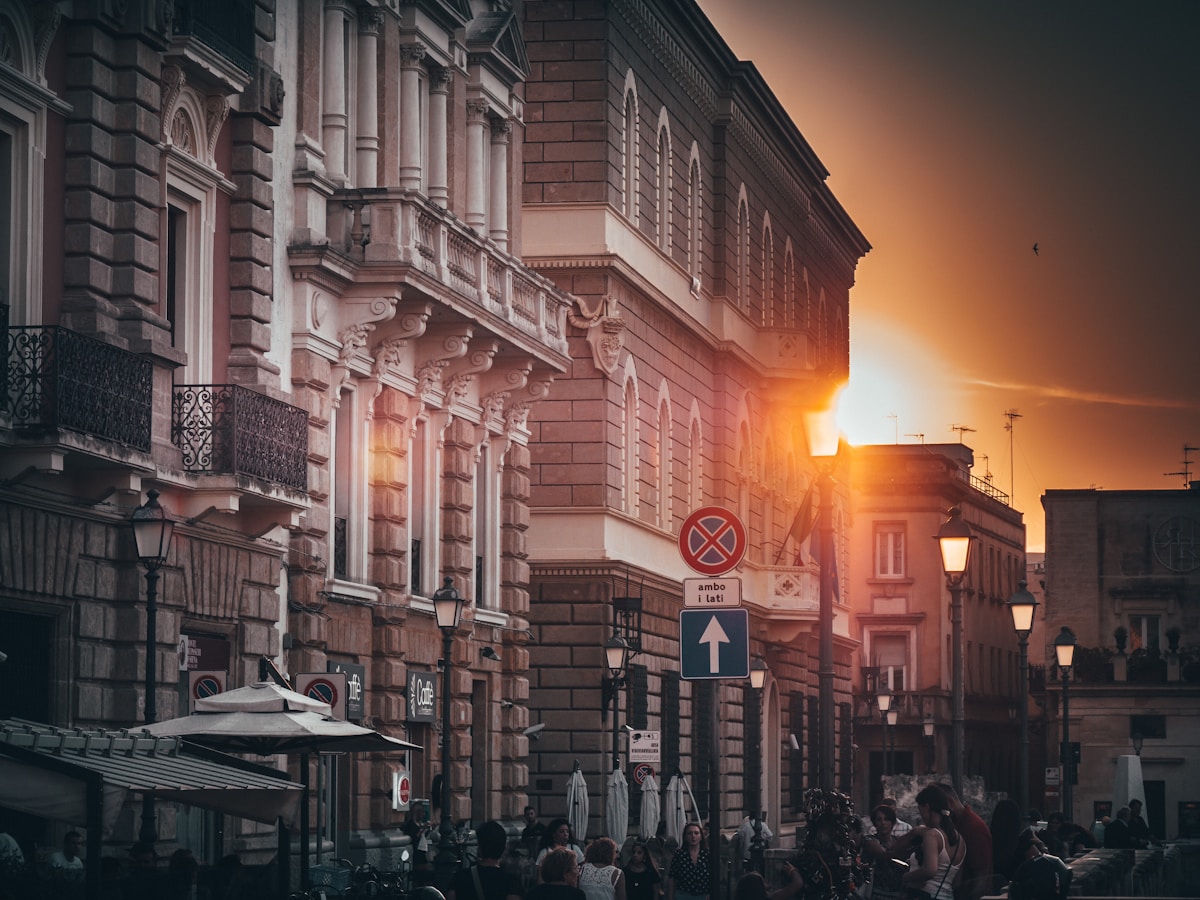
The main piazza, Piazza del Duomo, and the nearby Piazza Sant’Oronzo are at their most photographed in summer, when the golden stone glows in the low evening light. The Cathedral (Cattedrale di Santa Maria Assunta), with its 68-metre bell tower, and the Basilica di Santa Croce — with its extraordinary carved facade — are both open throughout the year, but the interiors provide some respite from summer heat.
Summer music and arts festivals run from June through September in Lecce, using the city’s historic spaces. The Palazzo dei Celestini courtyard and the Roman amphitheatre (partially excavated in Piazza Sant’Oronzo) both host evening concerts and events. Specific programming varies each year.
A key advantage of staying in Lecce rather than on the coast: you can drive or take a bus to the beaches of the Salento peninsula in the morning — Otranto (40km, 45 minutes) and Gallipoli (37km, 40 minutes) are the most popular — and return to the city for the cooler evening. Hotels in Lecce in July and August range from €90–130/night, significantly cheaper than beachfront properties.
Ferragosto (15 August) is the peak demand day. Book accommodation 6–8 weeks ahead if visiting this week.
Shoulder Season: April to May and September to October
April is when Lecce begins to fill with visitors. Holy Week (Easter) is one of the most celebrated periods in the Salento — processions through the Baroque streets are atmospheric and deeply rooted in local tradition. The Good Friday procession in Lecce features elaborate papier-mâché statues (a Lecce artisan tradition, the cartapesta) carried through the streets. Easter accommodation books up several weeks ahead.
Outside Easter, April in Lecce is quiet and pleasant: 16–19°C, the Baroque facades glowing in spring light, and the surrounding Salento countryside green and relatively empty. The famous masserie (historic farmhouses converted to accommodation) in the surrounding area are at their most affordable in April and May.
May is excellent: 20–23°C, low rain, and the olive groves and vineyards of the Salento are in leaf. This is arguably the best time for a food-focused trip — the spring artichoke season (carciofi) produces excellent local dishes, and the restaurants in the centro storico are busy but not overwhelmed.
September is the peak of the harvest period. The Primitivo and Negroamaro grape varieties that define Salento wine production are harvested in September, and many of the masserie and wineries welcome visitors. The sea is at its best temperature (25°C) and the crowds thin noticeably from early September. Hotel prices drop to €70–100/night.
October is good through mid-month. Temperatures are 20–22°C, rain is increasing but usually manageable, and Lecce is essentially the preserve of Italian visitors and a smaller number of Europeans.
Off Season: November to March
Lecce is a functioning city of 90,000 people with a university, good restaurants, and active cultural life — it doesn’t shut down in winter the way coastal resort towns do. November through February is cool (8–14°C) but rarely freezing, and the Baroque architecture looks especially fine on clear winter days when the low sun hits the golden lecce stone.
The Carnival of Lecce in February is one of the most celebrated in Puglia, with elaborate floats, street performances, and traditional costumes. It’s a genuine local event rather than a tourist spectacle. Dates vary by year but always precede Ash Wednesday.
Christmas in Lecce features large presepi (nativity scenes) displayed in the churches — the cartapesta tradition extends to nativity figures, and some of the historical presepi in the main churches are outstanding works of craftsmanship.
Hotel prices in winter start from €50/night for a good central option, making Lecce genuinely affordable for an extended stay.
Month-by-Month Guide
| Month | Weather | Events | Verdict |
|---|---|---|---|
| January | 8–11°C, occasional rain | Epiphany (6 Jan) | Quiet, cheapest |
| February | 9–12°C, some rain | Carnival (varies) | Very quiet, Carnival highlight |
| March | 12–15°C, variable | — | Improving, good value |
| April | 16–20°C, mostly dry | Easter (varies) | Excellent — Holy Week atmospheric |
| May | 20–23°C, dry | — | Best spring month |
| June | 24–28°C, dry | Summer festivals begin | Good |
| July | 28–32°C, very dry | — | Hot and busy |
| August | 30–34°C, very dry | Ferragosto (15 Aug) | Hottest, most crowded |
| September | 25–28°C, mostly dry | Grape harvest | Best month overall |
| October | 20–23°C, some rain | — | Good early, quieting |
| November | 14–17°C, wetter | — | Quiet, local pace |
| December | 10–13°C, some rain | Christmas presepi, markets | Quiet, atmospheric |
Key Events and Festivals
- Carnival of Lecce (February, date varies) — One of the most elaborate Carnivals in Puglia, centred on the historic city centre. Elaborate floats, traditional costumes, and the burning of the Carnival puppet on Mardi Gras. A genuine local celebration drawing participants from across Salento.
- Holy Week processions (Easter, date varies) — The Good Friday procession is the main event: papier-mâché figures (cartapesta), made by local artisans in the centuries-old Lecce tradition, are carried through the Baroque streets in candlelit procession. One of southern Italy’s most atmospheric Easter events.
- Notte della Taranta (late August, nearby Melpignano) — Technically not in Lecce but 25km away in Melpignano, this huge festival celebrates the traditional pizzica music and tarantella dance of Salento. It draws 100,000+ visitors and is easily accessed from Lecce.
- Summer Festival Season (June–September) — Various events in the Roman amphitheatre, Palazzo dei Celestini courtyard, and other historic spaces. Programming announced annually — check the Comune di Lecce cultural calendar.
- Grape Harvest (September) — Not a single event but a period when many masserie and cantine (wineries) of the Salento welcome visitors for tastings and harvest participation. Primitivo and Negroamaro grapes are harvested September into October.
- Christmas Presepi (December–January) — Lecce’s cartapesta tradition produces exceptional nativity figures. The Basilica di Santa Croce and the cathedral are the best places to see elaborate displays.
Plan Your Trip
✈️ Book your flights to Italy 🎫 Find tours in Lecce 🛡️ Get travel insurance 📱 Stay connected with an eSIM 🚗 Hire a car in Italy