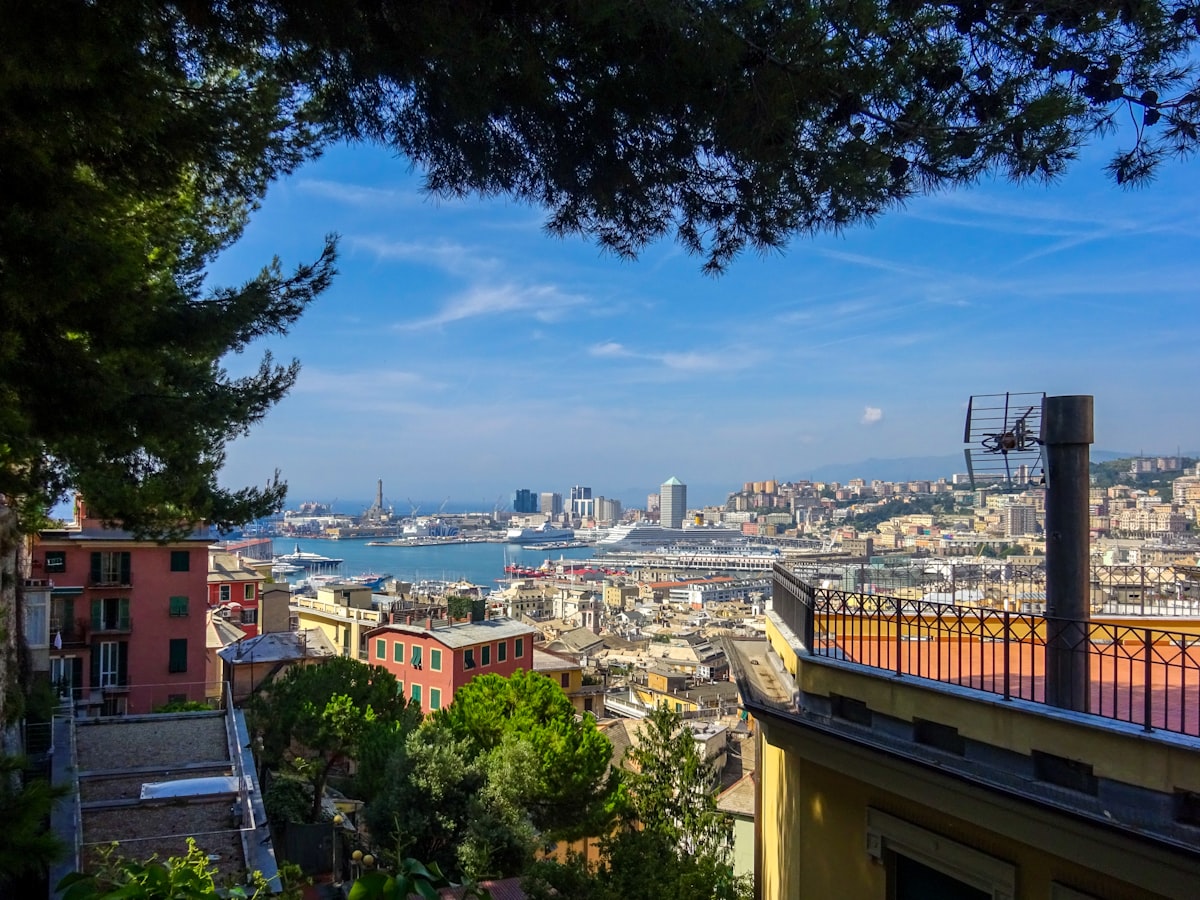
Quick Answer
Genoa rewards visits throughout the year, but September is the best single month. The Genoa International Boat Show (Salone Nautico Internazionale) runs in early September — one of the biggest boat shows in Europe — and the Rolli Days in October open the city’s UNESCO-listed Renaissance palaces for free public visits. Temperatures sit at 20–25°C, the sea is still warm from summer, and the city’s working-port atmosphere is at its most energetic. Hotels in Genoa are genuinely affordable compared to the rest of Italy: €55–80/night mid-range year-round. See our Genoa city guide and browse hotels in Genoa.
Season Overview
| Month | Avg Temp | Rain Days | Crowds | Cost |
|---|---|---|---|---|
| January | 8°C | 8 | Very low | Low |
| February | 9°C | 7 | Very low | Low |
| March | 12°C | 8 | Low | Low–Mid |
| April | 15°C | 9 | Moderate | Mid |
| May | 19°C | 8 | Moderate | Mid |
| June | 23°C | 6 | Moderate–High | Mid–High |
| July | 26°C | 4 | Moderate–High | High |
| August | 27°C | 4 | Moderate | High |
| September | 23°C | 6 | High (Boat Show) | Mid–High |
| October | 18°C | 10 | Moderate | Mid |
| November | 13°C | 11 | Low | Low–Mid |
| December | 9°C | 9 | Low | Low |
Peak Season: June to August
Genoa’s summer is warmer and more humid than many Italian cities at similar latitudes, partly because the surrounding Ligurian mountains trap warm, moist air against the coast. Temperatures of 28–32°C in July and August, combined with high humidity, make the caruggi — the dense medieval lane network of the centro storico — uncomfortable in the afternoon. The lanes are narrow enough to block almost all breeze, and the afternoon heat bounces off the stone walls.
That said, Genoa is far less overrun by tourists than comparably historic Italian cities. Even in August, you’ll encounter fewer foreign visitors here than in Florence, Venice, or the Cinque Terre (easily reachable from Genoa by fast train in 50–80 minutes). The locals take their own holidays in August, which means some neighbourhood restaurants and shops close for 2–3 weeks, but the Porto Antico area and major sites remain operational.
The Aquarium of Genoa — one of the largest in Europe with over 600 species — is busiest on summer weekends and Italian school holidays. Arrive early (opening at 9am) or buy tickets online. The nearby Biosfera (a glass biosphere dome adjacent to the aquarium) has the same recommendation.
Summer evenings in Genoa are genuinely pleasant: the Porto Antico waterfront fills with locals, the old palaces along Via Garibaldi are lit up, and the city feels like it’s actually living rather than performing for tourists.
Shoulder Season: April to May and September to October
April and May are the best spring months. The Ligurian coast between Genoa and the Cinque Terre is at its most photogenic in spring, with the terraced hillsides green and the sea clear. Temperatures in April are 14–17°C — a jacket in the morning, comfortable in the afternoon. May is consistently pleasant at 18–22°C.
The caruggi are manageable and atmospheric in spring: the Sottoripa arcade, the Via della Maddalena with its bars and bakeries, and the Piazza Banchi with the historic merchants’ loggia are all best explored at a pace that summer heat doesn’t allow.
September is the standout month for two specific reasons. First, the Genoa International Boat Show (Salone Nautico Internazionale) in early-to-mid September is one of the most significant maritime events in the world, drawing over 150,000 visitors. It’s held in the Porto Antico exhibition spaces. If boats aren’t your interest, this weekend sees hotels at peak price and occupancy — check dates and book or avoid accordingly. The surrounding days before and after are excellent for visiting.
Second, the Rolli Days in October (and occasionally in May — check each year’s schedule) open the Strade Nuove UNESCO palaces — Palazzo Rosso, Palazzo Bianco, Palazzo Tursi, and approximately 50 others — for free public access. This is the best opportunity to see the interiors of Genoa’s extraordinary Renaissance merchant palaces, normally closed to visitors or only partially accessible.
Off Season: November to March
Genoa’s Atlantic-influenced climate means October and November are genuinely wet — the city averages 10–11 rain days per month, with the heaviest rain in October and November, occasionally accompanied by flooding in lower-lying parts of the historic centre. The tramontane wind from the mountains can make November feel colder than the thermometer suggests.
Winter Genoa is quiet but far from dormant. The presepe (nativity scene) tradition is particularly strong in Genoa — churches throughout the centro storico install elaborate presepi from early December through January, some dating back centuries. The Basilica della Santissima Annunziata, the church of San Filippo Neri, and the Cathedral of San Lorenzo are among the best for presepi displays.
Columbus Day (mid-October) is a modest but authentic celebration in Genoa — Christopher Columbus was born here, and his childhood home (a reconstruction) is in the Caruggi near the city walls. Events include historical exhibitions and civic ceremonies.
Hotels in Genoa in January and February start from approximately €50/night for a decent central option, making it one of the most affordable major Italian cities in winter.
Month-by-Month Guide
| Month | Weather | Events | Verdict |
|---|---|---|---|
| January | 7–9°C, some rain | — | Cheapest, very quiet |
| February | 8–10°C, some rain | Carnival (varies) | Quiet, good value |
| March | 11–14°C, variable | — | Improving, good value |
| April | 14–17°C, some showers | Easter (varies) | Good |
| May | 18–22°C, mostly dry | Rolli Days (sometimes May) | Excellent |
| June | 22–26°C, drier | — | Good |
| July | 25–29°C, humid | — | Hot and humid |
| August | 26–30°C, humid | Ferragosto (15 Aug) | Humid, some closures |
| September | 22–26°C, some rain | Genoa Boat Show (early Sep) | Best month |
| October | 17–21°C, wet | Rolli Days, Columbus Day (mid-Oct) | Events excellent, wet weather |
| November | 12–16°C, wettest | — | Wettest month |
| December | 8–11°C, some rain | Presepi displays | Festive, quiet |
Key Events and Festivals
- Genoa International Boat Show (early–mid September) — One of the three largest boat shows in the world, held annually in the Porto Antico. Over 150,000 visitors across the week; tickets approximately €18/day as of 2026.
- Rolli Days (October, and sometimes May) — The highlight of the Genoese cultural calendar. The UNESCO-listed Strade Nuove palaces open their doors for free public visits over a weekend. Routes, times, and participating buildings vary each year — check the official Comune di Genova site for dates.
- Columbus Day (second Monday of October) — Civic celebrations marking the birth of Christopher Columbus in Genoa, with exhibitions at Palazzo Ducale and events near Casa di Colombo.
- Presepe Displays (December–January) — Genoa’s churches install elaborate nativity scenes from early December. The tradition is centuries old here; some presepi are major works of art. Free to view in most churches.
- Carnival (February) — Genoa’s Carnival is a traditional rather than spectacular celebration — masked balls in historic venues and street events in the caruggi.
- Sagra della Farinata (various dates) — Local festivals celebrating Genoa’s traditional chickpea flatbread, held in various neighbourhoods throughout the year.
Plan Your Trip
✈️ Book your flights to Italy 🎫 Find tours in Genoa 🛡️ Get travel insurance 📱 Stay connected with an eSIM 🚗 Hire a car in Italy