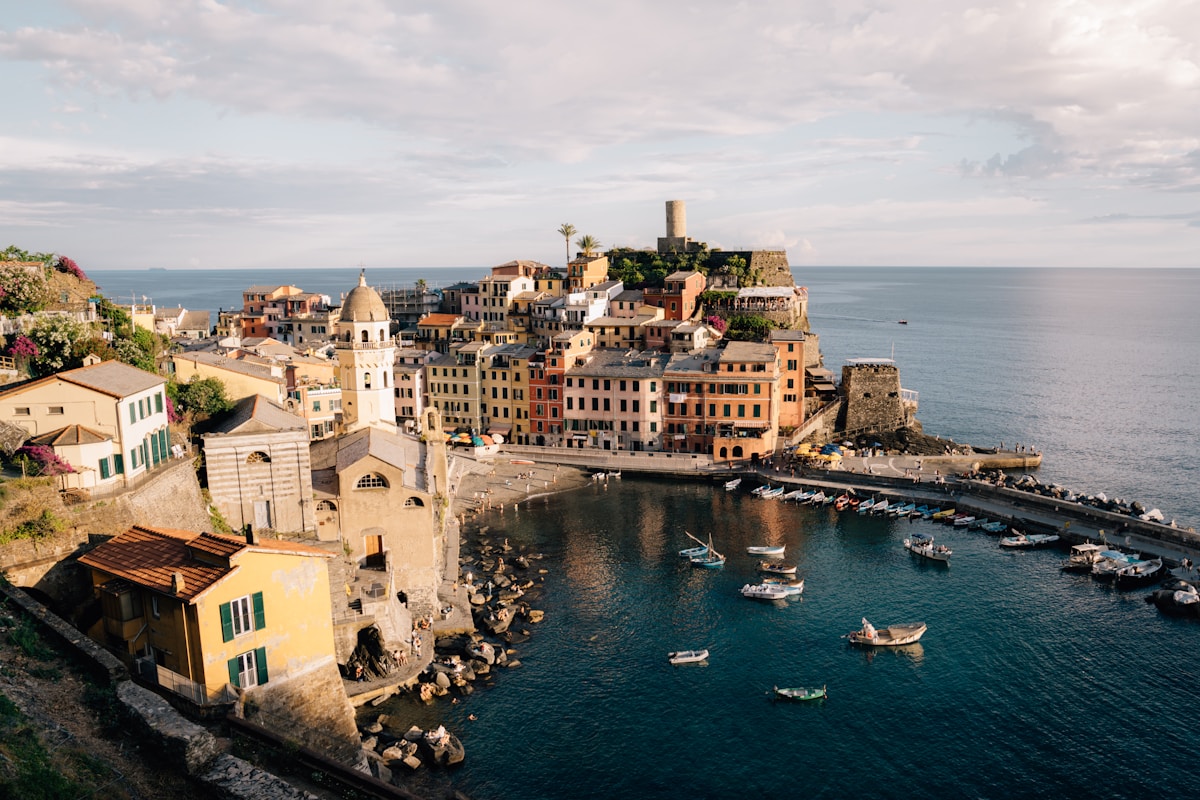
Liguria is a narrow coastal strip - the Italian Riviera - squeezed between the Alps and the Apennines and the Ligurian Sea. The terrain is too steep for cattle and too thin for wheat fields, so the cooking is built around olive oil, wild herbs, vegetables, pulses, and a long coastline’s worth of seafood. Pesto, farinata, and focaccia all originated here; together they represent the character of the regional cooking.
Pesto alla Genovese
The original pesto - basil (Ligurian DOP basil, grown in the protected microclimate of Pra’ near Genoa), pine nuts, garlic, Pecorino Sardo, Parmigiano-Reggiano, extra-virgin olive oil, and coarse salt, made in a marble mortar. Industrial and non-local versions are not pesto. The Genovese version uses small-leaf basil with a gentler flavour than the large-leaf varieties widely sold elsewhere.
Served on trofie (short twisted pasta), with trenette (a flat pasta similar to spaghetti), or in minestrone genovese (pesto stirred into vegetable soup at the table).
Where to eat it: Il Genovese (Vico Monachette 1r, Genoa old town) - trofie al pesto alongside cima alla genovese and cappon magro; one of Genoa’s better traditional restaurants. €35–55/person.
Farinata
A thin, unleavened flatbread made from chickpea flour, water, olive oil, and salt - cooked at high temperature in a round copper pan in a wood-fired oven. Crisp at the edges, soft in the centre. Eaten hot, cut in wedges, with black pepper. Known as socca in Nice (across the border). Available from farinerie (dedicated shops) throughout Liguria; Genoa’s Antica Sciamadda is the most famous address.
Where to eat it: Trattoria da Mario (Via Carlo Rolando 14, Genoa, Sampierdarena neighbourhood) - proper Genovese focaccia, farinata, and pesto pasta in a neighbourhood trattoria that is not tourist-facing. €20–35/person.
Focaccia
Ligurian focaccia (fugassa) is the original - thin, crisp underneath, soft above, soaked in olive oil with sea salt. Different from the thick, pillowy Bari version. The Recco variant (focaccia di Recco) has no leavening and is made in two paper-thin sheets with fresh cheese in between - one of the great things to eat in Italy.
Where to eat it: Panificio focaccerie throughout Genoa’s caruggi (alleyways) - focaccia is a street food institution here; 1–2€ per portion from any bakery on Vico Vegetti or Via San Vincenzo. Il Ciliegio (Via Aurelia, Cinque Terre area) - for pesto focaccia and local anchovies with preserved vegetables in the Cinque Terre context.
Trofie al Pesto
The most traditional pasta combination: trofie (short, twisted pasta from the Recco area) with pesto. In Liguria, the dish is often served with boiled green beans and potato - a combination that sounds odd but works exceptionally well, stretching the pesto while adding substance.
Where to eat it: Il Genovese (Vico Monachette 1r, Genoa old town) - trofie al pesto is on the menu alongside the wider Genovese repertoire. €35–55/person.
Stuffed Vegetables
Liguria has a strong tradition of stuffed and slow-cooked vegetables. Pansoti (a filled pasta shaped like a small basket) with walnut sauce. Torta pasqualina (Easter tart of pastry, ricotta, and whole eggs). Zucchini trombetta ripieni (long zucchini stuffed with rice, herbs, and meat).
Where to eat it: Il Genovese (Vico Monachette 1r, Genoa old town) - cima alla genovese (stuffed veal) is the kitchen’s standout second course alongside the pasta menu. €35–55/person.
Seafood
Despite the coastline, Ligurian cooking uses seafood more subtly than Pugliese or Venetian cuisine. Bagnun di acciughe (anchovy soup) from Sestri Levante is the most regional preparation. Fresh grilled fish along the Cinque Terre coast is simple and good.
Where to eat it: Antica Osteria di Vico Palla (Vico Palla 15r, Genoa waterfront) - close to the Porto Antico, good for stoccafisso (salt cod), buridda (Ligurian fish stew), and Ligurian white wines. €30–50/person.
Take a Guided Food Tour of Liguria
Liguria’s food is geographically defined — the sea on one side, steep terraced hillsides on the other — and pesto alla Genovese, focaccia di Recco, and farinata are products you understand better when you see where the basil and olive oil actually come from. A food tour in Genoa or the Cinque Terre coast covers the back-street bakeries, the historic Porto Antico market stalls, and a pesto-making session using a marble pestle and mortar. Browse Ligurian food tours on GetYourGuide.
Where to Eat
Genoa has the best concentration of traditional Ligurian restaurants - particularly around the caruggi (old town lanes) near Via Sottoripa and the old port. The focaccia bakeries in the morning, the farinerie at lunch. In Cinque Terre, restaurant quality is variable and prices are elevated; Monterosso has more options than the other villages. For guided food tours of Genoa’s caruggi - pesto workshops, focaccia bakeries, and farinerie - Genoa food tours are the most efficient way to cover the city’s food culture.
For visiting Liguria in person: Genoa travel guide covers the old port, the caruggi, and the palazzo heritage; Cinque Terre guide covers the five villages and the coastal walking trail. For the broader Italian food picture, the Italian pasta guide covers how pesto and trofie sit in the national pasta tradition. For plant-based eating in the region - pesto without Parmesan, focaccia, and the naturally vegan Ligurian dishes - our vegan Italy guide has the relevant sections. The Italian wine guide covers Ligurian DOC wines including Cinque Terre Sciacchetrà.