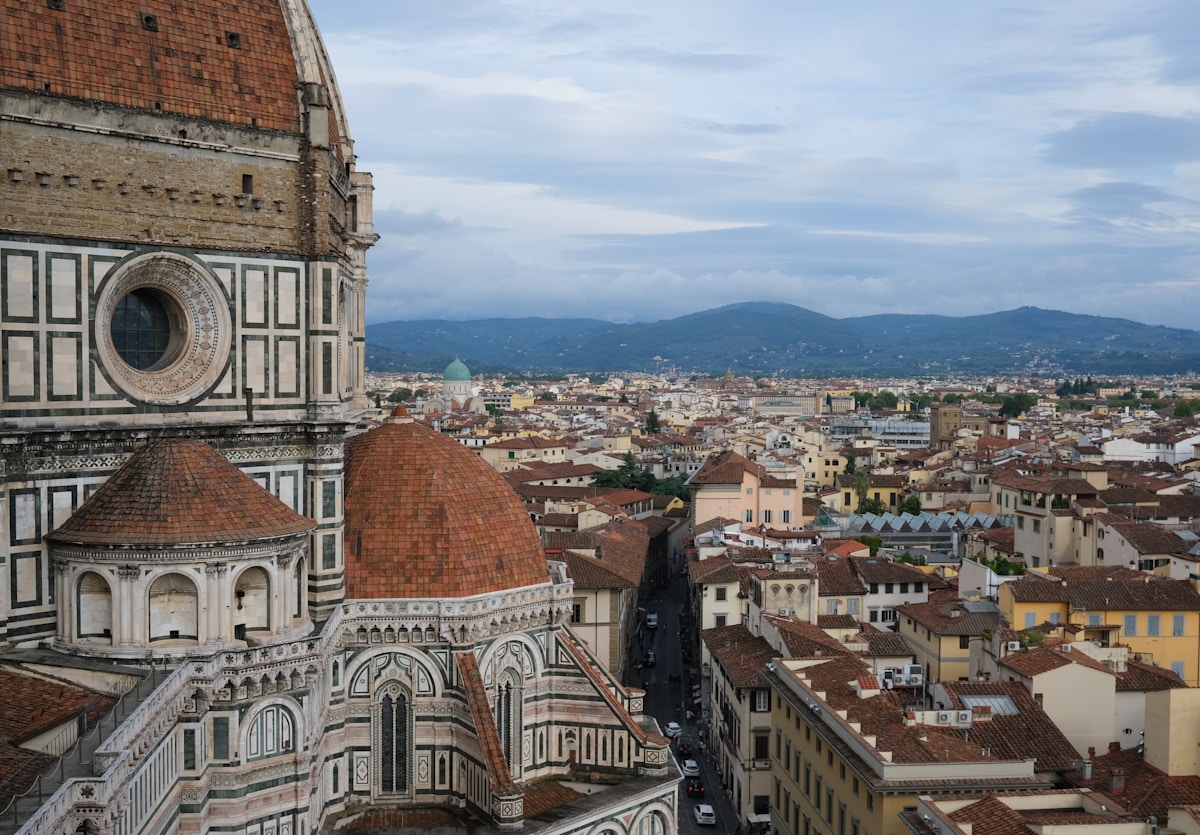
March is the pivot month in Italy - still winter in the north, but with the first genuine spring warmth arriving from the south. Sicily in late March, with almond blossoms and the Valley of the Temples in quietude, is one of the most rewarding experiences in Italian travel. The mainland cities are quiet and cheap. Easter, when it falls in March, brings the first surge of the spring tourist season.
Variable Spring: Still Cold in the North, Alps Skiing Continues, Amalfi Reopening by Late March
Northern Italy (Milan, Venice, Turin): 5–14°C. Cold and often wet. The Po Valley fog begins to lift but grey days are still common. Venice can be cold on the water; late March can be pleasant on sunny days. The Alps still have full snow cover - skiing continues through March at all major resorts.
Central Italy (Rome, Florence): 6–16°C. Variable - can range from cold rain to genuinely warm spring days within the same week. Layers are essential. Florence in the Arno valley can channel cold air; by late March the city becomes genuinely pleasant. Rome warms faster, with some days reaching 18°C.
Southern Italy (Naples, Amalfi): 9–16°C. Significantly warmer than the north. March is the beginning of the outdoor season for Naples. The Amalfi Coast is still cool - most hotels and restaurants reopen by late March or Easter, whichever comes first. Not yet warm enough for swimming but the landscape is extraordinary.
Sicily and Sardinia: 10–16°C in Sicily, 9–15°C in Sardinia. Sicily’s almond blossoms continue from late February into early March around Agrigento. Wildflowers appear in the archaeological parks. Sardinia’s interior is green and beautiful; the sea is too cold for beaches.
The almond blossom in Sicily
The most compelling reason to be in Sicily in late February to early March. The Agrigento Almond Blossom Festival (Sagra del Mandorlo in Fiore) is usually held in the second week of February, and the blossoms continue through early March. The Valley of the Temples with white-flowering almond trees growing among the 5th-century BC Greek ruins is one of the most improbable and beautiful images in Italian travel.
Ski resorts, museums, and the reopening coast
Museums and sites: All major museums and attractions are open - the Vatican Museums, Colosseum, Uffizi, and Pompeii operate normal hours. No advance booking required; you can walk into the Vatican Museums on a weekday without waiting.
Coastal resorts: Begin reopening from mid-March to Easter. The Amalfi Coast comes alive around Easter. Some restaurants and smaller hotels remain closed in early March - check ahead for specific dates.
Skiing: March is the last full month of the ski season. The Dolomiti Superski network, Courmayeur, and Cervinia are fully operational. Spring skiing conditions - warmer temperatures, longer days, softer snow - make March appealing for skiers who prefer comfort over powder. Most resorts close in early to mid-April.
Holy Week (if Easter falls in March)
Easter in March is an early Easter (Easter can fall between 22 March and 25 April). Holy Week in Italy brings dramatic processions across the country:
Sicily: Trapani’s Misteri procession (Good Friday) is among the most famous in Italy - 20 decorated floats representing the Passion, carried through the streets over 24 hours. Caltanissetta and Enna also have significant processions.
Rome: The Pope leads the Via Crucis procession at the Colosseum on Good Friday evening. Easter Mass in St Peter’s Square on Sunday draws tens of thousands.
Florence: The Scoppio del Carro (Explosion of the Cart) on Easter Sunday morning - an oxen-drawn cart in the Piazza del Duomo is set alight by a dove-shaped rocket fired from the high altar of the Duomo. A tradition dating to the First Crusade.
Easter pricing: Easter week in Rome, Florence, and Venice brings significant price rises - expect hotel rates 30–50% above normal March levels. Book 6–8 weeks ahead.
International Women’s Day (8 March)
La Festa della Donna is widely observed in Italy. Men give mimosa flowers to women - florists sell bunches of mimosa throughout the cities. Some museums and cultural institutions offer free or discounted entry for women. Not a public holiday, but a visible cultural occasion.
Why March is underrated
Cost: March is still off-season pricing for most of Italy (except Easter week). Hotels in Rome, Florence, and Venice are 25–40% cheaper than April or May.
Crowds: No queues. You can visit the Colosseum, Vatican Museums, and Uffizi without booking weeks ahead.
Sicily timing: March to early June is the best window for Sicily’s archaeological sites - comfortable walking temperatures, wildflowers among the ruins, and no summer crowds.
Spring light: The low March sun, combined with clear post-winter air, gives excellent photographic conditions across the cities.
Best March destinations: Sicily itinerary for archaeological sites in full flower - Sicily tours in March include temple and ancient site walks; Rome and Florence before Easter crowds; Amalfi Coast as hotels reopen. For our full seasonal overview: best time to visit Italy.
See Also
- Best time to visit Italy - full seasonal overview
- Italy in February - the month before
- Italy in April - the month after
Ready to Plan Your Trip?
See our itineraries for inspiration:
- One Week in Italy - seven days through Rome, Florence, and Venice
- 10 Days in Italy - the classic grand tour of Italy’s highlights
- 2 Weeks in Italy - the ultimate two-week Italian itinerary
- 3 Weeks in Italy - the north-to-south grand tour from Milan to Sicily
Plan Your Trip
March splits into two booking strategies depending on Easter. If Easter falls in March, book Rome, Florence, and Venice accommodation 6–8 weeks ahead and pre-book the Vatican, Uffizi, and Colosseum before departure — prices rise 30–50% in Easter week. In non-Easter March, last-minute booking is fine and cities run 25–40% below April prices.
The strongest March destination is Sicily: the Valley of the Temples with wildflower meadows and mild temperatures is exceptional. The Amalfi Coast reopens from mid-March — early arrivals get the coast at its most vivid and least crowded. The Alps are in their last full month of skiing.
Flights to Italy | Travel insurance | eSIM Italy | Car hire for Sicily or the south | Find hotels in Italy.