Italian culture rewards visitors who make an effort to respect local customs. A few basic rules — around dress, dining, and daily interactions — will take you a long way with locals and help you avoid the awkward moments that catch many first-time visitors off guard.
Dress Codes: Churches, Beaches, and Restaurants
Religious Sites
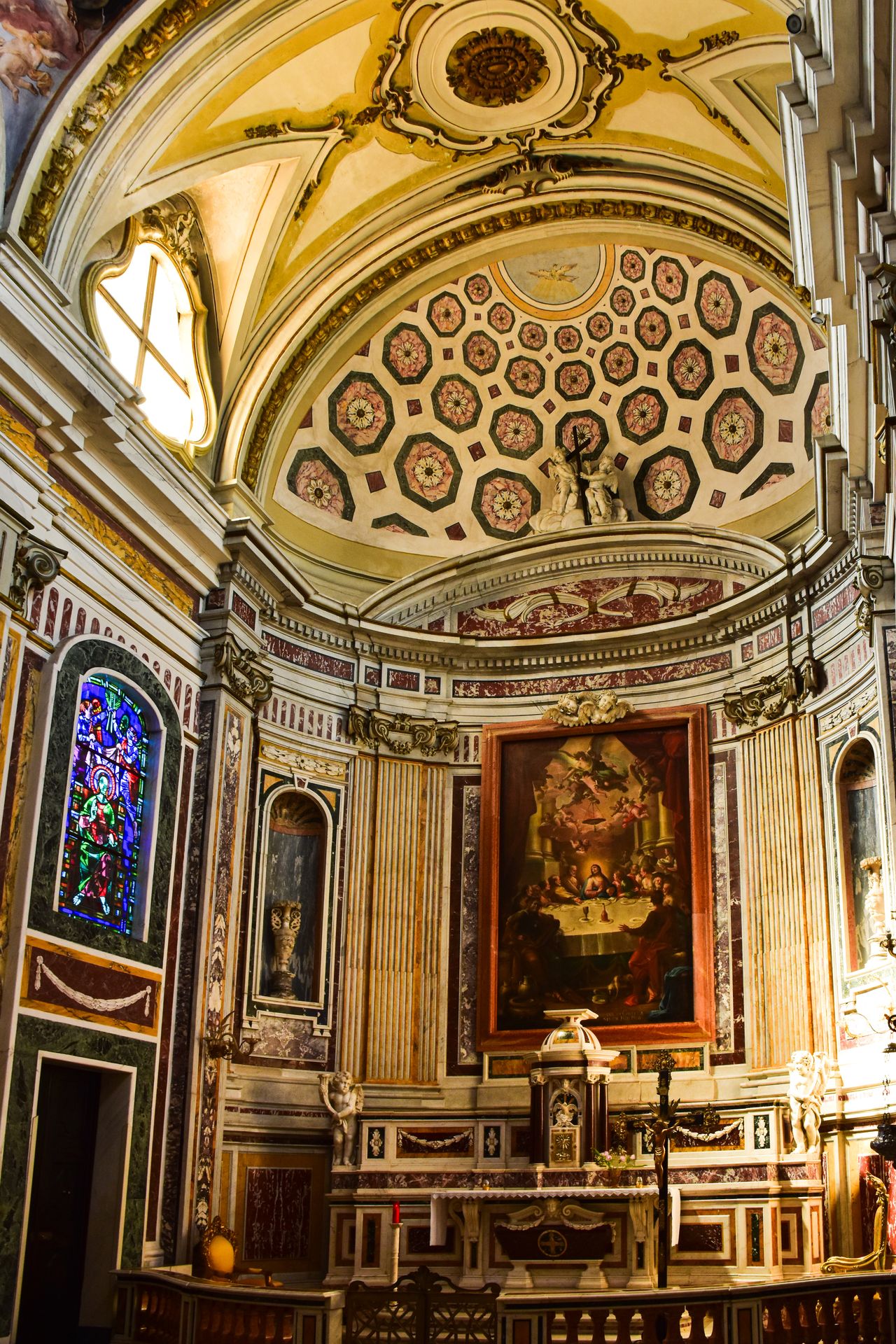
Italy has over 100,000 churches, and most of them are active places of worship. The standard rule is simple: cover your shoulders and knees before entering. This applies everywhere from a tiny Umbrian village chapel to St. Peter’s Basilica in Vatican City. At major sites, the rule is strictly enforced. Guards at the Duomo in Florence, Milan Cathedral, and the Pantheon in Rome will turn you away at the door if you arrive in a vest top or shorts above the knee.
Carry a light scarf or wrap. Drape it over bare shoulders or tie it around your waist when needed, then remove it once you leave. Women do not need to cover their heads. Men should remove caps and hats on entry.
Avoid visiting during Mass if your purpose is sightseeing — many churches restrict tourist access during services, typically between 12:00 and 15:30.
Beaches
Italians dress down at the beach but maintain a clear boundary between beach and town. Walking through a coastal town centre in a bikini top and board shorts is considered disrespectful and is, in several municipalities, also illegal. Municipalities along the Amalfi Coast, Cinque Terre, and parts of Sardinia have introduced fines for exactly this. Put a cover-up on before stepping off the sand into a shop, bar, or street.
Restaurants
Smart casual is the norm at mid-range and upscale restaurants in Italy. Trainers and shorts are acceptable at trattorias and pizzerias but look out of place at a ristorante. Upmarket restaurants in Milan — particularly around the Quadrilatero della Moda — maintain a smart dress code similar to what you would expect in a Parisian brasserie. If you are unsure, wear long trousers and close-toed shoes.
Tipping Culture
Italy does not have a tipping culture comparable to the United States or the UK. Service charges are rare, and staff are not dependent on tips. That said, leaving something is genuinely appreciated.
At a sit-down restaurant, rounding up the bill or leaving 1-2 euros per person is appropriate. If a menu lists a coperto (cover charge of approximately 1.50-3 euros per person), that is not a service charge — it is a fixed table fee. You can still leave a small tip separately.
At a bar, tip nothing when standing at the counter for a coffee. If table service is offered, a 50-cent coin is sufficient. Taxi drivers appreciate rounding up to the nearest euro. Hotel porters expect approximately 1-2 euros per bag. Tour guides typically receive 5-10 euros per person for a half-day.
Never tip with coins scraped from the bottom of your wallet — leave notes or round up the bill naturally.
Social Customs: Greetings, Bargaining, and Photography
Greetings
Italians greet warmly and physically. Among friends and family, a kiss on each cheek (starting on the left) is the norm. With strangers, a handshake is standard. Wait for the other person to initiate physical contact if you are unsure.
Use “buongiorno” (good morning/good day) until around 14:00 and “buonasera” (good evening) thereafter. “Ciao” is casual — save it for people you know or young locals who use it first. Using it with an older shopkeeper may come across as rude.
In shops, acknowledge the staff with “buongiorno” when you enter and “grazie, arrivederci” when you leave. Walking in and out without a greeting is considered impolite.
Bargaining
Bargaining is not part of Italian commercial culture. Fixed prices apply in shops, restaurants, and most markets. Some latitude exists at flea markets like Porta Portese in Rome (open Sunday mornings) or antique markets, but aggressive haggling is considered rude and will generally get you nowhere. A polite “c’e’ uno sconto?” (is there a discount?) is the furthest most vendors will go.
Photography
Photography is permitted in most public spaces in Italy. Inside churches and museums, check for posted signs. The Sistine Chapel in Vatican City prohibits photography and enforces this actively. The Uffizi in Florence and many private galleries have restrictions on flash and tripods. At archaeological sites such as Pompeii, photography is welcome but drone use requires separate permits.
When photographing people, particularly in rural southern Italy and Sicily, asking first is both polite and practically sensible.
Religious and Cultural Sensitivities
Italy is predominantly Roman Catholic, and church customs remain relevant even in secular contexts. Public religious holidays — particularly Easter and Ferragosto (15 August) — see businesses, restaurants, and transport operating on reduced schedules. Plan ahead.
Sunday closures are common outside major tourist centres. Many smaller shops close entirely, and in towns like Orvieto or Lucca you may find most of the high street shut by 13:00. Museums and galleries are often open on Sundays but closed on Mondays.
Italians are proud of regional identity. A Neapolitan will tell you Naples has nothing to do with Rome, and a Venetian will distinguish sharply between Venetian and Italian cuisine. Treating all of Italy as a single homogeneous culture will occasionally land you in an awkward conversation. Ask where something is from rather than assuming.
Dining Etiquette
Meals in Italy follow a rhythm that differs from other European countries. Lunch is the main meal of the day for many Italians, typically running from 13:00 to 15:00. Dinner rarely begins before 20:00 in the north and 21:00 in the south — arriving at 19:00 at a Naples restaurant is guaranteed to put you in the first wave of tourists.
Bread is placed on the table but is not used to start the meal. It is there to clean your plate (fare la scarpetta) at the end of a course. Asking for butter for your bread will confuse most waiters.
Cappuccino is a morning drink. Ordering one after lunch or dinner marks you as a tourist immediately — though no one will refuse to serve you one. Espresso is the post-meal drink of choice.
Do not ask for parmesan on seafood pasta. In Italian cooking, cheese is not combined with fish or seafood dishes, and a good restaurant will politely decline the request rather than comply.
Split bills (pagare separati) are unusual at Italian restaurants and can cause genuine difficulty for staff. It is simpler to agree among your group and pay one bill, dividing the cost yourselves.
Behaviour in Italian Homes
An invitation to an Italian home is a genuine gesture of friendship and worth taking seriously. Arrive slightly late — punctuality to the minute is not expected in social settings, and arriving exactly on time can wrong-foot the host. Ten to fifteen minutes late is entirely normal.
Bring something: wine, pastries from a local pasticceria, or flowers (avoid chrysanthemums, which carry funeral associations in Italy). Do not bring anything wrapped in purple for the same reason.
Wait to be shown to your seat — seating arrangements at Italian family tables are rarely random. Compliment the food directly to the cook; this matters more than general table conversation. Offering to help clear plates is appreciated but will usually be refused — offer once and then let it go.
Removing shoes at the door is not a universal custom in Italy as it is in some Asian cultures. Follow the host’s lead rather than assuming.