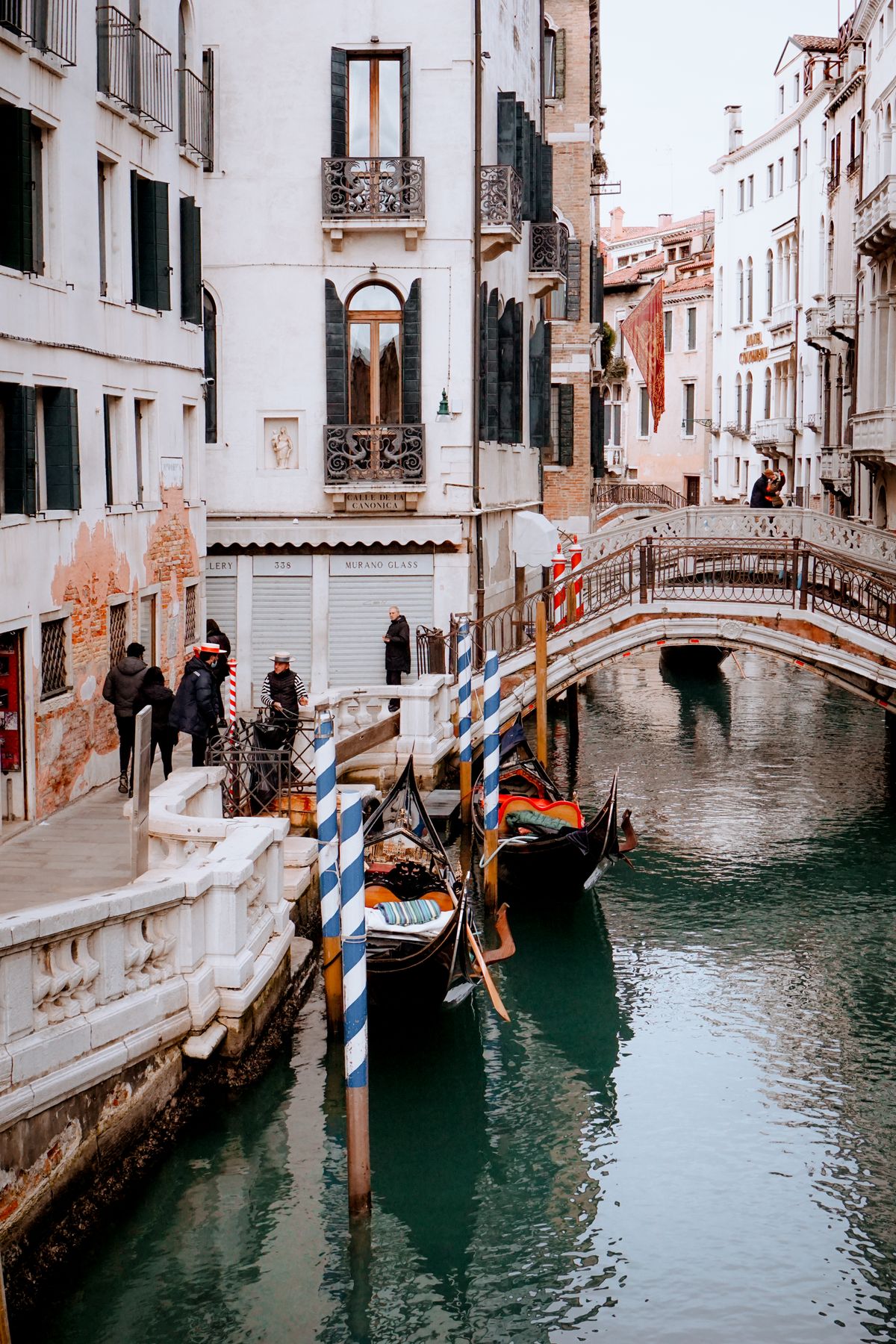
The Florence to Venice train is one of the classic Italian rail journeys — a two-hour ride from one Renaissance city to one of the world’s most extraordinary places. The Frecciarossa covers the route in approximately 2 hours 10 minutes, fares start under €20 with advance booking, and the arrival at Venice Santa Lucia station — right on the Grand Canal — is one of the great arrivals in European travel. This guide covers what you need to know before you book.
Route overview: Santa Maria Novella to Santa Lucia
Trains depart from Firenze Santa Maria Novella (SMN), Florence’s central station, a 5-minute walk from the Duomo district. They arrive at Venezia Santa Lucia, Venice’s main station, which sits directly on the Grand Canal at the northwest end of the historic island.
Do not book to Venezia Mestre by mistake. Mestre is a mainland suburb with no sights — only Santa Lucia places you inside Venice itself.
| Route | Journey time | Frequency |
|---|---|---|
| Firenze SMN → Venezia Santa Lucia | ~2h 05-15min (Frecciarossa) | ~2 per hour (peak hours) |
| Firenze SMN → Venezia Santa Lucia | ~2h 10-20min (Italo) | ~1 per hour |
Most services make one stop at Padova (Padua), adding around 5-8 minutes to the direct journey time. Check whether your specific train is non-stop or via Padova at booking.
Frecciarossa vs Italo
Both operators run the Florence–Venice route, with Frecciarossa offering more frequent departures.
Frecciarossa (Trenitalia) operates the majority of services, with Standard, Premium, Business, and Executive classes. Standard seats are comfortable for a two-hour journey with power sockets and tray tables. Book at trenitalia.com.
Italo (NTV) runs a smaller number of daily departures but is worth comparing for price — off-peak Italo fares can occasionally be lower than equivalent Frecciarossa options. Book at italotreno.it.
Compare both operators on Omio to see all departures and prices in a single view.
Ticket classes and prices
Approximate fares as of 2026, booked in advance:
| Operator | Class | From |
|---|---|---|
| Frecciarossa | Standard (Super Economy) | ~€19 |
| Frecciarossa | Standard (Economy) | ~€28 |
| Frecciarossa | Premium | ~€38 |
| Frecciarossa | Business | ~€55 |
| Italo | Smart (Low Cost) | ~€19 |
| Italo | Smart | ~€26 |
| Italo | Comfort | ~€38 |
Walk-up fares on the day of travel typically run €55-80 in second class. The cheapest Super Economy and Italo Low Cost fares are non-refundable and non-changeable, so confirm your plans before purchasing. Both operators use dynamic pricing — the earlier you book, the better the fare.
When to travel
Trains run from approximately 06:00 to 21:00 in each direction, with the highest frequency during peak morning and evening windows. The 07:00-09:30 departure window from Florence and the 17:00-20:00 window from Venice carry a consistent price premium. Shifting your departure by 30-60 minutes on either side of those windows often produces a meaningfully cheaper ticket.
Weekends in summer (June-September) and peak Italian holidays (Easter, Ferragosto, Christmas) are the most expensive periods to travel.
What to see from the window
The journey crosses the broad Po Valley — flat agricultural land between two of Italy’s mountain ranges. The views are unremarkable for most of the route, but the final approach into Venice is not. As the train crosses the Ponte della Libertà, the 3.6km causeway that connects the mainland to Venice island, the lagoon opens up on both sides. On a clear day you’ll see the island city ahead, with the bell tower of San Marco visible above the roofline. It’s an impressive arrival.
If you’re seated on the left-hand side (heading northeast), you’ll get the better view of the lagoon during the causeway approach. On the right, the view is partially obscured by the rail structure.
Arriving at Venice Santa Lucia
Venezia Santa Lucia is one of the world’s most dramatically positioned train stations. You walk out the front entrance and you are immediately on the Grand Canal — the main thoroughfare of the city. The Scalzi Bridge is immediately to your right; the Rialto Bridge is about 30 minutes by foot along the canal.
Getting around from Santa Lucia:
- Vaporetto Line 1 departs from the waterfront immediately outside the station, stopping at every landing stage along the Grand Canal to Piazza San Marco. Journey time to San Marco is approximately 30-40 minutes but the views make it worthwhile.
- Vaporetto Line 2 is the faster option, making fewer stops. It reaches San Marco in around 20 minutes.
- Water taxis are the fastest option for hotels with private canal access, but cost €80-120 for most city-centre trips.
- Walking is the default for many destinations in Venice. The station to Piazza San Marco on foot takes around 25-30 minutes through a mix of calli (narrow streets) and campi (small squares).
A note on luggage in Venice
Venice has no road access. Getting your luggage from the station to your hotel means either using a water taxi, a vaporetto (which can be crowded), or carrying it on foot — sometimes over numerous small bridges with steps on both sides. Rolling suitcases are common but slow on the bridges. A bag with handles and a shoulder strap is easier to manage than a rigid suitcase with small wheels. Factor this into your packing.
Left-luggage storage is available inside Santa Lucia station, operated by Luggage Heroes, for approximately €7 per bag for the first 5 hours as of 2026. Useful for arriving early before hotel check-in.
Where to stay in Venice
Venice accommodation ranges widely in price depending on location and season. Hotels directly on the Grand Canal command significant premiums. The Cannaregio, Dorsoduro, and Castello neighbourhoods offer a broader range of prices without being far from the main sights. Hotels in Venice.
What to see in Venice
Arriving at one of the world’s most visited cities, the essential sights are the Doge’s Palace, St Mark’s Basilica and Campanile, the Rialto Bridge, and the Accademia Gallery. The Grand Canal vaporetto ride at dusk is worth doing at least once. The outer islands — Murano (glass), Burano (lace and colour), and Torcello (early Byzantine history) — are each reachable by vaporetto.
Tours and experiences in Venice.
Florence before you leave
If you’re spending time in Florence before heading north, tours and experiences in Florence — and hotels in Florence if you need a base.
Plan Your Trip
✈️ Book your flights to Italy 🛡️ Get travel insurance 📱 Stay connected with an eSIM 🏨 Hotels in Venice