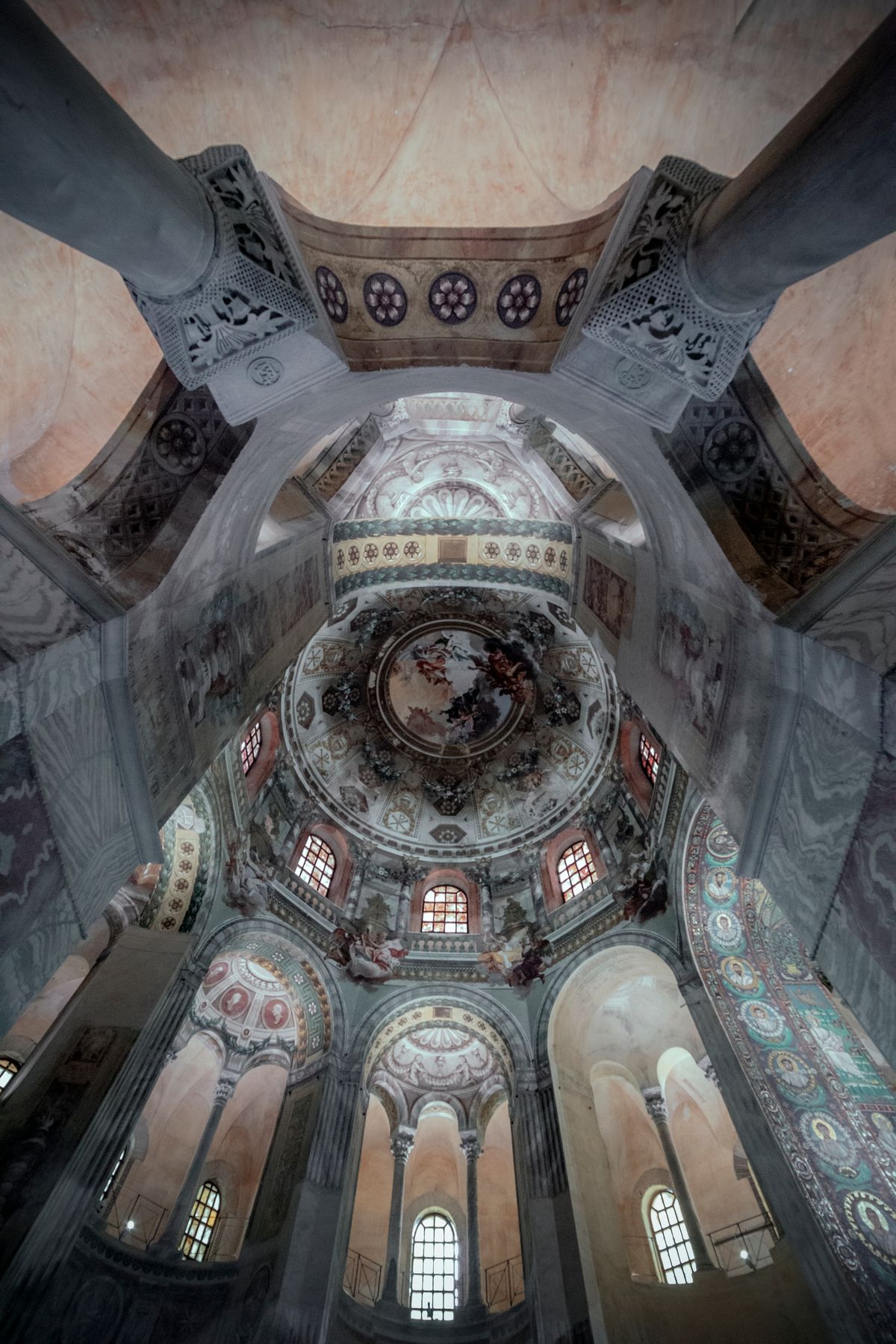
Quick Answer
Ravenna is one of the most rewarding Italian cities to visit outside the peak summer months. Its eight UNESCO World Heritage sites — all Early Christian and Byzantine mosaics, the finest concentration in the Western world — require no advance booking for most, operate in all weather, and are distributed across a walkable compact centre. The city never approaches the visitor volumes of Florence or Venice. For accommodation options, see Ravenna hotels, and book guided mosaic tours via Ravenna tours. The Ravenna city guide covers the combined ticket that covers all eight sites and costs approximately €12.50.
Season Overview
| Month | Avg Temp | Rain Days | Crowds | Cost |
|---|---|---|---|---|
| January | 3°C | 7 | Very low | Low |
| February | 5°C | 6 | Very low | Low |
| March | 9°C | 7 | Low | Low–Med |
| April | 13°C | 8 | Low–Med | Med |
| May | 18°C | 8 | Medium | Med |
| June | 23°C | 7 | Med (Festival) | Med–High |
| July | 27°C | 5 | Med–High | High |
| August | 28°C | 5 | High | High |
| September | 23°C | 6 | Medium | Med |
| October | 17°C | 7 | Low–Med | Med |
| November | 10°C | 8 | Low | Low |
| December | 5°C | 7 | Low | Low |
Peak Season: June to August
Summer in Ravenna has two distinct dynamics. The city itself is an inland destination — temperatures reach 28–32°C in July and August — but the Adriatic coast is 10 km east, accessible by bus or bicycle. Marina di Ravenna and neighbouring resorts draw large numbers of Italian and German beach tourists in summer, and a portion of these visit the mosaic sites as a half-day excursion. This adds crowds to the central sites (the Basilica di San Vitale and Mausoleo di Galla Placidia) during morning hours, typically 09:00–12:00.
The Ravenna Festival, one of Italy’s leading classical music and opera events, runs for approximately five weeks from late June to late July. Performances take place in the Palazzo Mauro de André and in outdoor venues across the city. Tickets for headline events cost €30–80; some piazza performances are free or low-cost. The festival generates significant accommodation demand — book early for the festival weeks.
Despite summer visitor numbers, the mosaic sites are remarkably manageable by Italian heritage city standards. The Mausoleo di Galla Placidia — a fifth-century mausoleum whose deep-blue star ceiling is among the most beautiful spaces in Italy — has timed entry in summer (entry slots of 5 minutes, maximum 9 people), but the wait is rarely more than 20–30 minutes. Entry to the mausoleum is included in the combined ticket but requires an additional booking supplement of approximately €2 in the high season.
Shoulder Season: April to May and September to October
These months offer the best conditions for the mosaics. In May, the early morning light through the eastern-facing windows of the Basilica di Sant’Apollinare Nuovo produces a golden quality that fully justifies the 5 km taxi or cycle ride to the Basilica di Sant’Apollinare in Classe, located outside the city in the former port location. The basilica — a sixth-century church with a complete apse mosaic and a procession of martyrs along the nave walls — is often overlooked in favour of the better-known city-centre sites, but it is among the most complete Byzantine interiors surviving anywhere.
September is warm (23°C average), the beach tourist numbers have dropped sharply, and the Ravenna Festival has ended. The Dante Alighieri Festival runs in September, marking the death anniversary of the poet (died 14 September 1321 in Ravenna). Dante is buried here — his Mausoleo in the city centre is free to visit — and the festival involves readings, theatrical performances, and literary events across the city.
October cools to 17°C and is excellent for cycling the flat landscape around the city. The Po Delta, 40 km north, is accessible by bicycle on dedicated paths and offers flamingo sightings from October through winter at the Valli di Comacchio wetlands.
Off Season: November to March
Ravenna in winter is quiet and genuinely cold — temperatures average 3–9°C, with fog common in the Po Valley from November through February. The mosaic sites reduce their hours slightly but remain open; a winter afternoon visit to the Battistero degli Ariani (a small, free-entry fifth-century baptistery with a complete dome mosaic) or the Battistero Neoniano demonstrates the quality that awaits in an uncrowded setting.
Hotel prices are among the lowest for a UNESCO city in northern Italy in this period: expect to pay €45–65/night for a comfortable mid-range hotel. A Carnival tradition in February includes local events, and the town has a modest Christmas market in December.
Month-by-Month Guide
| Month | Highlights | Watch Out For |
|---|---|---|
| January | Empty sites; low prices | Cold; fog; reduced hours |
| February | Carnival events; winter light quality | Short days |
| March | First warmth; no queues | Occasional rain |
| April | Spring cycling; uncrowded sites | Rain possible |
| May | Best mosaic light; all sites open | Growing visitors at weekends |
| June | Ravenna Festival begins; warm evenings | Festival accommodation demand |
| July | Festival peak; beach day-trippers | Timed entry at Mausoleo; heat |
| August | Adriatic tourists in city | Hottest month; inland heat |
| September | Dante Festival; warm and manageable | Still some coast crowds early month |
| October | Cycling season; Po Delta birds | Cooler; some reduced hours |
| November | Off-season peace; fog possible | Cold and damp |
| December | Christmas market; lowest prices | Cold |
Key Events and Festivals
- Ravenna Festival (late June to late July): five weeks of international opera, classical music, ballet, and contemporary dance; Mstislav Rostropovich founded it in 1990 and it retains a high international profile; tickets from €15 for smaller events
- Dante Festival (September, around 14 September): literary and theatrical events marking the anniversary of Dante’s death; the Tomba di Dante in the city centre is free year-round; the festival adds readings and performances in public spaces
- Carnival of Ravenna (February): local procession and community events in the city centre, including children’s costume parades — modest by Venetian standards but a genuine local tradition
- Mosaic Festival / Mosaico di Pace (periodic, October): events celebrating Ravenna’s mosaic tradition, with local artisan studios opening to visitors; check current year’s programme
- Via dell’Amore Mosaic Walk (year-round): the seasonal light quality on the mosaic trail through the city is particularly good in autumn and winter afternoons when the low sun angle matches the original Byzantine design conditions
Plan Your Trip
✈️ Book your flights to Italy 🎫 Find tours in Ravenna 🛡️ Get travel insurance 📱 Stay connected with an eSIM 🚗 Hire a car in Italy