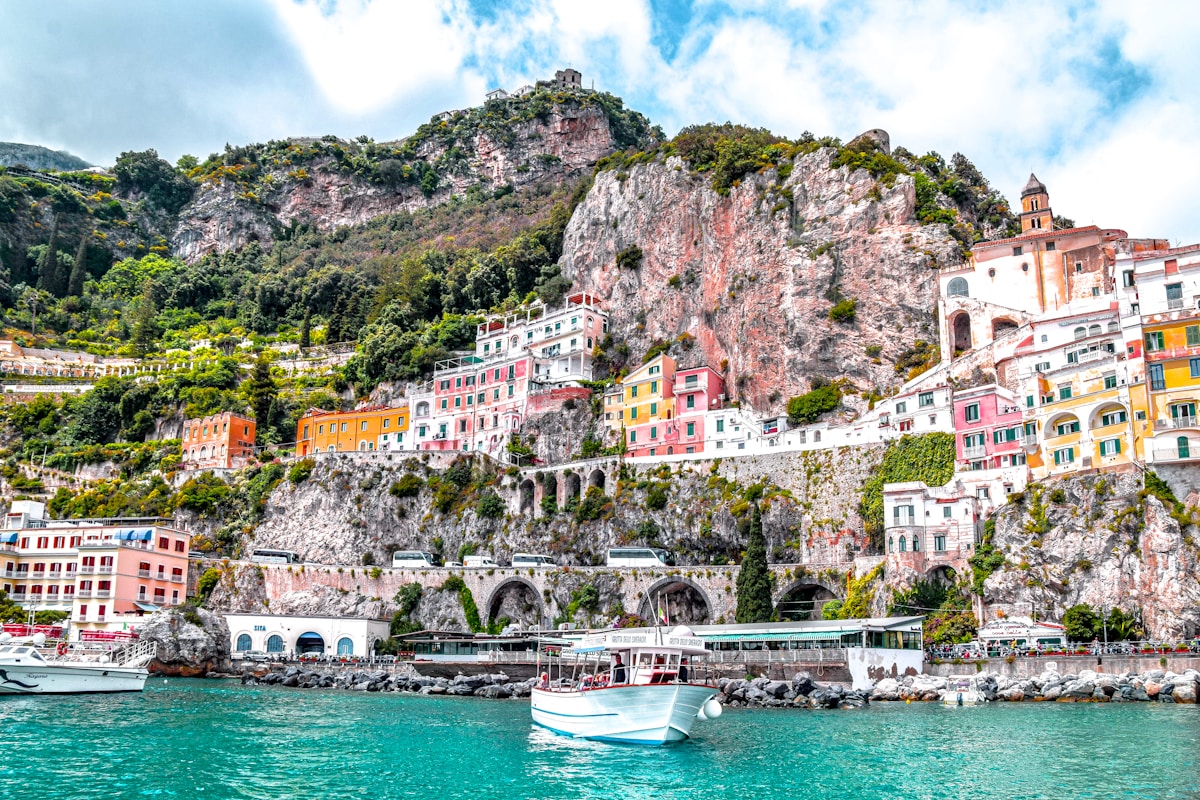
Capri’s position in the Bay of Naples makes it an exceptional base for reaching some of the most celebrated stretches of the Italian south. Hydrofoils and ferries leave Marina Grande throughout the day for Sorrento, Naples, and beyond; private boat operators offer a more scenic (and expensive) route along the Amalfi Coast. The key practical consideration is the return ferry schedule: services reduce sharply after early evening and during rough weather, so always confirm departure times before committing to an itinerary.
Sorrento
Travel time: approximately 20–25 minutes by hydrofoil, approximately 40–50 minutes by ferry. Cost: approximately €13–20 each way as of 2026 (varies by operator and service type).
Sorrento is Capri’s closest mainland neighbour and the most logical base for day trips along the coast. The town itself is genuinely rewarding: the historic centre clusters around Piazza Tasso, with a warren of streets behind it selling ceramics, limoncello, and inlaid woodwork. The cliffs above Marina Piccola offer some of the best views back towards Capri. Allow 2–3 hours to explore properly.
From Sorrento, the SITA bus network (approximately €1.30 per journey as of 2026) connects the entire Amalfi Coast. The bus is slow - the coast road was not built for traffic volumes it now carries - but it is the cheapest way to reach Positano and Amalfi. Taxis from Sorrento to Positano cost approximately €50–70 as of 2026.
What to eat in Sorrento: The old town’s back streets have better value than the clifftop restaurant terraces. Look for pasta e fagioli (pasta with beans), gnocchi alla Sorrentina (potato gnocchi baked with tomato and mozzarella), and the local limoncello made with sfusato lemons grown on the peninsula.
Positano
Travel time from Capri: approximately 1.5–2 hours by public transport (hydrofoil to Sorrento, then SITA bus). Approximately 30–50 minutes by private boat. Cost by private transfer: approximately €40–90 per person depending on vessel and season.
Positano is one of the most photographed villages in southern Italy - the multicoloured houses tumbling down the cliff to the small beach are immediately recognisable. The reality on a busy summer day is that the town is very crowded, the beach is small, and the good restaurants are expensive. That said, walking through the vertical streets in the early morning before the tour boats arrive, or in the late afternoon when day-trippers have departed, the place is genuinely beautiful.
What to do: Walk the upper village along Via Cristoforo Colombo; buy from the alimentari and eat on the steps of the Church of Santa Maria Assunta; swim at Spiaggia Grande (beach entry is free, sunbed hire approximately €20–30 as of 2026); eat scialatielli ai frutti di mare (the local pasta) at one of the restaurants above the beach.
Practical: Positano has very little flat ground - it is almost entirely stairs. If mobility is a concern, note that getting around requires significant effort.
Amalfi and Ravello
Travel time from Capri: approximately 2–2.5 hours by public transport. By private boat: approximately 45–60 minutes.
Amalfi was once the most powerful maritime republic in southern Italy, a rival to Venice and Genoa. The Cathedral of Sant’Andrea (entry approximately €3 as of 2026, includes the Cloister of Paradise) is the main sight - the Chiostro del Paradiso, a 13th-century cloister with interlaced arches, is architecturally extraordinary. The paper museums (Museo della Carta, entry approximately €4) tell the story of the Arab-origin papermaking industry that Amalfi preserved for centuries. The town itself is best explored in an hour or two; the waterfront is dominated by souvenir shops.
Ravello is the better destination if you want to spend a full day. Take the local bus from Amalfi (approximately €1.50, approximately 30 minutes). Villa Rufolo (entry approximately €7 as of 2026) has some of the most spectacular clifftop gardens in Europe - Wagner was famously inspired by them - and the view from the belvedere, with the coast 350 metres below, is genuinely extraordinary. Villa Cimbrone (entry approximately €7) has a rose garden and a terrace known as the Terrazza dell’Infinito, with an unobstructed sea view that rivals anything on the coast.
Naples
Travel time: approximately 50–75 minutes by hydrofoil or fast ferry, approximately 80–90 minutes by slower car ferry. Cost: approximately €13–25 each way as of 2026 depending on operator and service.
Naples is the obvious choice for a full day. The city is overwhelming in the best sense: dense, loud, occasionally chaotic, and in possession of more archaeological treasures per square kilometre than almost anywhere in Europe. From the port, the historic centre is 20 minutes on foot.
Key priorities:
- Museo Archeologico Nazionale (Via Museo, entry approximately €20 as of 2026): holds the greatest collection of Roman artefacts in the world, including the Secret Cabinet of erotic objects from Pompeii and the original Alexander Mosaic from the House of the Faun. Allow 2.5–3 hours minimum.
- Spaccanapoli (the long straight street bisecting the old city): the best street-level experience in Naples - street food vendors, historic churches (Gesù Nuovo, Santa Chiara), and the Veiled Christ sculpture in the Cappella Sansevero (entry approximately €8, must book ahead).
- Pizza: Naples is the origin point. Da Michele (Via Cesare Sersale) does two pizzas - Margherita and Marinara - both exceptional, queue expected. Sorbillo (Via dei Tribunali) is the other famous name; larger menu, similarly good. Budget approximately €5–10 per pizza as of 2026.
Pompeii and Herculaneum
Travel time from Capri: approximately 1.5 hours each way (hydrofoil to Sorrento or Naples, then Circumvesuviana train).
These two sites destroyed by Vesuvius in 79 AD are among the most visited archaeological sites in the world, and for good reason. Pompeii (entry approximately €18 as of 2026, book online to avoid queues; open approximately 9am–7pm, last entry 5:30pm) covers 66 hectares - you cannot see all of it in one visit. Focus on the Via dell’Abbondanza for the best-preserved street, the Thermopolia (ancient fast-food bars), the House of the Faun, and the Garden of the Fugitives.
Herculaneum (entry approximately €13, combined tickets with Pompeii available) is smaller, better-preserved (it was buried under 20 metres of volcanic material rather than ash), and far less crowded. The wooden furniture, mosaics, and painted walls are intact to a degree impossible at Pompeii. Allow 2–3 hours and note the site is open approximately 9am–5pm.
Both can be combined on the same day only if you start very early and limit your time at each. Most visitors choose one.
Boat Trips Along the Coast
Rather than reaching a specific destination, a full-day boat trip along the Amalfi Coast - from Capri towards Positano, Praiano, Amalfi, and back - is one of the most enjoyable things to do in the region. Multiple operators at Marina Grande run shared group tours (typically 7–8 hours, approximately €60–80 per person as of 2026 including snorkelling stops and lunch at anchor). Private charters cost from approximately €400–600 per day for a small vessel.
The perspective from the water is completely different from the land-based view: the cliffs are more dramatic, the sea caves accessible, and the coves impossible to reach by road open up for swimming. If the weather is good and you can afford the time, a full-day boat trip is arguably the best use of a day from Capri.
Book Capri Boat Tours on GetYourGuide
| Tour | Duration | From price | Highlights |
|---|---|---|---|
| Capri: Island Boat Tour with Blue Grotto Stop | 1.5 hours | From €25 | Faraglioni rocks, White and Green grottos, optional Blue Grotto entry (€18 extra) |
| Capri: Full-Day Small Group Boat Tour from Sorrento | 8 hours | From €110 | Island circumnavigation, swimming stops, snorkelling, drinks included |
| Capri: Private Half-Day Boat Tour | 4 hours | From €160 per boat | Sea caves, Faraglioni, customisable route, private skipper |
Where to stay in Capri: Find hotels in Capri — search accommodation across all budgets.