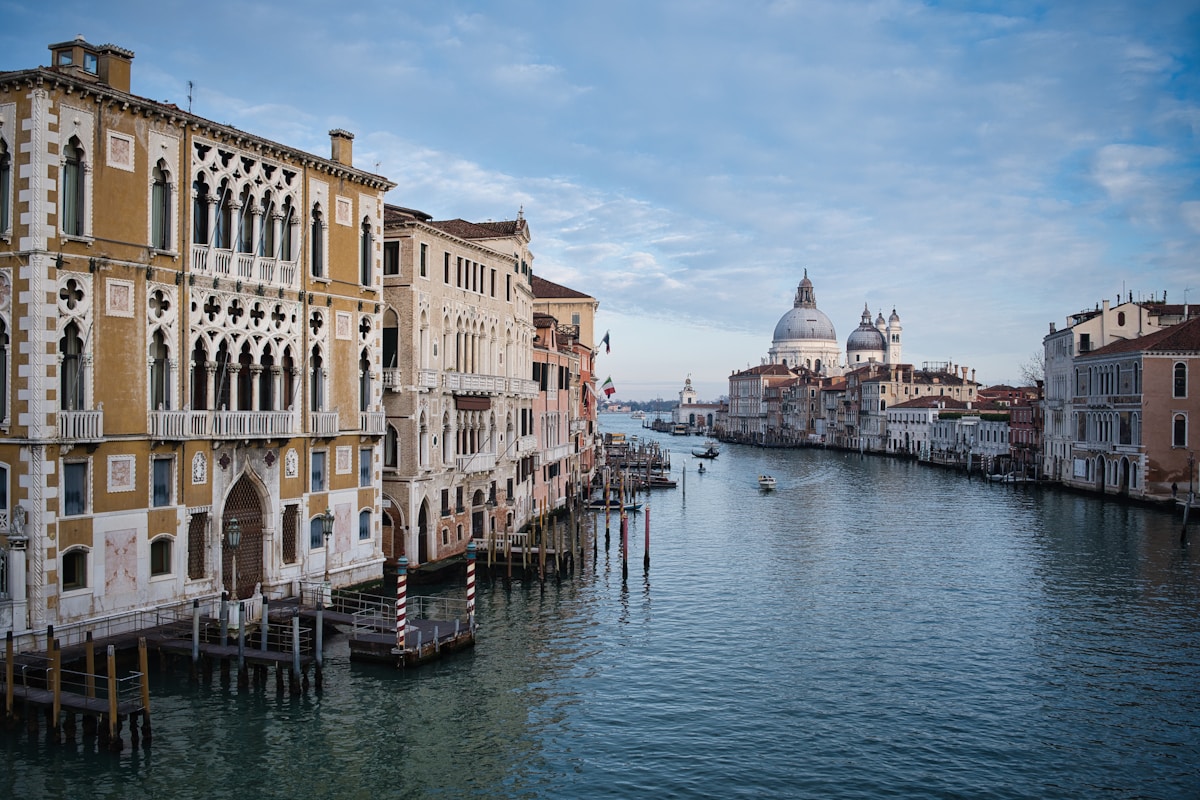
The Veneto stretches from the Dolomites to the Adriatic, taking in Venice, Verona, Padua, and some of Italy’s most important wine territories. Accommodation ranges from floating palazzi in Venice to agriturismi in the Valpolicella hills.
Search Veneto hotels on Booking.com to compare prices and check availability across all areas in this guide.
Venice: What to Expect
Venice’s accommodation is expensive and location matters more than any other factor.
On the island - the most atmospheric option. Dorsoduro, Cannaregio, and Castello are quieter and more residential than the San Marco area. Prices are high year-round.
Mestre - the mainland city across the bridge, 10 minutes by commuter rail to Venice Santa Lucia. Significantly cheaper at the cost of atmosphere. A practical option for budget travellers.
Giudecca - the long island south of Venice proper. A handful of significant hotels, quieter character, and a short vaporetto to San Marco.
Lido - Venice’s barrier island beach resort. Better for a beach holiday with Venice day trips than for city exploration.
Venice Budget Guide
- Under €100/night: Hostels and budget hotels in Mestre or basic rooms in Cannaregio
- €100–200/night: Mid-range hotels in Dorsoduro and Cannaregio - the best value island positions
- €200–400/night: Boutique hotels in converted palazzi, some with canal views
- €400+: Grand canal palazzi (Hotel Danieli, Gritti Palace)
Verona
More accessible and significantly cheaper than Venice. The historic centre is compact - the best hotels sit within 10 minutes of the Arena.
Historic centre: Arena, Piazza Bra, Juliet’s House, and the Roman theatre all walkable. Best position for opera season (July–September).
Budget: €60–100; Mid-range: €100–180; Boutique: €180–350.
Padua (Padova)
The cheapest major Veneto city. The student population maintains a strong guesthouse and small hotel market.
Historic centre: Most convenient for the Scrovegni Chapel and the Piazza delle Erbe bacaro scene. Multiple accessible-priced hotels in good locations.
University district: Lowest prices in the Veneto - a consequence of the student economy.
The Wine Country
Valpolicella (west of Verona) - Amarone, Ripasso, and Valpolicella Classico country. Agriturismi and boutique hotels among the vineyards; 20–30 minutes from Verona by car.
Soave (east of Verona) - a medieval castle town in the Soave DOC white wine zone. A handful of agriturismo options in vineyards.
Prosecco hills / Conegliano-Valdobbiadene - the UNESCO Prosecco wine landscape. Farm stays among the steep terraced vineyards. Conegliano has the best hotel infrastructure.
Euganean Hills - volcanic hills south of Padua with thermal spa towns (Abano Terme, Montegrotto Terme). Spa hotels at all price points.
Named accommodation recommendations
Venice
Hotel Nani Mocenigo Palace (Dorsoduro, Fondamenta di Ca’ Bala) - A four-star in a 16th-century palazzo on a quiet canal in Dorsoduro. Doubles from approximately €140/night as of 2026. Original Murano glass chandeliers, breakfast room overlooking the canal. Ten minutes’ walk to the Accademia and Zattere waterfront. One of the best-value palazzi stays in Venice.
Generator Venice (Giudecca, Fondamenta Zitelle) - A design hostel in a converted granary on Giudecca island. Dorm beds from approximately €30/night, private doubles from approximately €90/night. Rooftop terrace with panoramic views across to San Marco. Vaporetto line 2 or 4.1 to San Marco in 10 minutes. The best budget option with genuine Venetian atmosphere.
Aman Venice (Grand Canal, Palazzo Papadopoli) - A 24-room hotel in one of the most significant palazzi on the Grand Canal. Doubles from approximately €1,200/night. Tiepolo frescoes in the public rooms, private garden (rare in Venice). The most extraordinary hotel in the city for those with the budget.
Verona
Hotel Gabbia d’Oro (Corso Porta Borsari 4a) - A five-star in a medieval building steps from Piazza delle Erbe. Doubles from approximately €200/night. Courtyard garden, original frescoes, and an excellent central position for the Arena opera season (July–September). Book 2–3 months ahead for opera weekends.
Hotel Colomba d’Oro (Via Carlo Cattaneo 10) - A four-star in a former 14th-century chapel near the Arena. Doubles from approximately €120/night. Good mid-range option with reliable quality and a strong breakfast.
Padua
Methis Hotel & SPA (Riviera Paleocapa 70) - A four-star design hotel near the Basilica of Sant’Antonio. Doubles from approximately €100/night. Modern interiors, spa facilities, and a restaurant. Ten minutes’ walk to the Scrovegni Chapel.
Belludi 37 (Via Luca Belludi 37) - A boutique hotel in an Art Nouveau building near the Prato della Valle. Doubles from approximately €80/night. Clean, modern rooms; excellent value for the Veneto.
Wine country
Relais Villa Cordevigo (Cavaion Veronese, Valpolicella) - A five-star wine estate in a 16th-century villa surrounded by vineyards. Doubles from approximately €250/night. Michelin-starred restaurant, pool, and wine tastings of estate-produced Amarone and Valpolicella. Twenty minutes from Verona.
Villa Abbazia (Follina, Prosecco hills) - A four-star in a 17th-century villa in one of the Prosecco DOCG’s most attractive villages. Doubles from approximately €130/night. Garden, excellent restaurant using local ingredients. A strong base for touring the Conegliano-Valdobbiadene wine road.
Plan your trip:
- Browse tours in Venice and day trips across the Veneto
- Book a hire car for Verona, Padua, and the Dolomites
- Get travel insurance before you book
- Pick up an eSIM for Italy
- Search hotels in the Veneto on Booking.com
Practical Notes
- Venice airport transfer: the Alilaguna ferry (approximately €15, 90 minutes to San Marco) or ACTV bus to Mestre and train are far cheaper than water taxis (€80–120 for the same journey)
- Verona airport connects to the UK, Germany, and other European destinations - useful for direct arrivals bypassing Venice
- For wine country stays, a car is essential - the agriturismi and wine estates are spread across rural hills with limited public transport
- Booking timing: Venice accommodation is significantly cheaper in November–February (excluding Carnival week). The Verona opera season (late June–early September) fills the city; book 3–4 months ahead
- The Veneto is compact - Verona to Venice is approximately 1.5 hours by Frecciarossa (from approximately €15 booked ahead), making a split stay practical
For city-specific hotel pages: best hotels in Venice, best hotels in Verona, best hotels in Padua. Planning a Veneto route? Our northern Italy itinerary connects Venice, Verona, Lake Como, and Milan. For the food scene to pair with your stay: Venetian food guide covers cicchetti, bacari, and Veneto wines. Comparing Venice and Florence before committing to a base? Our Venice vs Florence guide covers the key differences.
Ready to Plan Your Trip?
See our itineraries for inspiration:
- Northern Italy Itinerary - lakes, cities, and the Dolomites
- One Week in Italy - seven days through Rome, Florence, and Venice
- 2 Weeks in Italy - the ultimate two-week Italian itinerary
- 3 Weeks in Italy - the north-to-south grand tour from Milan to Sicily