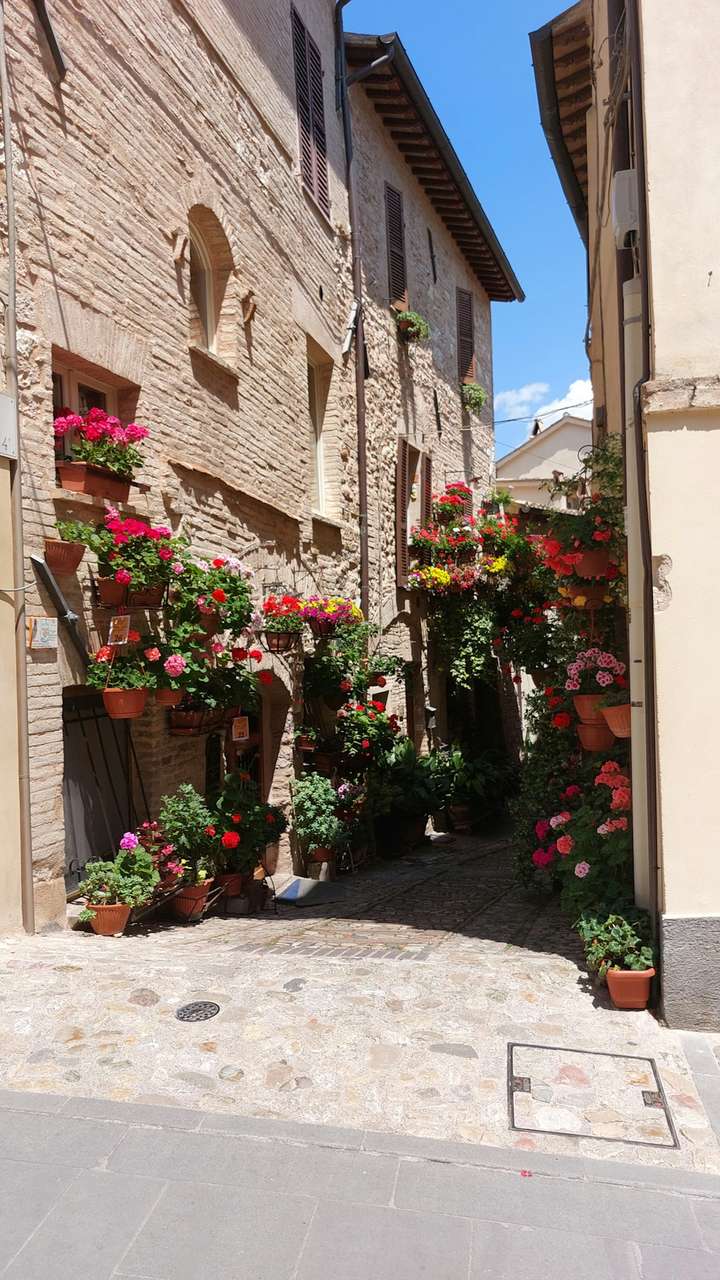
Umbria is Italy’s landlocked central region — the green heart of the country, as Italians call it. Unlike Tuscany, it has not been overwhelmed by international tourism. The landscapes are genuinely rural: rolling hills covered in olive groves and vineyards, medieval towns on every ridge, and valleys threaded with rivers that were controlled by Benedictine monasteries for centuries. The spiritual character of the region — Assisi, Norcia, Spello — is not just heritage marketing; it’s still the primary organising principle of many Umbrian communities.
Accommodation in Umbria divides between the main towns (practical, full-service hotels and guesthouses) and the countryside (agriturismo farmhouses and converted estates). Both are worth considering, and many visitors combine a night or two in a town with a night at an agriturismo.
Search Umbria hotels on Booking.com to compare prices and check availability across all areas in this guide.
Perugia — Best City Base
Perugia is Umbria’s regional capital and the most practical city base. The historic centre sits on a dramatic ridge above the surrounding valleys, accessible from below by escalator (the Minimetrò underground people-mover) or by the steep medieval streets. The main piazza — Piazza IV Novembre with the Fontana Maggiore — is one of the finest in central Italy. The Galleria Nazionale dell’Umbria (housed in the Palazzo dei Priori) contains the best collection of Umbrian painting, including major works by Perugino. The university gives the city a lively character.
Pros: Best transport connections in the region — trains to Assisi (20 min), Foligno, Spoleto. Regular bus services. Good range of restaurants and nightlife. Full hotel infrastructure. Perugia Chocolate Festival (Eurochocolate) in October and Umbria Jazz Festival in July are major events.
Cons: Less immediately charming than smaller hill towns. The area around the station (below the historic centre) is less attractive. Driving within the ZTL is restricted.
Budget (€55–90/night): The Ostello della Gioventù Mario Spagnoli (Via Bontempi): a hostel with private rooms at the lower end, well positioned in the historic centre; doubles from approximately €60/night as of 2026. The Hotel Fortuna (Via Luigi Bonazzi 19): a good-value three-star in a historic palazzo, central position; doubles from approximately €75/night.
Mid-range (€95–160/night): The Brufani Palace Hotel (Piazza Italia 12): a grand five-star on the edge of the historic centre with views over the Umbrian valley — one of the great historic hotels of central Italy, and occasionally available at reasonable rates in shoulder season; doubles from approximately €180/night as of 2026, lower in winter. The Hotel La Rosetta (Piazza Italia 19): a four-star with characterful older rooms and a reliable restaurant; doubles from approximately €110/night.
Assisi — Pilgrimage Town and Giotto’s Basilica
Assisi is one of Italy’s great religious sites — the birthplace of St. Francis and home to the Basilica of San Francesco, whose upper and lower churches contain Giotto’s fresco cycle on the life of the saint. The town itself is well-preserved pink limestone, and the pilgrimage character means a wide range of accommodation at every price point, including many religious guest houses.
Budget (€55–90/night): Assisi has multiple religious guest houses operated by Franciscan and other orders — these offer clean, modest rooms at very low prices, often with breakfast included. The Casa Papa Giovanni and similar establishments near the basilica area cost approximately €55–75/night. Note that religious guest houses often have curfews and may not allow alcohol on premises.
Mid-range (€100–180/night): The Hotel Fontebella (Via Fontebella 25): a comfortable four-star in a converted olive mill, rooms with valley views; doubles from approximately €130/night as of 2026. Nun Assisi Relais & Spa Museum (Via Eremo delle Carceri 1A): one of Assisi’s most interesting hotels, built into the ruins of an ancient Roman amphitheatre with a spa and excellent restaurant; doubles from approximately €180/night.
Luxury (€200–350/night): The Castello di Petrata (outside Assisi, panoramic setting): a restored castle with pool and gardens; doubles from approximately €220/night as of 2026.
Spoleto — Best for the Southern Region
Spoleto is a beautiful, sophisticated small city in southern Umbria — less visited than Assisi or Perugia but one of the most rewarding stops in the region. The Festival dei Due Mondi (Festival of Two Worlds) in late June–July brings major opera, dance, and theatre to the historic theatres and piazzas, making Spoleto internationally known in the arts world while remaining genuinely local the rest of the year. The Rocca Albornoziana (the 14th-century papal fortress), the Roman amphitheatre, and the Ponte delle Torri aqueduct-bridge are the main attractions.
Mid-range (€100–180/night): The Hotel Aurora (Via Apollinare 3): a charming three-star in the historic centre, good value, friendly staff; doubles from approximately €100/night as of 2026. The Hotel Gattapone (Via del Ponte 6): a small boutique hotel literally embedded in the medieval walls, with extraordinary views over the Ponte delle Torri — one of the most dramatically positioned hotels in Italy; doubles from approximately €160/night.
Spello — Flower Town and Agriturismo Country
Spello is a small town on the slopes of Monte Subasio between Assisi and Foligno, known for its flowers (the Infiorata festival in June carpets the streets in elaborate floral designs) and for a quieter, more local atmosphere than its famous neighbours. The churches contain frescoes by Pinturicchio. It is one of the most attractive small towns in Umbria for an overnight stay.
Budget to Mid-range (€75–160/night): The Hotel Palazzo Bocci (Via Cavour 17): a converted 17th-century palazzo with individually designed rooms; doubles from approximately €120/night as of 2026. The La Bastiglia Hotel (Via dei Molini 17): a small hotel in a converted mill with a garden; doubles from approximately €100/night.
Agriturismo Umbria — Countryside Farmhouses
The agriturismo tradition is strong in Umbria, and staying on a working farm or vineyard is often the highlight of an Umbrian visit. Properties typically include breakfast (and often dinner, made with estate produce), access to pools, and a location in the countryside that urban hotels cannot replicate.
Agriturismo range (€80–250/night): Simple farmhouses in the Martani hills, around Montefalco, or in the Valnerina charge approximately €80–120/night. The best converted estates — with pools, wine cellars, and organic kitchens — charge approximately €180–250/night as of 2026. Many require a minimum 2-night stay.
Plan your trip:
- Browse tours and wine experiences in Umbria
- Book a transfer from Rome or Florence
- Get travel insurance before you book
- Pick up an eSIM for Italy
- Search hotels in Perugia on Booking.com
Booking and practical tips
- Festival degli Due Mondi (Spoleto, late June–July). Hotels in Spoleto book out months in advance for the festival weeks. If you want to attend, plan the accommodation first and buy tickets second.
- Truffle season. Black truffles are harvested in Norcia and across southern Umbria from January to March. White truffles appear in autumn (October–November) around Gubbio and Città di Castello. Truffle dinners and market events are worth planning around.
- Montefalco and Sagrantino wine. Montefalco is 12 km south of Foligno and produces Sagrantino DOCG — one of Italy’s finest red wines. Most estates offer tastings by appointment. If you’re driving this area, a half-day wine itinerary combining two or three Sagrantino producers is worth building in.
- Parking. Umbrian hill towns all have ZTL zones and restricted access within the historic centres. Park at the indicated car parks on the edge of each town and walk in. Perugia has an escalator/lift system connecting parking areas to the upper historic centre.
- City tax varies by town: approximately €1–2.50/night per person across the main Umbrian cities.
For the full Umbria region guide: the Umbria itinerary covers the towns, landscapes, and food in sequence. For nearby Tuscany accommodation: hotels in Tuscany and hotels in Florence as a northern entry point.
Ready to Plan Your Trip?
- 5-Day Umbria Itinerary - Perugia, Assisi, Spello, Spoleto, and the countryside
- 2 Weeks in Italy - incorporating Umbria into a broader Italian route
- 10 Days in Italy - central Italy with time for less-visited cities