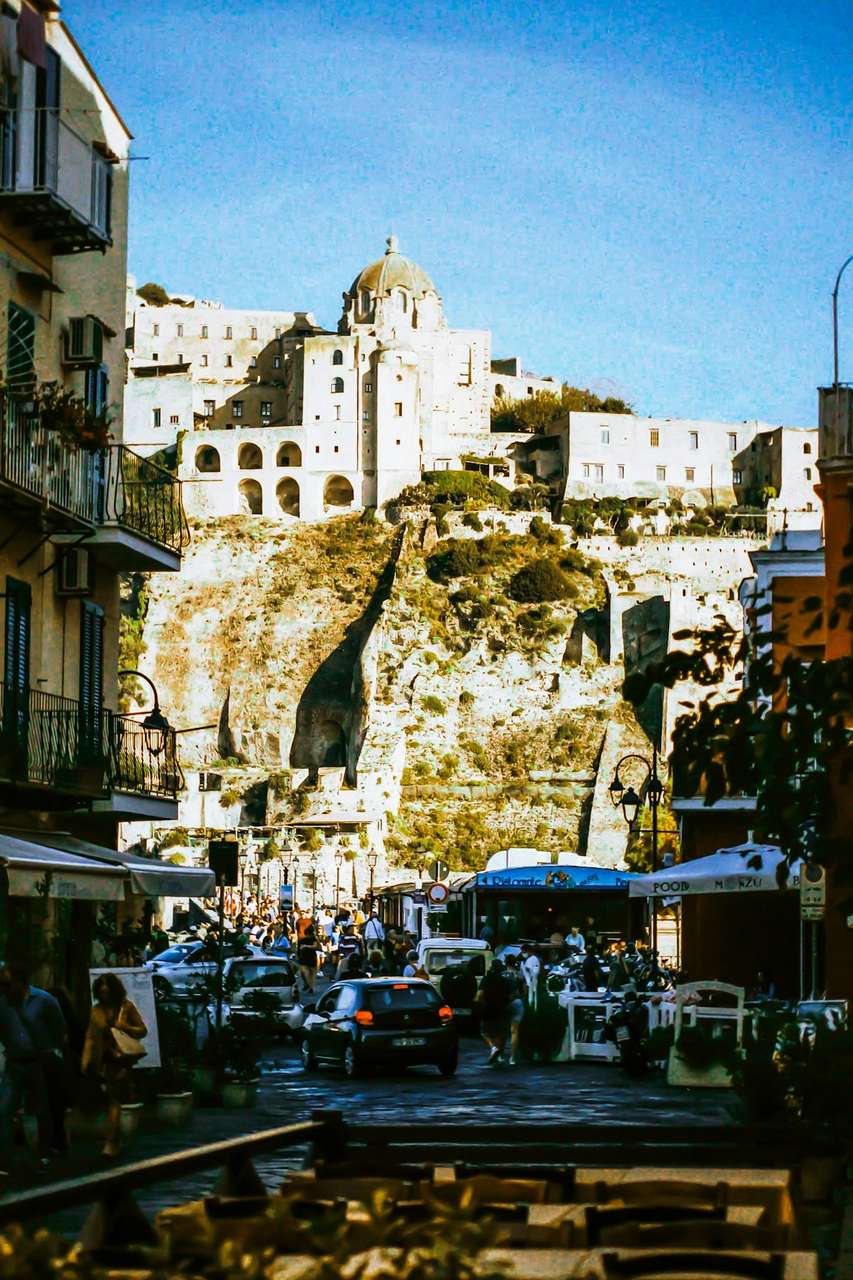
Ischia is the largest island in the Bay of Naples, separated from the mainland by 30 kilometres of water and from Capri by a similar distance across the bay. Unlike Capri — which is a day trip destination — Ischia rewards longer stays. The island is volcanic, with natural thermal springs of varying temperatures throughout. The landscape is more varied than Capri’s: forests, vineyards, a hilltop castle, a lagoon, and beaches of both black volcanic sand and lighter sandy shores. The six comuni of the island each have a distinct atmosphere, and choosing where to stay has a significant effect on your experience.
Search Ischia hotels on Booking.com to compare prices and check availability across all areas in this guide.
Ischia Porto — Main Town and Ferry Hub
Ischia Porto occupies the crater of an extinct volcano on the northeast coast — the perfectly round harbour is the former caldera. The town is busy, well-stocked with restaurants and bars, and the most practical base for day trips around the island or excursions to Naples and the mainland.
Pros: The ferry terminal — connections to Naples and Pozzuoli depart from here, making onward travel easy. Best choice of restaurants and shops. Central position for reaching other parts of the island. Most affordable accommodation on the island.
Cons: Busy and commercial, particularly in August. Less atmospheric than Ischia Ponte. The town itself is built largely in the 19th and 20th century rather than having a medieval core.
Budget (€80–120/night): Family-run pensioni and B&Bs in the streets behind the harbour. The Hotel La Villarosa (Via Giacinto Gigante 5): a small hotel with a thermal pool in the garden, one of the better-value options in the town; doubles from approximately €100/night as of 2026. Several apartment-style rentals near the port offer good value for longer stays.
Mid-range (€140–220/night): The Hotel Terme Parco Smeraldo (Via Pontile 27): a comfortable four-star with thermal pool and spa, reasonable facilities for the price; doubles from approximately €160/night as of 2026. Il Moresco Grand Hotel (Via Edoardo Gianturco 16): a well-run four-star with extensive thermal facilities and gardens; doubles from approximately €200/night.
Ischia Ponte — Castle Views and Medieval Character
Ischia Ponte is the oldest inhabited area of the island, connected to the rest of Ischia by a stone causeway leading to the Aragonese Castle (Castello Aragonese) on its own volcanic rock. The neighbourhood is calmer and more atmospheric than the port, with a genuine medieval character that no other part of the island has.
Pros: The Aragonese Castle is right there — the most dramatic sight on the island, worth visiting for the views from the upper terraces alone. Better atmosphere for evening dining than the port. The lace-making tradition of Ischia has its centre here. Quieter and more residential.
Cons: A 10–15 minute walk from the ferry terminal at Ischia Porto. Fewer large hotels than in the port zone.
Mid-range (€140–240/night): The Hotel Ulisse (Via Pontano): comfortable rooms with castle views, family-run; doubles from approximately €150/night as of 2026. The Hotel Damiano and similar three and four-star options in this area offer good value relative to comparable hotels at Lacco Ameno. Boutique guesthouses in converted stone buildings give the most characterful stays on the island.
Lacco Ameno — Luxury Spas and Upscale Resorts
Lacco Ameno is a small town on the northwest coast with the highest concentration of upscale thermal hotels on the island. The Fungo (Mushroom Rock) in the harbour is the island’s most recognisable geological formation. The Negombo thermal park — widely considered the best-designed thermal garden in Italy — is here.
Pros: The most beautiful section of the Ischia coastline. Best spa facilities. Quieter and more refined atmosphere than Ischia Porto. Direct access to Negombo (a 10-minute walk). The town itself is charming, with a good main square.
Cons: Expensive — this is the luxury end of the Ischia market. Limited budget options. Fewer restaurants than Ischia Porto. Requires transport to reach other parts of the island.
Luxury (€280–700+/night): The Regina Isabella (Piazza Santa Restituta 1): the most famous hotel on Ischia, opened in 1956, with a private beach, heated sea pool, thermal suite, and a position directly on the Lacco Ameno seafront; doubles from approximately €400/night in peak season as of 2026. The Mezzatorre Resort & Spa (Via Mezzatorre 23): a five-star on a cliff above the sea, with extraordinary views and a full thermal spa programme; doubles from approximately €350/night.
Forio — West Coast Beaches and Thermal Parks
Forio is the largest comune on the island’s west coast, facing the Tyrrhenian sunset. It has a broader beach than most of Ischia’s east-coast towns, the Giardini Poseidon thermal park (the island’s largest), and a more relaxed, less expensive atmosphere than Lacco Ameno.
Mid-range (€120–200/night): The Hotel Punta del Sole (Via Provinciale Panza 104): a four-star with direct sea access and thermal pool, popular with German visitors; doubles from approximately €150/night as of 2026. Several smaller family hotels in the Citara beach area — near Poseidon Thermal Gardens — offer good value.
Plan your trip:
- Browse tours and boat excursions around Ischia
- Book a ferry and hotel transfer from Naples
- Get travel insurance before you book
- Pick up an eSIM for Italy
- Search hotels in Ischia on Booking.com
Booking and practical tips
- Book ferries and hotels together for August. Peak August on Ischia means limited ferry capacity, full hotels, and beach congestion. Book both ferry crossings and accommodation several months ahead. Return ferry bookings are as important as outward — don’t arrive without a confirmed return booking.
- Hire a scooter or small car. The island is 46 km in circumference and has a bus service, but a scooter (from approximately €30–40/day as of 2026) or small car (€50–70/day) gives you the freedom to reach the best beaches and viewpoints on your own schedule.
- Thermal hotel half-board. Many Ischia thermal hotels include half-board (dinner and breakfast) in their room rates — particularly at the higher end. This can represent good value given the cost of island restaurants, but confirm whether the meals are included or optional add-ons when booking.
- Castello Aragonese. Entry costs approximately €10 per person as of 2026. The climb to the top takes 20–30 minutes and the views across the Bay of Naples on a clear day (with Vesuvius visible) justify the effort. The complex includes a convent, a cathedral, and a museum within the castle walls.
- City tax in Ischia varies by commune and season — approximately €1.50–3/night per person.
- Swimming note. Most of Ischia’s coast is rocky volcanic lava — beach shoes are recommended. The main sandy beaches are Spiaggia dei Maronti (south coast, large and sandy), Spiaggia di San Montano (near Lacco Ameno, smaller and sheltered), and Citara beach (near Forio). All charge for sun loungers and umbrellas in peak season.
For the full island overview: our Ischia guide covers the thermal parks, castle, and best beaches in detail. For the Campania island alternatives: hotels in Capri for the dramatic cliff island, and hotels in Sorrento for a mainland Campania base.
Ready to Plan Your Trip?
- 3 Days in Naples - the Campania city and its surrounding islands
- Southern Italy Itinerary - Naples, Campania, and the south
- 2 Weeks in Italy - building an island extension into a longer Italian trip