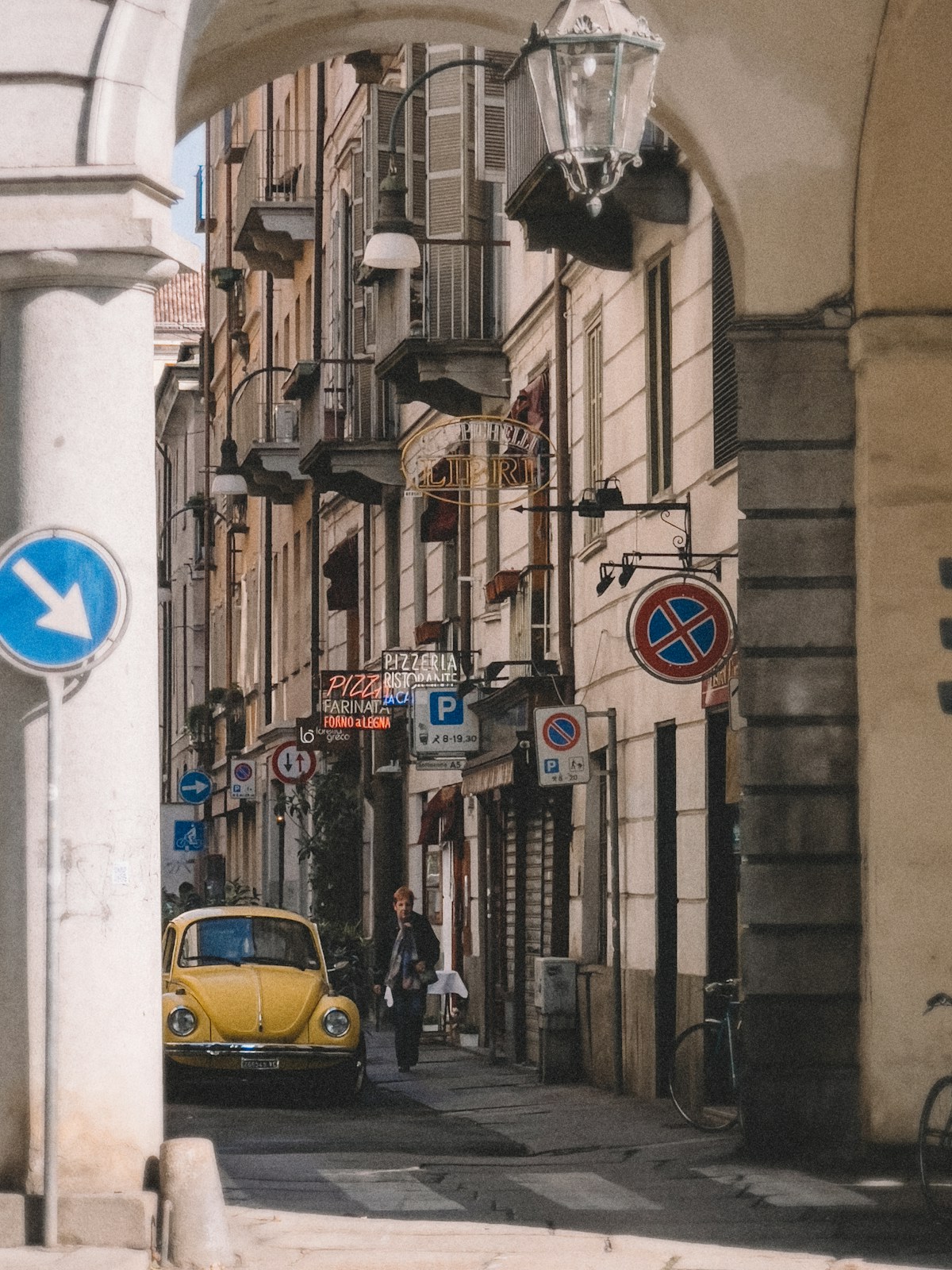
Turin sits at the foot of the Alps with excellent rail connections east toward Asti and the Monferrato hills, south into the Langhe wine country, west into the mountains, and northwest toward the Alpine valleys. It is one of the best-connected cities in northern Italy for day trips, and few visitors take advantage of it.
Barolo and the Langhe Wine Region (60 km south)
The Langhe hills south of Turin produce Barolo, Barbaresco, and Barbera d’Asti - some of Italy’s most serious red wines. The landscape itself is exceptional: steep vineyard-covered hillsides, stone villages perched on ridgelines, and views in October that look like a painting. The Barolo wine road runs through a cluster of small communes - La Morra, Barolo village, Castiglione Falletto, Serralunga d’Alba - each with its own character and several wineries accepting visitors.
Barolo village is tiny (approximately 700 inhabitants) but well set up for visitors. The castle houses the WiMu (Wine Museum) with interactive exhibits on Piedmontese wine culture - entry approximately €10 as of 2026, open daily except Tuesday. The more useful activity is a winery tasting: Cantina Borgogno (Via Gioberti 1, Barolo - tastings from approximately €20 per person as of 2026, book ahead) is one of the oldest producers in the appellation, with a historic cellar. Elvio Cogno (Frazione Ravera 2, Novello - tastings approximately €25–40 per person as of 2026) offers highly regarded sessions in an impressive modern cantina overlooking the vineyards.
La Morra has the best panoramic viewpoint across the Barolo zone - the terrace in front of the church of Sant’Abbondio gives a 180-degree view over the vine-covered hills. The village has several restaurants serving tajarin with white truffle in October and November.
Alba (approximately 60 km south, 1.5 hours by train via Asti or Fossano - approximately €10–14 as of 2026) is the gateway city. The white truffle fair runs every weekend in October and November in the town centre, drawing buyers, producers, and tourists from across Europe. The truffles are extraordinary; so is the price (approximately €300–500 per 100g as of 2026).
Getting there by car: 60 km south via the A6 motorway toward Savona, exit at Marene, then provincial roads into the Langhe - approximately 1.5 hours. Car strongly recommended for visiting multiple wineries. By bus: GEAP buses run from Cuneo bus station to Barolo via Cherasco (check timetables - services are infrequent on weekdays). Train to Alba (change at Fossano or Bra), then local transport or taxi.
Asti (55 km east, 1 hour by train)
Asti is the capital of Monferrato, the wine zone adjacent to the Langhe that produces Barbera d’Asti DOCG and the sparkling Asti Spumante. The city itself is undervisited - a handsome medieval centre with 120 surviving towers (though many are truncated), a Romanesque-Gothic Cathedral, and the Torre Rossa (an ancient Roman tower with distinctive brick upper section).
The Palio di Asti horse race runs in the third week of September - Asti’s own version of Siena’s Palio, older and less internationally known but enthusiastically observed. The days before the race include a medieval pageant with costumed representatives from the city’s 21 historic districts. Hotels book out weeks ahead; arrive the day before at minimum.
Wine tastings in Asti: the Enoteca di Palazzo Ottolenghi (Corso Vittorio Alfieri 350 - complimentary tastings, open weekday mornings) is a good starting point. The area around Canelli (20 km south of Asti, 30 minutes by train) produces the finest Moscato d’Asti - the sweet, low-alcohol sparkling wine made from Moscato Bianco - and several cantinas there accept visitors with advance booking.
Getting there: Direct train from Turin Porta Nuova to Asti - approximately 1 hour, approximately €5–8 as of 2026. Services roughly every 30–60 minutes.
Sacra di San Michele (35 km west)
The Sacra di San Michele is a Gothic-Romanesque abbey built on a sheer cliff at 962 metres on the southern end of the Pirchiriano mountain, overlooking the Val di Susa. Construction began around 983 AD. It is one of the great medieval religious buildings in Italy and one of the least known outside Piedmont.
The exterior is extraordinary even before you enter - the abbey seems to grow directly from the rock face. The interior has elaborate carved capitals, a 12th-century portal (the Zodiac Door, with reliefs of the months and constellations), frescoes in the New Church, and the haunting Scalinata dei Morti (Staircase of the Dead) - a steep internal staircase carved into the mountain, with Romanesque niches where the bodies of monks and nobles were displayed. Entry approximately €7 as of 2026. Closed Tuesdays.
The abbey was reportedly a partial inspiration for Umberto Eco when writing The Name of the Rose, though the connection is more atmospheric than literal.
Getting there: Regional train from Turin Porta Nuova to Sant’Ambrogio di Torino (approximately 45 minutes, approximately €3 as of 2026), then a signed uphill path to the abbey - approximately 45 minutes on foot, with a climb of approximately 360 metres. Strong footwear required. The path is well-marked but steep. A car parks at the base of the hill (Borgata San Pietro) and the same path applies.
Aosta and the Valle d’Aosta (100 km northwest)
The Valle d’Aosta is Italy’s smallest region - an Alpine valley leading to the Mont Blanc massif, bordered by France and Switzerland, with the highest peaks in the Alps visible on clear days. The town of Aosta itself is a remarkably intact Roman city: the Roman amphitheatre, the arch of Augustus (1st century BC, still intact over the main road), the Porta Praetoria (the most complete Roman gate in Italy), and a Roman theatre with the back wall largely surviving. Entry to the archaeological sites is free or approximately €3 per site.
From Aosta, the valley extends northwest to Courmayeur (40 km further, 30 minutes by bus) at the foot of Mont Blanc - a ski resort in winter and starting point for Alpine hikes in summer. The Skyway Monte Bianco cable car from Courmayeur rises to 3,466 metres on the Italian side of Mont Blanc - approximately €50 return as of 2026, extraordinary mountain views on clear days.
Getting there: Regular SAVDA buses from Turin’s bus terminal (Corso Vittorio Emanuele II) to Aosta - approximately 2 hours, approximately €10–15 as of 2026. By car: A5 motorway, approximately 1.5 hours. A day trip to Aosta with an afternoon in Courmayeur is feasible but long.
Lake Maggiore (90 km northeast)
Lago Maggiore straddles the Italian-Swiss border. The Italian shore is the most developed and visually spectacular. Stresa (1.5 hours from Turin by car or 2+ hours by train via Novara) is the main resort town - an elegant Belle Époque lakeside strip with views across to the Borromean Islands.
The Isole Borromee are the highlight: Isola Bella has a baroque palazzo and extraordinary terraced gardens with white peacocks, Mediterranean citrus trees, and views across the lake to the Alps - garden and palazzo entry approximately €17 as of 2026. Isola Madre has more extensive gardens and parrots - entry approximately €14. Regular ferries connect the islands from Stresa (approximately €15–20 return for a multi-island hop as of 2026). Isola dei Pescatori (Fishermen’s Island) has no major attraction but is a living village with good fish restaurants - worth a stop for lunch.
Getting there: By car from Turin approximately 90 minutes via the A4/A26. By train: Turin Porta Nuova to Stresa (change at Novara or Arona) - approximately 2 hours, approximately €12–18 as of 2026.
Lake Orta (80 km northeast, 1.5 hours)
Considerably less visited than Maggiore or Como, Lago d’Orta is smaller, quieter, and has a medieval quality that the more famous lakes have lost. Orta San Giulio is the main village - stone lanes, a frescoed town hall, and views across to Isola San Giulio (a tiny island with a Romanesque basilica, the island’s circumference walkable in 10 minutes). The ferry to the island costs approximately €4 return as of 2026.
The sanctuary of Sacro Monte di Orta on the hill above the village is a UNESCO World Heritage Site - 20 chapels containing life-size terracotta scenes from the life of Saint Francis, set in woodland above the lake. Free entry.
Getting there: By car approximately 80 km northeast of Turin via the A4 - approximately 1.5 hours. By train to Orta-Miasino station (change at Novara - approximately 1.5–2 hours total) then a 10-minute walk to the lakefront.
Practical notes
- For wine country day trips, hiring a car from Turin gives you access to the best viewpoints and multiple winery visits; trains work for Alba and Asti but not for touring the Langhe hills independently
- Sacra di San Michele closes Tuesday - check before going
- The Valle d’Aosta has some of Italy’s cleanest air and most spectacular Alpine scenery; mid-July through mid-September is the best season for high-altitude hiking
- Book Borromean Island ferry tickets online in high season (June–August); queues at Stresa can be long
- Organised day tours from Turin for the Langhe wine route depart most days in autumn - from approximately €80–120 per person including transport, tastings at 2–3 estates, and lunch
Back to the full Turin travel guide for the city itself. For Milan as a further destination - 50 minutes by Frecciarossa - see the Milan travel guide and the day trips from Milan guide for the reverse perspective. For the Langhe wines in context, our Italian wine guide covers Barolo, Barbaresco, and Piedmont’s classification system. The northern Italy itinerary connects Turin, Milan, the lakes, and Venice in a logical route.
Book Turin Day Tours on GetYourGuide
| Tour | Duration | From price | Highlights |
|---|---|---|---|
| From Turin: Barolo & Barbaresco Wine Tasting Tour | 8 hours | From €80 | Two winery visits, Alba food capital, Langhe UNESCO vineyards, premium Piedmont wine |
| Private Barolo Wine Region Day Trip from Turin with Lunch | 6–10 hours | From €180 | Private guide, Langhe estates, traditional lunch, multiple Barolo tastings |
| Langhe Wine Day Trip with Tastings & Lunch from Turin | Full day | From €95 | Two prestigious wineries, traditional regional lunch, vineyard scenery |
Where to stay in Turin: Find hotels in Turin — search accommodation across all budgets.