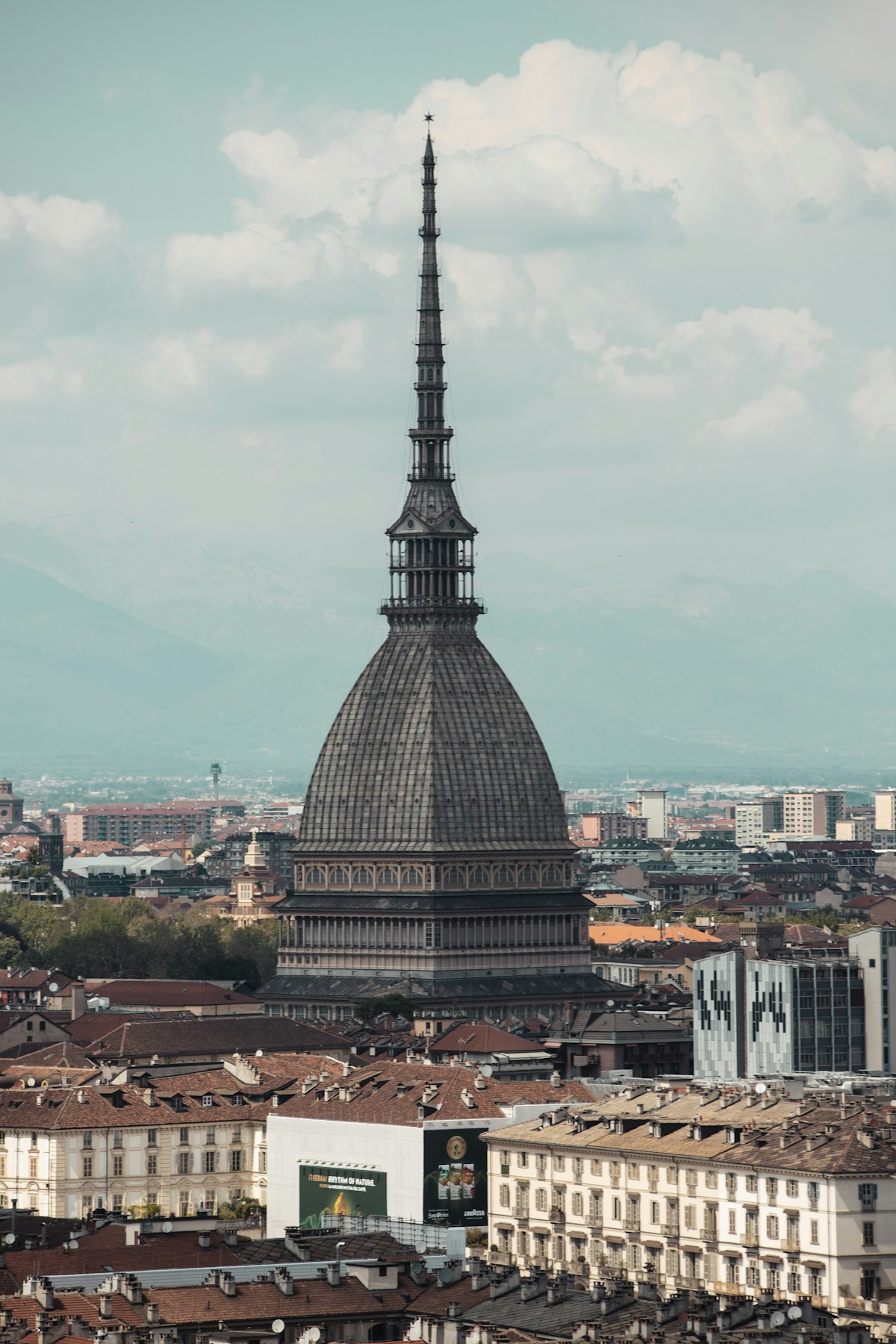
Turin (Torino) is Italy’s most underrated major city. The capital of the Kingdom of Sardinia-Piedmont before Italian unification, and Italy’s first capital after unification (1861–1865), it has a grandeur that reflects its status - baroque palaces, a world-class Egyptian museum, the Mole Antonelliana, and a café culture that predates Paris. It’s also the home of Fiat, Juventus, and Italian chocolate. Most foreign visitors overlook it entirely; those who go tend to want to return.
The Egyptian Museum (Museo Egizio)
The second-largest collection of Egyptian antiquities in the world after the Cairo Museum. The collection was assembled by Savoy kings who financed excavations in Egypt in the 18th and 19th centuries. The Statue Gallery has 26 statues of the goddess Sekhmet in a line - deeply atmospheric. The royal mummies, the Tomb of Kha and Merit (intact, rediscovered in 1906 with all contents in place), and the papyrus collection are the highlights. Allow 2–3 hours. One of the top five museums in Italy.
Top Tours at a Glance
| Tour | Duration | Price (from) | Group Size | Highlights |
|---|---|---|---|---|
| Turin city walking tour | 2.5 hrs | from €25 | Up to 20 | Royal Palace, Mole Antonelliana, Piazza Castello |
| Langhe wine tour from Turin | 8 hrs | from €85 | Up to 12 | Barolo, Barbaresco, truffle country, cellar visits |
| Turin food and chocolate tour | 2.5 hrs | from €55 | Up to 12 | Bicerin, gianduja, historic cafes, Quadrilatero |
| Venaria Reale palace and gardens tour | 3 hrs | from €40 | Up to 20 | Savoy baroque palace, guided, transport from Turin |
Browse all Turin tours → GetYourGuide
Royal Palace and the Savoy residences
Turin was the capital of the House of Savoy, the dynasty that unified Italy. The Royal Palace (Palazzo Reale) in the Piazza Castello is the centrepiece - the ceremonial palace, filled with Savoy furniture, armour collections, and the first-floor state rooms. The adjacent Palazzo Chiablese and the Armeria Reale (royal armoury) are on the same ticket. The Royal Library holds Leonardo da Vinci’s self-portrait.
The surrounding Savoy residences are UNESCO World Heritage Sites. The most impressive:
- Palazzo di Venaria Reale (10km north) - the “Versailles of Turin,” a vast baroque palace with enormous formal gardens, currently housing changing exhibitions. One of the finest palaces in Europe.
- Reggia di Stupinigi (12km south) - hunting lodge designed by Juvarra (1729), with a star-shaped plan and an interior of extraordinary quality.
Mole Antonelliana and the Cinema Museum
Turin’s iconic building - an extraordinary 167-metre tower built 1863–1889 as a synagogue, then acquired by the city and completed as a cultural monument. Now houses the Museo Nazionale del Cinema, one of the best film museums in the world - seven floors of history, props, costumes, and an extraordinary central atrium. A panoramic lift takes you to the dome summit (€9). The Mole is Turin’s equivalent of the Eiffel Tower.
The Shroud of Turin
The Linen cloth kept in the Cathedral of San Giovanni Battista (adjacent to the Royal Palace) is the most famous and most studied relic in Christianity - a 4.4m x 1.1m linen cloth with the image of a man bearing wounds consistent with crucifixion. Whether it is the burial cloth of Jesus Christ or a medieval forgery has been debated since its first documented appearance in the 1350s. Radiocarbon dating in 1988 dated it to 1260–1390 AD, but this is contested. The cloth is not on permanent public display - it is exhibited rarely (the last exposition was 2015). A permanent photographic exhibition in the cathedral explains the relic and the controversy.
Piazza Castello and the historic centre
Turin has a more regular street plan than most Italian cities - it was a planned Roman city (Augusta Taurinorum) and the Savoy kings reinforced this grid. The grand arcaded streets - Via Roma, Via Po, Via Pietro Micca - are excellent for walking in any weather (the arcades totalling 18km are the longest covered street system in the world). Piazza Castello is the central square, Piazza Vittorio Veneto is the largest baroque piazza in Europe, Via Roma runs south from the Castello to Piazza Carlo Felice.
Café culture and chocolate
Turin has the oldest café culture in Italy - caffè torino predates Parisian café culture. The historic cafes are elaborate 19th-century interiors with marble, brass, and gilt: Caffè Torino (Piazza San Carlo), Caffè San Carlo (next door), Baratti & Milano (Galleria Subalpina), Caffè Fiorio (Via Po). Many offer bicerin - Turin’s signature drink, a layered mixture of espresso, drinking chocolate, and whipped cream.
Turin is also the origin of gianduja - hazelnut and chocolate paste, the basis of Nutella. The confectionery shops along Via Roma and in the Quadrilatero Romano sell chocolate of extraordinary quality.
The Quadrilatero Romano
The neighbourhood north-west of Piazza Castello, on the site of the Roman city, is Turin’s most atmospheric area: narrow medieval streets, excellent restaurants, aperitivo bars, and the Porta Palazzo market - the largest open-air market in Europe, running every morning Monday–Saturday.
Day trips: the Alps and wine country
The Alps: From Turin you can see Monte Rosa and the first Alpine peaks. Sestriere (1 hour, ski resort) and the Valli di Lanzo are accessible for hiking in summer.
Langhe wine country (1.5 hours south): Barolo, Barbaresco, and Alba (truffle capital in October). The Langhe hills are UNESCO-listed and produce some of Italy’s greatest wines. Guided day tours from Turin to the Langhe covering Barolo tastings and the Alba truffle market run most days in autumn. See our day trips from Turin guide for the full logistics of the Langhe circuit and other excursions.
Back to the full Turin travel guide for the Egyptian Museum, Royal Palace, and neighbourhood guide. For Piedmontese food - vitello tonnato, tajarin, bagna cauda - see the Turin food guide. For Barolo and Piedmontese wine, our Italian wine guide covers the region. For a northern Italy circuit connecting Turin with Milan, the lakes, and Venice, see our northern Italy itinerary.
Where to stay in Turin: Find hotels in Turin — search accommodation across all budgets.