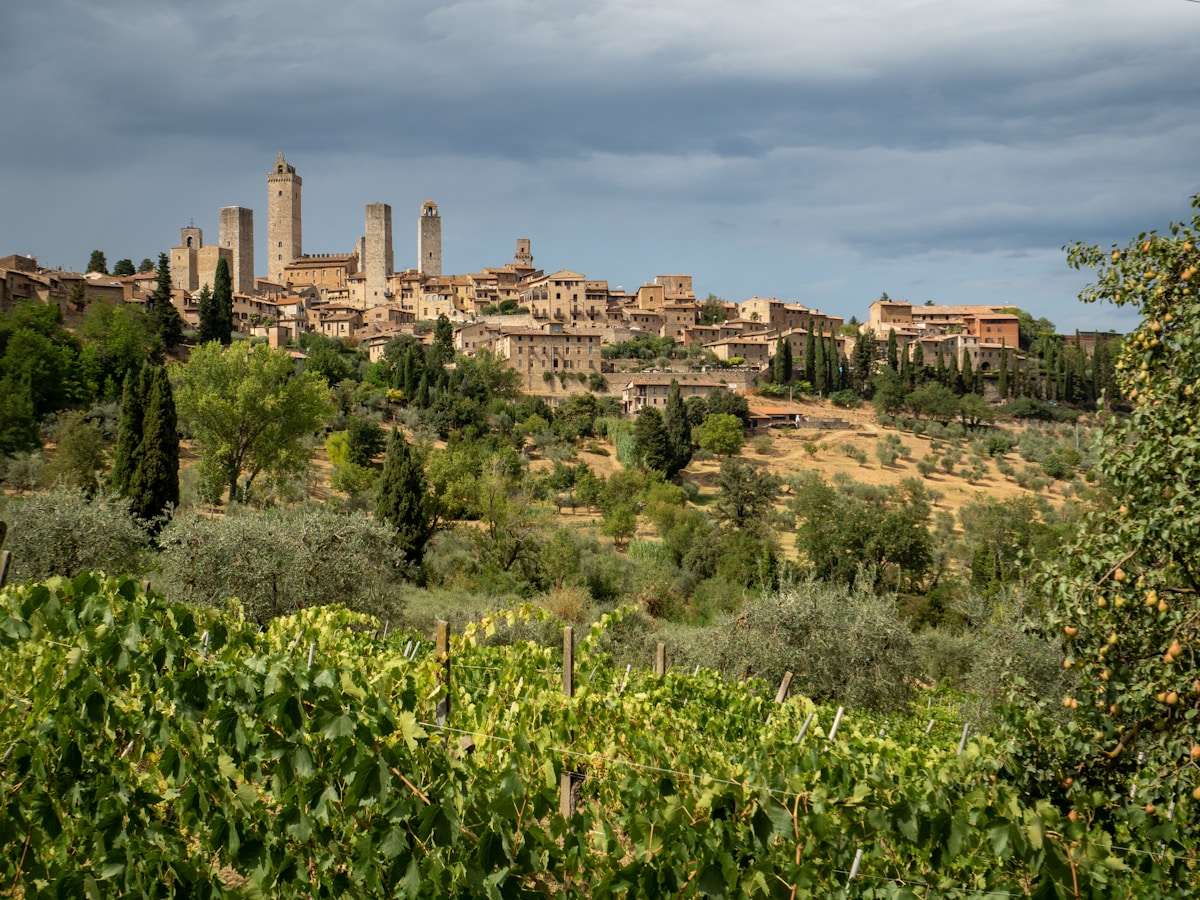
Alba sits at the geographical centre of one of the most wine-dense areas in Europe. Within 30km in almost any direction are vineyards producing some of Italy’s most acclaimed wines, medieval hilltop villages, and the city of Asti. Turin is an hour away. The day trips from Alba are almost entirely about wine country, medieval towns, and food — this is not an area for beach days or mountain scenery; it is an area for eating, drinking, and exploring one of Europe’s great agricultural landscapes.
A car is a significant advantage for most of these trips. The wine villages of Barolo and Barbaresco are connected to Alba by bus, but only just — frequencies are low and some villages are bus-free. Rental cars are available in Alba or from Turin Caselle airport.
Barolo Village and the Langhe Wine Road: 15–20 km South
The village of Barolo (approximately 700 permanent residents) is the symbolic centre of one of Italy’s most prestigious wines. The village is small — it takes under 30 minutes to walk from one end to the other — but it contains the Castello Falletti di Barolo, which houses two complementary attractions: WiMu (the Wine Museum of Barolo) and the Enoteca Regionale del Barolo.
WiMu (entry approximately €15) is an unusual wine museum: rather than presenting wine history in a conventional way, it uses art installations, sensory rooms, and thematic displays to explore wine’s place in culture and history. The final floor opens onto a rooftop terrace with views over the village vineyards. Allow 1–1.5 hours.
Enoteca Regionale del Barolo in the castle’s ground floor offers the most systematic tasting of the Barolo DOCG zone: wines from all 11 Barolo communes are available for tasting by the glass or in flights, sold at retail prices. This is one of the better ways to understand the differences between, for instance, a La Morra Barolo (typically softer, more aromatic) and a Serralunga d’Alba Barolo (more structured, tannic, long-lived).
The ridge road is what makes this day trip work. From Alba, drive south to La Morra and ascend to the village — the church terrace of San Martino has one of the finest views over the Langhe hills, looking across a patchwork of vineyards in autumn colours toward the snow-capped Alps on the northern horizon. From La Morra, the ridge road continues south through Barolo village, then east through Castiglione Falletto (a compact hill village with a privately-owned castle visible from the road) to Serralunga d’Alba, which has a remarkably intact 14th-century tower-keep castle (Castello di Serralunga, entry approximately €8, guided tours on specific days).
Individual cantina visits are possible throughout the Barolo zone but most require advance booking — direct email or phone. Producers open to walk-in visitors include Borgogno (Barolo village, historic cellar dating to 1761, tasting approximately €20–30), Principiano Ferdinando (Monforte d’Alba), and some of the larger cooperative producers. The Enoteca Regionale does not require booking.
Journey time from Alba: approximately 20–25 minutes by car to Barolo village via the direct SP7 south, or 35–45 minutes via La Morra on the scenic ridge route.
Barbaresco Village: 20 km East
Barbaresco village (approximately 700 permanent residents, interestingly similar in scale to Barolo) is 20km east of Alba, accessible via the SP10 and then local roads through the Tanaro river valley. The Barbaresco wine zone is smaller than Barolo — three main communes (Barbaresco, Treiso, Neive) — and the landscape feels gentler, with more rounded hills than the dramatic ridge terrain of the Barolo area.
Enoteca Regionale del Barbaresco: housed in the deconsecrated church of San Donato in the village centre, this regional wine shop and tasting room is the equivalent of the Barolo enoteca. Wines from the three Barbaresco communes are available at cellar-door prices. The setting — inside an old church, with the altar replaced by a wine display — is characteristically Piedmontese. No booking required; open most days except Monday.
The medieval towers: three medieval towers survive in the village, giving it a silhouette visible across the vineyards from a distance. They are smaller than the Barolo castle but atmospheric.
Combining Barbaresco, Neive, and Treiso: the three Barbaresco communes form a compact circuit of approximately 20km on secondary roads. Neive is arguably the most architecturally interesting of the three — a walled hilltop village with good restaurants and a well-preserved medieval centre. Treiso has the best views over the Barbaresco vineyards from the village edge.
Journey time from Alba: approximately 25 minutes by car.
Asti: 30 Minutes by Train or Car
Asti is the nearest city to Alba with serious historical monuments and urban atmosphere. It has approximately 73,000 residents — significantly larger than Alba — and functions as a city rather than a wine-tourism destination, which makes the contrast with the Langhe vineyards noticeable.
Cattedrale di Santa Maria Assunta: the most important single monument in Asti. The Gothic cathedral, built primarily between 1309 and 1354, is one of the finest examples of Gothic architecture in Piedmont. The facade has three arched portals decorated with reliefs; the interior is spacious and contains significant medieval frescoes. Free entry, open daily.
Baptistery of San Pietro: a small, separate Romanesque baptistery near the cathedral, currently incorporating a small archaeology museum (entry approximately €4). The baptistery dates to the 5th–6th century with later modifications.
Asti Spumante and Moscato d’Asti: Asti is the production centre for two sweet sparkling wines with DOCG status — Asti Spumante (fully sparkling, made from Moscato Bianco grapes by the Charmat method) and Moscato d’Asti (gently sparkling, lower alcohol at approximately 5.5%, intensely aromatic). The Cantine Bosca visitor centre (Canelli, 15km south of Asti) offers tours and tastings of both styles. Moscato d’Asti is one of the better food-and-wine pairings in the region — the sweetness and low alcohol make it work well with fruit tarts and pastries.
Palio di Asti: held on the third Sunday of September, this is a traditional horse race around Piazza Alfieri — older than Siena’s Palio (first recorded in 1275) and less touristic. Twenty-one historic districts of the city compete with horses and riders in medieval costume. If your visit coincides with September, this is the best single event in the area.
Journey time from Alba: approximately 40 minutes by regional train (change at Bra required for some services), or 35 minutes by car via the SP29.
Turin: 1 Hour by Train or Car
Turin (Torino) is Piedmont’s capital — a city of approximately 850,000 residents that combines a grand 17th–18th century Baroque urban plan with significant industrial history (Fiat was founded here in 1899) and excellent museums.
Museo Egizio: the Egyptian Museum of Turin holds the second-largest collection of ancient Egyptian artefacts in the world, after the Cairo Museum. The collection includes a complete tomb of Kha and Merit (New Kingdom, 14th century BC), extensive papyrus collections, and significant sculpture. Entry approximately €15. Allow 2.5–3 hours for a thorough visit — it is a full-day attraction on its own.
Mole Antonelliana and Museo Nazionale del Cinema: Turin’s architectural symbol — a 167m spire that was originally built as a synagogue in 1863, later acquired by the city. It now houses the National Cinema Museum, one of the best film museums in Europe. Entry approximately €15 for museum + lift to panoramic terrace. The lift ride to the terrace is worth taking separately (approximately €8) for the view over the city to the Alps.
Palazzo Reale and the Royal Precinct: the royal palace of the House of Savoy, flanked by the Armeria Reale (royal armoury) and the Palazzo Madama. Entry to the Palazzo Reale approximately €12. The Via Roma covered arcades and the Piazza Castello square are the centre of the city’s historic district.
Getting there from Alba: the most practical route by car is the A33 motorway from Cuneo towards Asti, then the A6/A21 towards Turin — approximately 60km, around 1 hour in normal traffic. By public transport: regional bus or train to Bra (20 minutes from Alba), then train from Bra to Turin Porta Nuova (approximately 45 minutes). Total journey approximately 1h15. Train from Bra to Turin runs frequently on weekdays.
Cuneo and the Maritime Alps: 50 Minutes South by Car
Cuneo, the provincial capital, is 40km south of Alba — a compact city with good porticoes and a busy Saturday market. The main square, Piazza Galimberti, is one of the largest in Italy and lined with arcaded buildings. Cuneo does not have major tourist monuments but is a pleasant Piedmontese city for an easy morning trip.
South of Cuneo, the Valle Stura and Valle Gesso lead into the Maritime Alps. The Colle di Tenda (1,870m) and its road tunnel connect directly to the French Riviera: Nice is approximately 1h40 from Cuneo, Monaco approximately 1h30. This makes the Cuneo direction relevant for multi-day trips combining Piedmont with the Côte d’Azur.
Where to Stay in Alba
Alba is the natural base for exploring the Langhe wine country, Barolo, and Barbaresco — all day trips above are within an hour’s drive. Browse hotels in Alba for options in the city centre and surrounding agriturismo properties in the vineyards.