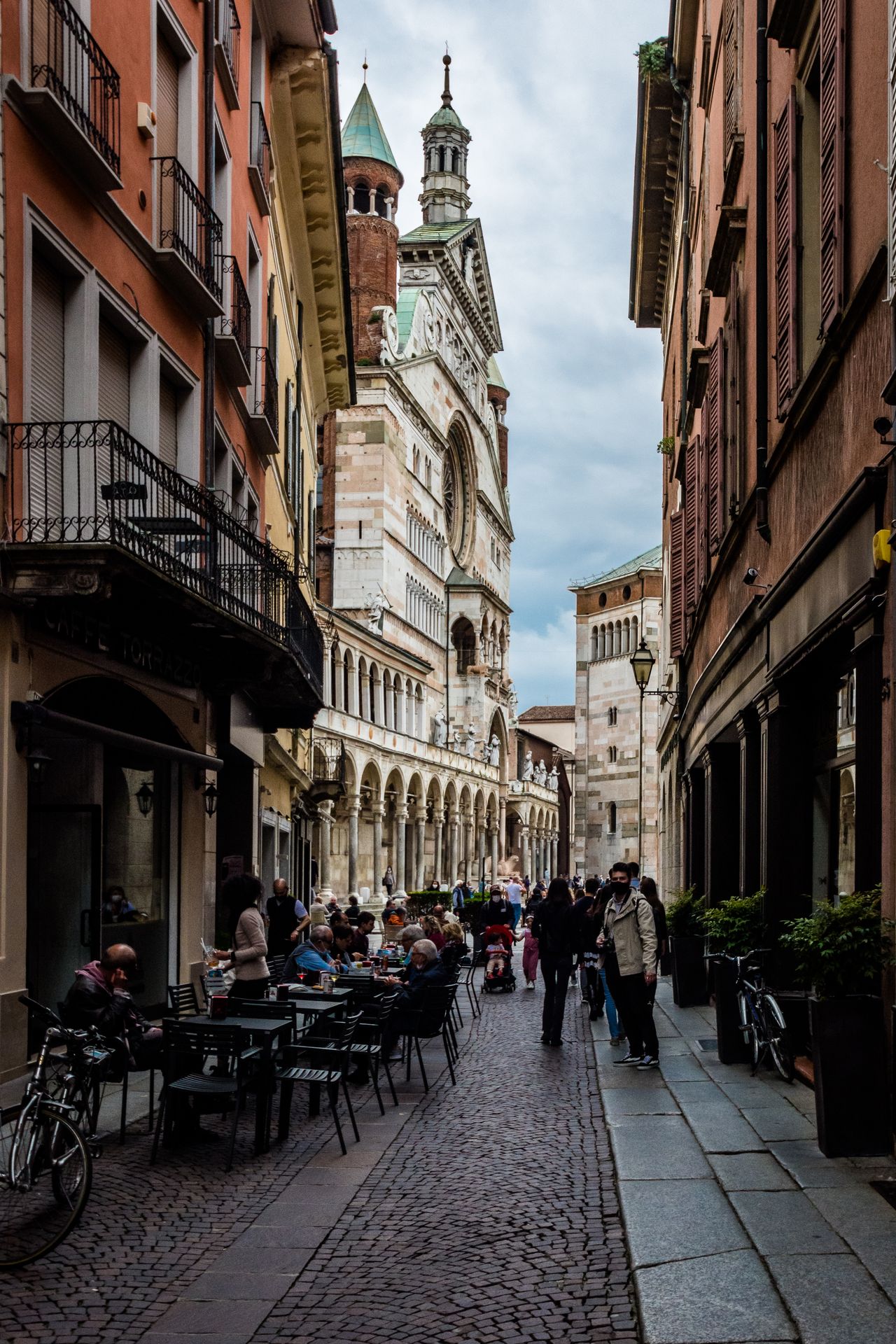
Cremona is a city of around 75,000 people in the Po plain of Lombardy, sitting on the south bank of the Po river between Milan and Mantua. It does not appear on the standard Italian itinerary in the way that its neighbours do — it lacks a major art collection, a lakeside setting, or a UNESCO-listed historic centre. What it has instead is a single, extraordinary specialisation: it is the world capital of bowed string instrument making, a tradition that reached its absolute peak in the workshops of three families — the Amati, the Guarneri, and above all the Stradivari — between approximately 1550 and 1750, and that has continued without interruption to the present day.
Antonio Stradivari (1644–1737) made approximately 1,100 instruments over a working life of more than sixty years; around 650 survive, including violins, violas, cellos, and guitars. These instruments are still used in performance by some of the world’s leading soloists. The question of why the Stradivarius instruments sound as they do has been debated for three centuries — the wood selection (spruce from the Val di Fiemme, maple from the Balkans), the varnish (whose precise composition remains unknown), the geometry of the archings and f-holes, and possibly the effect of a prolonged cold period in the 17th century on the density of Alpine spruce wood have all been proposed as contributing factors. No single explanation has been confirmed, which adds to the fascination.
The Stradivari family worked in a workshop on what is now Via Palestro; the workshop building is gone, but the adjacent Piazza Roma preserves part of the street pattern. The Museo del Violino, which opened in 2013 in the restored Palazzo dell’Arte, holds thirteen masterpiece instruments — five by Stradivari — in a dedicated conservation display, along with Stradivari’s original tools, models, and working documents.
Beyond the violin story, Cremona is a handsome Lombard city with a cathedral complex — Cathedral, Baptistery, Torrazzo campanile, and the Loggia dei Militi — facing each other across the Piazza del Duomo in an ensemble that is among the finest Romanesque-Gothic cathedral squares in northern Italy. The Torrazzo, at 112 metres, is the tallest medieval tower in Italy. Cremona is also a UNESCO Creative City of Gastronomy, known for torrone (nougat, made here since at least the 15th century), mostarda di Cremona (fruit in mustard syrup), and the bollito misto tradition of the Po plain.
This guide covers the best-rated tours in Cremona, from violin museum visits to full Po Valley food excursions.
Quick Comparison: Top Cremona Tours at a Glance
| Tour | Duration | From | Best For |
|---|---|---|---|
| Cremona: Old Town and Violin Quarter Walking Tour | 2.5 hrs | €18 | First-timers, city overview |
| Cremona: Museo del Violino Guided Tour | 2 hrs | €25 | Music and instrument lovers |
| Cremona: Luthier Workshop Visit and Demonstration | 2 hrs | €35 | Craft and music enthusiasts |
| Cremona: Torrazzo Tower Climb and Cathedral Tour | 2 hrs | €22 | Architecture lovers, views |
| Cremona: Torrone and Mostarda Food Tasting Tour | 2.5 hrs | €40 | Food lovers |
| Cremona: Private Violin and City History Tour | 3 hrs | €95 | Private groups, deep history |
| Milan: Day Trip to Cremona | 7 hrs | €45 | Day trippers from Milan |
| Cremona: Po River Boat Excursion | 2.5 hrs | €30 | Scenic, families |
For First-Timers
Cremona: Old Town and Violin Quarter Walking Tour
Duration: 2.5 hours | From: approximately €18 per person
The standard introduction to Cremona, starting at Piazza del Comune and covering both the cathedral complex and the historic luthier district. The guide explains the Roman foundation of the city (Cremona was a Roman colony from 218 BC, one of the oldest in the Po plain), its medieval development as a Lombard commune, and the emergence of the violin-making tradition in the mid-16th century — why here, and why in this specific period.
The violin story is placed in economic and cultural context: the city was wealthy and well-connected in the 16th century, with access to Alpine timber networks, a strong guild culture, and patrons — the Gonzaga court in Mantua (57km away) was an early major customer for Cremonese instruments. The guide walks through the streets around Piazza Roma where the major workshops were concentrated and past the exterior of the buildings associated with the Amati and Stradivari families. The tour ends at the Museo del Violino (entry not included in this format) with a brief orientation to what the museum contains. A separate ticket allows entry after the tour.
Book the Cremona Old Town and Violin Quarter Walking Tour
For Music and Instrument Lovers
Cremona: Museo del Violino Guided Tour
Duration: 2 hours | From: approximately €25 per person
A guided visit to the Museo del Violino (entry approximately €12 included), focused on the instrument collection and the historical narrative it represents. The museum holds thirteen instruments designated as National Monuments: five Stradivari violins, instruments by Amati, Guarneri del Gesù, and other major Cremonese makers, displayed in individual conservation cases with controlled humidity and light.
The guide covers the history of each instrument — its date of construction, the client for whom it was made where known, its subsequent ownership history (several Stradivari instruments have ownership histories traceable through three centuries of performance), and the specific features that make it significant. The differences between a Stradivari and a Guarneri del Gesù instrument are explained: the Guarneri instruments are generally considered tonally more powerful and less regular in form; many soloists who play Guarneri instruments, including historically Jascha Heifetz and Leonid Kogan, have preferred them for their projection in large concert halls.
The museum also holds Stradivari’s original tools — planes, gouges, moulds for arching the plates, and templates for the f-holes — and a reconstruction of his workshop.
Book the Cremona Museo del Violino Guided Tour
Cremona: Luthier Workshop Visit and Demonstration
Duration: 2 hours | From: approximately €35 per person
Cremona still has around 150 active luthiers working in the city — a number that makes it unique in the world. This is not a legacy industry kept alive by heritage funding: Cremonese violins, violas, and cellos are sold internationally and played by professional musicians. The international violin-making school (Scuola Internazionale di Liuteria) has trained makers from across the world since 1938, and its graduates form the core of the current Cremonese trade.
This small-group visit (maximum 6 people) is escorted to a working luthier’s workshop — not a demonstration facility or a museum reconstruction — where a maker demonstrates the stages of instrument construction: the carving of the spruce top plate using a combination of planes and gouges to achieve the correct arching; the bending of the maple ribs around the internal mould; the fitting and graduation of the back plate. The demonstration covers approximately 45–60 minutes, with questions. The remaining time is spent understanding the materials — the specific spruce from the Val di Fiemme (the same forest that supplied Stradivari), the flamed maple selected for the back and sides — and the tools, many of which are based directly on those in Stradivari’s surviving collection.
Book the Cremona Luthier Workshop Visit and Demonstration
For Architecture Lovers
Cremona: Torrazzo Tower Climb and Cathedral Tour
Duration: 2 hours | From: approximately €22 per person
The Torrazzo is attached to the southern flank of Cremona’s Cathedral and at 112 metres is the tallest medieval tower in Italy — 502 steps to the top through a series of internal chambers and finally an external walkway with views across the Po plain. The tower was built in stages between the 12th and 14th centuries; the astronomical clock on its exterior, added in 1583 by the brothers Giovan Battista and Giovan Francesco Divizioli, is one of the most complex surviving Renaissance astronomical clocks, showing the hour, the phases of the moon, the zodiac, and the positions of planets.
The guided tour covers the Cathedral interior (a Romanesque-Gothic structure begun in 1107 and substantially completed by the 14th century, with a notable carved marble facade, a series of 16th-century tapestries, and frescoes including works by Boccaccio Boccaccino and Pordenone) and the adjacent Baptistery (octagonal, Romanesque, built 1167) before ascending the Torrazzo. Entry fees to the tower (approximately €8) and cathedral are included.
Book the Cremona Torrazzo Tower Climb and Cathedral Tour
For Food Lovers
Cremona: Torrone and Mostarda Food Tasting Tour
Duration: 2.5 hours | From: approximately €40 per person
Cremona’s claim to gastronomic distinction rests on two products. Torrone — a confection of honey, egg whites, and sugar with whole almonds or hazelnuts, eaten across Italy at Christmas — was reportedly first made in Cremona in 1441 at the wedding banquet of Francesco Sforza and Bianca Maria Visconti, shaped to represent the Torrazzo. Whether the legend is accurate or not, Cremona has been associated with torrone production for at least four centuries, and the best Cremonese torrone — using whole toasted almonds and a high honey content — is quite different from the commercial versions sold everywhere in Italy at Christmas.
Mostarda di Cremona is a condiment of mixed fruits (quince, cherries, figs, apricots, pears) preserved in a sugar syrup flavoured with mustard oil, producing a sweet-and-hot combination that is the classic accompaniment to bollito misto (mixed boiled meats, the defining dish of the Po plain) and to aged cheeses. This tour visits a torrone producer and a mostarda maker for guided tastings with commentary on the production methods and history, followed by a traditional lunch or aperitivo at a central osteria where bollito misto with mostarda is available in season.
Book the Cremona Torrone and Mostarda Food Tasting Tour
Milan: Day Trip to Cremona
Duration: 7 hours | From: approximately €45 per person
Cremona is 80km southeast of Milan — approximately 1 hour by train from Milano Centrale or Milano Rogoredo. This day trip by coach from Milan includes return transport, a guided walking tour of the historic centre and violin quarter, a visit to the Museo del Violino (entry included), and lunch at a local restaurant with a tasting of Cremonese specialties. The afternoon includes free time for independent exploration or a visit to a luthier workshop.
The guide contextualises Cremona in the broader Lombard landscape: its relationship with Milan (which controlled the city for much of the early modern period), its role in the Po plain economy, and how its artisan tradition survived the industrialisation of the surrounding region largely intact. The day trip is a comfortable length — no very early starts — and works particularly well for visitors based in Milan who want a completely different experience from the city.
Book the Milan Day Trip to Cremona
Practical Information
Getting to Cremona: Direct trains from Milan (Centrale or Rogoredo) run approximately every 30–60 minutes; journey time 1 hour to 1 hour 20 minutes. From Brescia: approximately 48km, 45 minutes by train or car. From Mantua: approximately 57km, 45 minutes by car (direct rail connections are limited). From Verona: approximately 88km, 1 hour 15 minutes by car.
When to visit: Cremona is a year-round destination. The Cremona Musica international exhibition (September) is the world’s largest trade fair for musical instruments and attracts buyers, makers, and musicians internationally — the city is livelier than usual and many workshops have extended hours. The Stradivari Festival (October–November) brings solo concerts performed on the museum’s Stradivari instruments and other historic Cremonese violins, in the Auditorium Giovanni Arvedi within the Museo del Violino.
Entry fees: Museo del Violino: approximately €12 adults, €8 reduced. Torrazzo tower climb: approximately €8. Cathedral: free. Baptistery: included with Torrazzo ticket.
Auditorium concerts: The Museo del Violino’s Auditorium Giovanni Arvedi holds regular lunchtime concerts (free with museum entry on selected dates) where the museum’s instruments are played by invited soloists — one of the few places in the world where you can hear a Stradivari violin in an intimate acoustic setting.