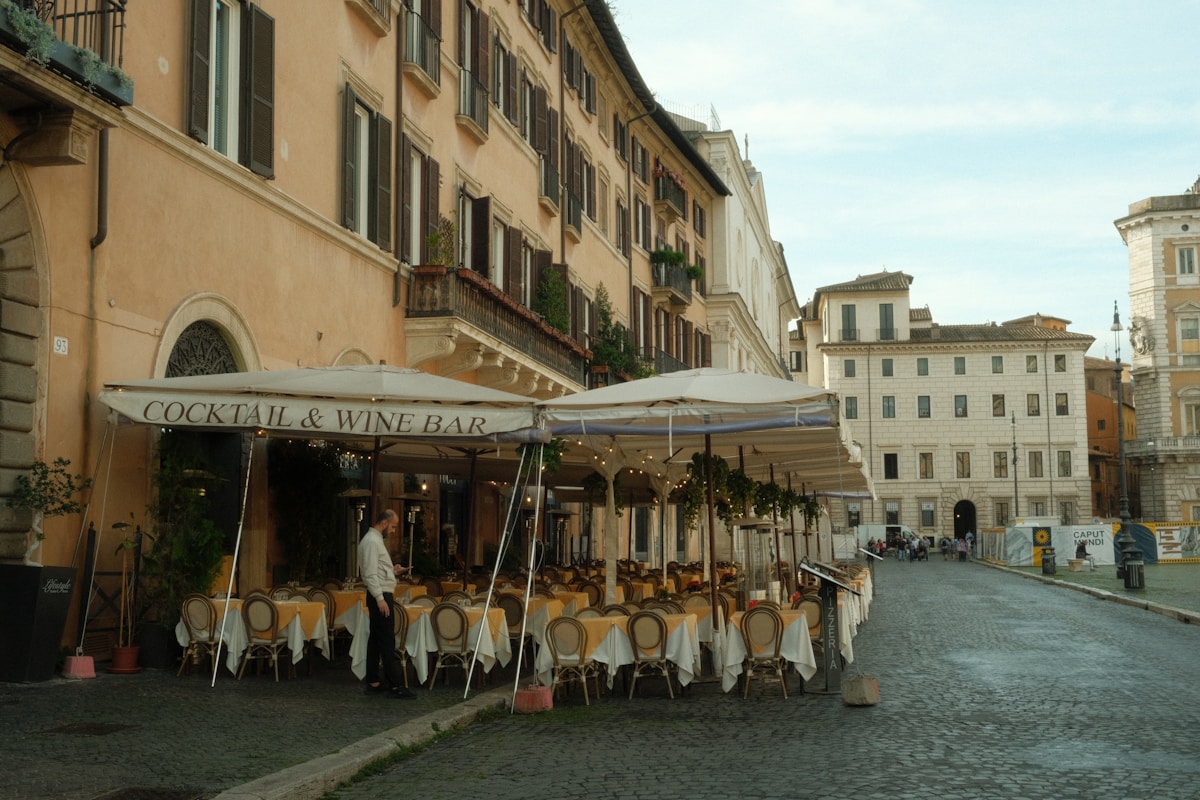
Rome’s food identity is locked down tight. The city’s four pastas - carbonara, cacio e pepe, amatriciana, and gricia - are non-negotiable, and Romans will tell you exactly when you’ve ordered them wrong. But beyond the iconic pasta dishes, there’s a whole ecosystem of street food, market stalls, Jewish-Roman specialties, and offal-driven quinto quarto cooking that most visitors miss entirely.
Here’s what to eat, where to eat it, and what to avoid.
The Four Roman Pastas
Carbonara is the dish. Rigatoni or spaghetti, guanciale (cured pork cheek), egg yolk, Pecorino Romano, and cracked black pepper. The sauce coats without clumping because the heat from the pasta cooks the egg rather than scrambling it. There is no cream, no pancetta, no peas. Roscioli (Via dei Giubbonari 21–22) serves what many consider the definitive version, from approximately €16. Tonnarello in Trastevere is more affordable at around €12, though busier.
Cacio e pepe sounds simpler - pasta, Pecorino, pepper - but the emulsification is notoriously difficult to get right. Da Enzo al 29 (Via dei Vascellari 29, Trastevere) does it well and the pasta is made in-house, from approximately €13.
Amatriciana uses guanciale, San Marzano tomatoes, and Pecorino. The right pasta is bucatini - the thick hollow spaghetti that holds the sauce. Osteria dell’Angelo (Via Bettolo 24) is a neighbourhood trattoria that sticks to the formula without embellishment, from approximately €12.
Gricia is the oldest of the four - amatriciana without the tomato, which arrived in Rome only in the 18th century. It appears less often on menus; Osteria Fernanda (Via Crescenzio 38) does an excellent version.
Street Food Worth Queuing For
Supplì are fried rice balls filled with ragù and a molten core of mozzarella. The name comes from “surprise.” The original Supplì Roma stall in Testaccio Market (Via Aldo Manuzio, open Mon–Sat) charges approximately €2 each. Roscioli Caffè on Piazza Benedetto Cairoli does a refined version for around €3.
Pizza al taglio (pizza by the cut, sold by weight) is Rome’s working lunch. Pizzarium (Via della Meloria 43, near Cipro metro) run by Gabriele Bonci is widely considered the city’s best - inventive toppings, proper sourdough base, approximately €4–6 per 100g.
Trapizzino is a more recent Roman invention: triangular pockets of pizza bianca filled with Roman classics like pollo alla cacciatora (hunter’s chicken) or coda alla vaccinara (oxtail). The original shop is in Testaccio (Via Giovanni Branca 88), approximately €4.50 each.
Jewish-Roman Dishes
The Jewish Ghetto neighbourhood (around Via del Portico d’Ottavia) preserves a distinct culinary tradition predating the Roman Empire’s fall.
Carciofi alla giudia (Jewish-style artichokes) are whole artichokes deep-fried until the outer leaves crisp into something resembling potato chips. Nonna Betta (Via del Portico d’Ottavia 16) is the most visited, from approximately €9. Ba’Ghetto on the same street is slightly more formal but equally good.
Fiori di zucca (fried courgette flowers) stuffed with ricotta and anchovy appear on almost every menu in the Ghetto in summer. Expect to pay approximately €8–12 for a portion of four.
What Else to Eat
Coda alla vaccinara (oxtail braised in tomato, celery, and cocoa) is the centrepiece of Rome’s quinto quarto (offal) tradition. It requires three or four hours of cooking and is done properly at Checchino dal 1887 (Via di Monte Testaccio 30), which has operated near the old slaughterhouse since the 19th century, approximately €22 for a main course.
Saltimbocca alla romana - veal escalopes with prosciutto and sage, cooked in white wine and butter - appears on trattoria menus across the city. The name means “jumps in the mouth.” Approximately €14–18 as a secondo.
Maritozzi are the Roman breakfast: brioche buns split and stuffed with an unreasonable amount of whipped cream. Regoli (Via dello Statuto 60, Esquilino) has been making them since 1916, approximately €3.
Gelato: the real thing is dense, not whipped with air, and displayed flat in covered metal containers rather than piled in fluorescent towers. Giolitti (Via degli Uffici del Vicario 40) is Rome’s oldest gelateria, from approximately €2.50 for a cone.
Best Food Markets
Mercato di Testaccio (Via Aldo Manuzio) is the best overall market in Rome - fresh produce, cheese, norcineria (pork products), and several excellent street food stalls. Open Monday to Saturday 7am–3:30pm. Take metro line B to Piramide.
Campo de’ Fiori runs every morning except Sunday and is closer to the tourist centre, but prices are higher and quality more variable. Good for browsing; go to Testaccio to actually shop.
Seasonal Specialties
Artichoke season (February–May) is when carciofi alla giudia and carciofi alla romana (braised with mint and garlic) flood menus. This is the best time for Jewish Ghetto dining.
Fave e pecorino (broad beans and young Pecorino) is a spring snack eaten outdoors on 1 May (Festa dei Lavoratori), traditionally at family picnics in the Roman countryside.
Panettone appears in bakeries from November and dominates through Christmas, though Romans would argue their maritozzi is superior year-round.
Take a Guided Food Tour of Rome
Rome’s food culture is neighbourhood-specific in a way that makes local guidance genuinely valuable: the Testaccio rione concentrates traditional offal cooking and the best street food sandwiches; the Trastevere market on Tuesday mornings is the most local produce market in the centro; the Campo de’ Fiori area has the good street-side bakeries. A Testaccio food walk — market, suppli, lampredotto sandwich, and a Roman pasta lunch — is the most concentrated food experience the city offers. Browse Rome food tours on GetYourGuide.
What to Avoid
Restaurants on or immediately adjacent to the major tourist sites (Trevi Fountain, Piazza Navona, Campo de’ Fiori) charge a significant premium and often use industrial pasta. Walk two streets back and prices drop noticeably.
Carbonara with cream is a reliable signal of a kitchen that doesn’t care. Same goes for guanciale substituted with pancetta - it’s a different dish with a milder flavour.
Pesto on the menu in Rome is not necessarily wrong, but it’s a Ligurian sauce and its presence often signals a kitchen playing to tourist expectations rather than Roman tradition.
For a deeper look at Roman culinary history, why the four pastas exist, and the story of the Jewish Ghetto kitchen, see our full Roman food guide.
For guided food tours with market visits and restaurant introductions, browse food tours in Rome.
Where to stay in Rome: Find hotels in Rome — search accommodation across all budgets.