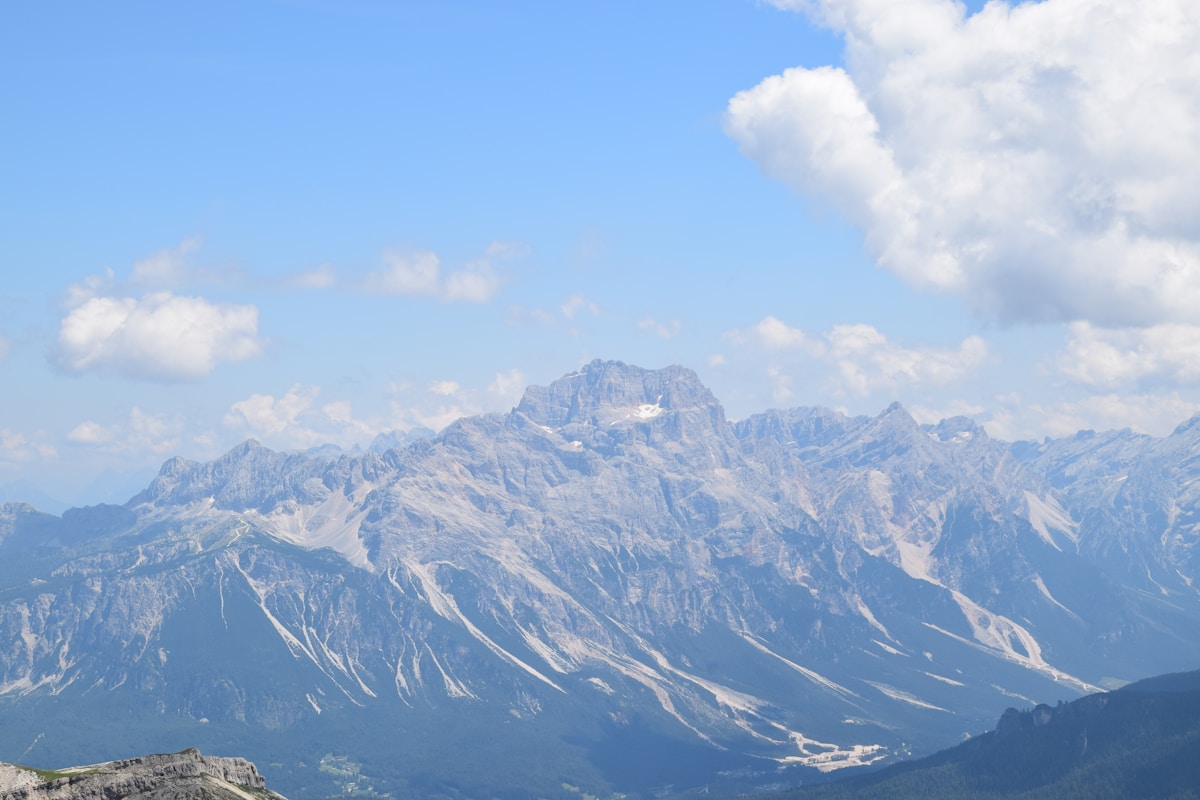
Cortina d’Ampezzo is Italy’s most famous ski resort — glamorous, expensive, and set against some of the most spectacular mountain scenery in Europe. The Dolomites that surround it were UNESCO World Heritage listed in 2009, and from any direction the rock formations — the Tofane, the Faloria, the Cinque Torri, the Tre Cime — give Cortina a landscape that even guests with no interest in skiing find extraordinary. The centro — a car-free pedestrian strip of high-end boutiques, restaurants, and cafes — has the feel of an alpine version of a luxury shopping street, with real mountain access directly from the town. This is where to base yourself, though the relationship between your hotel and the specific ski lifts you plan to use matters considerably.
Search Cortina d’Ampezzo hotels on Booking.com to compare prices and check availability across all areas in this guide.
Centro — Corso Italia and Surrounds
Cortina’s pedestrianised main street runs north-south through the resort, flanked by the church of Santi Filippo e Giacomo (with its distinctive onion-dome bell tower, the town’s signature image) and a concentration of designer boutiques, mountain equipment shops, restaurants, and aperitivo bars. Hotels in this zone are at the centre of the resort action.
Mid-range (€200–320/night winter, €130–200 summer): Hotel Ancora (Corso Italia 62) is a well-established four-star in the best possible location — right on the pedestrian strip — with traditionally furnished rooms, an indoor pool, and a reliable restaurant; doubles from approximately €220–310/night in peak winter season, €130–180 in summer as of 2026. Hotel de la Poste (Piazza Roma 14) is a historic landmark hotel that has anchored Cortina’s social scene since 1896, with a famous bar and generous rooms; doubles from approximately €250–380/night in peak winter as of 2026.
Luxury (€400–800/night winter): Cristallo Resort & Spa (Via Rinaldo Menardi 42) is Cortina’s most celebrated luxury property — a historic grand hotel rebuilt to five-star standards with a tennis club, spa, heated outdoor pool, and the best views of the Dolomite skyline from the resort; doubles from approximately €400–700/night in peak winter, considerably less in summer as of 2026. Grand Hotel Savoia (Via Roma 62) is a historic early 20th-century hotel with restored rooms and a central position; comparable price bracket.
Near the Ski Lifts
Cortina’s ski areas are served by several distinct lift stations, and some guests prefer to stay within walking distance of a specific lift rather than in the central pedestrian zone.
Faloria cable car area (east of centre): Hotels here are within a 10-minute walk of the Faloria gondola base. Slightly quieter than the Corso Italia zone.
Tofana-Falzarego area (northwest): More remote from the town centre, but direct access to the Tofana glacier area — one of Cortina’s highest and longest ski runs.
Practical consideration: For ski-focused stays, ask hotels specifically about walking distance to the nearest lift. Cortina’s shuttle bus network (Dolomiti Bus) connects most accommodation to all lift areas, but the convenience of direct access in ski boots is significant.
Outside Town — Mountain Chalets and Smaller Resorts
The valleys and hamlets around Cortina — Misurina (14 km east, at the base of the Tre Cime), San Vito di Cadore (13 km southwest) — offer mountain accommodation at lower prices than the resort itself.
Budget-adjacent options: Small guesthouses and mountain B&Bs from approximately €80–130/night in summer, higher in winter. Suitable for guests with a car who want Dolomites access without Cortina prices.
Plan your trip:
- Browse Cortina d’Ampezzo tours and experiences
- Book an airport transfer
- Get travel insurance for Italy
- Pick up an eSIM for Italy
- Search Cortina hotels on Booking.com
Practical notes
- Book ski-season accommodation 3–6 months ahead. Christmas week and February school holidays (Italian and Northern European) fill Cortina to capacity. Best hotel rooms at any price tier book out in September–October for the ski season.
- Summer is significantly better value. June–September offers the same Dolomite scenery at 30–50% lower rates, without the ski crowds. The Tre Cime di Lavaredo hike from Rifugio Auronzo is one of the finest walks in the Alps.
- 2026 ski season note. Cortina co-hosted events for the 2026 Milan-Cortina Winter Olympics (February 2026), which drove significant investment in infrastructure and some temporary accommodation pressure. Standard season operations apply from March 2026 onward.
- Altitude and acclimatisation. Cortina sits at approximately 1,224m; ski areas reach 3,243m. Light-headedness is possible for guests arriving from low altitudes, particularly at higher lift stations.
The Cortina d’Ampezzo travel guide covers the ski areas, Dolomites hiking routes, and the Olympic venues in detail.