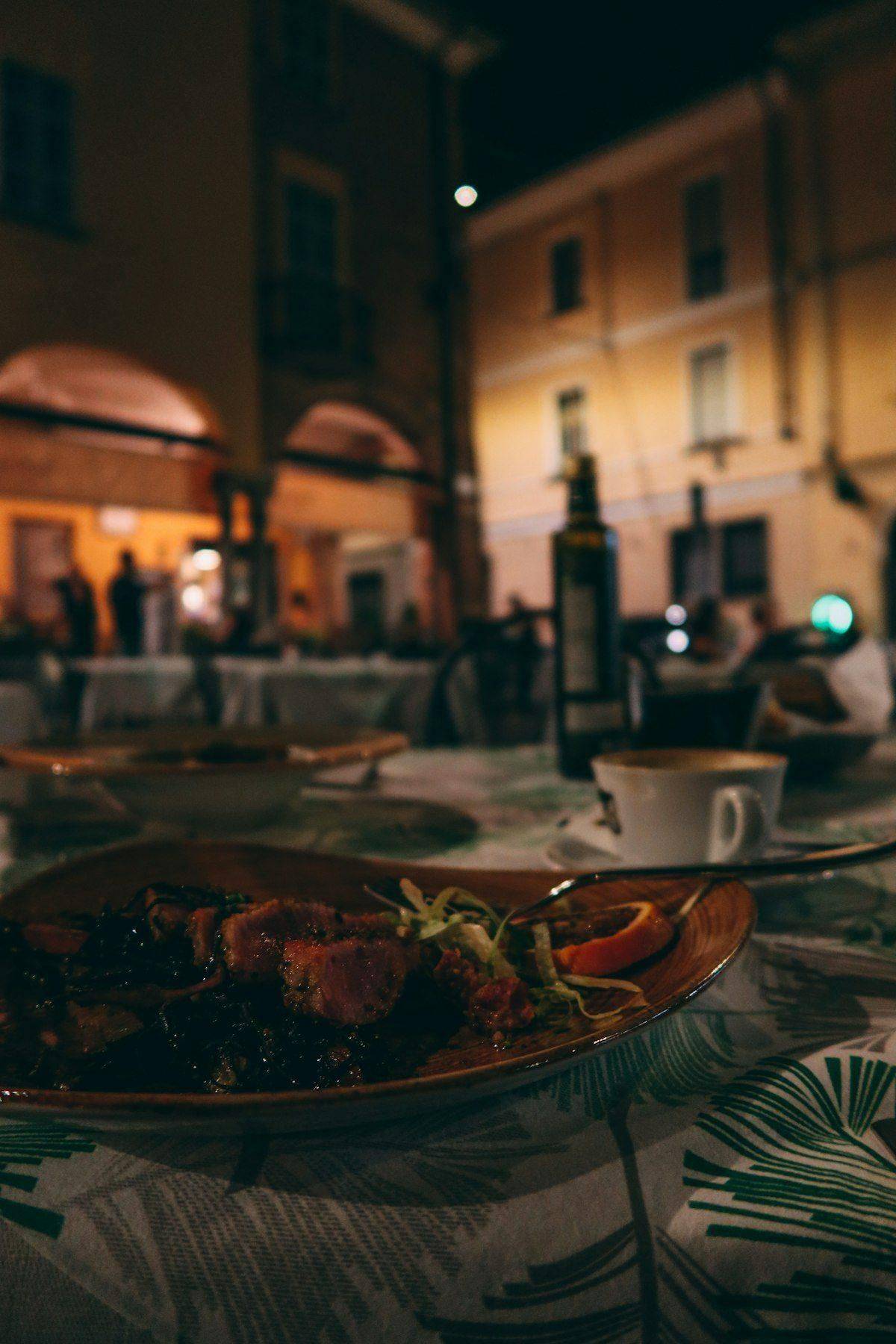
Trentino cuisine occupies a specific position in Italian food: it’s neither purely Italian nor properly South Tyrolean (which skews more Germanic), but a distinct blend of both traditions layered over centuries of proximity to the Habsburg Empire. Trento itself was part of the Habsburg domains until 1919. That history shows up in the dumplings, the cured meats, the grappa, and the particular approach to polenta.
What it means in practice: dishes here tend to be more substantial and alpine in character than anything you’d eat in Veneto or Lombardy, and the wine list is dominated by the exceptional sparkling wines made in the Trentino hills rather than the Prosecco of the east.
Canederli: The Essential Dish
Canederli (Knödel in German) are bread dumplings — the most direct inheritance from the Alpine culinary tradition. They’re made with stale bread, egg, milk, and various additions depending on the recipe: speck (smoked cured ham), mushrooms, spinach, or cheese. The dough is formed into large spheres and either poached in broth or plated with browned butter and sage.
There are two ways to eat them. Canederli in brodo — served in a light beef or vegetable broth — is the traditional approach and the best version for understanding the dish. Canederli al burro e salvia is richer and more filling. As a first course (primo), expect to pay approximately €8–12 per portion as of 2026. They’re on every trattoria menu in Trento and genuinely good when freshly made.
Carne Salada
Carne salada is a Trentino speciality: beef tenderloin (or sometimes other cuts) cured with salt, pepper, rosemary, garlic, and bay leaves for several weeks, then sliced very thin and served raw. The closest comparison is bresaola from the Valtellina, but the flavour is more herbaceous and the texture slightly firmer. It’s served as an antipasto with capers, rocket, and a drizzle of olive oil — approximately €12–16 at most restaurants as of 2026.
It’s a genuinely regional product and worth seeking out. Supermarkets and salumerie in Trento sell it vacuum-packed for approximately €6–9 per 200g.
Polenta and Mushrooms
Autumn in Trentino means porcini season. From September through November, the forests around Trento and across the Val di Non and Val di Fiemme yield wild mushrooms that end up on menus as risotto, on pasta, and most classically combined with polenta.
Polenta e funghi — polenta made from Storo corn (a local cultivar from the Chiese valley, IGP protected) with wild porcini mushrooms — is a dish that appears at its best in this period. The Storo polenta has a slightly more intense corn flavour than standard polenta. It’s served as a main course, often alongside local sausage or braised game.
Tortel di patate are potato fritters — grated potato formed into rounds and pan-fried until crisp, then served with speck and local cheese melted on top. They appear as a street food at markets and as a trattoria first course. A reliable, cheap option for a quick lunch.
Trento DOC Sparkling Wine
Trentino is Italy’s most serious producer of Metodo Classico (traditional method) sparkling wine — a fact not well known internationally but widely acknowledged within Italian wine circles. The Trento DOC is specifically for sparkling wines made in the province by secondary fermentation in bottle, the same method as Champagne.
Ferrari Trentodoc is the dominant producer, with wines ranging from the accessible Ferrari Brut (approximately €18–25 at retail, €25–40 at a restaurant) to the prestige Giulio Ferrari Riserva del Fondatore. You’ll find Ferrari on every restaurant list in town. Other producers worth knowing: Cavit, Maso Martis, and Abate Nero for smaller-production alternatives.
For still wines, the Trentino DOC covers good Pinot Grigio, Nosiola (a local white grape — dry and nutty), and Teroldego Rotaliano, a red DOC from the Campo Rotaliano plain north of Trento. Teroldego is perhaps the most interesting local red — dark fruit, firm tannins, worth asking for.
Grappa
Trentino is Italy’s grappa capital — a claim backed by production volume and the number of serious distilleries in the province. Segnana (owned by the Ferrari Trentodoc group) and Pojer e Sandri in Faedo are two of the most respected names. Single-varietal grappa distilled from individual grape pomace varieties is a speciality here.
Most restaurants in Trento offer a digestivo grappa round, often from local distilleries. A glass at a restaurant runs approximately €5–8. Bottles are available at wine shops throughout the city centre from approximately €18 upward.
Where to Eat
Osteria a le Due Spade (Via Don Arcangelo Rizzi 11) is widely cited as the oldest restaurant in Trento, with records going back to at least the 16th century and dining rooms in vaulted stone cellars that reinforce the claim. The menu covers traditional Trentino dishes alongside more composed modern courses. Dinner runs approximately €40–55pp with wine.
Trattoria Due Mori (Via San Marco 11) is a more casual option for straightforward Trentino cooking — canederli, carne salada, polenta, grappa. Budget approximately €20–30pp for lunch or dinner. No reservation required most days outside summer weekends.
The covered market Mercato di Trento (Piazza Lodron, Monday–Saturday mornings) stocks local cheeses, speck, carne salada, Storo polenta flour, and Trentino wines. Worth a look before heading out of the city.
Practical Notes
Trento is a university city with a genuine local eating culture rather than a purely tourist-facing restaurant scene. That means prices remain reasonable by northern Italian standards — a trattoria lunch of two courses and a glass of wine costs approximately €16–22 per person as of 2026.
Autumn (September–November) is the best season for food in Trento — mushroom dishes are at their peak, new-vintage wines appear on lists, and the markets fill with apples and chestnuts from the surrounding valleys.
Where to stay in Trento: Find hotels in Trento — search accommodation across all budgets.