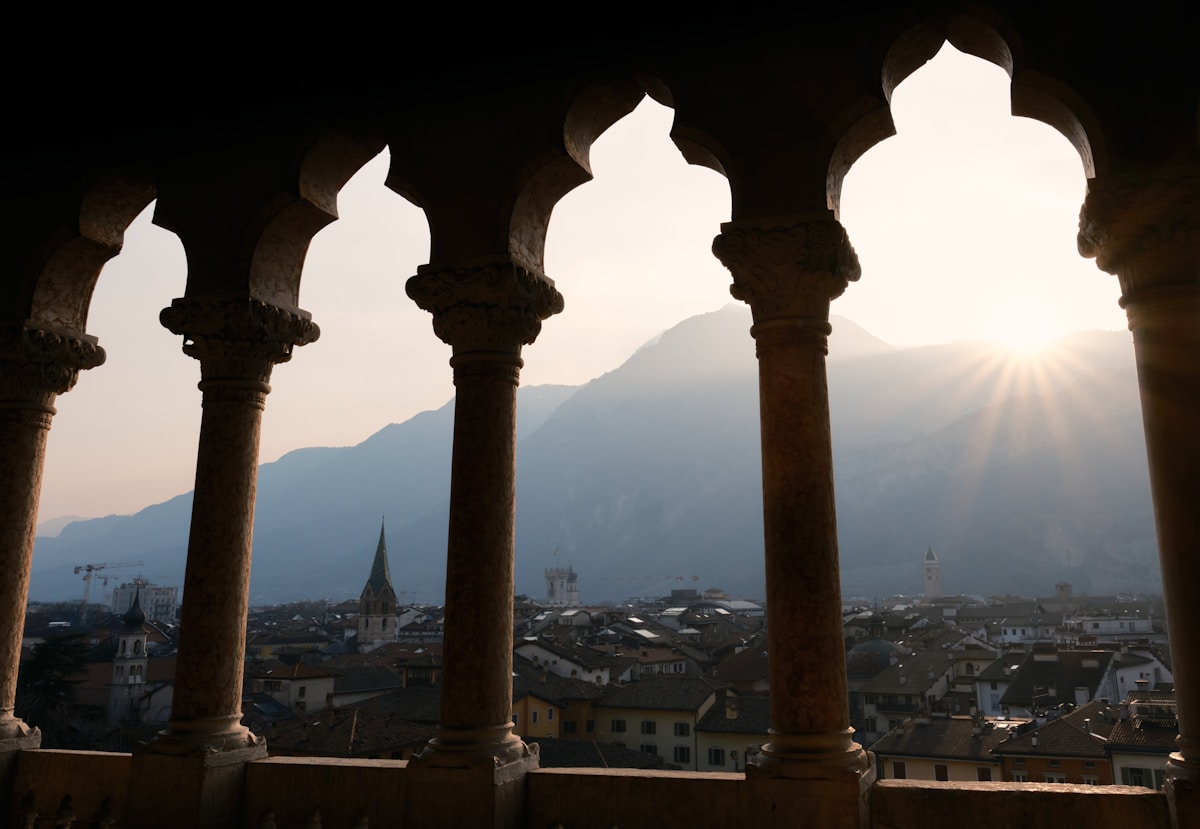
Trento Travel Guide: Alps, Wine & the Council of Trent
Trento travel guide: the city of the Council of Trent, with the Castello del Buonconsiglio, the MUSE museum, and the gateway to the Dolomites.
Guides for Trento
Trento is the capital of Trentino-Alto Adige, Italy’s most autonomous region, and a city where Italian and Germanic cultures have coexisted for centuries. The city is primarily known to historians as the location of the Council of Trent (1545–1563), the Catholic Church’s response to the Protestant Reformation that defined Catholicism for the following 400 years. For visitors, it is a handsome alpine city with excellent wines, easy Dolomite access, and a well-preserved medieval and Renaissance centre.
The city
Piazza del Duomo is the central square - the Cathedral of San Vigilio (where sessions of the Council of Trent were held), the Torre Civica, and the Neptune Fountain. The Romanesque and Gothic cathedral is architecturally fine; the Romanesque crypt (where San Vigilio’s relics are kept) and the 15th-century frescoes in the Chapel of the Crucifix are highlights. Free entry. Open daily 6:30am–12pm and 2:30pm–8pm.
Castello del Buonconsiglio (Via Bernardo Clesio 5) - The medieval-Renaissance complex that served as the residence of the Prince-Bishops who governed Trento from the 13th century to 1803. The castle comprises three main buildings spanning different centuries. The Ciclo dei Mesi (Cycle of the Months) frescoes in the Torre Aquila are one of the finest secular fresco cycles of the International Gothic style in Italy - detailed scenes of aristocratic and peasant life across the twelve months, painted around 1400. Entry approximately €10 as of 2026. Open Tuesday–Sunday 9:30am–5pm (until 6pm in summer). Allow 1.5–2 hours.
Via Belenzani - The main street between the Duomo and the castle, lined with frescoed Renaissance palazzi. The Palazzo Geremia and Palazzo Thun (now the Town Hall) have particularly well-preserved exterior frescoes.
MUSE - Museo delle Scienze (Corso del Lavoro e della Scienza 3) - A Renzo Piano-designed science museum focused on the Alpine environment. Interactive exhibits on geology, glaciology, biodiversity, and sustainability. A major family attraction. Entry approximately €12. Closed Monday. The building itself - glass walls reflecting the Dolomite peaks - is architecturally impressive.
Museo Diocesano Tridentino (Piazza Duomo 18) - In the Palazzo Pretorio adjacent to the cathedral. Art and artefacts related to the Council of Trent, including Flemish tapestries and painted altarpieces. Entry approximately €7. Closed Monday.
Wine
Trentino produces excellent wines - the combination of altitude, temperature variation, and south-facing slopes creates ideal conditions. Teroldego Rotaliano (a robust, dark red from the Campo Rotaliano plain north of the city) is the flagship. Marzemino (the wine Don Giovanni orders in Mozart’s opera, produced locally) is lighter and aromatic. Müller Thurgau (from the high valleys, 700–1,000m altitude) is crisp and floral. Trentino also produces some of Italy’s best Metodo Classico sparkling wine - Ferrari Trento (Ravina, 3km south of the city centre) offers cellar tours and tastings (approximately €20–30, book at ferraritrento.it).
The Cantina di Trento area south of the city has several producers open for visits. Wine bars in the centro storico serve local wines by the glass from approximately €4–6.
Where to eat
Trentino cuisine blends Italian and Austrian traditions: canederli (bread dumplings, the Tyrolean Knödel), strangolapreti (spinach and bread dumplings in butter and sage), polenta with mushrooms, and game (venison, chamois). Osteria a Le Due Spade (Via Don Arcangelo Rizzi 11 - mains approximately €14–20) is the most historically significant restaurant in Trento (since 1545 - it fed delegates during the Council). Scrigno del Duomo (Piazza del Duomo 29 - mains approximately €16–24) has a terrace overlooking the cathedral square.
Where to stay
Budget: approximately €50–75/night. Mid-range: approximately €80–140/night. Hotel America (Via Torre Verde 50 - doubles from approximately €85/night) is well-positioned in the historic centre.
The Dolomites
Trento is the western gateway to the Dolomites. Paganella ski area (30 minutes by bus) serves winter skiing and summer hiking. The Brenta Dolomites (accessible from Madonna di Campiglio, approximately 80km north-west) are the western Dolomite group - spectacular via ferrata routes and hiking. Lago di Tovel (approximately 40km north) is a mountain lake in a dramatic Alpine setting. In summer, Trento is a base for the extensive Trentino hiking trail network.
Getting there
Trento station: trains from Verona approximately 1 hour (from approximately €8), from Venice approximately 2.5 hours (from approximately €15), from Bologna approximately 2.5 hours. From Bolzano approximately 40 minutes (from approximately €5) - useful for combining with South Tyrol.
Practical details
Accommodation options: Trento is priced competitively - an Alpine city without ski-resort pricing. Budget: approximately €50–75/night near the station or in the surrounding area. Hotel America (Via Torre Verde 50 - doubles from approximately €85/night as of 2026) is well-positioned in the old city. Grand Hotel Trento (Via Alfieri 1 - doubles from approximately €110/night) is the largest hotel in the centre, with modern rooms near the train station. For a higher-end option, Relais Villa Madruzzo (approximately 5km from the centre - doubles from approximately €130/night) is a converted 19th-century villa with gardens and views.
Getting around the region: Trentino’s Mobilcard covers bus, cable car, and mountain railway travel within the province (1 day approximately €15, 7 days approximately €38) - worthwhile for exploring beyond the city. The Paganella ski area (40 minutes by bus from Trento, free bus with ski pass) is the most accessible for day skiing in winter.
Council of Trent context: The Council (1545–1563) met in three locations within Trento: the Cathedral (main sessions), Santa Maria Maggiore (where the final decrees were signed), and Castello del Buonconsiglio (private deliberations). The Museo Diocesano Tridentino in the adjacent Palazzo Pretorio holds the original Council documents, Flemish tapestries commissioned to commemorate the sessions, and the reliquaries carried in the Council processions. For anyone interested in Reformation history, Trento is one of the essential stops in Italy.
Combining Trento with Bolzano: Bolzano (40 minutes north, from approximately €5) is the capital of South Tyrol - distinctly more Germanic than Italian, with the Ötzi the Iceman mummy at the South Tyrol Museum of Archaeology (entry approximately €14), excellent wine bars, and a medieval old city. The two cities make a logical two-day pairing on a Trentino-South Tyrol circuit.
For accommodation: Trento hotels. For Castello del Buonconsiglio, the MUSE science museum, and Dolomites access routes: things to do in Trento. Book a guided Trento tour to explore the castle, the Council of Trent sites, and the wine culture of the Trentino region. Trento is the starting point for the Dolomites - our Dolomites itinerary covers the key hiking and driving routes from this base.
Upcoming Events in Trento
La Befana - Feast of the Epiphany 2027
La Befana 2027, January 6. Italy's Epiphany gift-giving day: children receive sweets or coal from the Befana witch, then decorations come down.
Book an experience
Top experiences in Trento
Explore the best tours and activities in Trento, with instant confirmation and free cancellation on most bookings.