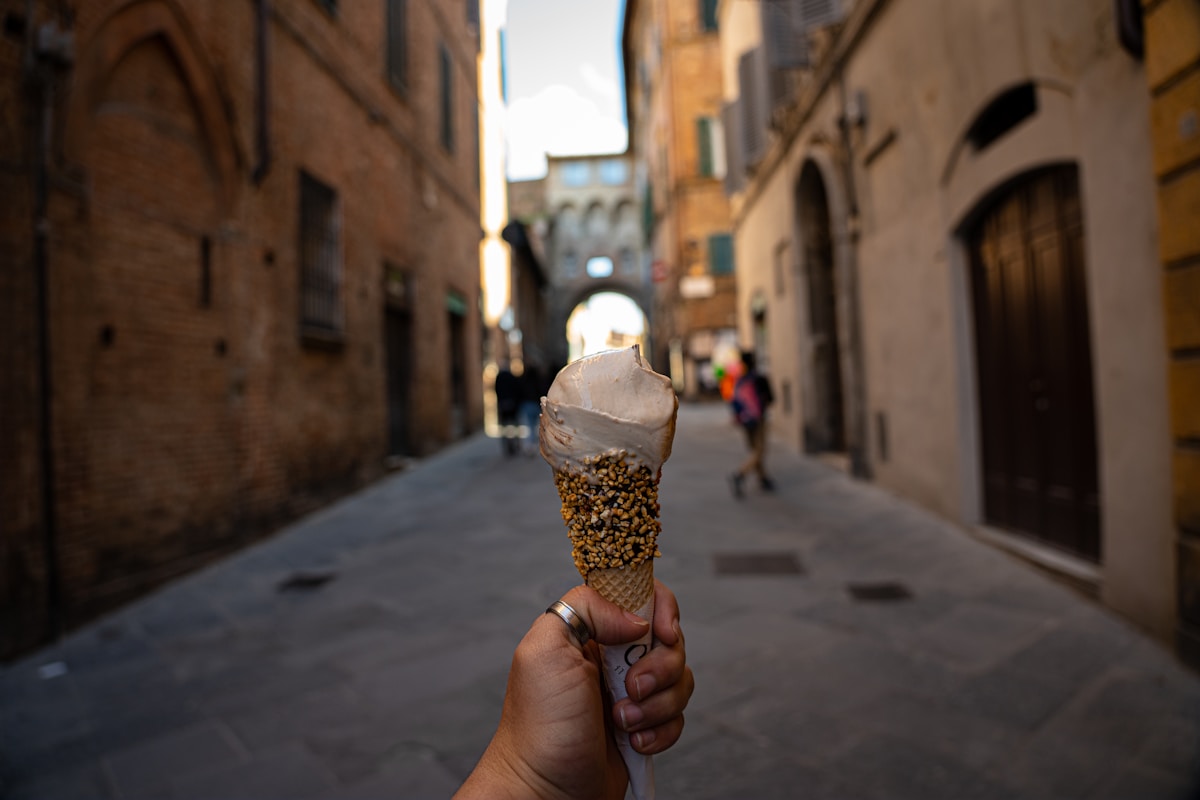
Siena’s food culture is rooted in Tuscan tradition but with distinctive local products that are harder to find elsewhere. The city’s medieval prosperity created a sophisticated food culture that persists in the panforte, the hand-rolled pasta, and the wine production of the surrounding territory.
What to Eat
Pici - the Sienese pasta. Thick, hand-rolled spaghetti made from flour and water (no egg). Peasant food in origin; now a fine-dining staple. Served all’aglione (with garlic and tomato), al ragù (meat sauce), or cacio e pepe. Easier to find in Siena than almost anywhere else in Tuscany.
Wild boar (cinghiale) - braised into ragù for pasta or served as a main course. Boar is hunted extensively in the Crete Senesi and Chianti hills. The best version is slow-cooked until it shreds.
Ribollita - the twice-cooked bread and vegetable soup, made with black kale (cavolo nero), cannellini beans, and stale bread. Thick enough to stand a spoon in. Better in autumn and winter.
Pappardelle al lepre - wide egg pasta with braised hare. A Sienese and Maremman specialty. Slower cooking, more intense flavour than cinghiale.
Panforte - a dense, spiced cake of honey, almonds, candied orange peel, and spices pressed into a disc and dusted with icing sugar. Made in Siena since the 13th century. The original (panforte nero) is spicier and darker; panforte margherita (created for the queen’s visit in 1879) is lighter.
Ricciarelli - almond biscuits with icing sugar, chewy and intensely aromatic. Siena’s defining pastry. IGP-protected. Available year-round but most abundant at Christmas.
Cavallucci - spiced biscuits with anise, walnuts, and candied citrus. Dipped in vin santo or eaten as they are. Ancient origin (the name references medieval horse couriers who carried them as provisions).
Wine
The surrounding territory produces some of Tuscany’s greatest wine: Chianti Classico (Sangiovese, aged minimum 12 months), Brunello di Montalcino (Sangiovese, aged 5 years before release), Vino Nobile di Montepulciano, and the white Vernaccia di San Gimignano. Local wine lists in Siena’s better restaurants are excellent.
Vin santo - the amber dessert wine made from dried Malvasia grapes - is the traditional accompaniment to ricciarelli and cantucci.
Where to Eat
The streets behind the Piazza del Campo (away from the main piazza) have the best trattoria options. The Campo itself has tourist pricing. The Terzo di Camollia district (north of the cathedral) has several good neighbourhood restaurants used by locals rather than visitors.
The covered market (Mercato di Piazza del Mercato, behind the Palazzo Pubblico) is the best source of local produce.
Named restaurants
Osteria Le Logge (Via del Porrione 33) - One of the best trattorias in Siena. Pici with wild boar ragù, ribollita, grilled Chianina beef. Mains approximately €16–22 as of 2026. Reservations recommended. Closed Sunday.
Trattoria Papei (Piazza del Mercato 6) - Large portions of Sienese classics at fair prices. Pici, ribollita, roast meats. Mains approximately €10–14. Popular with locals and visitors alike.
Antica Osteria da Divo (Via Franciosa 25–29) - A restaurant built into Etruscan cave rooms beneath the street. Tuscan cuisine in an extraordinary setting. Mains approximately €16–22. The atmosphere is the draw.
Nannini (Banchi di Sopra 24) - Siena’s most famous pasticceria. Panforte, ricciarelli, cantucci, and excellent coffee. A panforte (the traditional Sienese spiced fruit and nut cake) makes one of Italy’s best food souvenirs - approximately €8–12 for a small round.
Take a Guided Food Tour of Siena
Siena’s food is among the most specific in Tuscany — pici all’aglione uses a pasta shape found almost exclusively in the southern Sienese hills, Panforte di Siena has been made here since at least the 13th century, and the Brunello and Vino Nobile vineyards are within 40 kilometres. A food walk through Siena’s medieval contrade, with stops at the historic pasticcerie on Via di Città, the salumerie around the Campo, and a wine bar in the Enoteca Italiana, covers the full picture efficiently. Browse Siena food tours on GetYourGuide.
Practical tips
A full dinner with wine costs approximately €30–45 per person in a good Sienese trattoria. The Campo restaurants charge a premium for the view; the side streets off the main piazza offer better value. Siena’s Palio dates (July 2 and August 16) affect restaurant availability - book ahead during these weeks. A Siena food tour taking in the covered market, local producers, and pici pasta is an efficient way to cover the highlights with local guidance.
Back to the full Siena travel guide for museums, the Duomo, and city logistics. For the Tuscan food tradition in broader regional context - including pici production, Chianina beef, and the best Tuscan markets - our Tuscan food guide covers all of it. For wine context: Brunello, Chianti Classico, and Vernaccia are covered in our Italian wine guide. For accommodation in Siena and the surrounding countryside, see the best hotels in Siena. For a broader Tuscany accommodation overview, our hotels in Tuscany guide covers the region.
Where to stay in Siena: Find hotels in Siena — search accommodation across all budgets.