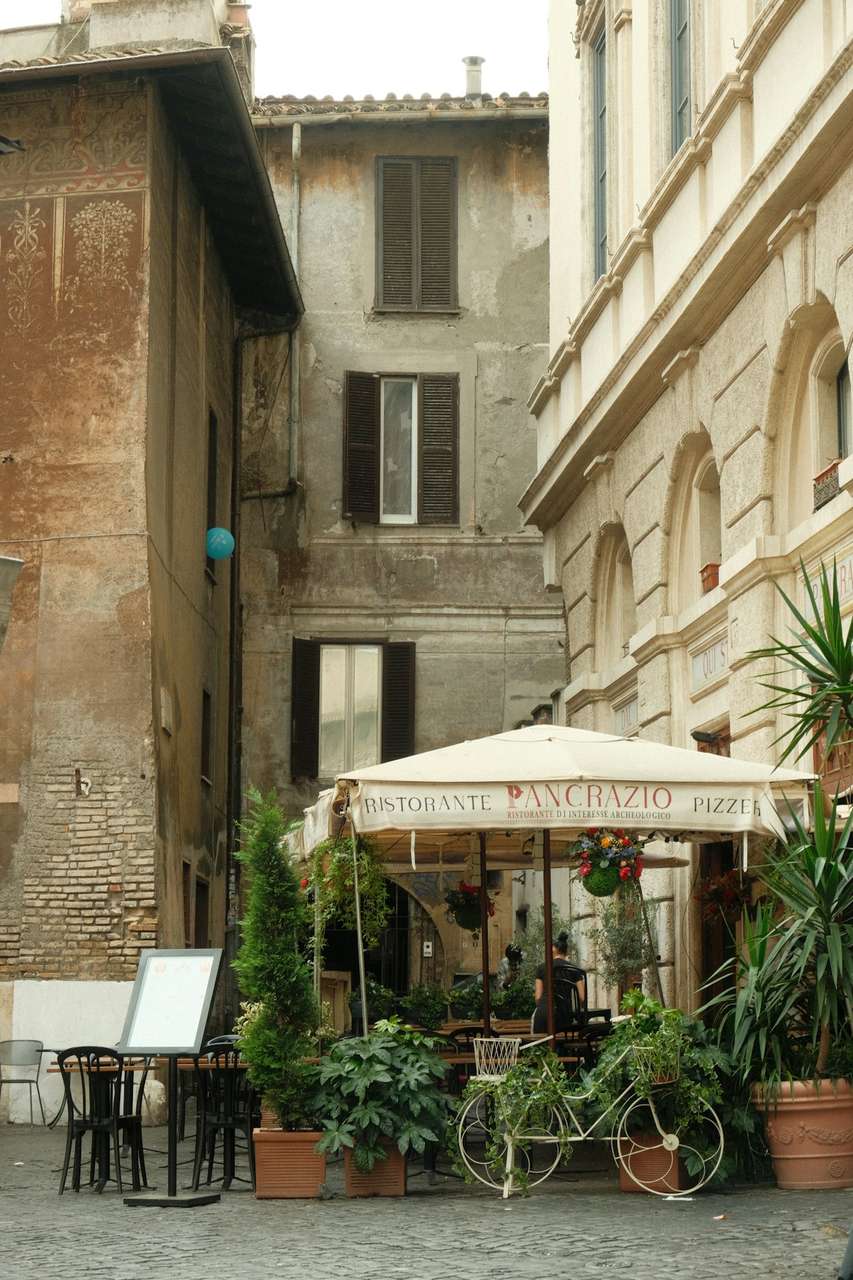
Ravenna sits in Emilia-Romagna, consistently ranked Italy’s finest food region: the home of Parmigiano-Reggiano, Prosciutto di Parma, mortadella, tagliatelle al ragù, and tortellini. Ravenna itself is in the eastern, coastal part of the region — closer to Rimini than to Parma — which means its food identity is Romagnole rather than strictly Emilian. The distinction matters: the Romagna half of the region has its own pasta shapes, its own flatbreads, and a slightly earthier, more rustic approach to cooking. All of it is excellent.
Piadina Romagnola
No dish defines Ravenna’s street food more completely than piadina romagnola. A flat, unleavened bread cooked directly on a terracotta or cast-iron plate, the piadina has been eaten in Romagna since at least the medieval period. It is thin, slightly charred at the edges, and folded around a filling immediately after cooking.
The classic combination is squacquerone cheese, prosciutto crudo, and rucola. Squacquerone is a very soft, almost spreadable fresh cheese with a mild, slightly acidic flavour — specific to Emilia-Romagna and not widely exported. The warmth of the freshly cooked piadina softens it further. Other common fillings include mozzarella and grilled vegetables, bresaola and rucola, or simply prosciutto cotto and cheese.
Piadinerie and street kiosks throughout Ravenna’s centre sell them for approximately €3–5. Look along Via Cavour and Via IV Novembre for kiosks doing brisk lunchtime trade. A piadina and a glass of local Sangiovese makes a quick, satisfying lunch between mosaic visits.
Strozzapreti al Ragù
Strozzapreti — the name translates roughly as “priest-stranglers”, a piece of anticlerical Romagnole humour — is the pasta shape most associated with this part of the region. The shape is an irregular twisted tube, slightly thicker than tagliatelle, made without eggs in some traditional versions. It holds sauce well.
The standard serving is with ragù: slow-cooked pork, often made with sausage rather than the more refined beef-dominated Bolognese ragù further west. Some variations include chicken livers or a mixed meat base. The flavour is direct and slightly rougher than the refined tagliatelle al ragù you would find in Bologna. Order it at a trattoria as a primo — expect to pay approximately €10–14.
Cappelletti in Brodo
The festive pasta of Ravenna and much of Romagna, cappelletti are small filled pasta parcels folded into a shape that resembles a little hat (cappello = hat). They are closely related to tortellini but differ in shape, filling ratios, and the thickness of the pasta. The Romagnole version typically uses a filling based on beef, pork, and aged cheese.
The correct way to serve them is in brodo — in a clear broth made from capon or aged beef, strained and skimmed until perfectly clear. The combination of the delicate pasta and the deep, clean broth is simple and precise. Cappelletti in brodo appears on menus throughout the winter months and on Christmas Eve by tradition. On a menu, expect approximately €10–12.
Cassoni Romagnoli
Cassoni (sometimes called cascioni) are a close relative of piadina — made from the same dough but folded over a filling and sealed before cooking, so the result is a sealed flatbread parcel rather than an open fold. The most traditional filling is erbette: Swiss chard cooked down with garlic and ricotta. In coastal areas of Romagna, a filling of herring (erring a la romagnola) is also traditional, though less common in Ravenna’s centre.
Piadinerie sell them alongside piadina for approximately €3–4. They travel better than piadina and make a good portable lunch for eating between sites.
Squacquerone Cheese
Squacquerone di Romagna DOP is one of the most distinctive cheeses of the region — a very fresh, soft, almost liquid cheese that cannot be sliced and barely holds a shape. It is produced and eaten within a few days; it does not age. The flavour is mild and slightly sour, the texture somewhere between very soft ricotta and strained yoghurt.
Beyond its role inside piadina, squacquerone is eaten as a spread on bread, as part of a cheese board, or stirred through pasta. If you want to buy some to eat at your accommodation, look for it at the Mercato Coperto (Piazza Andrea Costa, open Monday to Saturday mornings). Cheese shops in the centre also stock it, typically in small tubs.
Mercato Coperto
The covered market on Piazza Andrea Costa is the best single source for Romagnole ingredients in Ravenna. Stalls sell squacquerone and other local cheeses, whole legs of prosciutto crudo, fresh pasta, produce, and regional wines. It operates Monday to Saturday mornings. If you want to assemble a picnic or simply see what the region produces, come here first.
Where to Eat
Osteria del Tempo Perso (Via Gamba 12) is a traditional Romagnole trattoria — uncomplicated, honest, and consistent. The menu follows the seasons and leans on the local pasta dishes and grilled meat. Expect approximately €25–35 per person with wine.
Ca’ de Vén (Via Corrado Ricci 24) occupies a frescoed 15th-century palazzo and doubles as an enoteca and restaurant. The wine list focuses on Emilia-Romagna, and the food is well executed. It is slightly more expensive than a basic trattoria but the setting and wine selection justify the premium. Expect approximately €30–45 per person.
For a quick meal between mosaic sites, any piadineria along Via Cavour will serve you faster and cheaper than a sit-down trattoria, and the quality of a well-made piadina is not to be underestimated.
Wine
Sangiovese di Romagna DOC is the default red — a lighter, more rustic expression than the Chianti Classico or Brunello versions of the same grape. It is slightly tannic, medium-bodied, and pairs cleanly with the region’s ragù and charcuterie. Trebbiano di Romagna is the workhorse white, dry and simple. Albana di Romagna DOCG, the first Italian white to receive DOCG designation (1987), ranges from dry to passito-style sweet; if you encounter it, try the dry version with piadina.
At an enoteca or wine bar in Ravenna, regional bottles typically start at approximately €12–15. Ca’ de Vén is the best place in the city to drink across the regional range with guidance.
Where to stay in Ravenna: Find hotels in Ravenna — search accommodation across all budgets.