Pompeii presents a familiar Italian tourist-town problem: the closer you eat to the main attraction, the worse the food-to-price ratio tends to be. Via Roma, the principal approach to the Pompeii Scavi entrance, is lined with restaurants that exist primarily to serve the tourist flow — adequate food at inflated prices, high turnover, no particular attachment to local tradition.
The good news is that you’re in Campania. Move ten minutes off the main axis and you’re in the same food region that produced Neapolitan pizza, spaghetti alle vongole, and some of the finest mozzarella in Italy. The ingredients are excellent here; you just need to find the places using them properly.
Pizza Napoletana
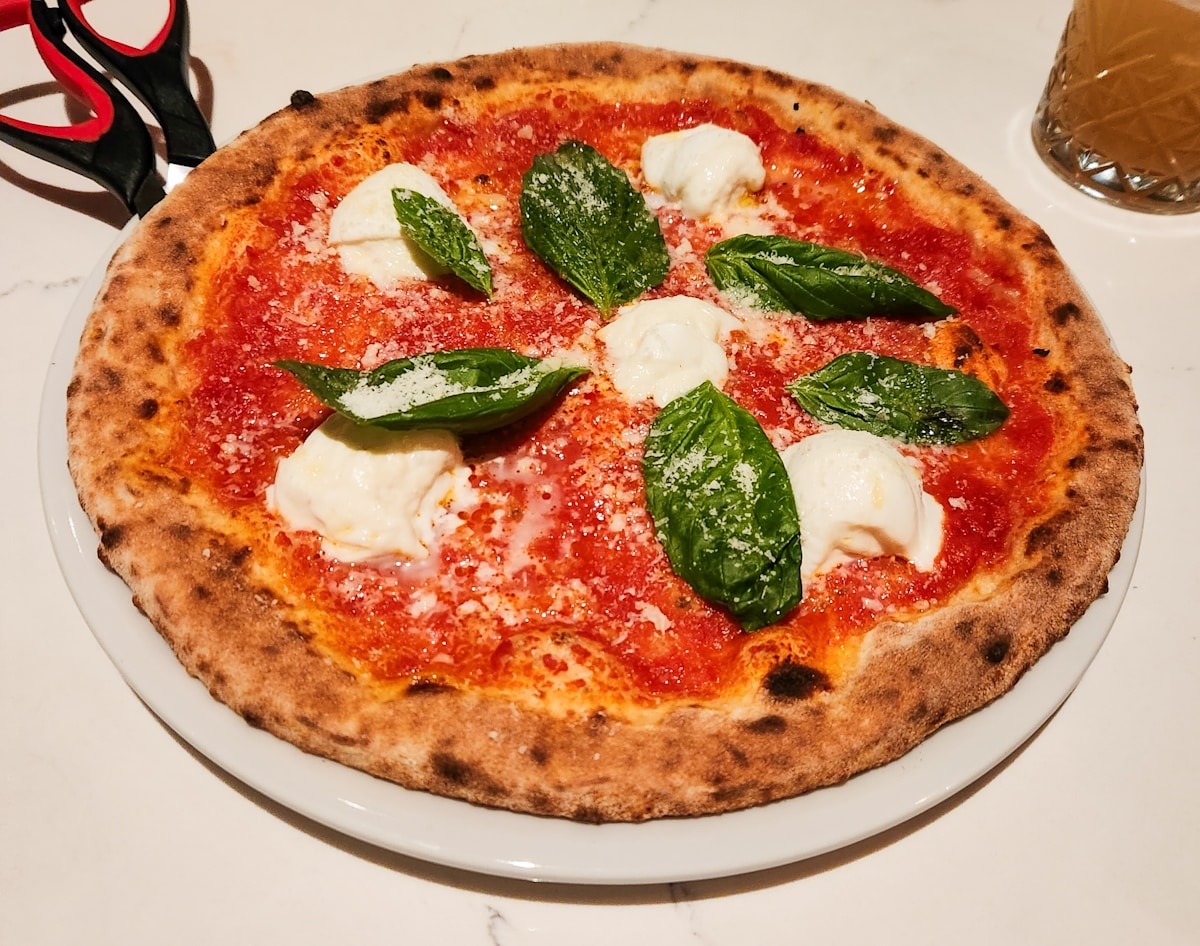
Proper Neapolitan pizza is available throughout the Pompeii area and the surrounding towns. Look for the AVPN (Associazione Verace Pizza Napoletana) certification — a blue and white roundel sign — which indicates the kitchen adheres to the traditional method: specific Caputo flour, San Marzano DOP tomatoes, fior di latte (or mozzarella di bufala), wood-fired dome oven at around 485°C, 60–90 second cook time. The result is a soft, slightly charred base with a puffy cornicione (crust edge).
Il Principe (Piazza Bartolo Longo 8, Pompeii) is the most acclaimed restaurant in the town itself and stands apart from the tourist-trap tier. Its menu goes beyond pizza into a broader interpretation of Campanian cuisine, including dishes inspired by ancient Roman recipes and local seasonal produce. Expect approximately €40–60 per person for dinner as of 2026. Booking well ahead is advisable.
For pizza at a more everyday price, the streets south and west of the archaeological park entrance have several options — the quality is easier to find once you’re clear of the Via Roma corridor.
Spaghetti alle Vongole
The Tyrrhenian coast runs along the western edge of Campania, and clams are a constant on menus throughout the area. Spaghetti alle vongole — spaghetti with clams in a white wine and olive oil sauce, or sometimes with cherry tomatoes (rosso) — is a litmus-test dish for seafood restaurants here. The best versions use small Neapolitan vongole veraci (carpet-shell clams) rather than frozen alternatives.
Good versions are more readily found at seafood restaurants in Torre Annunziata (5 minutes from Pompeii Scavi by Circumvesuviana train) or Castellammare di Stabia (10 minutes south) than in Pompeii town itself. A main course portion costs approximately €12–16 as of 2026 at a proper seafood trattoria.
Paccheri al Ragù
Paccheri are large, tube-shaped pasta — a Neapolitan format designed to hold substantial sauce. The classic match is the Sunday ragù: a long-cooked tomato sauce with mixed meats (pork ribs, sausage, braised beef) that has simmered for at least four hours. The pasta is served first, dressed with the sauce; the meats follow as a second course. It’s a substantial meal.
A trattoria serving this properly is doing things right. It’s the kind of dish that disappears from menus on Monday at lunch because it was all eaten on Sunday — if a restaurant has it every day of the week in a tourist area, look closely at how it’s made.
Mozzarella di Bufala Campana DOP
Campania is where mozzarella di bufala campana DOP is made, and eating it within the region reveals why the imported versions in other countries are a pale comparison. Fresh buffalo mozzarella is at its best within 24–48 hours of production — the milk fat is still liquid, the texture tears rather than cuts, and the flavour has a slight lactic tang.
The buffalo farms are concentrated around Caserta (approximately 30km north) and Battipaglia (south of Salerno). Factory shops and caseifici (dairy shops) near those towns sell it directly for approximately €4–7 for a 250g ball as of 2026. In Pompeii itself, a decent deli will have it; avoid shrink-wrapped supermarket versions.
On restaurant menus in the area, insalata caprese (mozzarella di bufala with sliced tomato, basil, olive oil) is the default showcase. It’s a fair test of ingredient quality when done well.
Sfogliatella
Sfogliatella is the classic Neapolitan pastry, and you’ll find it throughout the Pompeii area at bar counters and pastry shops. It comes in two forms: riccia (the ribbed shell shape, made with multiple layers of thin pastry) and frolla (a shortcrust version, softer and less dramatic). The filling is semolina with ricotta, candied citrus peel, and cinnamon.
Pastry shops along Corso Italia and the streets approaching the archaeological park carry them from morning — best eaten fresh and warm. A sfogliatella riccia at a bar costs approximately €1.50–2.50.
Limoncello
Campania’s citrus coast begins at Sorrento, 35 minutes south. The lemons used for limoncello — the femminello di Sorrento variety, with thick, intensely scented peel — are grown on the terraces above the Sorrento Peninsula and the Amalfi coast. The liqueur (approximately 30% alcohol) is made by infusing the peel in alcohol, then diluting with sugar syrup.
Every gift shop near Pompeii sells it — quality ranges from commercial to genuinely artisan. A 500ml bottle of a decent producer’s limoncello costs approximately €8–15 as of 2026; anything below that price is likely made with artificial flavouring rather than real lemon peel.
Practical Notes
Eating well near Pompeii is primarily about navigation. The ten minutes of walking it takes to leave the Via Roma tourist corridor separates average meals at inflated prices from genuinely good Campanian food at reasonable ones. A three-course lunch with wine at a proper trattoria in the side streets costs approximately €22–30 per person as of 2026 — close to what a bad pasta dish and a beer cost on the main approach road.
If you’re spending a full day at the archaeological park, bring provisions from a local bar or forno (bakery) rather than eating inside the site — the internal cafeteria is expensive and the food is not representative of the region.
Where to stay in Naples: Find hotels in Naples — search accommodation across all budgets.