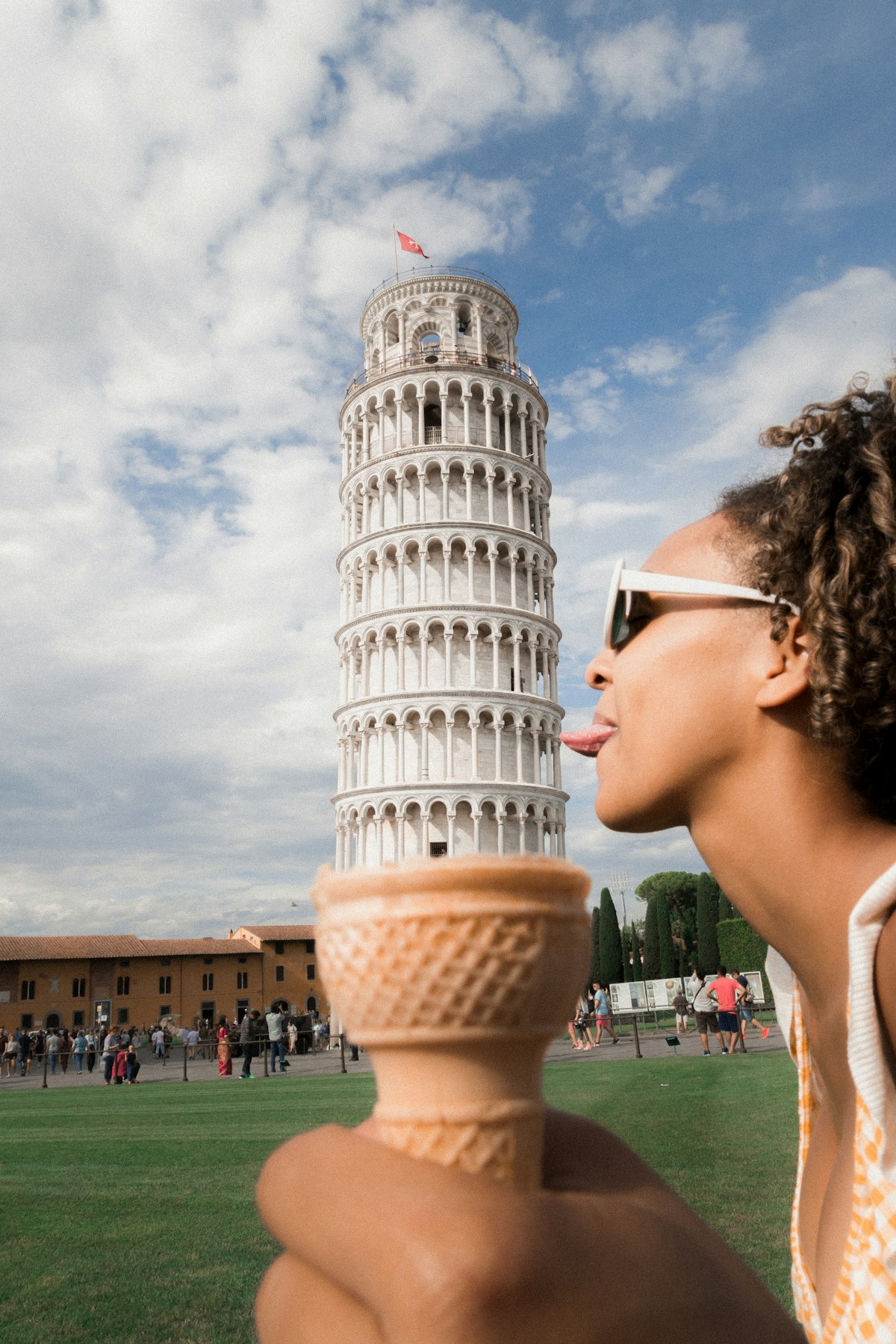
Most visitors give Pisa a few hours: arrive, photograph the Leaning Tower, take the staged photo of pushing or holding it up, leave. This is defensible - the Tower is genuinely remarkable and the Piazza dei Miracoli is one of the finest collections of medieval architecture in Europe. But Pisa is also a functioning university city of 90,000 people, and the parts beyond the tower district have a different and more genuine character.
The Piazza dei Miracoli
The “Field of Miracles” contains four buildings on a green lawn, all faced in white marble and representing the high point of Pisan Romanesque architecture (11th–14th centuries):
The Leaning Tower (Torre di Pisa) - originally intended as the freestanding bell tower for the cathedral. Construction began in 1173 and almost immediately started tilting due to soft subsoil. Construction stopped, restarted, and the characteristic lean is visible even in the higher tiers where builders tried to compensate. It leans 3.97 degrees from vertical (reduced from 5.5 degrees after stabilisation work in the 1990s and 2000s). Climbing it: 294 steps, spiral interior, €18–25 by time of booking. Book online - same-day tickets often unavailable. Guided tours of Pisa that include skip-the-queue Leaning Tower access and a full explanation of the Piazza dei Miracoli are available.
Top Tours at a Glance
| Tour | Duration | Price (from) | Group Size | Highlights |
|---|---|---|---|---|
| Pisa guided tour with skip-the-line tower entry | 2 hrs | from €30 | Up to 15 | Leaning Tower, Duomo, Baptistery, Camposanto |
| Pisa + Lucca day tour from Florence | 8 hrs | from €55 | Up to 20 | Pisa Piazza dei Miracoli, Lucca medieval walls |
| Pisa walking tour of the city beyond the tower | 2 hrs | from €20 | Up to 15 | Piazza dei Cavalieri, Lungarni, Borgo Stretto |
| Cinque Terre + Pisa combo tour | Full day | from €75 | Up to 20 | Coastal villages and Piazza dei Miracoli |
Browse all Pisa tours → GetYourGuide
The Cathedral (Duomo) - a 12th-century Romanesque cathedral, the model for several churches across Tuscany. The interior has a pulpit by Giovanni Pisano (1301). Galileo allegedly made his pendulum observations here.
The Baptistery - the largest baptistery in Italy, begun 1152. The interior has extraordinary acoustics - the guides regularly demonstrate the resonance.
The Camposanto - the monumental cemetery. The Gothic cloister around a courtyard of soil reportedly brought from Calvary by the Crusaders. The walls were covered with 14th-century frescoes; these were largely destroyed by an Allied incendiary bombing in 1944 that melted the lead roof. What survives is displayed inside. The sinopie (preliminary sketches) for the lost frescoes are displayed in the Sinopie Museum across the square.
The rest of Pisa
Knights’ Square (Piazza dei Cavalieri) - five minutes’ walk from the Tower. Vasari’s redesign for the Knights of St Stephen (1562–1596): the Palazzo della Carovana (now the Scuola Normale Superiore), the clock-faced Palazzo dell’Orologio, and the attached church. In the tower of the Palazzo dell’Orologio, Count Ugolino della Gherardesca was allegedly starved to death with his sons in 1289 - the episode in Dante’s Inferno. A calmer and more authentically Pisan square than the tourist-saturated Piazza dei Miracoli.
The Lungarni (riverside walks) - the embankments on either side of the Arno are where Pisans actually spend their time. The north bank (Lungarno Mediceo) has the Museo Nazionale di San Matteo, with an excellent collection of Pisan and Tuscan medieval sculpture and painting. The south bank has more bars and restaurants.
Borgo Stretto - the medieval street running north from Piazza Garibaldi with medieval logge (arcades). The main street of old Pisa.
Day trips from Pisa
Lucca (30 minutes by train) - the best nearby option. Well-preserved medieval walls you can walk along, good Romanesque churches, and an easy day.
Cinque Terre (2 hours by train) - the five clifftop villages north of La Spezia. A long day from Pisa but possible; better as an overnight.
Florence (1 hour by train) - the most common day trip; Pisa is often used as the gateway airport for Florence itineraries.
Practical notes
Pisa airport (Galileo Galilei) is 2km from the city centre - a 5-minute train journey or 15-minute walk. The airport is the gateway for Tuscany; trains run to Florence hourly (1 hour, €9–15). The Pisa Centrale train station is 15 minutes’ walk from the Piazza dei Miracoli.
Back to the full Pisa travel guide for Piazza dei Miracoli details, entry fees, and city transport. For Pisa food and the local Tuscan tradition, see the Pisa food guide. For day trips from Pisa to Florence, Lucca, and Cinque Terre, see day trips from Pisa. Pisa is most commonly visited from Florence - our Florence day trips guide covers the train logistics. For accommodation in Pisa, see best hotels in Pisa. For the Tuscany itinerary that includes Pisa as a stop, see our Tuscany itinerary.
Where to stay in Pisa: Find hotels in Pisa - search accommodation across all budgets.