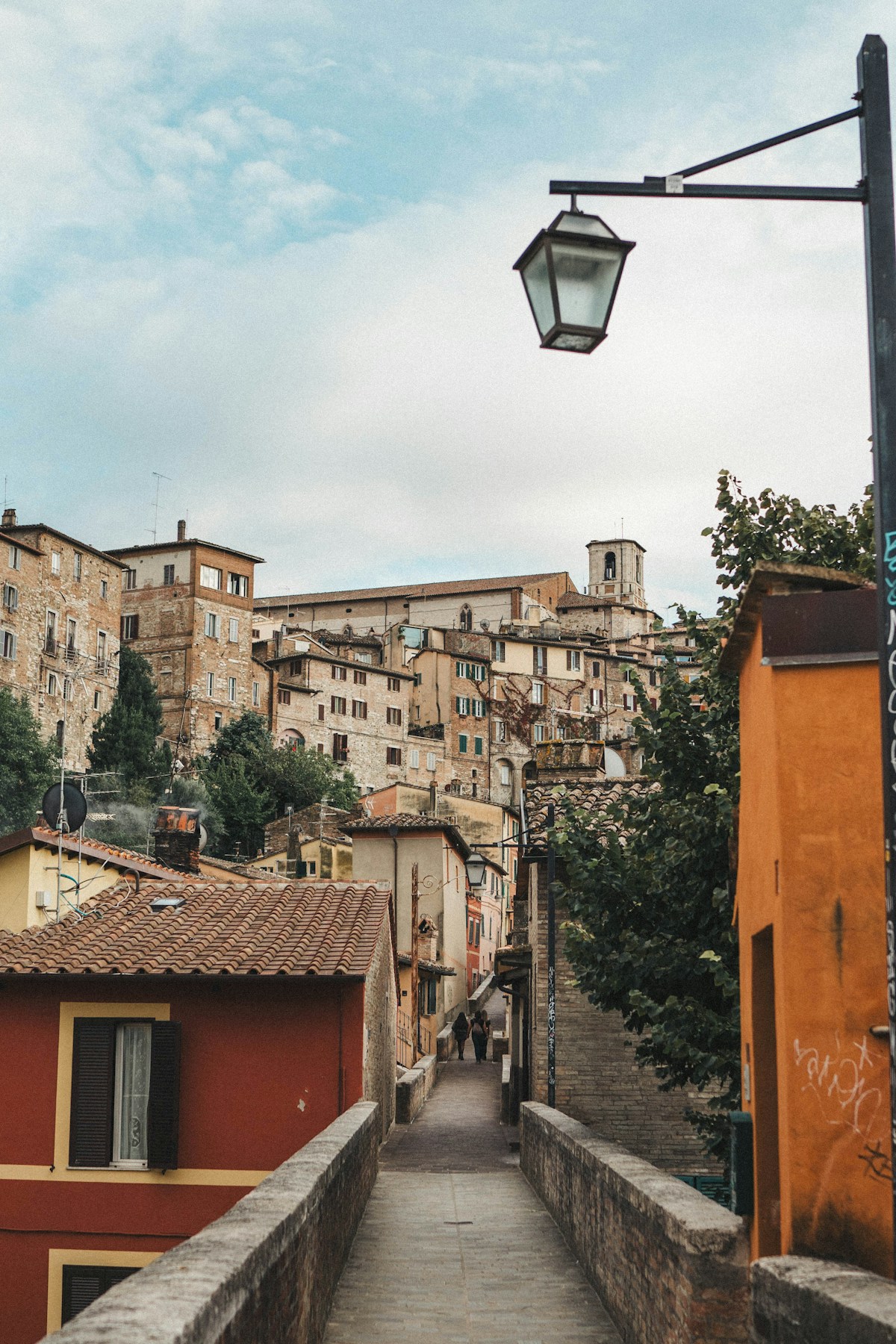
Perugia is the capital of Umbria, the only landlocked region in central Italy, and a working university city with a well-preserved medieval centre on a hilltop above the Tiber valley. It has excellent museums, some of the finest Perugino paintings in Italy, an extraordinary underground ancient city beneath the medieval streets, and is the best base for exploring the Umbrian hill towns: Assisi, Spello, Montefalco, Trevi, Spoleto.
Piazza IV Novembre and the Fontana Maggiore
The central piazza is framed by the Gothic Cathedral of San Lorenzo and the Palazzo dei Priori (1293–1443, now the National Gallery). The Fontana Maggiore (1278), designed by Nicola and Giovanni Pisano, is one of the most important medieval sculptural works in Italy - a double basin decorated with reliefs of biblical scenes, classical mythology, and the labours of the months. It is not usually noted as a major work in travel writing; it deserves more attention.
National Gallery of Umbria (Galleria Nazionale dell’Umbria)
On the upper floors of the Palazzo dei Priori. The finest collection of Umbrian painting from the 13th to 18th centuries: Duccio, Fra Angelico, Bonfigli, Pinturicchio. The Perugino rooms are the main attraction - Pietro Perugino (c.1448–1523) was the teacher of Raphael and the defining painter of the Umbrian school. His soft, atmospheric landscapes and devotional Madonnas are best seen here in concentrated form. €8 entry.
Collegio del Cambio
The guild hall of the moneychangers, decorated with frescoes by Perugino (1498–1500). A small room with complete frescoes depicting planetary gods, classical heroes, and Christian virtues - Perugino also painted a self-portrait on the left wall. One of the best-preserved Renaissance interior decorations in Italy. €4.50 entry; often overlooked.
Underground Perugia (Rocca Paolina)
The 16th-century Papal fortress (built by order of Pope Paul III in 1540 on top of medieval Perugia) is now an underground walkway connecting the lower city to the upper city, via escalator. The passages run through intact medieval buildings, streets, and the Baglioni family residences absorbed into the fortress - entire medieval streets are preserved below ground. Free entry via the escalators from Piazza Italia.
Etruscan archaeology
Perugia was a major Etruscan city (Perusia) before Roman conquest. The Etruscan Arch (Arco Etrusco di Augusto) at the north end of the historic centre incorporates Etruscan masonry below the Roman additions. The National Archaeological Museum of Umbria has an Etruscan collection with urns, bronzes, and the famous Cippus Peruginus (inscribed stone with the longest Etruscan text known).
Umbrian food and the truffle economy
Perugia is the base for one of Italy’s most important food cultures. Guided tours of Perugia covering the truffle markets, the Perugino gallery, and the underground city are available from the historic centre. Umbrian cuisine:
- Truffles - both white truffle (from the north, around Città di Castello) and black truffle (from Norcia and Spoleto). October–November is truffle season. Umbria truffles are used more generously and are cheaper than their Piedmont equivalents.
- Norcineria - Umbrian cured meats from Norcia, the pork butchery capital of Italy. The word norcino (from Norcia) became the Italian term for a pork butcher.
- Lentils from Castelluccio - tiny lentils grown on a high plain near Norcia, used in soups and with pork sausage.
Umbria Jazz Festival (July) - one of Italy’s premier jazz festivals, held in Perugia. The city fills with concerts in piazzas and churches.
Day trips from Perugia
Assisi (25km east) - St Francis’s town. The Basilica with Giotto frescoes, the Rocca Maggiore, the medieval streets.
Spello (35km east) - Umbrian hill town with the Baglioni Chapel in Santa Maria Maggiore (Pinturicchio frescoes, 1501).
Orvieto (1 hour south) - the Cathedral and the underground Etruscan city.
Torgiano (15km south) - the Lungarotti winery, with an excellent wine museum.
Lake Trasimeno (25km west) - the largest lake in central Italy, peaceful and largely un-touristed.
Book Perugia Tours on GetYourGuide
| Tour | Duration | From price | Highlights |
|---|---|---|---|
| Perugia walking tour with Etruscan underground city | 2–3 hrs | From €22 | Palazzo dei Priori, Galleria Nazionale, Etruscan tunnels |
| Assisi day trip from Perugia with guided basilica visit | Full day | From €45 | Basilica of St Francis, Rocca Maggiore, medieval Assisi |
| Umbrian truffle hunting experience near Perugia | 3 hrs | From €65 | Truffle hunt with dogs, tasting, local food and wine pairing |
Browse all Perugia tours on GetYourGuide →
Back to the full Perugia travel guide for the medieval hill city, the Galleria Nazionale, and transport connections. For day trips from Perugia to Assisi, Spoleto, and Lake Trasimeno, see day trips from Perugia. For accommodation in Perugia, see best hotels in Perugia. Assisi is 25 minutes by bus - we have a dedicated city guide. For the broader Umbrian food tradition - truffles, porchetta, sagrantino wine - our Italian wine guide covers the region. Orvieto and Assisi both have dedicated guides for extending a stay in Umbria.
Where to stay in Perugia: Find hotels in Perugia — search accommodation across all budgets.