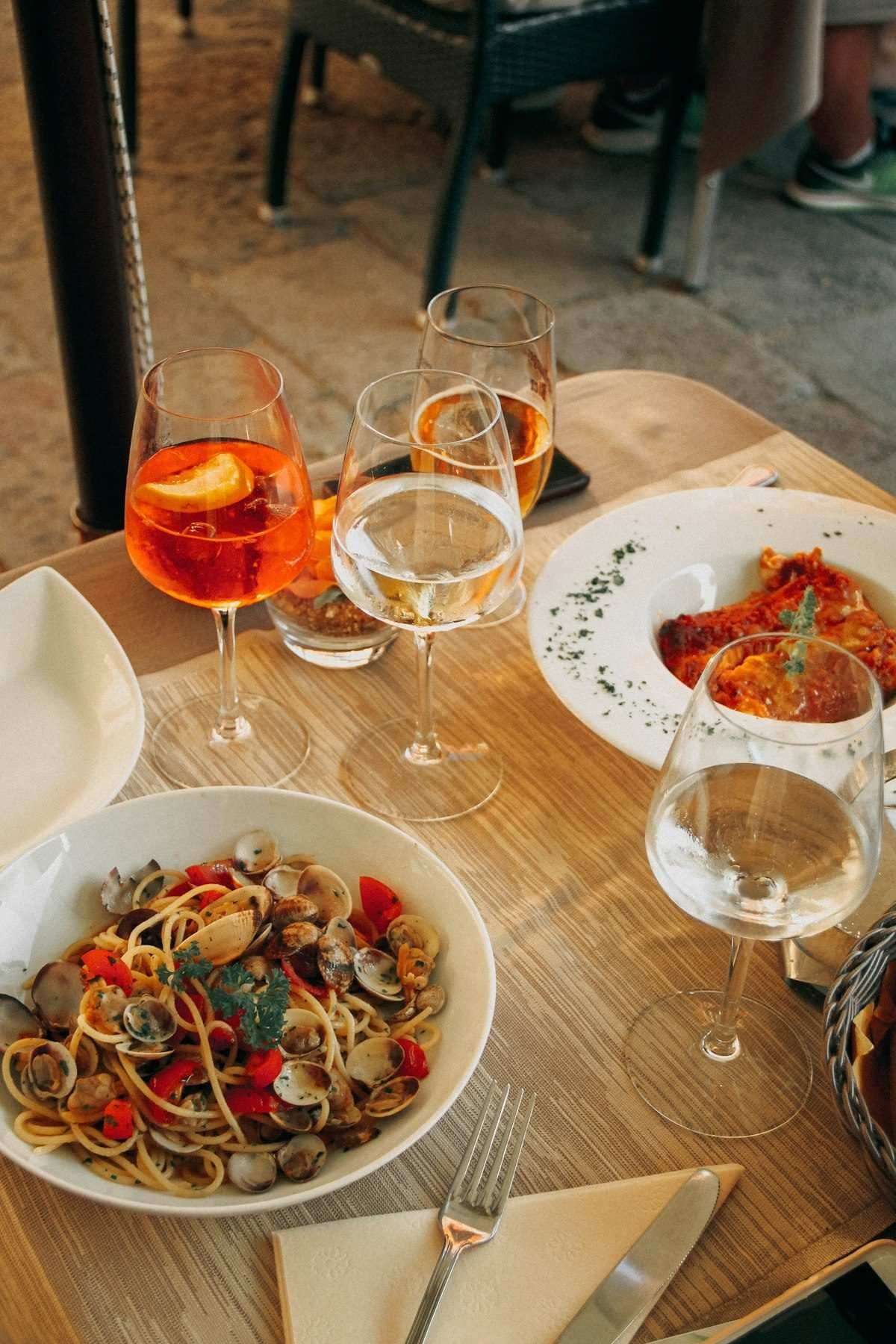
Lake Como’s food culture is shaped entirely by geography. The long Alpine lake produces its own fish, the valleys behind supply buckwheat and cheese, and the vine terraces of the Valtellina begin less than an hour north. What you’ll find on menus here isn’t a diluted version of Milanese cuisine — it’s a distinct set of dishes with ingredients you won’t easily find elsewhere in Italy.
Prices are higher than the Italian average, particularly on the lakefront. That’s simply the reality of eating in one of Europe’s most visited resort areas. The quality at the better restaurants justifies it.
Lake Fish: The Core of Como Cuisine
The Lario — the lake’s local name — produces several species that have shaped regional cooking for centuries. Two dominate menus across the area.
Pesce persico (lake perch) is the more versatile of the two. The fillets are small and delicate, typically pan-fried in butter and sage — a simple preparation that works because the flesh is good enough to need nothing more. Risotto con pesce persico is the dish that most restaurants in Varenna and Bellagio keep on the menu year-round; it’s a fair measure of a kitchen’s standards.
Lavarello (European whitefish) is meatier and often served grilled, baked, or sliced very thin as a carpaccio with lemon and olive oil. The carpaccio version works well as a starter.
Missoltini is the traditional preserved form of agone, a small fish from the lake. The fish are pressed, salted, and dried with bay leaves for months before being grilled to order — a cured, concentrated flavour that has no real equivalent outside the Como area. It’s served as an antipasto with polenta. Not every restaurant keeps it on the menu; when you see it, order it.
Alpine Dishes from the Valleys
The food changes sharply once you move away from the lake and toward the mountains. Two dishes are worth knowing.
Pizzoccheri alla Valtellinese comes from the Valtellina valley north of Como. Short buckwheat pasta noodles are cooked with cabbage and potato, then layered with Casera DOP cheese (a semi-aged cow’s milk cheese specific to the valley) and finished with butter and garlic. It’s a winter-weight dish — rich, filling, and very good after a day of walking. The best versions are made with genuine Casera rather than substitutes; restaurants in Morbegno and Tirano in the Valtellina itself are the benchmark, but Como-area restaurants with strong regional menus also do it well.
Polenta taragna is a mixed buckwheat and maize polenta, darker and more robust than the standard yellow variety. It’s finished with local cheeses until almost molten, and served alongside braised meat or sausage. Primarily an autumn and winter dish — most restaurants offer it from September onward.
Wine: What to Drink
Lake Como itself doesn’t produce wine at scale. The vineyards are in the Valtellina to the north, where steep, terraced slopes grow Nebbiolo (called Chiavennasca locally) to make Valtellina Superiore DOCG. The four main sub-zones — Sassella, Grumello, Inferno, and Valgella — each have slightly different character, but all produce serious red wine with firm tannins and good acidity. A bottle on a restaurant list runs approximately €30–50 as of 2026; Sassella tends to be the most refined.
For white wine, the closest quality option is Lugana DOC from Lake Garda (roughly 90 minutes south). It’s a clean, mineral Trebbiano di Lugana — good with lake fish. Ask for it by name; it’s widely stocked at Como restaurants.
Where to Eat
Ristorante La Cucina di Materia in Tremezzo applies a modern approach to Larian ingredients — lake fish presented with care rather than just simply fried. Booking ahead is advisable in high season (May–September). Expect approximately €50–65pp for a full meal.
Ristorante Barchetta in Bellagio is one of the most consistently recommended restaurants on the lake for traditional cuisine. It sits close to the central piazza and has outdoor tables that fill up quickly in summer. The pesce persico and lavarello preparations are reliable. Budget approximately €40–55pp for dinner.
The Markets
Mercato di Como runs on Tuesday and Thursday mornings in and around Piazza San Fedele in Como city centre. This is where you’ll find local honey, cheeses from the surrounding valleys, preserved missoltini, and seasonal produce. Useful if you’re self-catering or want to put together a picnic before heading to the lake.
The market in Bellagio (typically Wednesday mornings in season) is smaller but convenient for lakefront visitors.
Practical Notes
Bellagio’s lakefront piazzas are pleasant for outdoor dining from April through October, but the terrace restaurants book up quickly in July and August. Reservations at dinner are recommended at any named restaurant during high season.
Away from the main tourist axis — a few streets back from the Bellagio waterfront, or in smaller villages like Varenna or Menaggio — prices drop noticeably without much sacrifice in quality. The further you sit from the ferry dock view, the more reasonable the bill tends to be.
Where to stay in Lake Como: Find hotels in Lake Como — search accommodation across all budgets.