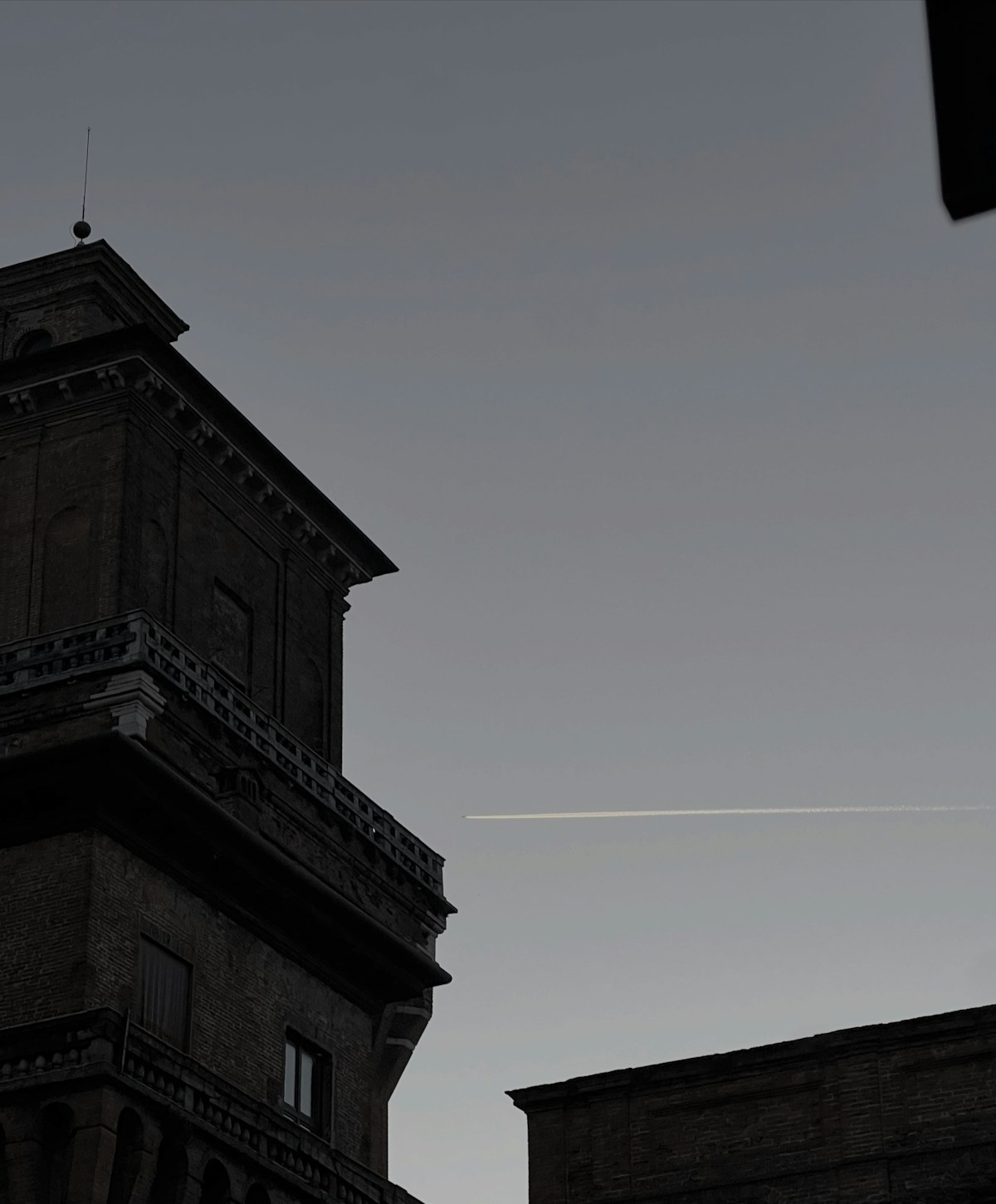
Ferrara is Italy’s best-kept secret - a perfectly preserved Renaissance city on the Po plain, UNESCO World Heritage Site since 1995, with a moated Este castle in the centre, some of the finest Renaissance secular frescoes in Italy, and an academic cycling culture that makes it the most bike-friendly city in the country. It has fewer foreign visitors than almost any comparable Italian city, which is entirely its advantage.
Castello Estense
The moated 14th-century castle of the Este family sits in the exact centre of the city, surrounded by a working moat. The Este lords ruled Ferrara from 1240 to 1598 - under their patronage the city became one of the most cultured courts in Renaissance Europe, attracting Ariosto (who wrote Orlando Furioso here), Tasso, and the Flemish painter Roger van der Weyden. The castle is now partly offices (the provincial government) and partly a museum.
The museum section includes the Sala dell’Aurora (frescoed ceiling), the court chapel, the prison cells in the towers (where Parisina Malatesta and her lover, the illegitimate son of Nicolò d’Este, were held before execution in 1425 - one of the most notorious Este family scandals), and the loggia with views over the moat.
Palazzo Schifanoia
The “palace of escaping boredom” - built by the Este lords as a pleasure villa outside the city walls (now absorbed into the city). The Salone dei Mesi (Hall of Months) has a fresco cycle of the twelve months by the Ferrara school (Cosimo Tura, Francesco del Cossa, Ercole de’ Roberti, 1469–1470) depicting each month in three registers: classical myths (top tier), the zodiac signs and their corresponding planets (middle tier), and scenes of Este court life (bottom tier). One of the most important secular fresco cycles in Italy and the key document of the Ferrara Renaissance school.
The Cathedral (Cattedrale di San Giorgio)
The Romanesque-Gothic cathedral facing the main square (Piazza Trento e Trieste). The facade has the most elaborate Romanesque sculptural programme in northern Italy - the Last Judgement tympanum, the carved portal reliefs of the months and the zodiac, and the gallery of saints. The interior was largely redesigned in the baroque period; the Museum of the Cathedral (in the adjacent church of San Romano) holds the original bronze doors and Jacopo della Quercia’s carved relief panels.
The Renaissance street plan
Ercole I d’Este commissioned a radical urban expansion of Ferrara in the 1490s (the “Herculean Addition”) - tripling the size of the city with wide, straight streets laid out on a near-geometric grid, with monumental palaces along the new avenues. This was the first example of Renaissance town planning in Europe. The Corso Ercole I d’Este, running north from the castle, is the spine of this expansion - flanked by the Palazzo dei Diamanti at the intersection (its diamond-rusticated facade being the most extraordinary exterior in Ferrara).
Palazzo dei Diamanti
The most photographed building in Ferrara - a palace with over 8,500 diamond-shaped marble bosses on its facade, creating a shimmering textured surface that changes character with the light. Now the Pinacoteca Nazionale, with a collection of Ferrara and Emilia-Romagna painting. The building itself is the main reason to visit.
Cycling in Ferrara
Ferrara has 138km of cycle lanes and one of the highest cycling modal shares in Italy. Bike hire is available throughout the city from €8/day. For guided cycling tours of the Este walls and the Renaissance quarter, browse Ferrara tours. The cycle route along the Este walls (Renaissance fortifications, 9km circuit) and the Po delta cycling paths are the main rides. The city is entirely flat; cycling makes seeing all the scattered sights much more efficient.
Day trips
Bologna (40 minutes by train) - the closest major city.
Po Delta (30 minutes by car) - the UNESCO World Heritage wetland of the Po river delta. Flamingos, herons, the largest lagoon ecosystem in Italy.
Ravenna (45 minutes by train) - the Byzantine mosaics.
Book Ferrara Tours on GetYourGuide
| Tour | Duration | From price | Highlights |
|---|---|---|---|
| Ferrara Este Castle and Renaissance city guided tour | 2 hrs | From €22 | Castello Estense, Palazzo dei Diamanti, Renaissance street plan |
| Ferrara cycling tour of the Este walls | 2.5 hrs | From €30 | 9km wall circuit by bike, Palazzo Schifanoia, Po delta views |
| Ferrara and Ravenna day trip from Bologna | 9 hrs | From €65 | Este Renaissance city + Byzantine mosaics, return transport |
Browse all Ferrara tours on GetYourGuide →
Back to the full Ferrara travel guide for the Este Castle, the Renaissance city, and transport connections. For Ferrara food - cappellacci di zucca and the local salami tradition - see the Ferrara food guide. For day trips from Ferrara to Bologna, Ravenna, and the Po Delta, see the Ferrara day trips guide. Ferrara is part of the Emilian food belt - our Emilian food guide covers the regional cuisine. For accommodation, see best hotels in Ferrara. For a Bologna-based day trip to Ferrara, see day trips from Bologna.
Where to stay in Ferrara: Find hotels in Ferrara — search accommodation across all budgets.